

Did you know that Thoreau, when he was staying at Waldon Pond would sometimes sit on the front steps of his cabin right after sunrise.
Often he would look up and discover that it was already midday or even late afternoon; he’d spent those several hours in a reverie.
Being in a reverie is most often described as being a pleasant experience, just like a nice day-dream. It is also universally (at least in the context of my short Google searches) described as being ‘lost in thought’, as well as being a place of fantasy, a place in which fanciful and impractical ideas are born.
In other words, a reverie while being pleasant, does not seem to be looked upon as a useful, productive, or worthwhile experience.
I’ve been thinking about the word, reverie, and the state to which it refers for a couple of days now. In fact since I read the anecdote opening post in a truly wonderful and illuminating book called Thoreau’s Quest: Mysticism in the Life and Writings of Henry David Thoreau, by Paul and Anna Hourihan.
The outcome of this contemplation and the above-mentioned little bits of Googling, is that I don’t agree at all with the dictionaries when they tell us that reveries are almost useless and have little or no benefits.
Even the Hourihans dismiss the value of reveries when compared to the practice of formal meditation. Listen to what they say:
There is a difference between the two. Meditation means effort, concentration of the total mind. What Thoreau has experienced is reverie – passive, beautiful and enchanting, but not true meditation.

My reaction to this dismissal? Well, I say, what’s wrong with an experience that is passive (there might be a book in the idea that reveries might not be all that passive after all) beautiful and enchanting?
And on the other side? Why is it seen as virtuous to be always making efforts and concentrating the total mind all the time? Speaking for me and I suspect several billion other people, I get tired, always trying, making effort, always concentrating and the rest.

I’m not saying at all that I’m not in favour of meditation. Indeed, I spend hours each day (in theory that is) in some kind of effortful, concentrated meditation. But, really, isn’t it nice now and again to just give up the effort, lose concentration, just for a bit? Just rest.
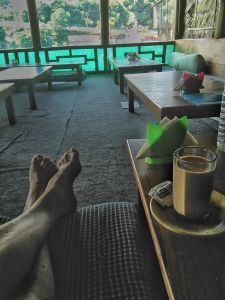
Of course when one’s mind wanders in reverie, fanciful ideas and thoughts will arise. Mind you it’s equally likely that some of those thoughts and ideas won’t be fanciful, but be helpful. And you know, I doubt there’s a meditator in the universe who would not report exactly the same thoughts and fancies come up despite all their meditatory efforts and concentration That’s just how our minds work.
The notion of being ‘lost in thought’ is interesting to look at too. I don’t think it’s quite the right way to refer to what happens in reveries. At least not completely.
Was Thoreau really lost in thought when he would suddenly realise that several hours had passed without him being aware?
Perhaps it’s more likely that at least a proportion of those hours were spent in a thought free state, just as in deep sleep when our mind is absent.And we all know how restful and satisfying deep, dreamless sleep can be. Maybe that’s why reveries are described as ‘pleasant’ experiences.
My teacher talks about how sometimes when we’re listening to a favourite piece of music, we can become ‘lost in the music’. We all know how that feels. He then asks us to consider, what is it exactly that ‘gets lost’?
Well, just as with deep sleep or when in a state of Samadhi or deep meditation, it is the mind that disappears – along with its self-idenifying ego sense. In other words, whoever we think we are goes missing or absent for a while.
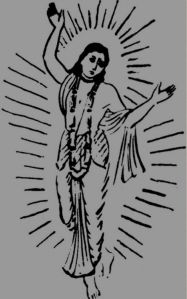
When I’ve experienced that state when listening to music, I would describe it as losing track of time, or rather not being aware of time at all. Thoughts come and go but don’t often stay long, ‘just floating by like clouds’ as someone recently described it to me. And afterwards when I return to ‘normal’ I sometimes have a sense that for a time I and the music were one, no separation or judgements, non-different.
And so it is when ‘lost’ in a reverie: the ego disappears; thoughts come and go. What’s left is the space between thoughts – a bit like the silence that exists between notes in a musical composition.
Some say that it is this silence, this space when mind and ego are absent, is where the divine is to be found. It is said, by some, that it is in this space, this silence, one may experience God, or Absolute Reality.
So, no ego; no monkey mind jumping about; no ‘I’ to interfere with the state of silence, stillness, and peace. And quiet!
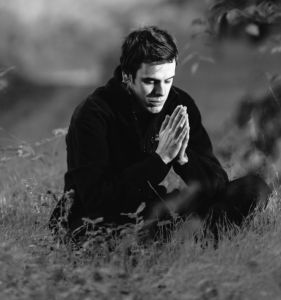
And if one removes the letter ‘I’ from the word reverie? We are left with revere. Perhaps those who tell us that the silence is God, those who say that the absence of thoughts, ego and so on, allows us to detect the Divine, are onto something. That silence, and the process by which it is realised, are to be revered.
Being ‘lost’ (the dictionary’s word not mine) in a reverie might just be the most useful and the most productive (not the world’s definition, but more in the sense of the actions that make for the betterment of Self) thing we can do when the mood, the moment, and the inclination strike.





























 Notes from the Hermit's Cave