Remember that old Bee Gees‘ song Words? It’s about one person offering all they have to another. Well, the one doing the offering must have been a writer because, while the song’s a love story, it’s words that are the big thing on offer here:
It’s only words, and words are all I have To take your heart away
Well, as this is a blog, words are the way it hopes to reach your heart. Actually, the posts also include photos and sometimes other art, but the main vehicle used here is words.
So, with that in mind I have a couple of words to offer you today. Well, one word and its opposite. Have a look at this sentence from Thomas Merton:
If Irish monks affirmed his Celtic spirit in their mastery of cataphatic contemplation of the wonders of divinity in nature, Buddhist monks evoked his Zen mind and drew him into the apophatic path of formless ’emptiness’…
As sentences go (though this is obviously only part of a sentence) this has to rank pretty close to the top for length and denseness.
Kataphatic. What a word! Of course I had to look it up; I’d never heard the word before (this post is a rewrite from notes written a while ago that I never got around to posting.), and even though the sentence seems to suggest the meaning, I was still curious.
Looking at Wikipedia – where they spell it with a ‘C’ like Merton, as well as with a ‘K’- I learned that cataphatic is an adjective that describes an approach to theology that uses ‘positive terminology to describe or refer to the divine (God, Truth, Dharma, Spirit. You know what I mean: the divine).
Apophatic, as you probably figured out already, is when one uses ‘negative terminology to indicate what it is believed the divine is not’. A process of negation or we could say you get to what the divine is by a process of elimination.
Pretty simple concept really, but with a couple of big words to label it, and a lot of words to define it. No, don’t worry, I won’t bore you with the meaning and origin of the words and all the rest. Mainly because I don’t know and I’m not especially interested anyway in all that technical stuff.
I simply resonated with the word, and the concept. Cataphatic made me think of Dick Van Dyke and Julie Andrews singing Supercalifragilisticexpialidocious in Mary Poppins. But let’s not go there: this is a serious blog after all. Except to say there’s more to that word than you might imagine.
Putting aside the aesthetic appeal of the word for a minute, let’s contemplate a while on cataphatic, and it’s opposite, apothatic.
To begin thinking about these two words, it’s necessary to acknowledge the existence of the divine. We can call it God, if we like. Or Dharma, Truth, Spirit, Love, Beauty.
As the quote suggests, a cataphatic approach, ideology, theology, or whatever we call it, ascribes names and forms to the divine, as well as describing where and in what the divine may reside.
Whereas apothatic, again as the quote suggests, does not ascribe names and forms to the divine. Instead it seeks to discover what or who god is or isn’t by a process of negation as described already.
For a long time I labelled myself as a Humanist. I had decided that this physical body is all there is; the physical or material universe is all there is, and that there is no ‘god’ separate from us or who has special powers to affect our lives. No God at all in fact.
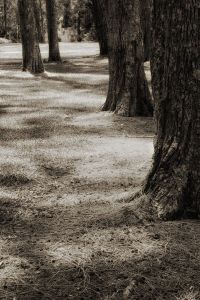
In the Grove of the Sentinals
But, all that while, I just knew that there was something else, something more than just the physical. And over time, I came to the knowledge that there is indeed more than the simply phsical universe (including we humans).
I’ve thought about it a lot over the years and I came to the conclusion not that many years ago, that I had simply been afraid to name or define that something more. It would have meant admitting to myself that something more really did exist.
That is to say, I was scared of taking the cataphatic approach – and I’d never even heard the word.
Well brothers and sisters, I saw the light. The truth was revealed to me. And what is that truth? Well, to put it simply, I wasn’t scared anymore. Not of names and forms, and not of what I couldn’t see.
Now I could take both the Catophatic and the Apothatic approach: that the something else I had actually always known just was, really is, and can have a name and form, or not. The divine is not an omniscient being or any kind of being at all; As I’m very fond of saying, the divine (or truth, God, Dharma) simply is. And it’s all there is.
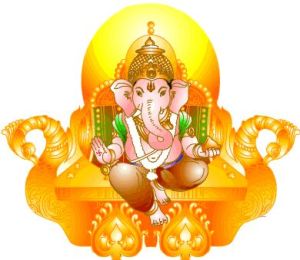
Some of you might know that I am really quite fond of the Indian deity, Ganesha . Do I believe that a man with the head of an elephant actually exists or ever existed?. Of course not. Do I actually think that he resides in the lovely painted icon that sits by my bed? Well, obviously not.
But do I believe that there is a spark or aspect or attribute in all life, in you and me, in nature, in (scary word time) creation, that we can tap into to help us overcome obstacles? Or that we can access when we begin new ventures of whatever kind, or when we need strength to face challenges? Yes, I do. Very definitely.
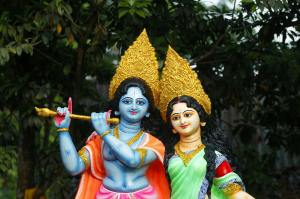
And do I believe in a blue boy called Krishna who lived in India 5000 years ago and spent his time playing in the fields with the village cows and his friends, entertaining them with his flute? Again, of course not. Does he live in the other beautiful icon by my bed? The answer is obvious: no.
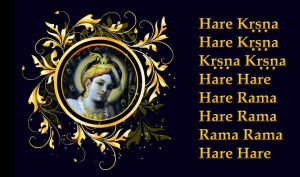
But do I chant the Hare Krishna mantra in an effort to come closer to the divine that is… well, that just is? Yes, again, very definitely.
Words. It’s all only words. Only words? Only??
In the beginning was the word, and the word was with God and the word was God. (from the opening of the Gospel of John)
You know it’s funny how sometimes it takes a lot of time, many years in some cases, for a life event or some happening or other to finally emerge to express itself in some kind of creative form or other.
Just this minute (literally) I was reading through some poems of mine and I came across one I wrote only two months ago. I won’t say I’d completely forgotten about it, but at the same time, I can’t recall thinking of it again since writing. Until that moment five minutes ago that is.
The poem was prompted by an event that took place thirty- seven years ago. Not a major event on the face of it, just a small interaction between a mother and son. Here’s the backstory.
My mother loved Bingo, and played it at various venues several times a week. I’d just returned from several years overseas and she asked me if I’d like to be the security guard at that night’s particular venue. The regular guy couldh’t make it and they needed someone to just hang out in the car park so everyone would feel safe.
The River of Life rarely flows in a straight line
Well they were very different days, and I wasn’t who I am now, so I jumped at this very easy, relaxed, sounding gig. And off we went at the appropriate time.
It’s not part of the poem’s story but thinking about it now, I remember my mother’s joy and relaxed vibe as she interacted with her ‘Bingo family’. That’s a treasured memory.
Anyway, later in the evening I was wandering around, zigzagging through the parking lot, when I saw Mam waving at me to come to her.
And the poem takes it from there as they say.
I said the piece is about a simple mother son interaction and it is. But there is more to it really. The poem is about, at another level, Love and Truth.
It’s also about a fundamental concept I try hard to govern my life by: Ahimsa. This is an approach to life based on doing the least harm one can do in all areas of living in the world. It’s not strictly speaking a prohibition on telling untruths, nor does it mandate an absolute ban on violence. It’s complicated, as they say.
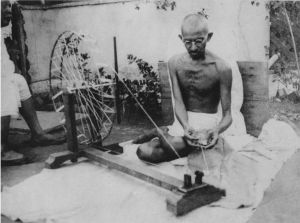
Gandhiji adhered to Ahimsa as his life’s guiding principle. While his style of living was to trust in Truth, he knew that at times, the way of least harm requires loving, compassionate discernment as we are faced with dilemmas of what’s right and what’s wrong in the infinite number of situations we are confronted with on a daily basis.
So, my friends, here is my poem. Read in peace.
WITH THE EYES OF THE HEART
I ate a hotdog once upon a time, even though a vegan I am. On the spot, split second decison; I considered it fine. You see, as a fait accompli it was presented to me – by my Mam.
‘It’s a special vege kind I got for you.’ So the offered food I did receive, though I clearly saw it wasn’t true. Sometimes you need more than eyes to see what you believe.
My acceptance acknowledged her thoughtfulness and validated her gesture of mother-to-son love. So, to any karmic consequences, I will submit with grace.
Thank you for allowing me to share this story and poem with you. And even more of a thank you for reading how I learned a lesson about love and truth and how sometimes truth may actually sometimes need to be followed even if the so-called facts say different.
Well, here we are with the third and final part of our contemplations on Flee, Be silent, Pray Always, the answer discovered by our friend Arsenius who was looking for a way to be saved from the the things of the world.
In a very real sense, this third injunction might be seen as the most important of the three. Indeed, again in a very real sense, those first two seem to me to be prerequisites for the third. Certainly, many of us would like to flee to a place and state of silence in order to escape the world and its many and varied causes of our suffering. Such people are simply and completely over the noise, the chaos, war, greed, the complexity of relationships, and all the rest.
Then there are many many others who, rather than looking to escape the world, are wanting to ‘flee’ towards a place and state of silence in order to engage more fully with the world by contemplation, meditation, and most of all, prayer. Such people are working towards making their entire lives a prayer.
And then there are the third group which is made up of those who have some sense of running away from the world while at the same time they feel compelled to move towards a contemplative life that they sense will be the best way they can actually serve the world.
I think I can include myself in this last group. I’ve never coped well with masses of people, being in the workforce, or dealing with the horrors that the world seemed to be overwhelmed with.
At the same time, I’ve always wanted to (and have tried to) combat injustice, racism, violence and the rest. I guess you could sum it up by putting it this way: I was (still am) an oversensitive person who one day had had enough of trying to ‘fight the system’ when it was the system making and changing the rules of the game as it went along.
Better I thought, to turn inwards in order to reach or realise my oneness with all living things. I’ve always been predisposed to praying as well, so it was a natural evolution in many ways. My intention and commitment these last few years has been (and still is of course) to pray continuously and with all my being.
My prayer is for the release from suffering for all living beings and that’s my central focus for prayer. For me, it feels very much that I am a lot more use to others living what I think of as a prayerful contemplative life than being actively engaged with the world out there in the midst of it all so to speak.
Pray Always
Prayer for me is not so much about petitioning some all-powerful being who is seemingly on a whim able to grant or refuse my wishes. For me it is more an affirmation of the reality of my already existent oneness with the entirety of the universe. It’s a way of seeking to actually realise that this oneness is my very Self.
Prayer is about being present, not wishing blindly that things be different than they are. In praying I seek to affirm that the ‘universe is unfolding as it should’, as it says in a famous poem I’ve always loved. (Actually if you don’t know about Desiderata [Things Desired] then please do check it out; you’ll love it).
I think that in this sense, prayer is in fact an act of mindfulness, or rather an act which will help develop a mindfulness practice. It is a way to practise being fully focused and present to whatever is going on, whatever circumstances we find ourselves in.
And if we’re able to be present – even on a temporary or momentary basis – then we will be more calm, more at peace, and more able to achieve some clarity in our lives and with whatever is the intention with our prayer.
I know it might sound like a clumsy attempt at a clever play on words, but we’ve described mindfulness as the practice of being fully present. But we can put it another way. We can define that state of being fully present as being in presence. Like what we might say to a friend who is daydreaming while we are trying to talk to them. We might say something like ‘so and so, your presence would be appreciated’.
In presence of what? I would say everything. When we are absolutely in the present moment (again even momentarily), when we are able to realise our oneness with all things. Essentially the universe is there – or is it here? – with you in that present moment. It’s a moment when we may indeed feel we are in the presence of all that is.
Some may call that presence God, or the Divine, or Universal Consciousness. Others may see it as being in the presence of their own true and authentic Self.
That leads quite nicely to the next aspect of prayer that I want us to look at. Praying to God. I’ve spent so long on mindfulness because I wanted to stress that I don’t think it’s necessary to have a personal name or form for God, or even a notion of an unmanifested, invisible ‘force’ called God, in order to pray.
On the other hand for me, and I know for a lot of people, there are names and forms of the universal consciousness that pervades and permeates the universe, that I personally resonate with and I can reach out to them whenever the feeling or inclination arises. It sounds a bit odd to say, but for me to think that all that is, is all that is, sort of sums it up.
And as a result of that, any prayer I pray is addressed to my own Self which is simply part and parcel of all there is. In other words, it’s a personal choice for any one of us what form or name we choose to pray to. Or if we don’t pray to a name and form at all. All is one.
One thing I’ve mentioned I think a couple of times is the idea of making all our activities into a prayer, but other than the discussion on mindfulness and presence, I’ve not really addressed the how and why.
Why is pretty obvious. Because living and acting mindfully helps us in so many way such as being more peaceful, more relaxed, happier, and so on. The how, now I’m thinking about it is the purpose of this post. And it’s also true to say we’ve been talking about it since this series began.
That is to say, we flee from the aspects of our lives that don’t serve us and which can be changed. This might be a decision to spend 30 minutes every day sitting quietly and undisturbed. And as we’ve mentioned a few times already it could be going all out and moving to a desert cave somewhere.
In both those scenarios we give ourselves the opportunity to be silent and, hopefully also surrounded by silence. How to pray always? There’s an expression I love and try to live by: Follow your Dharma. Here Dharma means your own truth, being authentic to who you are, having the intention to do what’s right in all situations. And of course actually following through with that intention if at all possible. In this way you transform every action into prayer.
Living a life of prayer does seem on the face of it to not involve much use of spoken prayers, as in saying prayers with words. Well, I don’t intend to be humourous here, but a great deal of prayer does it fact involve talking to one’s Self. To the real self, that part of us that’s part of everything else. It can do us good to have these deep conversations.
Then of course there are the many many prayers that already exist to serve people from so many traditions, cultures, to suit all kinds of purposes and intentions.
Many of us will be familiar with a number of prayers learnt when we were children. If you’re anything like me, they still pop up by themselves from time to time.
Actually as I deepen my prayer practice, I’m discovering that I’m remembering all sorts of prayers from many and varied sources. I think as I dig deeper, more and more are coming up to the surface.
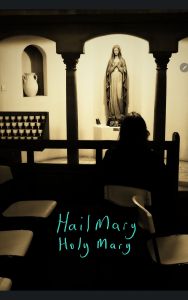
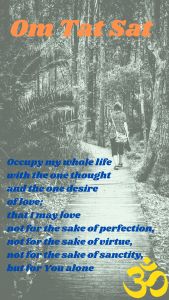
This prayer (by Thomas Merton I think) resonates deeply with me
If these ‘pre-prepared’ prayers say what you want to say and in a way that resonates with you, then you are free to choose those that feel right for you. I guess I mix and match the prayers I use; it’s always dependent on my feelings, thoughts, and intentions at the time.
Like Arsenius, I try to be open and responsive to whatever the ‘answers’ are, even though my ego does sometimes when it doesn’t like the answer, try and control outcomes.
One point about such prayers: I find it tempting oftentimes to simply recite them at what I’ve heard described as lip level. By rote and without emotion, in other words. At those times I try to slow down or pause to reflect on what I’m doing and why to get back in touch with Self.
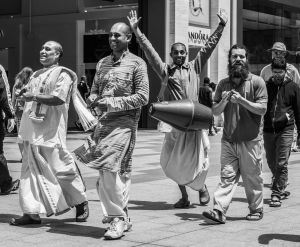
A major part of my prayer life is chanting mantra. I try to spend more time chanting as time passes. There are a number that I use depending on inclination and need.
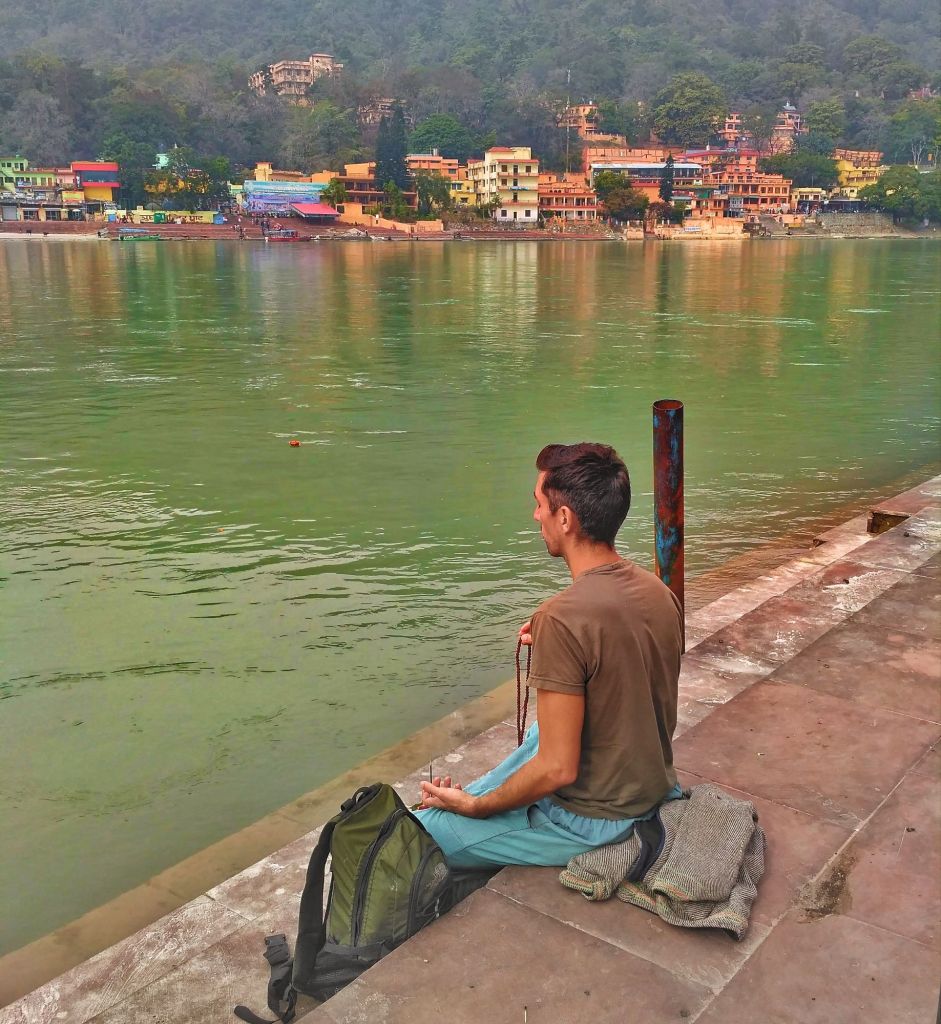
I chant anywhere and sometimes a mantra will start chanting itself, surprising me by its arrival
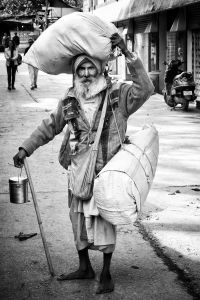
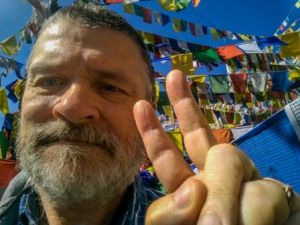
(This photo isn’t me by the way)
Now, probably one of the most important aspects of my own prayer life: I know I’ve mentioned my intentions in praying at all, but one aspect I haven’t mentioned is praying as devotion.
Devotion as in worship, praise, as in gratitude for the beauty in my life, as an expression of love. Knowing with the mind that all is one is fine, but these kinds of prayers help us to cement our awareness of that oneness of all living beings. As I said earlier, I, like you or anyone else, may use particular names and forms to represent this oneness, but, well, it’s all one, so we are non-different from all those names and forms.
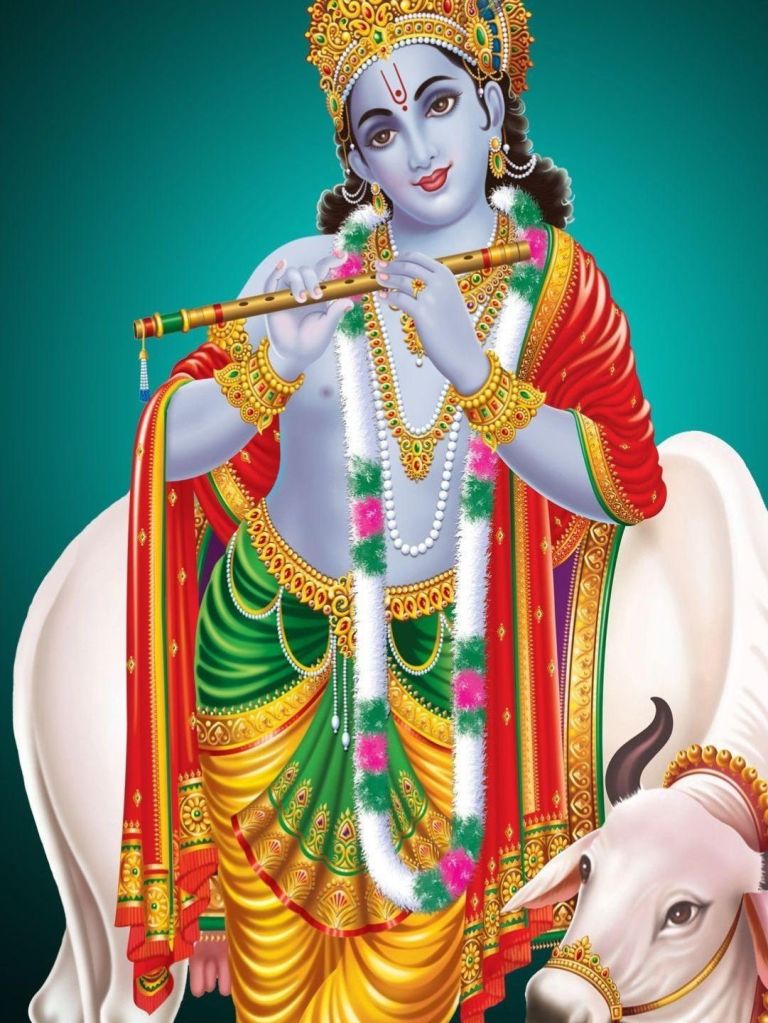
Lord Sri Krishna is among my favourite forms of Universal Consciousness (also known as Brahman)
There are many representations of the Divine, but Krishna and this picture of Him are special to me.
Focusing your devotion on a particular form seems to help make it easier or more real. It’s tricky to pray to and with a thing that has no form and is invisible.
So, my friends I hope what I’ve said here is of some little interest to you and that you have found at least something you can use for your own life.
A few days ago I began a new work to study and contemplate in my not quite daily Lectio Divina practice. It’s actually a spiritual classic that, although I’ve read it before, I felt the need to explore a little more, dig a little deeper, rather than simply reading through it as I did the first time.
I haven’t gotten very far in the book; like I say it’s going to be a slower, more reflective process this time (I’m amazed how little I remember as I reread now). A small story the author tells us by way of describing how he’s structured the book, is actually where I’ve left off, so that I can share it with you before I go on with the text and forget!
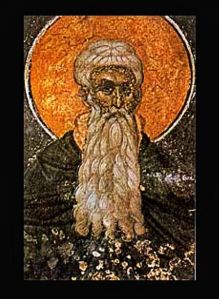
Abba Arsenius (courtesy Wikipedia)
It concerns Abba Arsenius who was a high ranking Roman official working in the household of the Emperor. Clearly he was looking for a more meaningful, more spiritually oriented lifestyle away from the dogma running people’s lives, politics, the decadence and the rest, because he constantly prayed to God, seeking a way out that would lead him ‘to salvation’. He was wanting badly to be free.
Well, he heard an answer, from deep within his soul:
Flee, be silent and pray always.
So, that’s what he did, fleeing first obviously. I don’t know the rest of his story. I mean I could look him up, but for our purposes here today, all we need to know is that he took off secretly to Egypt and went to live alone in the desert.
Nouwen believes:
“The words flee, be silent and pray summarize the spirituality of the desert. They indicate the three ways of preventing the world from shaping us in its image and are thus the three ways to life in the Spirit.”
Flee. It’s quite a strong word isn’t it? On the face of it, it simply means run away or escape. But it seems to suggest something more urgent, as if the one doing the fleeing needs to get away as quickly as possible; sticking around could be (or actually is) dangerous.
And that, as I said, is where I stopped to think. Sorry, I mean contemplate. I was so struck by the concept: in its essence, it is exactly the life I am attempting to live. Anyway, since reading it I’ve been thinking a lot about the three imperatives given to Arsenius in that very succinct answer he received to his question.
In fact, looking the word up just now I see that some slang terms for flee are: bolt, scram, schedaddle, or get the heck of out Dodge (or in the case of Arsenius, Rome). Let’s just say, to flee means to run away as quickly as you can, to escape imminent danger of some kind, real or metaphorical.
I read once of a woman who had the debilitating Chronic Fatigue Syndrome. In an attempt to recover and heal, she moved to a remote cottage in a tiny town ‘in the middle of nowhere’. Why such a drastic move? Surely if she is ill she should stay near to doctors and other resources?
Well, for her being in a city was the problem. Noise, crowds, pollution, pressure to conform and consume, interaction on so many levels all the time with other people, trying to meet daily needs in a complex, crowded and hectic environment was precisely what was making her ill.
Not to mention the effects on mental health that living in such conditions has on a lot of people, and I think we can all relate to some degree to this idea. We’ve all felt sometimes (or even very often) how we would like to just get away from it all.
For me it was about the gross materialism, the lack of ethical and moral thinking in the running of businesses, governments, and the rest; I longed also for a deeper connection with what one might call the sacred; more time and space for contemplation and just a simpler, slower, less rushed, less complex life.
Now, I hear you saying: ‘not everyone can or should just give up everything and take off to live in a cave’. (or desert, wherever). And you are right, of course. In fact, we can say the cave is a metaphor for all sorts of spaces one might feel drawn to when fleeing and seeking separation from the world. Actually, we’ll be talking more about this later when we get to the be silent bit.
For these Hermit Pilgrims ‘fleeing from the world’ has meant a nomadic lifestyle, few possessions and material needs, a hermit life where our engagement or entanglement with the world is kept to a minimum, and in which we feel less of a pressure to conform, to ‘be shaped’ by the world around us’).
The reality is of course, at the end of the day for most of us and for most of our lives we have to make money to feed and clothe ourselves and our families. And for that we need to work. And in order to work we need a house to live in, and to have a house to live in we (perhaps) have to get a mortgage, and to get a mortgage … . Well I guess you get the point.
But, for a moment ask yourself: What would it look like for me to ‘flee’? For each person it’s going to take on its own unique meaning. I suppose the easiest way to put it is to say that fleeing for all of us essentially means laying aside those things (or people, places, behaviours) that we look at as ‘dangerous’ , ‘bad for us’, or from which we constantly feel the need to escape. Sometimes they’re little things, sometimes more serious.
It might be that we’ve taken on too many social media ‘obligations’ that are swallowing up any precious spare moments we have, that we’d like to be free of. Or it could be our compulsion for bringing our work home that we are desperate to give up (the bringing work home, though of course it might be the job too), so we can actually make some more free moments.
Perhaps it’s our drive to ‘know what’s going on’ by watching the news every night that’s doing our head in. These are some of the so-called minor things that we know are shaping who we are, and often against our own wishes too. Now I think about it, maybe none of it’s ‘minor’ after all.
Oh dear, I’ve done it again: word count is very nearly 1000. Too many words is another thing people try to flee from: we’re flooded, overwhelmed by words. And as much as I personally love words, I get the point and I will leave our contemplation on what was actually a message of very few words, till the next post.
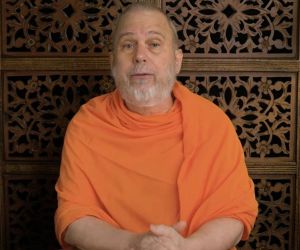
The other day, while listening to a talk by my teacher Swami Tadatmananda, I was struck by something he said. Of course, being my teacher, there are many things that he says that have significance and that resonate with me. But these statements in particular found a home in me that day:
Words can’t get you there (ie realisation of our oneness with the Divine, God, Universal Consciousness, we may call it many things), but words can help you get rid of everything else.
Talking with my partner hermit this morning about this idea, I suddenly thought that for the vast majority of us there are only a given number of words used on a daily basis. And I think this would apply to whatever language we speak – even when you think of specialist groups like scientists, religious people, engineers, – any group.
I’m not talking here about whether me or you as an individual has a ‘wide’ vocabulary, or a ‘limited’ one; I’m just saying that there are only so many words we need to get by while living in our particular worlds.
And that thought led to a not so original idea that those words will be used to achieve all kinds of ends, including opposing goals and purposes.
In other words (no pun intended, I promise!), words may be used to attack and hurt others and ourselves; or in the relaying or writing of the news telling us (constantly and repetitively) all the bad things going on in the world; to express hate; to promote violence; in advertising for anything and everything; to threaten and dominate – have power over – other living beings or Earth herself.
Then, on the other hand, those exact same words can be used to heal others and ourselves; spread news about good things happening around us; in the prayers many of us utter every day; in the many holy scriptures and other sacred texts so many hold dear; to promote love and express love; to promote harmony and unity among peoples and with Earth and all her life; to empower ourselves and others to live well and to thrive.
So, where’s the difference? Well, I think there is a theme developing in this post: it’s going to be packed solid with obvious, even clichéd words and statements. What I’m getting at is this: Two very well worn clichés just popped into mind:
Sticks and stones might break my bones, but words will never hurt me.
And the other:
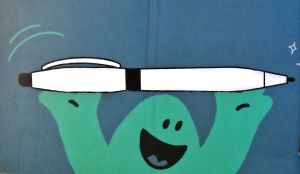
The pen (or any other means of communication) is mightier than the sword.
Behold the Mighty Pen
It seems to me that these two statements appear to be at odds with each other; kind of opposite ideas aren’t they? Well, clichés may be ‘hackneyed oft-repeated aphorisms’ (I read that definition somewhere ages ago), but I rather think that a great many clichés are merely truths passed down the ages that have been remembered and treasured precisely because they are true and have proven helpful.
Words can hurt; we have all experienced that truth for ourselves. Of course, for ‘enlightened ‘ people words might roll over them like, (forgive another cliché or two) like water off a duck’s back, or those words will go in one ear and out the other. But, I think most of us have a way to go before enlightenment, certianly it’ll be a rather high number of lifetimes before I’m even close.
Which means that before that day of enlightenment comes, words will continue to hurt. Or heal. All of us can think of many examples of words that can be used in so many ways, but let’s just take one example:
Power or powerful. In how many ways can we use that word? What does it mean if I say: ‘He’s a powerful politician’.?
Does it mean this politician is a dictator who forces people to do what he wants? Does he ban anyone who disagrees with him? Is he a believer in the myth that the people are all there to serve him? Does he raise taxes so he can live luxuriously? Does he make policies that keep people poor or hungry?
Or does it mean that this politician is a strong, good, and compassionate leader? Does he know how to empower people to move themselves and society forward? Is he sensitive to the needs of all the people he serves? Does he listen to the people and follow through on what they tell him? Does he do his best to ensure that nobody goes poor and hungry?
You probably get the point I think? Exactly the same words; two diametrically opposed meanings. Of course, we could all cite countless examples of this duality: same words, different meanings. And you know something? We all do it.
So, what’s the solution? How can we find words that don’t hurt? How are we to learn that our ‘pen’ (read voice, keyboard, paintbrush, camera, or any medium we use to ‘speak with’) is mightier? Well, until that aforementioned day of enlightenment is upon us, all we can do is practise; after all, practise makes perfect (sorry).
Okay then, how shall we practise? I can only tell you what I am trying to do myself. Focus on truth in all your actions, words, thoughts. Turn away, as your default response, from all that you know to be untrue. Develop your powers of discernment so you will know what is true and what isn’t.
And this requires that you remind yourself constantly that you already do know the difference. Your heart will tell you, so listen to it as well!
Does all this work. Yes. Maybe. Sometimes. But what I can say for sure is that practising this way of reconditioning your thoughts, words, and deeds so that they are all on the same page, (there I go again with the clichés again) advances you ever so steadily on that road that leads to enlightenment, when we will know exactly what, when, and how to say what we need to say whenever we try to express ourselves in any given situation.