Flee, Be Silent, Pray Always Part 3

Namaste and welcome

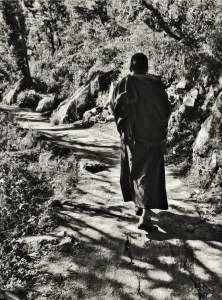
Well, here we are with the third and final part of our contemplations on Flee, Be silent, Pray Always, the answer discovered by our friend Arsenius who was looking for a way to be saved from the the things of the world.

In a very real sense, this third injunction might be seen as the most important of the three. Indeed, again in a very real sense, those first two seem to me to be prerequisites for the third. Certainly, many of us would like to flee to a place and state of silence in order to escape the world and its many and varied causes of our suffering. Such people are simply and completely over the noise, the chaos, war, greed, the complexity of relationships, and all the rest.

Then there are many many others who, rather than looking to escape the world, are wanting to ‘flee’ towards a place and state of silence in order to engage more fully with the world by contemplation, meditation, and most of all, prayer. Such people are working towards making their entire lives a prayer.

And then there are the third group which is made up of those who have some sense of running away from the world while at the same time they feel compelled to move towards a contemplative life that they sense will be the best way they can actually serve the world.

I think I can include myself in this last group. I’ve never coped well with masses of people, being in the workforce, or dealing with the horrors that the world seemed to be overwhelmed with.
At the same time, I’ve always wanted to (and have tried to) combat injustice, racism, violence and the rest. I guess you could sum it up by putting it this way: I was (still am) an oversensitive person who one day had had enough of trying to ‘fight the system’ when it was the system making and changing the rules of the game as it went along.

Better I thought, to turn inwards in order to reach or realise my oneness with all living things. I’ve always been predisposed to praying as well, so it was a natural evolution in many ways. My intention and commitment these last few years has been (and still is of course) to pray continuously and with all my being.

My prayer is for the release from suffering for all living beings and that’s my central focus for prayer. For me, it feels very much that I am a lot more use to others living what I think of as a prayerful contemplative life than being actively engaged with the world out there in the midst of it all so to speak.
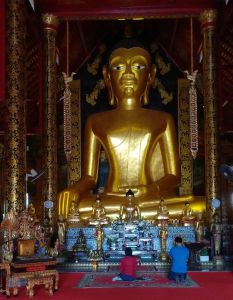
Pray Always

Prayer for me is not so much about petitioning some all-powerful being who is seemingly on a whim able to grant or refuse my wishes. For me it is more an affirmation of the reality of my already existent oneness with the entirety of the universe. It’s a way of seeking to actually realise that this oneness is my very Self.

Prayer is about being present, not wishing blindly that things be different than they are. In praying I seek to affirm that the ‘universe is unfolding as it should’, as it says in a famous poem I’ve always loved. (Actually if you don’t know about Desiderata [Things Desired] then please do check it out; you’ll love it).

I think that in this sense, prayer is in fact an act of mindfulness, or rather an act which will help develop a mindfulness practice. It is a way to practise being fully focused and present to whatever is going on, whatever circumstances we find ourselves in.
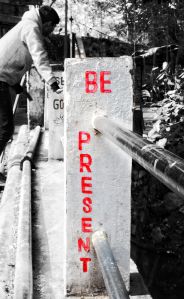
And if we’re able to be present – even on a temporary or momentary basis – then we will be more calm, more at peace, and more able to achieve some clarity in our lives and with whatever is the intention with our prayer.

I know it might sound like a clumsy attempt at a clever play on words, but we’ve described mindfulness as the practice of being fully present. But we can put it another way. We can define that state of being fully present as being in presence.  Like what we might say to a friend who is daydreaming while we are trying to talk to them. We might say something like ‘so and so, your presence would be appreciated’.

In presence of what? I would say everything. When we are absolutely in the present moment (again even momentarily), when we are able to realise our oneness with all things. Essentially the universe is there – or is it here? – with you in that present moment. It’s a moment when we may indeed feel we are in the presence of all that is.
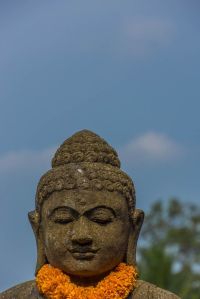
Some may call that presence God, or the Divine, or Universal Consciousness. Others may see it as being in the presence of their own true and authentic Self.

That leads quite nicely to the next aspect of prayer that I want us to look at. Praying to God. I’ve spent so long on mindfulness because I wanted to stress that I don’t think it’s necessary to have a personal name or form for God, or even a notion of an unmanifested, invisible ‘force’ called God, in order to pray.

On the other hand for me, and I know for a lot of people, there are names and forms of the universal consciousness that pervades and permeates the universe, that I personally resonate with and I can reach out to them whenever the feeling or inclination arises. It sounds a bit odd to say, but for me to think that all that is, is all that is, sort of sums it up.

And as a result of that, any prayer  I pray is addressed to my own Self which is simply part and parcel of all there is. In other words, it’s a personal choice for any one of us what form or name we choose to pray to. Or if we don’t pray to a name and form at all. All is one.

One thing I’ve mentioned I think a couple of times is the idea of making all our activities into a prayer, but other than the discussion on mindfulness and presence, I’ve not really addressed the how and why.

Why is pretty obvious. Because living and acting mindfully helps us in so many way such as being more peaceful, more relaxed, happier, and so on. The how, now I’m thinking about it is the purpose of this post. And it’s also true to say we’ve been talking about it since this series began.

That is to say, we flee from the aspects of our lives that don’t serve us and which can be changed. This might be a decision to spend 30 minutes every day sitting quietly and undisturbed. And as we’ve mentioned a few times already it could be going all out and moving to a desert cave somewhere.

In both those scenarios we give ourselves the opportunity to be silent and, hopefully also surrounded by silence. How to pray always? There’s an expression I love and try to live by: Follow your Dharma. Here Dharma means your own truth, being authentic to who you are, having the intention to do what’s right in all situations. And of course actually following through with that intention if at all possible. In this way you transform every action into prayer.

Living a life of prayer does seem on the face of it to not involve much use of spoken prayers, as in saying prayers with words. Well, I don’t intend to be humourous here, but a great deal of prayer does it fact involve talking to one’s Self. To the real self, that part of us that’s part of everything else. It can do us good to have these deep conversations.
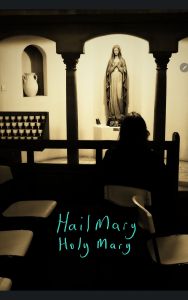
Then of course there are the many many prayers that already exist to serve people from so many traditions, cultures, to suit all kinds of purposes and intentions.

Many of us will be familiar with a number of prayers learnt when we were children. If you’re anything like me, they still pop up by themselves from time to time.

Actually as I deepen my prayer practice, I’m discovering that I’m remembering all sorts of prayers from many and varied sources. I think as I dig deeper, more and more are coming up to the surface.
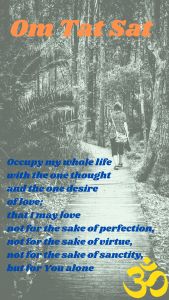
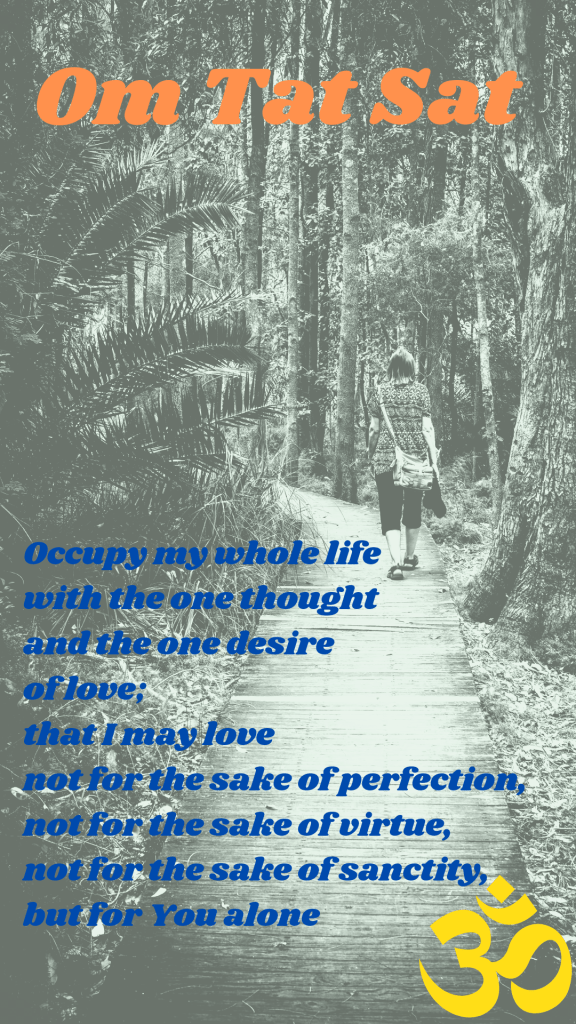
This prayer (by Thomas Merton I think) resonates deeply with me

If these ‘pre-prepared’ prayers say what you want to say and in a way that resonates with you, then you are free to choose those that feel right for you. I guess I mix and match the prayers I use; it’s always dependent on my feelings, thoughts, and intentions at the time.

Like  Arsenius, I try to be open and responsive to whatever the ‘answers’ are, even though my ego does sometimes when it doesn’t like the answer, try and control outcomes.

One point about such prayers: I find it tempting oftentimes to simply recite them at what I’ve heard described as lip level. By rote and without emotion, in other words. At those times I try to slow down or pause to reflect on what I’m doing and why to get back in touch with Self.
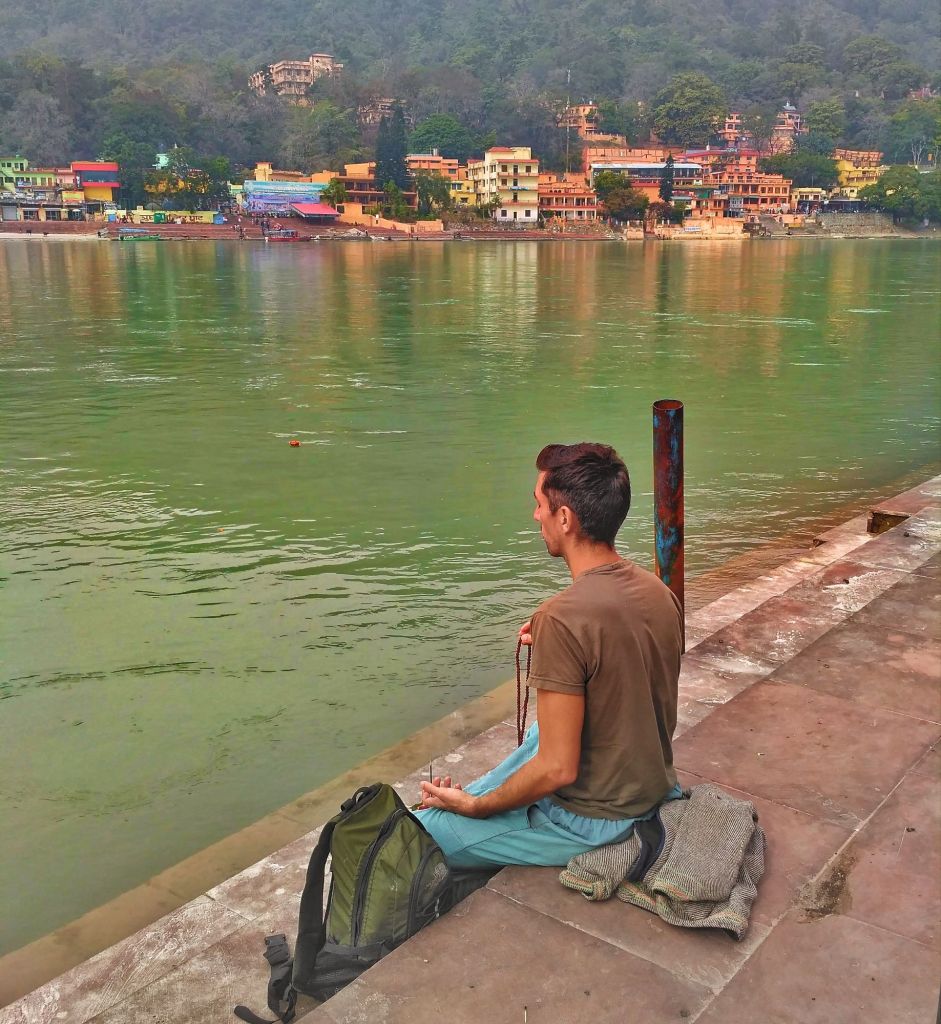
A major part of my prayer life is chanting mantra. I try to spend more time chanting as time passes. There are a number that I use depending on inclination and need.

I chant anywhere and sometimes a mantra will start chanting itself, surprising me by its arrival

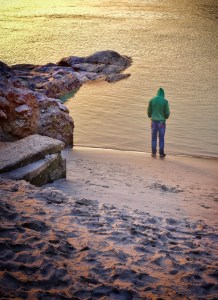
(This photo isn’t me by the way)

Now, probably one of the most important aspects of my own prayer life: I know I’ve mentioned my intentions in praying at all, but one aspect I haven’t mentioned is praying as devotion.
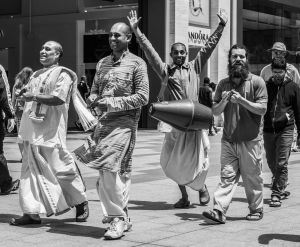
Devotion as in worship, praise, as in gratitude for the beauty in my life, as an expression of love. Knowing with the mind that all is one is fine, but these kinds of prayers help us to cement our awareness of that oneness of all living beings. As I said earlier, I, like you or anyone else, may use particular names and forms to represent this oneness, but, well, it’s all one, so we are non-different from all those names and forms.
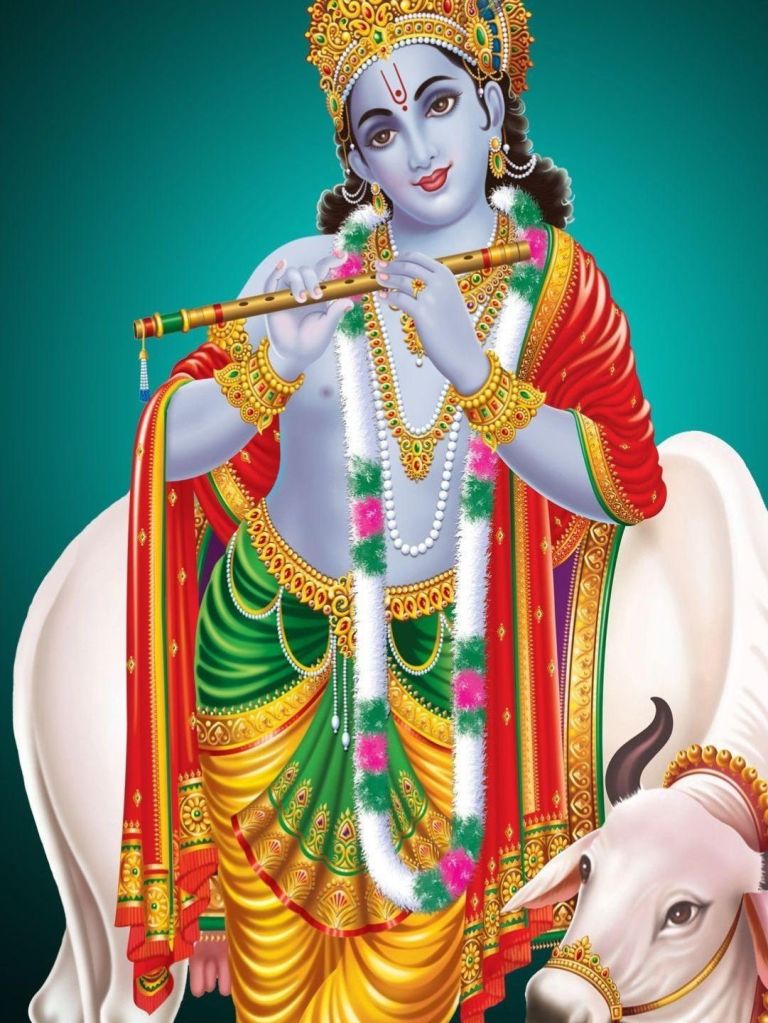
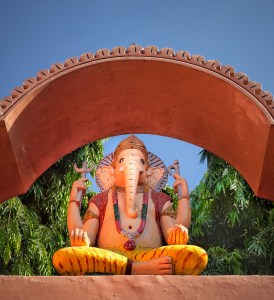
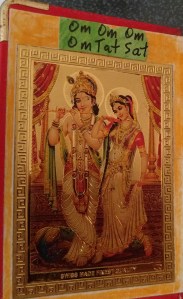
Lord Sri Krishna is among my favourite forms of Universal Consciousness  (also known as Brahman)

There are many representations of the Divine, but Krishna and this picture of Him are special to me.

Focusing your devotion on a particular form seems to help make it easier or more real. It’s tricky to pray to and with a thing that has no form and is invisible.

So, my friends I hope what I’ve said here is of some little interest to you and that you have found at least something you can use for your own life.

With peace, love, and with my prayers

Paul
The Best Job in the World

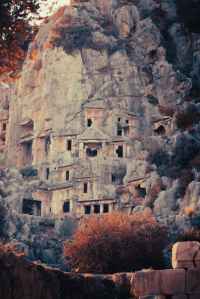
Indeed, it is clear to all who dwell there that through them the world is kept in being

I jotted down this note I forget how long ago. Over the last few years I’ve read a lot about the early Christian hermits who lived in the deserts of Egypt, Syria, and other areas of that area we label the Middle East.

While I think it was one of these early hermits who uttered these words, it may instead have been a monk or hermit from the 9th or 10th Century, living in the forests of Russia or Eastern Europe. (I wish was a lot less careless with sources for things I note down).

In any case, it was spoken by a hermit or monk who, along with perhaps thousands of other men and women, fled the strict dogmatism of both government and religious institutions , as well as the corruption, materialism, noise, and all the other distractions of the cities and towns.They went to the deserts, the forests, and other remote places, in search of solitude, silence, and peace.

They longed to commune with the divine. They chose to bypass the mire of worldliness, and hoped to find a better way to serve the divine and the world. The writer or speaker of our quote is pointing our attention to all those who went to the deserts, the forests, and other sanctuaries, who in her or his words, believe they are actually keeping the world going, and its people too.

These nuns, monks, priests and hermits, knew that by communing with the divine without distractions, and living a simple life completely and absolutely centred on the divine, was the way to save the world.

‘So’, you might be saying with a slightly cynical tone in your voice: ‘These are people who have ‘escaped’ from the world and are ignoring governments and the law, rejecting social status of any kind, not associating with other people like other good citizens. They’ve gone to sit in a hut or cave or whatever and are doing nothing productive at all. They’re not buying stuff so they aren’t contributing the the economy. And you say they are the ones keeping the world spinning round? Hardly.’

There are hermits everywhere.

Yes, I think they are. Keeping the world spinning I mean. Just as mystics from all the world’s religious traditions, these women and men of the deserts – and the forests too – knew that the world they’d left behind wasn’t real. Well, yes, it’s real enough of course: I mean we only have to look around us, and feel the workings of our bodies. It’s real alright.

But, realer (I know, it’s not a real word) than this physical world we are in and are an integral part of, is what lies within us as well as everything else in the Universe:

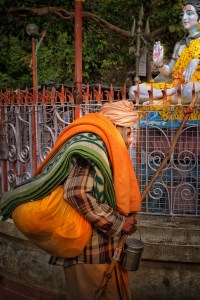
Holy Wanderer
Detached from all Worldly Entanglements

The divine, God, the life force, Consciousness. So many names for the same thing. Many of us sense that at the core of ourselves there is ‘something else’; that there is some kind of intelligence for wont of a better word. This intelligence is what illumines life, as in life, the universe, and everything.

But, we don’t see this, or not so often anyway. The mire of worldliness (a phrase I mentioned earlier and which I like very much) seems to be specifically designed to keep us in the dark so to speak, about our true nature.

Think about the seemingly endless focus on materialism with its temptations and promises to make us happy; the conflict and competition among individuals and nations to acquire more power, possessions, land and anything else that ‘they’ve got and that we want’.

Mire is a good word: We’re trapped and sinking fast in a kind of quicksand.

And this mire keeps us from becoming aware, from realizing, that we are the Consciousness (the word I prefer but, as I said, names are just names) mentioned above. It keeps us ignorant of our true nature, and we go on and on struggling to keep afloat in the world.

The hermits of the past and the present, the nuns, monks and other contemplative people of all kinds, and, in many and various places, are all engaged in a quest to know – and yes, to realise – that they and everything else in the material and non-material universe is Consciousness.

I believe that, far from being unproductive, from ‘doing nothing’, It is the engagement by such people everywhere with this quest that does indeed keep the world in being.

Courtesy Wikimedia Commons Thank you

I would like to leave you with a couple of quotes if I may.
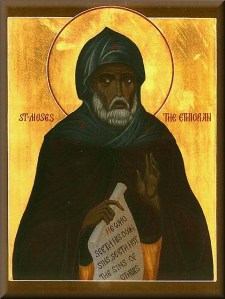
The first is from Abba Moses, one of the greatest of the early desert fathers who was born in Ethiopia and lived in Egypt in the 4th Century:

Our objective is puritas cordis,’ Abba Moses told Cassian and Germanus [fellow monks].A heart kept free of all disturbance. The more we cultivate such inner stability, the more we can offer our lives in service to the world.’

Courtesy Wikimedia Commons Thank you

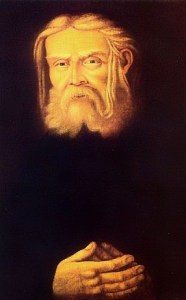
The second quote I would like to share is from Saint Seraphim of Sarov, a 19th Century Russian monk who lived as a hermit deep in the woods:

‘Acquire a peaceful spirit, and thousands around you will be saved.’

Probably the best gig in the world I would say.

Peace and love

Out for a walk & Singing Sacred Songs

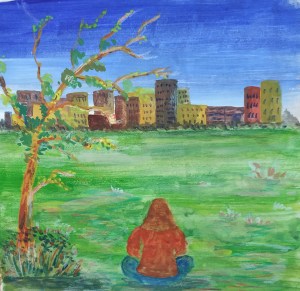
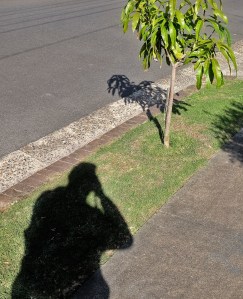
I call this one: Self-portrait With Tree 😁

I was out and about photographing for a few hours this morning. On such walkabouts I like to walk at a slow but steady pace, and in a contemplative frame of mind.

Usually I’ll also chant mantras as a way of focusing my mind, of keeping random thoughts from distracting my attention. And so it was today.

Deep into today’s walk, I was feeling ‘in the zone’, as I like to call it. Making photos and chanting mantra. All of a sudden I heard myself singing a bhajan (sacred song or hymn) in place of the mantra I’d been reciting.

This particular bhajan was By Your Grace, by Krishna Das, It’s a beautiful devotional song that you can listen to here. I’ve been listening to it and singing it for years, and I love it. I find it puts me in a nice prayerful state of mind,  Anyway, here are the lyrics:

Closer than breath, you are the air
Sweeter than life itself, you are here
I am a wanderer, you are my peace
I am a prisoner, you are release

Jai Gurudev…

I am a pilgrim, your road so long
I am the singer, you are the song
Held in the open sky, so far above
I am the lover, you are the love

Jai Gurudev…

I follow your footsteps through the flame
All that I ever need is in your name
Carry your heart in mine, vast as space
All that I am today is by your grace.
By your Grace…
I live by your grace.

One more way to chant sacred songs

Now, the song was written by Krishna Das as a way of thanking and praising his Guru. But, the words and the power of the song can be dedicated to any of our own individual concepts of the Truth. Whether we call it the Absolute Reality, the Supreme Being, the Life Force, the inner Divinity, Nature, Consciousness, God, Guru, the Universe. After all, these are all simply names and forms.

I guess what I’m saying here is that the song is a fine prayerful and meditative way to express our gratitude to, our love for, and devotion to whatever it is in our heart of hearts we know as our support, our teacher, our creator, our Guru. Our very own Truth

Peace blessings from me to you

For You Alone: A Prayer

I’m not completely sure where I found this prayer. But I have a feeling it is by Thomas Merton, one of my most favourite and significant teachers and guides.

Thank you with Love

When Trees Speak

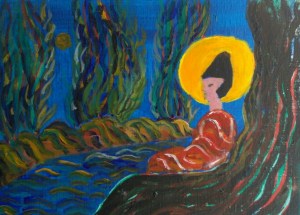
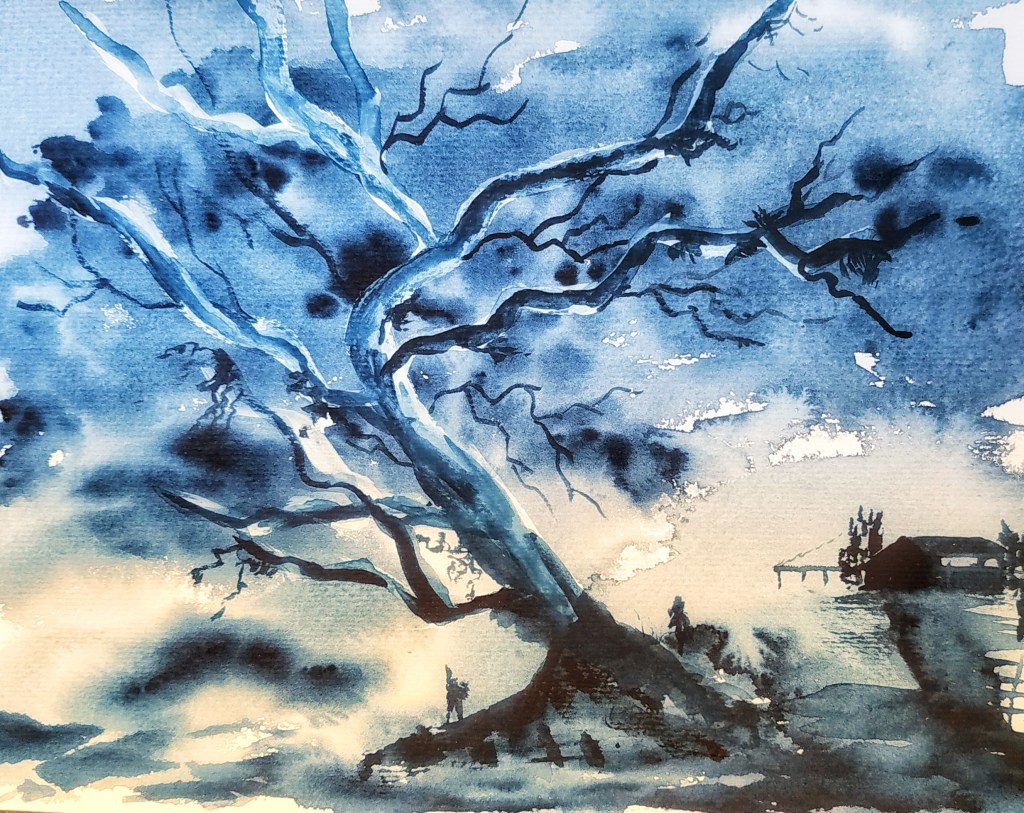
Watercolour by Pauline (with digital enhancement by the Hermit)

Vibing on the mystic trees,
their upside is downside, their downside is upside
selves telling me:
You’ve got to cut through the attachments.
Then, not a new, but old made new again, insight
confirms, clarifies, brings details to,
shines a light on the specifics:
Stop desiring what you already have.

By the River’s Light

By the River’s Light
I’ll Live My Life
out of sight of Babylon

A Note From Me: I can’t tell you who wrote these words. Maybe I did; maybe it’s a song lyric; or maybe it’s a quote from someone famous. Whatever the case, a half hour internet search failed to come up with anything even close. So, The best I can do is thank whoever did bring these beautiful words into the world. I hope you are pleased with how I’ve made use of them.

Suffer the Little Children

Suffer the Little Children

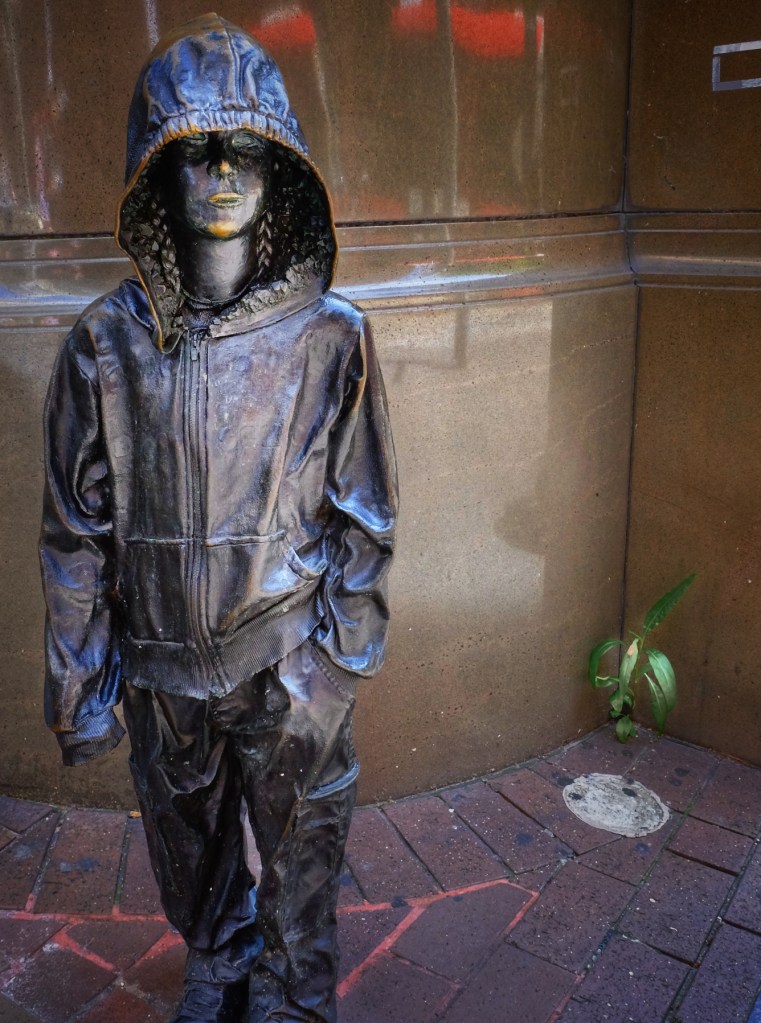
A sculpture of a young child, on a busy street corner in the heart of downtown Sydney. I like many thousands of others, have passed it by many times only giving passing thought to the origins, meaning, or significance of the statue itself.

Until a couple of days ago that is.

As a subject for contemplation and for a photograph, it is a powerful image: striking in its presence. Once one actually stops to look and reflect that is.

After several minutes of standing with the statue and asking myself who is it? What does it mean? (there is no plaque or sign to steer the way), I made this photo and I moved on.

Only later, at home, did I notice the little plant growing through the pavement in the corner. And zooming in on the plant I saw the little moth sitting on a leaf.

I decided to research online, see if I could learn more about this site. The sculpture is called Youngster and was created by artist Caroline Rothwell. It seeks to highlight the plight of refugees, in particular children.

There isn’t much online, but you can read a media article which gives some more insight into the sculpture here.

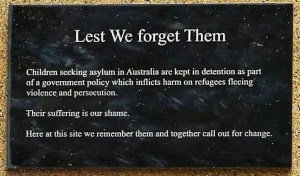
That article focuses mainly on the sudden appearance of a plaque at the site. Presumebly placed by a citizen with strong feelings on the subject, the plaque wasn’t ‘official’, so was later removed.

Actually, the text on this plaque pretty much sums up my own strongly held and often expressed feelings. Though, these days as a contemplative monk and hermit, I try hard to not have opinions, or make judgements on the way in which things in the material world play out.

But, obviously I am still human, and this is only one of so many issues that cause me distress, sadness, even rage. Actually, rage is a big one. But then, how could anyone of goodwill not be outraged? It is the very reason I am struggling hard to get this post down, to somehow make it all clear.

You see, at the same time as being so affected on the human heart level, I am very aware at the same time that it is the conditioning of material nature that leads to the very obvious fact that life is suffering.

Eating, sleeping, mating, and defending. Every single activity of every living being is motivated by one or more of these activities or a desire for their fullfillment. They are the basic drives that rule all life.

So what to do? As I’ve said (probably many times) I am not a warrior – I used to be but not now. However I am just like every other life form motivated by conditioning, either from my experiences in this life, or by that conditioning inherent in all material nature.

To a great extent I have retreated from the world. Not in order to escape or so I can ignore the suffering. I haven’t abandoned the world.

In fact the exact opposite is true: I have withdrawn, become a hermit monk, precisely so that I might be able to dedicate every ounce of my energy, my heart, my love, to prayer; to creating and maintaining a quiet and contemplative silence.

My prayer is not of the asking or begging kind, beseeching some invisible ‘god’ to give me something. Instead, I attempt to be still (never ever easy); to free and open my mind so that I may be more receptive to the Divine, to the will of the Universe; and to  become more mindful in every activity and moment.

In this way I am aspiring to realize fully my oneness with all life.  All life. I want to become fully awake to the fact that everything is Self. That there is nothing else.

And of course Self includes this child and all she symbolizes; it includes that little green plant growing through the pavement in the corner; and it includes the little moth perched on one of its leaves.

As well, my prayer, my aspiration for full self realization and union includes all those who are warriors, those whose activism and engagement with the material or physical world is every day alleviating and attempting to alleviate suffering and its causes in whatever form it takes on this planet we all share.

I am extremely flawed: I’d like to tell you I am always full of love and light, but there is much of darkness in me still to be rid of. So, all I’ve shared with you till now are still only aspirations and I have far to go. Nobody can say if I will ever reach that full realisation. In the meantime I intend to keep doing what I can to participate in the work of change.

Peace and love

Homage to Holiness: A Story to Share with You

This morning as I do most mornings (trying to make it every morning) I sat for my practice starting with some prayers and reading a a few random verses from Bhagavad Gita.

Then I settled to spend some time in devotional chanting of mantra. For a change this morning, while chanting I listened to a lovely album of devotees chanting the Hare Krishna mantra:

Hare Krishna Hare Krishna
Krishna Krishna Hare Hare.
Hare Rama Hare Rama,
Rama Rama Hare Hare.

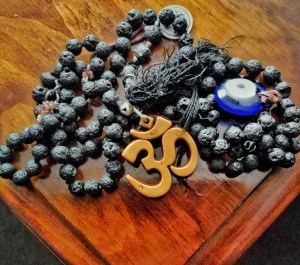
I reached for my mala (prayer beads or rosary) and as I mentally repeated these holy names in accompaniment to the recording, I held a bead between my fingers for each repetition, focusing on the chant.

Now, chanting is much like any other human activity: that is to say, the mind is always there. Usually it manages to bring up all kinds of irrelevant fears, memories, questions, you name it. Today, however, one of those supposedly random memories actually caught my attention in a good way and took me along.

As I continued handling my prayer beads I thought about a story I read in India nearly 15 years ago now. The story concerned prayer beads as it happens. Buddhist nuns, imprisoned in Tibet, were forced  to resort to making their own rosaries in secret after their meagre belongings had been seized.

Almost ten years later, after another extended stay in India, I finally was able to write about this story. In this instance it came into being as a poem I called Homage to Holiness. May I share it with you here?

Homage to Holiness

Threads harvested from threadbare clothing.
Pea-sized bits of bread, sliced from meagre rations,
secretly hoarded for sacred purpose.

Mala makers work at night
in the dark of the stinking and freezing stone cell.
Chewed bits of bread become dough again,

and, by feel, frozen fingers knead the dough
until tiny beads are created.
An even tinier twig, again by feel, pierces each bead through.

Then in solemn prayerful silence and focus,
the nun passes her harvested thread through the first bead.
She ties a knot, no easy task with freezing fingers in the frozen dark.

And so it goes; all sacred duties take their own time.
One by one; one bead of bread threaded; one knot knotted.
The nun nears collapse. But now, at last, her task is done.

As the last knot is knotted, the last bead in its place,
the nun sighs and mutters, whispers, a prayer of thanks.
One hundred and eight beads – plus one – made, and strung
Her Mala
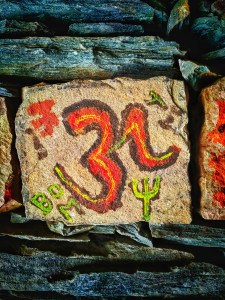
Om Mani Padme Hum

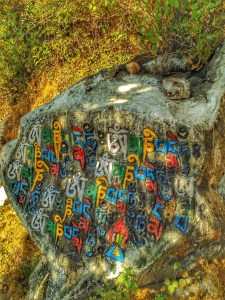
Probably the most sacred and significant of all Buddhist Mantra, Om Mani Padme Hum, means something like ‘the jewel is in the lotus’. But many would say it goes a lot further than the mere literal translation of the words; It is said to be the actual path to Enlightenment. There is a huge amount of information on the Internet about this mantra, so if you’re interested a good place to start is at this link.

Whatever the actual literal meaning, interpretation, or who chants it,  I think we can all agree that the intent of this mantra is to have us focus on the divine, or on the Ultimate or Absolute reality. The same as any mantra one might choose actually. Remember last post? God is.

in any case, I think somewhere above I’ve used the word random. Well I should know better by now: no such thing as random. One of the Bhagavad Gita verses I read – in fact the final one I left marked with my bookmark – seems to me fit very nicely with that ‘random’ memory of a story read years ago, and my humble retelling of the story in a poem many years later

One who knows the Absolute and whose intelligence is fixed on the Absolute is not moved by pleasure or pain, pleasant or unpleasant happenings.

Bhagavad Gita 5:20

Did that nun imprisoned as she was in the dark and the cold feel that pain? Did she feel fear? Of course she did. The thing is, she was, as constantly as her circumstances allowed, fixed on the Absolute: the activity of making the mala, the intended use of the mala, and her prayerful attention and devotion as she worked, all enabling a complete fixing of mind, heart, and attention onto the Absolute.

The cold was still there; the hunger and fear too. But this nun was able to remain centred, you might even say calm and content, despite the dire situation.

Actually content was a word I read in relation to this nun and her sisters (she wasn’t alone in that prison cell): From what I read they were released after some time, and eventually escaped to India where they rejoined friends, family, and of course their leader the Dalai Lama

At the time the story was being recorded for posterity, the Mala Maker reported that she was happy and content and leading a full and fulfilling life. I imagine her as still being fixed on the Absolute.

Thank you for allowing me to share these moments with you
Love and peace

Tell Me: What is God? Dominus Est

Welcome dear reader

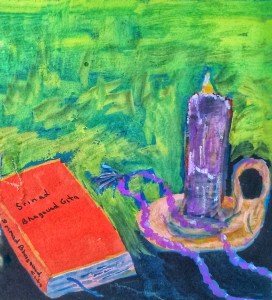
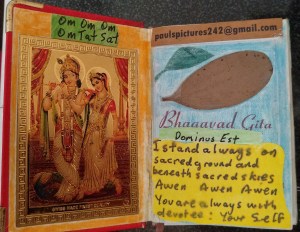
Have I shared with you my Bhagavad Gita? Well, I know I’ve mentioned a few times that it’s one of, if not the primary resource for study and guidance for me.

As you’ve probably guessed, this is a quick photo of the inside of the front cover. And, again as you’ve noticed, I like to stick things in my books, especially this little one. (Actually now I mention it, this is the only book in the traditional format as in made of paper, I own). It’s an old practice and for me adds multiple dimensions and depths to what is already a treasure.

Sometime I’d like to go through and describe to you all that I have added, but for today, do you see the little green section with the words Dominus Est printed?

In the religious tradition I was raised in, these two words have a specific meaning and use. However, it’s only recently that I’ve come to think of this little Latin phrase (well technically it’s a sentence, but …) in the sense of the literal meaning of the words themselves: God is.

That’s it. Or the Lord is, or the Master is. If we change the Dominus, we can use this tiny sentence to define our conception of the divine, the holy, in any way that seems right: Truth is, Beauty is, Art is. For me, God is, sits right. As do the others in this list. Same same.

So, God Is. What else could possibly be said that would add to this already very emphatic and simple statement? Nothing at all. It’s stand-alone, complete in itself.

Like asking who or what is God, we can answer: ‘I am this’ or ‘I am not that’. Or we can realise what for me is becoming the only answer:
I am.

Why? Well, if we were to add anything at all to these two words, such as God is Truth, or God is Love, or God Resides in …, or God is called … , then we are in fact stating only a little of the truth. Sure, God is truth and love, and goes by many names and is found in many forms, but once we say what something is, we are actually making more of a statement about what it is not.

In the beginning there was the word, and the word was with God, and the word was God.

Mind you, it’s perfectly natural, and for many of us helpful, even necessary, to ascribe to God a name and or form. We are ourselves material beings, living in a material universe; it’s logical that we would choose (or need) to see God in a word, a physical object, or attribute some other kind of materiality to our notions of the divine.

I must say that I am one of those who find it difficult to envisage an invisible, non-physical, and impersonal ‘God’. Of course, our little statement, God is, does indeed say just this doesn’t it? Isness is pretty non-corporeal, certainly not in the least physical. And isn’t even a ‘spirit’ or ‘entity’ of any kind; Isness just is. The moment we label something (including ourselves) we miss that isness, that essence.

You see my picture of Krishna and Radha? This form, or forms, is one of the several that I feel right in having as a kind of focus, or centre of my devotion to and love for the divine; for love, for truth, and for it all.

You might be saying, this guy does believe in a personal God. He just told us. The truth is I don’t believe or not believe that Krishna (or any of the myriad names and forms we’ve invented) is God. God simply is. And my heart tells me that this is enough.

There are a pair of theological ideas known as Cataphatic Theology, and Apophatic Theology. Cataphatic describes or approaches the divine by stating what God is, while Apothatic (you guessed it) describes God by speaking only of what God is not.

My guess is that pretty much everybody, from whatever tradition, would approach the divine (and not only the divine) in one or other of these ways. But for me it was such a relief to realise that there was no need to go there at all. I could stop with the definitions and the descriptions, the what is and what is not. I have the freedom to not have to believe or not beleive. None of it matters. Dominus Est. God is.

Am I there yet? Have I let go of dualities? Hardly. Maybe the odd glimpse, but it’s rare. And it always will be for as long as I live in a physical body. But to paraphrase something Swami Ramdas said:

I’ve set my feet upon the path, so I am already at the goal.

Peace and love from me to you

God is My All: A Reaching Out, a Rap on time, & a (sort of) unrelated poem

Namaste and Welcome to you.

I can’t remember when I wrote my last post. And of course it isn’t relevant at all is it? I mean to say that in the contemplative life, time sometimes seems to take on some other kind of character.

Or at least I should say that one’s perception of the passage of time shifts; nothing unusal there I hear you say, and of course you’re right. Just thinking out loud I suppose.

For me, having a right perception of time is an important aspect of my Sadhana, my practice: yes, it’s true: time is seen to fly, or it is frustratingly felt to drag. But my aspiration is to see time as simply a human construction that we use to limit, structure, bind, define, and place all kinds of restrictions on our lives.

Which for me, simply means that there is only presence or Presence; only the ongoing continous moment (what we often call The Now). Easier said than done mind!

Swami Ramdas (known as Papa to his followers)

In any case, here I am, just where God would have me be. Feeling strongly to reach out to you, I remember the poem (it’s not really about time in the sense we’re discussing it so far) that emerged the other day after reading a quote from Swami Ramdas that seemed to be an answer to some thoughts I’d been having.

I’m grateul for this, all of this. And for you too, the reader of these musings offered with humility and thanks.

Peace and love from me to you.

GOD IS MY ALL

Thinking thoughts
as if battered by demons.
Memories arising of my own evil deeds, selfish and cruel.
Right away I turn to God:
God is my all;
Hare Krishna

Forego repentance,
relinquish regrets;
you are filled with God,
the supreme essence of life.
God is my all;
Hare Krishna.

Through Papa Ramdas
I hear the Universe speak:
Forgiveness is from God;
and it has been granted.
God is my all;
Hare Krishna.

Broken Hill, Australia
9 July 2022