It always surprises me how quickly, how easily – how smoothly – a perfectly okay conversation or train of thought will, just like that, morph into a full-on gossipy rant.
You know the thing: pointing the finger at what someone else is doing wrong; or precisely and with great clarity of analysis detailing how another person (or sometimes myself) has erred, how they’ve slipped up, made mistakes they could have or in ‘my opinion’ should have avoided.
How easy it seems to happen that I will suddenly find myself very eagerly ranting about the sawdust in the eye of another, while breezily ignoring the huge plank in my own eye. The errors in someone else’s way are so often clear to me, while my own not so terrific ways are completely ignored.
And the weird thing is, how it sneaks up on you. I mean on me. As I said at the start, one minute I’m having a pleasant and reasonable conversation, the next minute I’m ranting about him, or her, or them, or who or whatever.
Such an error in my own ways, occured this morning as I fell into what felt like a perfectly rational pointing the finger session, full of criticisms and judgements about someone I actually quite admire.
That is until one of the hermits with just one comment, brought the whole thing to a sudden and definite stop:
‘We should be sitting here sending out good vibes. That’s our job.’
A perfectly timed cause for a pause for thought. And absolutely correct – as hermits, as monks committed to the welfare of all beings, it’s more than our job; our lives are dedicated supposedly to love, prayer, service, contemplation on the Divine in all things and how we can best serve that Divine.
Human nature is a tricky topic to think about though. So much of what we do in the world is driven by our desires for more things, for status, for happiness, or pleasure. Eating, sleeping, mating, and defending, I have heard it called by way of summary.
Hermits behind walls are still flawed human beings
I’ve supposedly withdrawn from all that, left it behind ‘in the world’. I live a secluded, quiet, and contemplative life precisely in order to counter those very attributes of human nature.
I suppose all this says is, I am still a human being with all the flaws, all the desires – and aversions – that come with being that kind of, well, being.
Yes, all true. Maybe. But, isn’t it possible that I might use just a bit more discipline? Could I be perhaps a little more clear in my focus?
Perhaps I could ‘sit here’ and send out good vibes. At the very least I could pay a bit more attention to those times when I’m about to slide – or have already slid – into my ‘putting out bad vibes’ mode.
We can’t really ever know what’s going on in the lives of other people, or in their minds and hearts. In any case, it is rarely, if ever, our business to even want to know or make guesses or assumptions about others’ lives.
As a hermit monk, as a pilgrim on the spiritual path I aspire to walk, my only business is the making of ripples (I know it’s a cliché but it works for me, just as so many do), the distribution of waves, or vibrations of replenishment, of love, and kindness, of good things, out beyond myself.
Good vibes to all living beings who I am pledged to serve, to the Divine that is in, and in fact is, all beings, including me, you and all there is.
The walk from the Hermitage to the coffee shop at the Village Green takes around five minutes or so. This morning, noticing a pause in the rain, we thought we might take the opportunity to get some fresh air and a walk, at the end of which there would be coffee. So, we stepped bravely forward, with the faith that the gods of the rain were indeed taking a break.
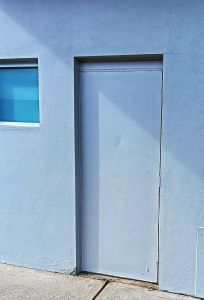
‘Look over there, ‘ said my partner hermit as we passed through the centre of the village. ‘There’s a door that can only be opened from the inside.’
‘I’ve never noticed that before,’ I replied, looking across the street to a wall into which was set a door with no visible handles or lock. The only things that suggested that it was in fact a door were the hinges on one side, as well as its size and shape.
Now don’t ask me how many times I’d passed that spot. Most likely dozens of times, on both sides of the road. Still, now that I had been shown it, I was intrigued. Mentally I was captured: I thought, what a wonderful thing: the one or ones on the other side of the door have complete control over who or what is allowed to enter.
With such a door, one that only opens from your side, you could easily choose to rarely – or even never – open it. Ah, peace at last went my thoughts.
But, right away, those thoughts were dismissed, sent packing: too simplistic, too extreme, to heavy a response. Though, you know, I do feel strongly that such a response to the world – shutting it all out completely – is perfectly understandable, completely reasonable, and oftentimes even an absolute necessity .
Still, I had that feeling towards my reactive thoughts of ‘too extreme’ (inner editor’s note: he has no idea what he’s saying does he? If you ask me, right this minute he will be thinking his initial reaction was spot on and he’d love to have a door like that. Anyway, we’ll let him have it his way).
Some further, more careful thought is required here I think. For a start, here’s a question: If I were to keep the door shut all the time, how would I ever be able to allow my own light, my own love, my own Self, out into the world?
Maybe there’s a way to keep the door open sometimes, then at other times choose to keep it closed to bar access to unwanted intruders in the form of people, thoughts, events, emotions and so on.
After all, it is my door (in this little fantasy at least), the door to the inside, where resides the ‘real’ me, the Self within, beyond and above, the physical form that I so tenaciously cling to as as being the real me. Talk about attachment!
Perhaps slightly exagerated, but this is close to how I see my actual door working as distinct from the story I’m telling in this post.
Where was I? Oh yes. With that door that opens only from the inside, I might come – eventually – to realise that there is nothing to disturb me – unless I open the door and let whoever or whatever that is unwanted, through the door.
I am my own gatekeeper, and without my consent my gate (door) cannot be opened and entered.
And, getting back to the choices I am able to make to sometimes open the door to allow some light and love to flow out from me, out the door and into the world. The more I’m able to discern when, and for how long, to open the door as a way to control what comes in, to what can reach me, the more resources of said love and light I shall be able to build up.
Which, in turn, will lead to more and more opportunities I’ll have to open the door in order to share some of that good.
I can envisage a state reached where my door could quite possibly be left to stand ajar all the time.
You see, the more love and light pouring out, the less that disturbs me can get in. Love and light is transforming, isn’t it?
Yes. Now I’ve noticed – recognised – the door that can only be opened from the inside: It’s me! Now, where did I leave my door keys?
Well, here we are with the third and final part of our contemplations on Flee, Be silent, Pray Always, the answer discovered by our friend Arsenius who was looking for a way to be saved from the the things of the world.
In a very real sense, this third injunction might be seen as the most important of the three. Indeed, again in a very real sense, those first two seem to me to be prerequisites for the third. Certainly, many of us would like to flee to a place and state of silence in order to escape the world and its many and varied causes of our suffering. Such people are simply and completely over the noise, the chaos, war, greed, the complexity of relationships, and all the rest.
Then there are many many others who, rather than looking to escape the world, are wanting to ‘flee’ towards a place and state of silence in order to engage more fully with the world by contemplation, meditation, and most of all, prayer. Such people are working towards making their entire lives a prayer.
And then there are the third group which is made up of those who have some sense of running away from the world while at the same time they feel compelled to move towards a contemplative life that they sense will be the best way they can actually serve the world.
I think I can include myself in this last group. I’ve never coped well with masses of people, being in the workforce, or dealing with the horrors that the world seemed to be overwhelmed with.
At the same time, I’ve always wanted to (and have tried to) combat injustice, racism, violence and the rest. I guess you could sum it up by putting it this way: I was (still am) an oversensitive person who one day had had enough of trying to ‘fight the system’ when it was the system making and changing the rules of the game as it went along.
Better I thought, to turn inwards in order to reach or realise my oneness with all living things. I’ve always been predisposed to praying as well, so it was a natural evolution in many ways. My intention and commitment these last few years has been (and still is of course) to pray continuously and with all my being.
My prayer is for the release from suffering for all living beings and that’s my central focus for prayer. For me, it feels very much that I am a lot more use to others living what I think of as a prayerful contemplative life than being actively engaged with the world out there in the midst of it all so to speak.
Pray Always
Prayer for me is not so much about petitioning some all-powerful being who is seemingly on a whim able to grant or refuse my wishes. For me it is more an affirmation of the reality of my already existent oneness with the entirety of the universe. It’s a way of seeking to actually realise that this oneness is my very Self.
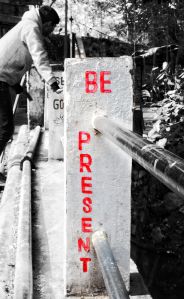
Prayer is about being present, not wishing blindly that things be different than they are. In praying I seek to affirm that the ‘universe is unfolding as it should’, as it says in a famous poem I’ve always loved. (Actually if you don’t know about Desiderata [Things Desired] then please do check it out; you’ll love it).
I think that in this sense, prayer is in fact an act of mindfulness, or rather an act which will help develop a mindfulness practice. It is a way to practise being fully focused and present to whatever is going on, whatever circumstances we find ourselves in.
And if we’re able to be present – even on a temporary or momentary basis – then we will be more calm, more at peace, and more able to achieve some clarity in our lives and with whatever is the intention with our prayer.
I know it might sound like a clumsy attempt at a clever play on words, but we’ve described mindfulness as the practice of being fully present. But we can put it another way. We can define that state of being fully present as being in presence. Like what we might say to a friend who is daydreaming while we are trying to talk to them. We might say something like ‘so and so, your presence would be appreciated’.
In presence of what? I would say everything. When we are absolutely in the present moment (again even momentarily), when we are able to realise our oneness with all things. Essentially the universe is there – or is it here? – with you in that present moment. It’s a moment when we may indeed feel we are in the presence of all that is.
Some may call that presence God, or the Divine, or Universal Consciousness. Others may see it as being in the presence of their own true and authentic Self.
That leads quite nicely to the next aspect of prayer that I want us to look at. Praying to God. I’ve spent so long on mindfulness because I wanted to stress that I don’t think it’s necessary to have a personal name or form for God, or even a notion of an unmanifested, invisible ‘force’ called God, in order to pray.
On the other hand for me, and I know for a lot of people, there are names and forms of the universal consciousness that pervades and permeates the universe, that I personally resonate with and I can reach out to them whenever the feeling or inclination arises. It sounds a bit odd to say, but for me to think that all that is, is all that is, sort of sums it up.
And as a result of that, any prayer I pray is addressed to my own Self which is simply part and parcel of all there is. In other words, it’s a personal choice for any one of us what form or name we choose to pray to. Or if we don’t pray to a name and form at all. All is one.
One thing I’ve mentioned I think a couple of times is the idea of making all our activities into a prayer, but other than the discussion on mindfulness and presence, I’ve not really addressed the how and why.
Why is pretty obvious. Because living and acting mindfully helps us in so many way such as being more peaceful, more relaxed, happier, and so on. The how, now I’m thinking about it is the purpose of this post. And it’s also true to say we’ve been talking about it since this series began.
That is to say, we flee from the aspects of our lives that don’t serve us and which can be changed. This might be a decision to spend 30 minutes every day sitting quietly and undisturbed. And as we’ve mentioned a few times already it could be going all out and moving to a desert cave somewhere.
In both those scenarios we give ourselves the opportunity to be silent and, hopefully also surrounded by silence. How to pray always? There’s an expression I love and try to live by: Follow your Dharma. Here Dharma means your own truth, being authentic to who you are, having the intention to do what’s right in all situations. And of course actually following through with that intention if at all possible. In this way you transform every action into prayer.
Living a life of prayer does seem on the face of it to not involve much use of spoken prayers, as in saying prayers with words. Well, I don’t intend to be humourous here, but a great deal of prayer does it fact involve talking to one’s Self. To the real self, that part of us that’s part of everything else. It can do us good to have these deep conversations.
Then of course there are the many many prayers that already exist to serve people from so many traditions, cultures, to suit all kinds of purposes and intentions.
Many of us will be familiar with a number of prayers learnt when we were children. If you’re anything like me, they still pop up by themselves from time to time.
Actually as I deepen my prayer practice, I’m discovering that I’m remembering all sorts of prayers from many and varied sources. I think as I dig deeper, more and more are coming up to the surface.
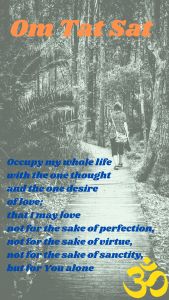
This prayer (by Thomas Merton I think) resonates deeply with me
If these ‘pre-prepared’ prayers say what you want to say and in a way that resonates with you, then you are free to choose those that feel right for you. I guess I mix and match the prayers I use; it’s always dependent on my feelings, thoughts, and intentions at the time.
Like Arsenius, I try to be open and responsive to whatever the ‘answers’ are, even though my ego does sometimes when it doesn’t like the answer, try and control outcomes.
One point about such prayers: I find it tempting oftentimes to simply recite them at what I’ve heard described as lip level. By rote and without emotion, in other words. At those times I try to slow down or pause to reflect on what I’m doing and why to get back in touch with Self.
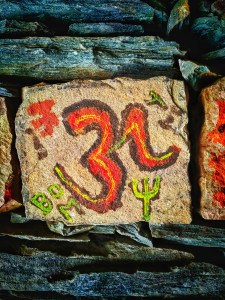
A major part of my prayer life is chanting mantra. I try to spend more time chanting as time passes. There are a number that I use depending on inclination and need.
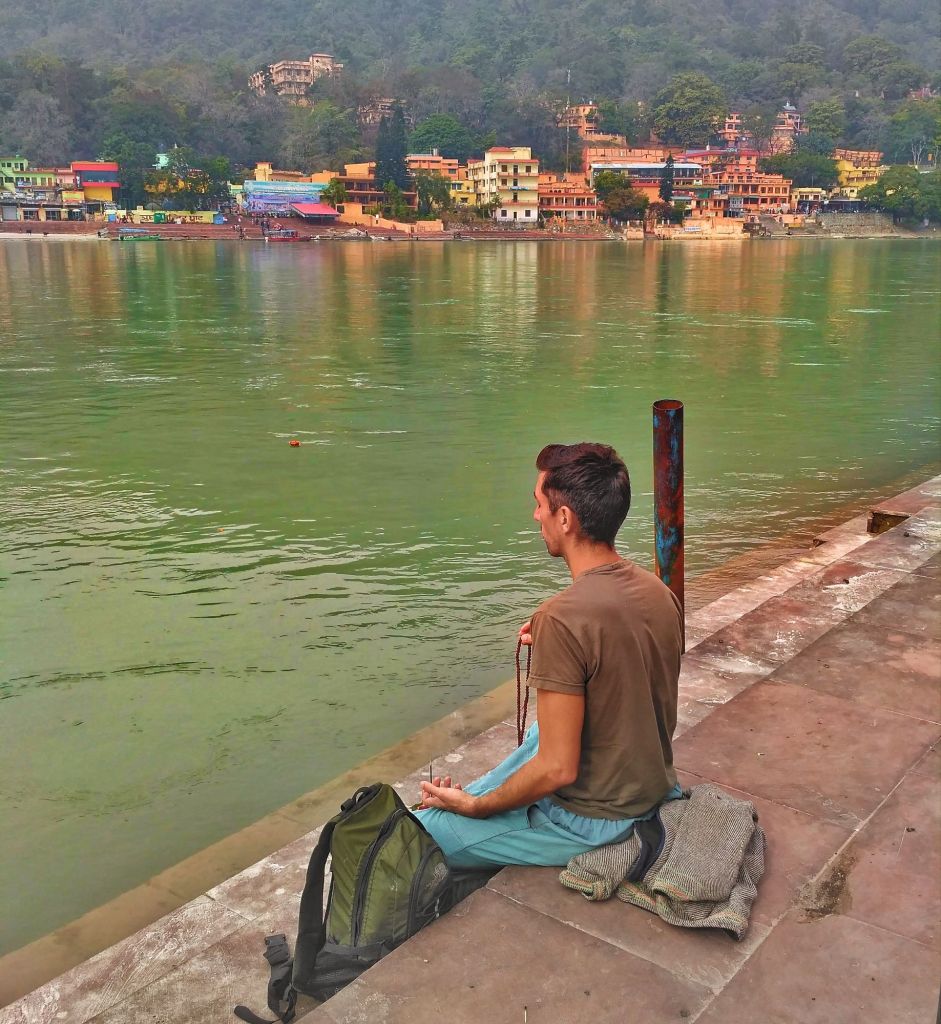
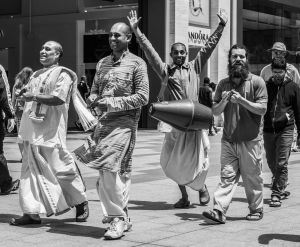
I chant anywhere and sometimes a mantra will start chanting itself, surprising me by its arrival
(This photo isn’t me by the way)
Now, probably one of the most important aspects of my own prayer life: I know I’ve mentioned my intentions in praying at all, but one aspect I haven’t mentioned is praying as devotion.
Devotion as in worship, praise, as in gratitude for the beauty in my life, as an expression of love. Knowing with the mind that all is one is fine, but these kinds of prayers help us to cement our awareness of that oneness of all living beings. As I said earlier, I, like you or anyone else, may use particular names and forms to represent this oneness, but, well, it’s all one, so we are non-different from all those names and forms.
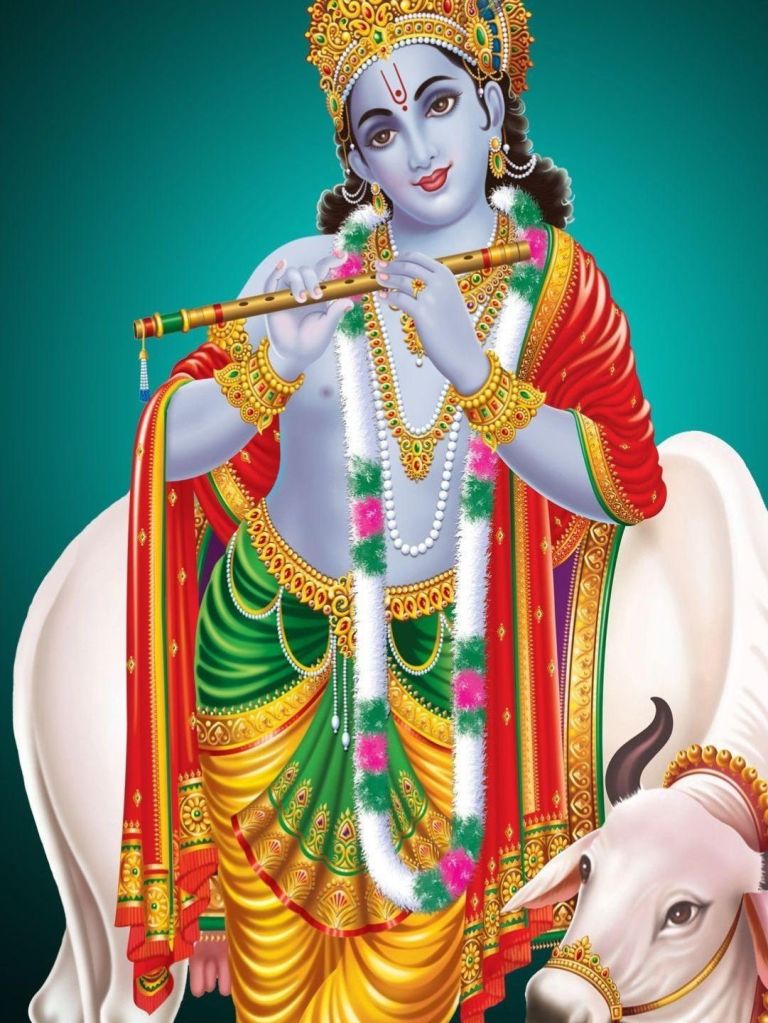
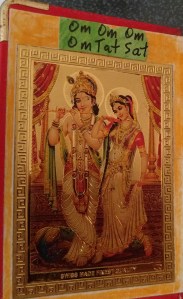
Lord Sri Krishna is among my favourite forms of Universal Consciousness (also known as Brahman)
There are many representations of the Divine, but Krishna and this picture of Him are special to me.
Focusing your devotion on a particular form seems to help make it easier or more real. It’s tricky to pray to and with a thing that has no form and is invisible.
So, my friends I hope what I’ve said here is of some little interest to you and that you have found at least something you can use for your own life.
Makes sense, don’t you think? It is a really excellent affirmation to give oneself isn’t it? A wise piece of advice also. And I agree with you: great advice, sensible, logical, very helpful for anyone and everyone. Unfortunately, it’s not something I can honestly tell you that I practise on any kind of regular basis. It’s more likely that I would have to admit to you that:
‘I am always hurrying to get things done, and until I do, there’s no rest. Doesn’t matter how I feel’.
And it doesn’t seem to matter whether I have a lot to do, or only a little – or even if there’s nothing needing my attention. Whatever the situation, you will catch me in a hurry, going as fast as I can to get whatever there is, done. ASAP.
Okay, I admit it: I am exaggerating slightly. But not by much. Always rushing, always ‘getting ahead of myself’, always in a hurry. It’s been a problem for, well, forever really.
And I know I’m not alone. The world – as in society, economics, education, and the rest – is in a never-ending race to do whatever they do, and to get it done as quickly as possible, regardless of the cost to the planet and all of us who live on Her.
And, obviously, we are all caught up in this ‘race’, in pretty much every area of our lives.
Whether it’s an exercise program we set for ourselves, or which has been forced upon on us by advertising, cultural shaming, false identification with our bodies. Or the intense and all-pervading pressure to be ‘more productive’ at work. Or the newest mobile app that will magically make even our off-work lives more productive and (supposedly) give us that extra edge in the marketplace (whatever that means).
And remember school? High school? College? The night classes you took for fun and relaxation? How many classes began with the teacher giving the following little speech:
‘Now, we can really take our time with this class/course/semester, and we will be able to take as many breaks as we like. We have plenty of time to cover all the material. So, sit back, relax, take your time and enjoy.’
Not many I’m guessing.
Now, as a hermit, you might think I lead a quiet life. And it’s true: I do. Relatively speaking that is. All of us are required to be constantly taking some kind of action in order to maintain life.
Just like everyone else I have to do whatever it takes to just be alive: Cooking, eating, cleaning, laundry, shopping, praying, meditating, relating to loved ones as well as other people I encounter.
Then there’s reading, studying, talking (way too much in my own case), thinking. Well, that’s probably enough to be getting on with, I think.
Despite my hermit life, all these and more I do. And for me, it’s always in a rush and hurry. Well, not always perhaps, but too often for my liking, and way too often for my mental health, peace of mind and for the calm, peaceful like, I aspire to.
Whatever our personal lifestyle, or way of living, we are all in the same boat, so to speak.
Fix your mind of truth and be free from the concerns of the material world.
So, what to do? How can we slow down, get some sort of equilibrium or balance in our lives? How do we stop the rush, the panic, the pressures that besiege us and sometimes overwhelm us?
Well, there’s the problem. I won’t say I have no idea. I can’t say I don’t know. But, and here’s the point, while I can tell you how I am trying to do.If you’ve read what I’ve told you already, you will realise that whatever I try only works sometimes. And a very few sometimes’s at that.
Mindfullness
I try all the time to make everything I do, even if it’s just walking down the street, or washing the dishes, a prayer. Which is really simply another way to say that I try to do everything mindfully.
Sounds really simple when I put it like this, but of course it’s not at all. It takes discipline (I want to talk about this a little more later on). It’s about focusing on how you are interacting with the world around you, and obviously this starts with being fully mindful in each moment as you take action in the world, whatever it might be.
Simplify.
Not easy, I know. Life is full of details and complications. It’s full of conflicting priorities, each with their own sense of urgency and importance. The simple advice is to do what you can. Once again, tackle all the things you have to do one step/thing at a time.
Did you notice the italics? Be alert to the old urgent vs important dichotomy: not everything is of equal importance, regardless of appearances. Equally, we have to discern a thing’s or action’s degree of urgency for ourselves. With obvious exceptions, most things aren’t as urgent or immediate as they are presented.
Minimise.
Sound familiar?
Listen carefully to the commands to buy, buy, buy, and do, do, do that we are constantly being bombarded with from all direction. Ask yourself one of the big self enquiry questions: Do I really need … ?
Related to this is the question of how much money we actually need to have a good life, support our families, and so on. No guru, teacher, book, or anything else can help with this one; we are all different and have our own unique and specific needs. Only you can know what is right for you.
Discipline.
I mentioned this aspect of the solution to bringing a calmer, slower, less pressured vibe of equilibrium to our lives. For me (self-discipline is what we’re talking about here) is not only about willpower, though of course, it’s an important part of the picture. A quote from Bhagavad Gita that I think points us in a helpful direction:
What does it mean, ‘fix your mind on truth’? While it is very often an extremely difficult thing to do, fixing your mind on truth simply means keeping your mind (and consequently your body and heart too) focused on what is actually real, important, and meaningful to you. It means staying focused on what truly resonates with you as the way you wish to live your life.
So hard is this for me to do, that I am engaged in an ongoing project (please forgive the productivity cult lingo) to keep focused on what is true and real to me. To be honest, while I’m pretty sure that it does get easier with practise, I will always be refocusing on my truth. As they say, it comes with the job description for all of us human beings.
Now, about the second half of that Bhagavad Gita quote. If we do manage to reach that stage where we are able to focus on the meaningful and important, the truth for us, will all our troubles, problems, pressures, commitments of all kinds, just magically go away? Can we eliminate completely ‘the concerns of the material world’?
Absolutely not. The only thing that will potentially cease is our constant state of being stressed.
While the things we worry about now won’t disappear, the worry itself may lessen. Our abilities to function more effectively and happily in the world (in our family, our work, our own mind) will also improve. We really may become one of those people who always (or most of the time) take things in our stride.
But we should remember that the pressures, conflicts, health issues, the need to support ourselves and family, relationships with all their ups and downs, remain; they are part of the human condition; they are the natural order of things in this material world.
What we can do, is try as much as we can to control our minds, trying to remain focused on that which is true and meaningful to us.
Minimise, simplify as far as possible in all everything. We can focus on all that is true and meaningful in the life you are creating on an ongoing basis. And, of course, it is one considered and deliberate step at a time.
For Thoreau, going to live in the woods was the natural thing to do. It resonated with his soul and heart.
Of course going to live in the woods isn’t for everyone, but if it speaks to you; if it is in tune with your own truth and you feel it would give your life meaning, then why not?
All of us have within us our own ‘going to the woods’ equivalent. It might be anything. Go find it! Rest there.
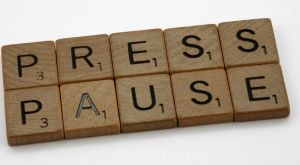
The last words of this post are the same as the first. Actually as I think about it now, I see more clearly that this entire post with all its words and thoughts, might be summed up very nicely by that one small affirmative statement. Well, I might add three more words of my own:
In all things, I pause to rest whenever I feel the need. Peace and love from me to you.
Remain in your cell, and your cell will teach you everything
This piece of advice from one of the early Christian desert hermits to a follower has been going round in my head for ages. And I mean a couple of years at least. I’d read it in several books at the time, and I’ve seen it in a few since.
Of course, most of the writers of those books interpreted this advice at face value, literally advising the student, hermit, monk, or other contemplative person to stay in their physical cell (hut, cave monastery cell, suburban bedroom, wherever is their permanent dwelling) and listen, meditate, study, and contemplate. The advice is, stay in that space in silence and seclusion. Quite possibly forever.
‘But it could be the cell of your Self,’ my partner hermit said to me one time. And yes, I thought, that’s exactly right. I liked the symbolism. The actual literal, physical space and its geographical location isn’t necessarily the important factor. What’s important is that you, the real you is actually fully present wherever you are, right here, right now.
Think about what it really means to be present – to be here now: It means that you can say, ‘This is the only space and the only moment that exists. Right here and right now.’
Living life is an ever-flowing movement or process, and at the same time (excuse the unintended pun) is always occuring in the present. And in that ongoing moment you – your Self -is always there.
Of course along for the ride is your little s self with its ego, chattering and never quiet mind reminding you of the distractions, stresses, anxieties, worries about things to do or not do, memories of the past, and fears for the future. It goes on and on.
But, still, that space within where you can meditate, pray, contemplate quietly, that’s your Self, your ‘cell’.
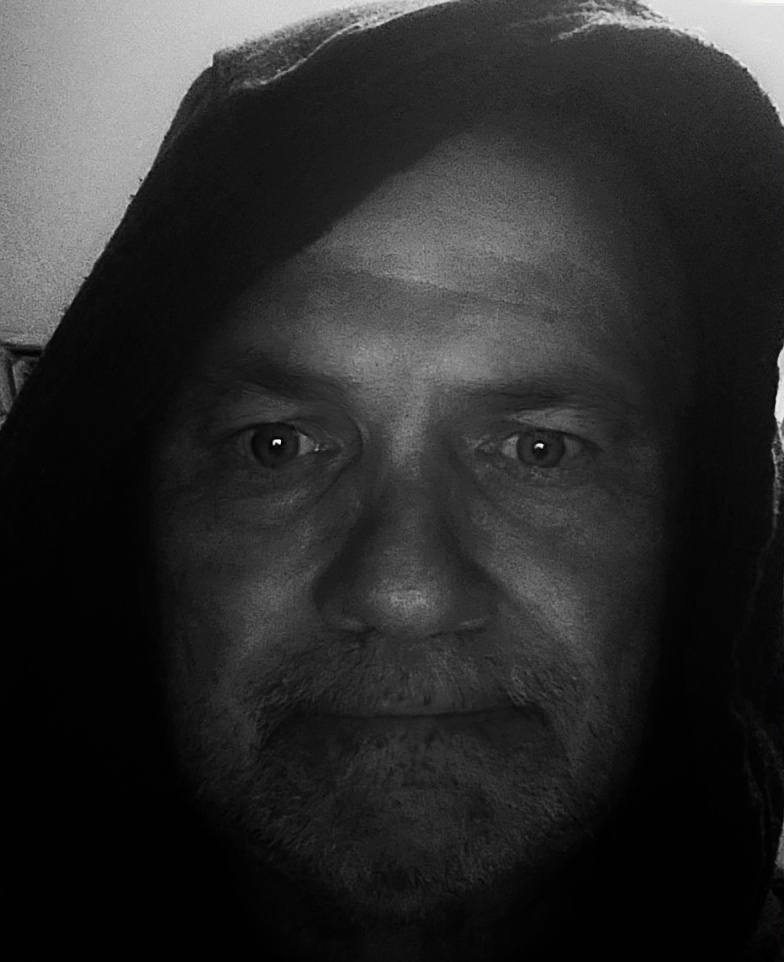
I’ve always liked and worn hoodies. I guess a lot of people do. For some it’s about fashion; others wear them for warmth in cold weather or to keep the sun off when it’s hot; some people even use them to hide.
Then there are others such as nuns, monks, priests and others too, for whom a hood is a part of the robe they wear as a member of their particular group.
In those cases, a hood is called a cowl and most often it’s a largish loose hood sewn onto the robe or habit. Just like a regular hoodie.
I read somewhere (I forget where) that some groups nickname these cowls ‘cells’. In other words, the wearer carries their cell with them wherever they go.
Of course they don’t always actually wear the hood on their heads, but whenever they wish or need to retreat to their cells, all they have to do is simply pull their hood up and over their head and all of a sudden they are in their own private and solitary world; they are in their cell.
As I said earlier, I like the symbolism. But more than that: I find wearing a hood on my head or simply in standby mode, comforting.
I’m not overly good with crowds, or in close proximity to other people on a bus or train or whatever. I like knowing that just by pulling my hood on, I’m able to create my own space apart from my surroundings. In that space I can feel safe and kind of apart.
Even at home I wear a hood when I’m meditating or praying. It’s just one more opportunity to retreat into my cell, into Self
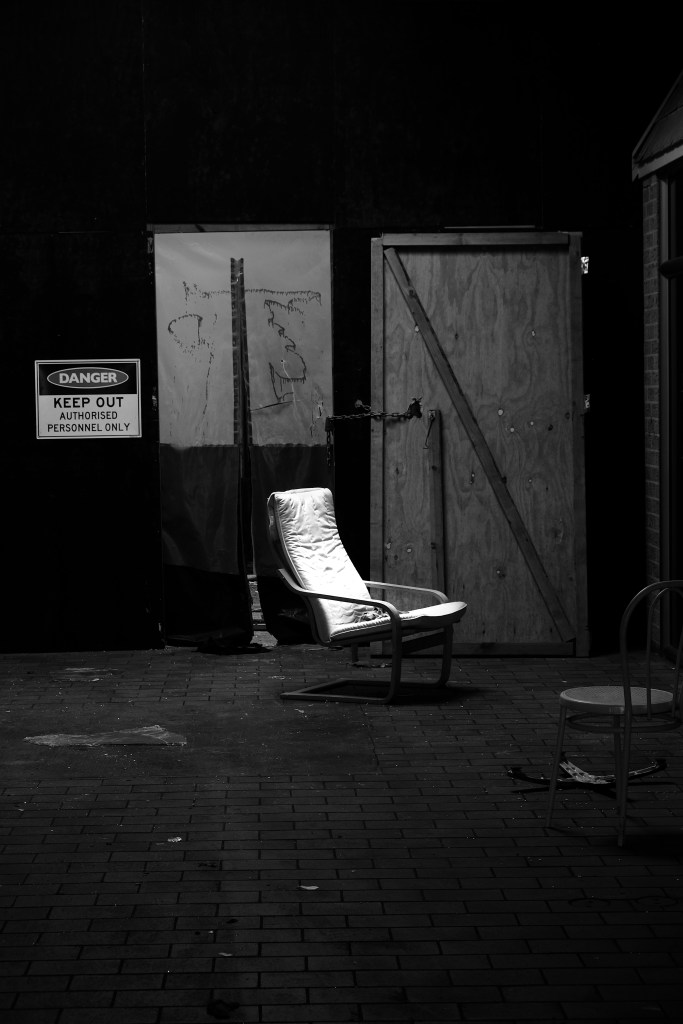
That was the first thing my partner said when I showed her this photo. Her eyes – and perhaps even her heart – had found that which is illuminated by the sun, even though it’s surrounded by wreckage and ruin.
The wreckage by the way, of an abandoned and trashed store front. One of several in a small arcade, that’s long sat empty.
Ah, I thought: one more illustration of a metaphor I’ve been hearing a lot lately in my studies about consciousness.
Allow me, please, to adopt our teacher’s metaphor which, for me, really clarifies this concept of consciousness, or Atma as it’s called in Sanskrit.
Is the brilliant light streaming into this room and onto this chair affected in any way whatsoever because the chair is sitting amidst all that wreckage?
Is the sun shining any less brightly on the chair than it would if the chair was sitting in a luxuriously decorated space instead?
Of course the answer to both questions is no. The sun, and its brilliance remains undimmed, and completely unaffected, untouched, regardless of what it shines on.
The ‘I’ that photographed this scene, and my partner’s ‘I’ whose eyes were drawn to the chair in the scene, are both consciousness. Not ‘my’ consciousness; not ‘her’ consciousness. Consciousness is all; all there is. Boundaryless, infinite, all pervading. We can’t even say there is one consciousness, because there is only consciousness.
Ah, I hear you say: there is one sun shining on our world; and the sun isn’t ‘all there is’. Well, as our teacher likes to remind us, all metaphors are flawed: you can only take them so far.
Metaphors, are only meant to illustrate, to show us the way, point us in the right direction as it were. In our little example here, the metaphor is meant to help us gain some knowledge.
The knowledge that we are not what we see, hear, taste, touch, think or feel. We are that light – consciousness – that allows us to know what we experience with our senses.
One more thing: The light of the sun, flooding the chair with its brilliance, enabled my partner to see that it was comfy, even though it was sitting in that wrecked, abandoned and lonely place.
Just as in our lives, when everything seems to be crashing down around us and we feel we are the ones stranded in that wreckage, we can remember that the light of our own consciousness, is the way in which we may shine our attention on the truth of our unchanging eternal, and true nature, that is who we really are: perfect, eternal, absolutely unaffected by anything at all.
By the River’s Light I’ll Live My Life out of sight of Babylon
A Note From Me: I can’t tell you who wrote these words. Maybe I did; maybe it’s a song lyric; or maybe it’s a quote from someone famous. Whatever the case, a half hour internet search failed to come up with anything even close. So, The best I can do is thank whoever did bring these beautiful words into the world. I hope you are pleased with how I’ve made use of them.
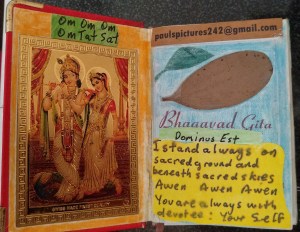
Have I shared with you my Bhagavad Gita? Well, I know I’ve mentioned a few times that it’s one of, if not the primary resource for study and guidance for me.
As you’ve probably guessed, this is a quick photo of the inside of the front cover. And, again as you’ve noticed, I like to stick things in my books, especially this little one. (Actually now I mention it, this is the only book in the traditional format as in made of paper, I own). It’s an old practice and for me adds multiple dimensions and depths to what is already a treasure.
Sometime I’d like to go through and describe to you all that I have added, but for today, do you see the little green section with the words Dominus Est printed?
In the religious tradition I was raised in, these two words have a specific meaning and use. However, it’s only recently that I’ve come to think of this little Latin phrase (well technically it’s a sentence, but …) in the sense of the literal meaning of the words themselves: God is.
That’s it. Or the Lord is, or the Master is. If we change the Dominus, we can use this tiny sentence to define our conception of the divine, the holy, in any way that seems right: Truth is, Beauty is, Art is. For me, God is, sits right. As do the others in this list. Same same.
So, God Is. What else could possibly be said that would add to this already very emphatic and simple statement? Nothing at all. It’s stand-alone, complete in itself.
Like asking who or what is God, we can answer: ‘I am this’ or ‘I am not that’. Or we can realise what for me is becoming the only answer: I am.
Why? Well, if we were to add anything at all to these two words, such as God is Truth, or God is Love, or God Resides in …, or God is called … , then we are in fact stating only a little of the truth. Sure, God is truth and love, and goes by many names and is found in many forms, but once we say what something is, we are actually making more of a statement about what it is not.
In the beginning there was the word, and the word was with God, and the word was God.
Mind you, it’s perfectly natural, and for many of us helpful, even necessary, to ascribe to God a name and or form. We are ourselves material beings, living in a material universe; it’s logical that we would choose (or need) to see God in a word, a physical object, or attribute some other kind of materiality to our notions of the divine.
I must say that I am one of those who find it difficult to envisage an invisible, non-physical, and impersonal ‘God’. Of course, our little statement, God is, does indeed say just this doesn’t it? Isness is pretty non-corporeal, certainly not in the least physical. And isn’t even a ‘spirit’ or ‘entity’ of any kind; Isness just is. The moment we label something (including ourselves) we miss that isness, that essence.
You see my picture of Krishna and Radha? This form, or forms, is one of the several that I feel right in having as a kind of focus, or centre of my devotion to and love for the divine; for love, for truth, and for it all.
You might be saying, this guy does believe in a personal God. He just told us. The truth is I don’t believe or not believe that Krishna (or any of the myriad names and forms we’ve invented) is God. God simply is. And my heart tells me that this is enough.
There are a pair of theological ideas known as Cataphatic Theology, and Apophatic Theology. Cataphatic describes or approaches the divine by stating what God is, while Apothatic (you guessed it) describes God by speaking only of what God is not.
My guess is that pretty much everybody, from whatever tradition, would approach the divine (and not only the divine) in one or other of these ways. But for me it was such a relief to realise that there was no need to go there at all. I could stop with the definitions and the descriptions, the what is and what is not. I have the freedom to not have to believe or not beleive. None of it matters. Dominus Est. God is.
Am I there yet? Have I let go of dualities? Hardly. Maybe the odd glimpse, but it’s rare. And it always will be for as long as I live in a physical body. But to paraphrase something Swami Ramdas said:
I’ve set my feet upon the path, so I am already at the goal.
I can’t remember when I wrote my last post. And of course it isn’t relevant at all is it? I mean to say that in the contemplative life, time sometimes seems to take on some other kind of character.
Or at least I should say that one’s perception of the passage of time shifts; nothing unusal there I hear you say, and of course you’re right. Just thinking out loud I suppose.
For me, having a right perception of time is an important aspect of my Sadhana, my practice: yes, it’s true: time is seen to fly, or it is frustratingly felt to drag. But my aspiration is to see time as simply a human construction that we use to limit, structure, bind, define, and place all kinds of restrictions on our lives.
Which for me, simply means that there is only presence or Presence; only the ongoing continous moment (what we often call The Now). Easier said than done mind!
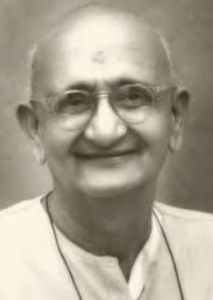
Swami Ramdas (known as Papa to his followers)
In any case, here I am, just where God would have me be. Feeling strongly to reach out to you, I remember the poem (it’s not really about time in the sense we’re discussing it so far) that emerged the other day after reading a quote from Swami Ramdas that seemed to be an answer to some thoughts I’d been having.
I’m grateul for this, all of this. And for you too, the reader of these musings offered with humility and thanks.
Peace and love from me to you.
GOD IS MY ALL
Thinking thoughts as if battered by demons. Memories arising of my own evil deeds, selfish and cruel. Right away I turn to God: God is my all; Hare Krishna
Forego repentance, relinquish regrets; you are filled with God, the supreme essence of life. God is my all; Hare Krishna.
Through Papa Ramdas I hear the Universe speak: Forgiveness is from God; and it has been granted. God is my all; Hare Krishna.






















 Notes from the Hermit's Cave