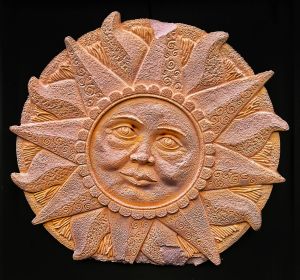
Varuna and Surya. the Hindu deities of sky and all Earth’s waters (Varuna), and our sun (Surya). These names resonate for me. I like how such great natural phenomena fundamental to our existence on this planet, can be ‘personalised’ in this way.
I find that having acquired symbolic or representational names for sky, water, and sun, has allowed me to somehow relate to the inherent giving and preserving of the energies that power all life that water, sky, and sun provide in a prayerful, thankful way. Kind of makes it personal.
Let me put aside for a moment the obvious scientific reality that tells us we can’t live long without water, can’t live at all without the gases in our atmosphere, and if the sun goes dark for whatever length of time it is, then all life ceases to exist.
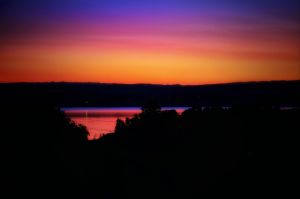
How many times have I stood in awe watching a sunset?
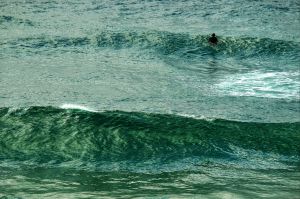
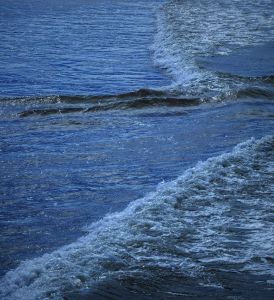
Or watched as big waves rolled in with a surfer hoping for a ride?
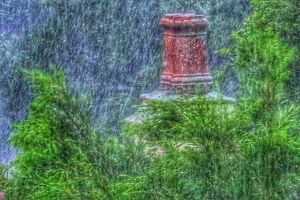
How many times have I welcomed the sound of rain on a roof and the sight of it nourishing trees or other life
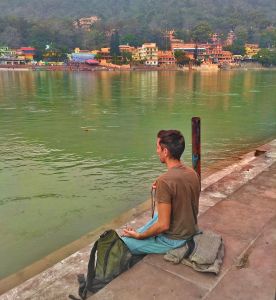
And how many times have I sat on or walked along a riverbank feeling uplifted and a little more grounded?
Many, many times is the short answer. Varuna and Surya are constant presences in our lives. And I am grateful for the life-giving and life-sustaining natures of their existence.
Sharing with you today, a little poetic expression of one of those times when sky, water, and sun, gave me just a little more than those fundamental material energies.
ONCE AGAIN VARUNA AND SURYA
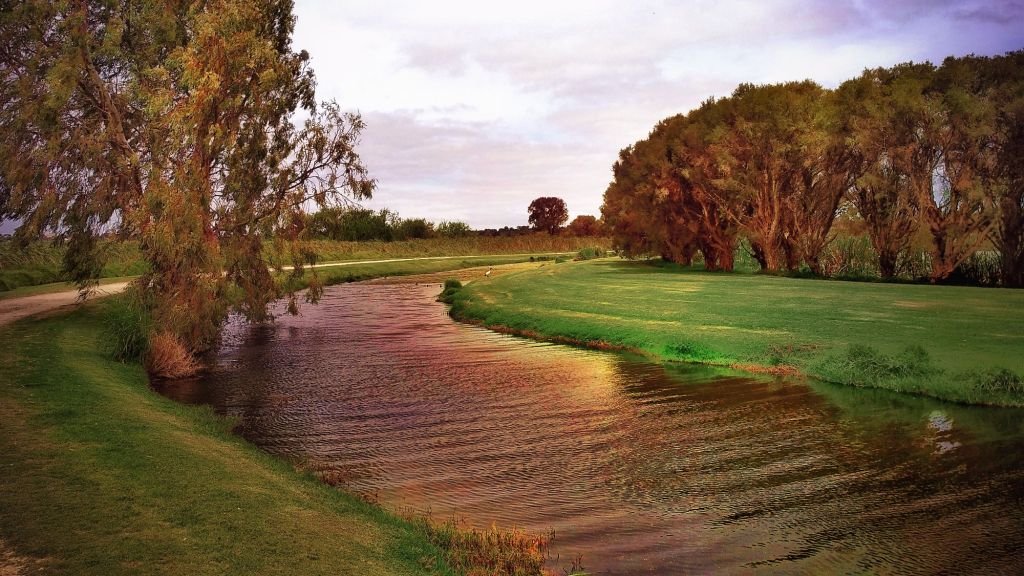
Once again, Varuna and Surya are coming to make rescue. They arrive on – as in fact they are – the currents and eddies of the river of life. In this way, the natural order remains in motion.
Shared with love
from Paul the hermit
Flow river go, past the shady tree. Flow river flow, flow to the sea. Flow river flow, flow to the sea.
Thanks to Roger McGuinn for one of the classic flowing on a river songs.
Reading the other day about the deeper meanings of the word Amen, a memory surfaced.
A memory from the summer of 1971. I was seventeen years old; young yes. I was hitchhiking around Europe, and as for this memory in particular, I was sitting day by day in the Dam Square in Amsterdam.
The memory of which we are speaking involves chanting. One day (or it could have been more), chanting, along with dozens, perhaps hundreds of hippies, freaks, travellers from all over the world, assorted tourists and locals. Chanting Amen. Just like Sidney Poitier sings in Lilies of the Field. Minus all the verses; we chanted the chorus only. Amen. To help get the vibe, just go here.
Anyway, it was a nice memory, a memory of a day (and more) of music in a time of exploration, on the road and trying to be free.
More that that though: experiencing the memory gave me the feeling that that day, in the Square, had included at least a moment of devotion.
Sure, it was likely just one more tune among many sung during those times, but as I think about it now, I sense a distinct vibe of devotion and praise. I recall a sense of a kind of rejoicing in the word itself – Amen.
Anyway, here is the resulting poem. Do look up the chant; and do please join in, add your voice – your own distinct vibration – to the gathered voices.
Amen
DAYS OF AMSTERDAM CHANTING
Once upon a time I hitchhiked to Holland. Another mad attempted escape, trying to leave the madness behind. Amen.
Crashing in the park in the night, beneath a bridge – when it rained, behind the bushes – when it didn’t. Amen.
Squatting in the Square in the day. Sometimes singing days. Dozens of hippies, freaks, travellers, and even a few tourists and locals. Amen.
Many memories of those days remain. Like this one: I was 17, you see, in those days, squatting in the Square – Dam Square. Music in all directions. Truly surround sound. Guitars, bongos, reedy things like flutes and whistles, even a trumpet I can recall. Amen.
Then, a chant erupts, and soon engulfs the gathered. Amen … Amen … Amen, Amen, Amen.
And, now, I’ve joined the chanting, maracas shaking held high, as if in exalted devotion, as I sway to vibration overwhelming. Amen.
This entrancing word, this creative vibration, how long did it linger, permeating the very air I was breathing? Amen.
Memory informs: it was hours. That is to say, it was eternal – or was it a mere moment? Same. Of course, Amen – Om – the vibration of creation was never born, is never changing, always existent. Amen.
Always creating. Always dissolving. Then again creating. Making manifest that which was unmanifest. Amen.
Or, is it a sound and light show? Amen, the word, the vibration, the sound shining a light on what is there already? And what is there already, is all there is. Amen Amen Amen
These last few days I’ve been researching and thinking about an idea for a blog post. But I’ve come to realise that I am grossly underqualified to write about the topic I had in mind. Let me put it another way: I am completely and utterly unqualified in any way whatsoever to go there. In fact, after all the research, I think I’m going to disqualify myself from ever going there in writing.
However, I’m a great believer in the idea that no quest for knowledge is ever a waste of time or effort; there is always something to be learned. During my research I came across a topic I believe I am qualified to discuss, as it forms an integral and vital part of my own personal spiritual practice.
Why I’ve decided to write this post, though, is because I made a discovery that lead to an insight that I know will lead to a great progress in that practice. It’s nothing new, not really, but it was one of those occasions we’ve all experienced of ‘I knew that, but now I really know it.’ For me, it was a realisation of something that till then had been a nice cosy theory and belief.
Bhakti Yoga is that practice. It is really a key foundation, a valuable component of my spiritual life.
Wikipedia opens its entry on Bhakti Yoga (see the link just above) with a description of the practice that mirrors what I think is the traditional understanding of Bhakti Yoga:
Bhakti Yoga (also called Bhakti Marga, literally the path of Bhakti) is a spiritual path or practice within Hinduism focused on loving devotion towards any personal deity.
In the same entry there is a description of the origins and meanings of the two words, Bhakti and Yoga:
The Sanskrit word Bhakti is derived from the root bhaj, which means “divide, share, partake, participate, to belong to”. The word also means ‘attachment, devotion to, fondness for, homage, faith or love, worship, piety to something as a spiritual, religious principle or means of salvation’.
The term Yoga literally means “union, yoke”, and in this context connotes a path or practice for ‘salvation, liberation’. yoga referred to here is the ‘joining together, union’ of one’s Atman (true self) with the concept of Supreme Brahman (true reality).
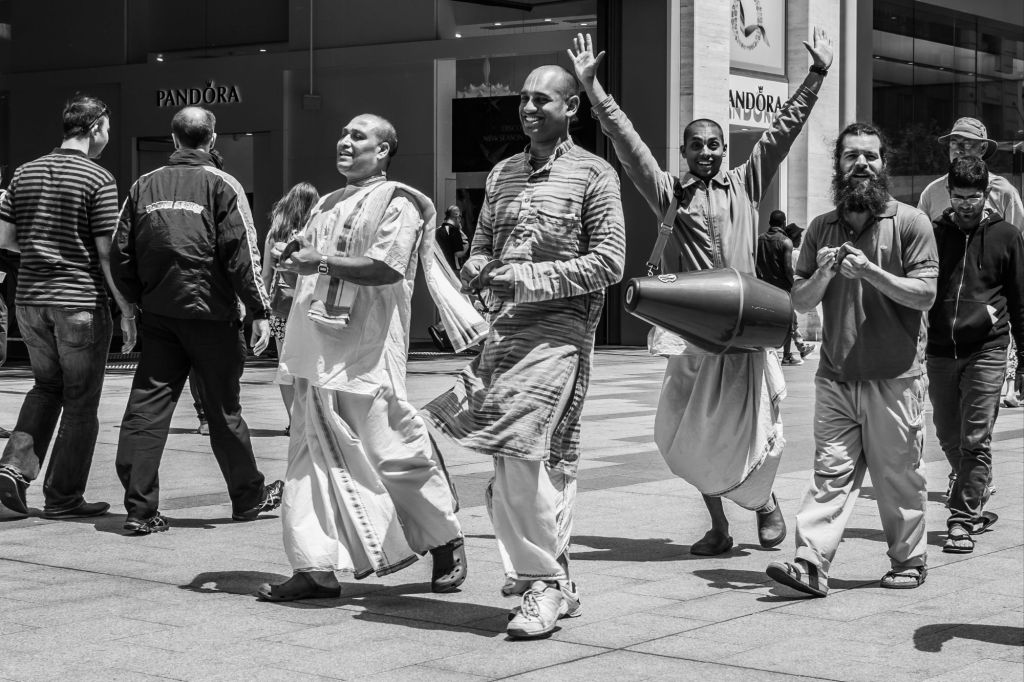
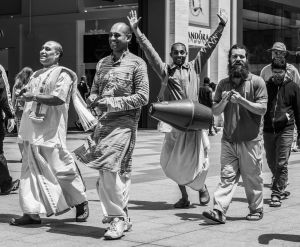
For some, dancing while chanting the names of their God, demonstrates their devotion and celebrates their union with each other and with God
In other words, those called to a religious or spiritual life, practise Bhakti Yoga whenever they pray or otherwise express devotion towards their personal conception of God, or the Divine. This particular definition seems to be saying that such a conception of the Divine, or God, is in the form of a personal deity who is a kind of representative of true reality, which the devotee is aspiring to join with.
Some Bhakta Yogis are full-time, full-on practitioners. People like contemplative nuns or monks, hermits who retire from the world into seclusion. Anyone basically whose entire life and activities are spent in devotion.
So, when I discovered all this, I became intrigued; I decided to go off on a tangent and explore the word Bhakti itself. Wikipedia has a separate entry for the word on its own:
Bhakti is a term common in Indian religions which means attachment, fondness for, devotion to, trust, homage, worship, piety, faith, or love. In Indian religions, it may refer to loving devotion for a personal God
…
is often a deeply emotional devotion based on a relationship between a devotee and the object of devotion.
…
In ancient texts the term simply means participation, devotion and love for any endeavor.
May refer to devotion to a personal god? While I thought this entry doesn’t contradict our first quote above, it does seem to broaden, and deepen, the meaning of Bhakti. Expand might be the better word.
In some traditions a simple life on the road is a way to commit full time to Bhakti or devotion.
It struck me that that object of devotion might be anything. Or even everything. You see? I told you it wasn’t a new idea. It’s just that it’s resonated deeply within me now. It appears that the object of Bhakti Yoga practice doesn’t necessarily have to be a ‘personal god’.
Many many people would say ‘I like animals’ or ‘I think we should save the world’. But, while that may imply a kind of love for or at least a fondness for, I think Bhakti is something more – actually several somethings more!
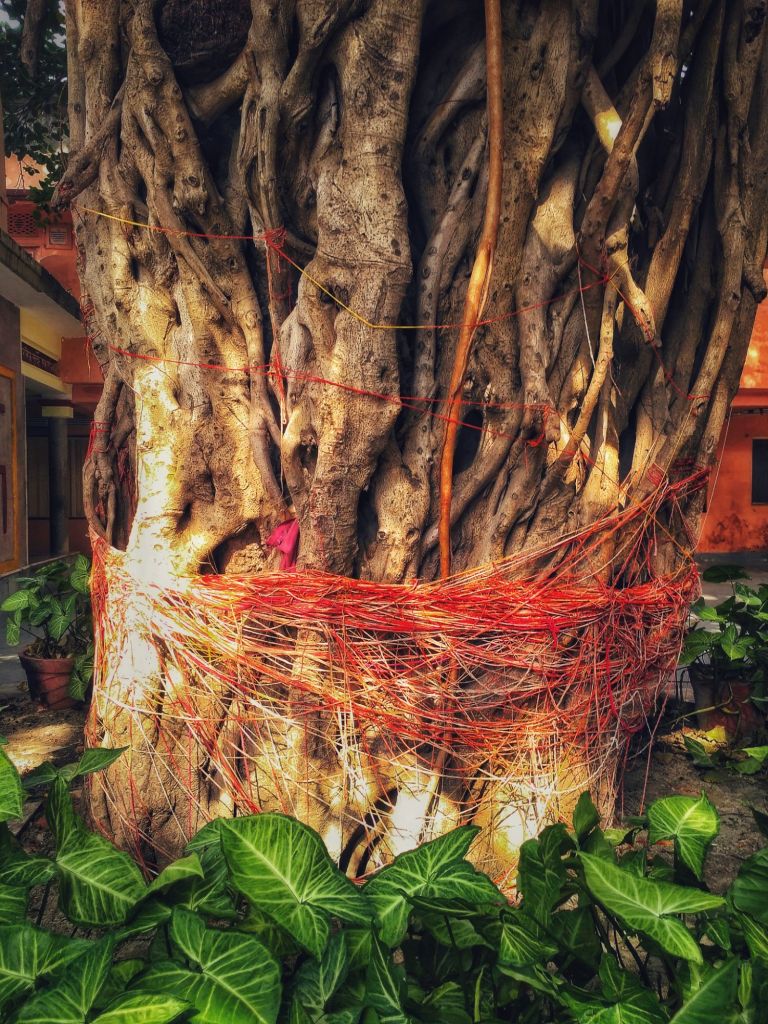
For example, some people have a particular attraction to and love for, the ocean, or it might be a river they view as, if not sacred in a religious sense, then as special to them in some deep, comforting, even therapeutic way. Others have similar relationships with and feelings for trees, or even a particular tree.
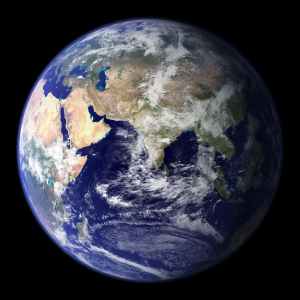
Animals as either individuals or as a species or group, can have the same appeal and call to other people. Then there are those who feel strongly in their hearts you could say, that Earth itself is a sacred object, or others have a knowing that the planet is a living entity and worthy of our devotion.
Bhakti begins with love and devotion, which is about caring for, affection towards, loyalty to, emotional engagement with the object of devotion. But even more than that, there is faith in that object of devotion; faith as in trust, confidence that the love is real, that the ‘relationship’ is sound and real.
Homage and worship too are key aspects of Bhakti. The deep inner feeling we have towards a thing, person, or other being, that is beyond what we normally call ‘love’. It’s about seeing and actually realizing ‘in our hearts’ our desire to be merged or united with that thing, person, or other being.
Actually, seeing that word other just now got me thinking. I had to go back and reread our definition of Yoga up there near the beginning. It says Yoga means ‘union, yoke’. It goes on to add: yoga refers to a ‘joining together, union’.
This passage seems to be suggesting that Yoga (in our case Bhakti Yoga) is both an already existing union, and a process of joining together to achieve union. One thing I would say here is that in my practice of Bhakti (and love as a general thing to strive for and be) it’s both.
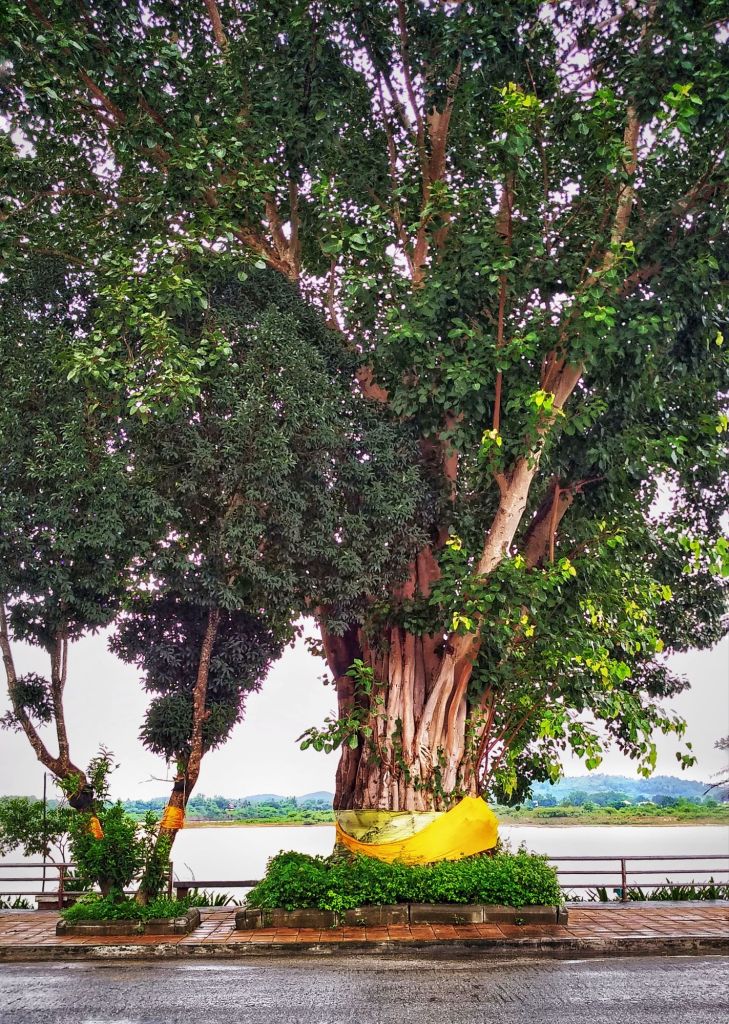
Trees are special beings for many people from a whole variiety of cultures all over the world
But, in the end, it seems to me that the process or practice, the path of Bhakti, serves to awaken us, to assist us to acknowledge, recognise, and realise in that really knowing way, our pre-existent true nature.
That true essential nature can be said to be the reality of our oneness with all things, living and non-living. And their oneness with us too of course. In fact, by putting it that way, I’m saying there is only one, or oneness. What’s that expression? One without a second.
May you be a Bhakta Yogi. Or, perhaps you already are one?
Love and peace from Paul the Hermit
Life has manifested itself as the multitudinous forms that comprise the universe. It is the one Universal Life, Power or Shakti (the laws of the universe or natural laws) that controls, guides and actuates all movements and activities in all beings, creatures and things.
You know it’s funny how sometimes it takes a lot of time, many years in some cases, for a life event or some happening or other to finally emerge to express itself in some kind of creative form or other.
Just this minute (literally) I was reading through some poems of mine and I came across one I wrote only two months ago. I won’t say I’d completely forgotten about it, but at the same time, I can’t recall thinking of it again since writing. Until that moment five minutes ago that is.
The poem was prompted by an event that took place thirty- seven years ago. Not a major event on the face of it, just a small interaction between a mother and son. Here’s the backstory.
My mother loved Bingo, and played it at various venues several times a week. I’d just returned from several years overseas and she asked me if I’d like to be the security guard at that night’s particular venue. The regular guy couldh’t make it and they needed someone to just hang out in the car park so everyone would feel safe.
The River of Life rarely flows in a straight line
Well they were very different days, and I wasn’t who I am now, so I jumped at this very easy, relaxed, sounding gig. And off we went at the appropriate time.
It’s not part of the poem’s story but thinking about it now, I remember my mother’s joy and relaxed vibe as she interacted with her ‘Bingo family’. That’s a treasured memory.
Anyway, later in the evening I was wandering around, zigzagging through the parking lot, when I saw Mam waving at me to come to her.
And the poem takes it from there as they say.
I said the piece is about a simple mother son interaction and it is. But there is more to it really. The poem is about, at another level, Love and Truth.
It’s also about a fundamental concept I try hard to govern my life by: Ahimsa. This is an approach to life based on doing the least harm one can do in all areas of living in the world. It’s not strictly speaking a prohibition on telling untruths, nor does it mandate an absolute ban on violence. It’s complicated, as they say.
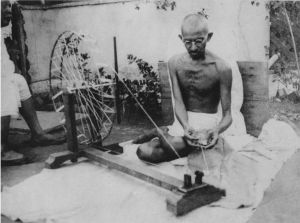
Gandhiji adhered to Ahimsa as his life’s guiding principle. While his style of living was to trust in Truth, he knew that at times, the way of least harm requires loving, compassionate discernment as we are faced with dilemmas of what’s right and what’s wrong in the infinite number of situations we are confronted with on a daily basis.
So, my friends, here is my poem. Read in peace.
WITH THE EYES OF THE HEART
I ate a hotdog once upon a time, even though a vegan I am. On the spot, split second decison; I considered it fine. You see, as a fait accompli it was presented to me – by my Mam.
‘It’s a special vege kind I got for you.’ So the offered food I did receive, though I clearly saw it wasn’t true. Sometimes you need more than eyes to see what you believe.
My acceptance acknowledged her thoughtfulness and validated her gesture of mother-to-son love. So, to any karmic consequences, I will submit with grace.
Thank you for allowing me to share this story and poem with you. And even more of a thank you for reading how I learned a lesson about love and truth and how sometimes truth may actually sometimes need to be followed even if the so-called facts say different.
It’s a funny thing, but as soon as I start thinking about resharing older (let’s call them prior posts instead) all sorts of posts come up begging to be the next in line to be shared again.
Anyway, I’d sat down to write something on a quote I really like:
Forget all that and hit the road into exile.
FROM A LONG LOST DEEPLY BURIED NOTE-TAKING APP ON MY TABLET
But nothing was coming. Then suddenly I remembered: I’d already written (sort of, kind of, in a manner of speaking) about this topic, if not this particular quote.
Looking up the post, well it did its thing and said very clearly and in no uncertain terms, Post me!
So, here it is dear friends. I will let it speak for itself
Today I’d like to share a poem with you. I wrote it exactly a year ago, but it’s about a day many many years ago. At other places on this site I’ve mentioned that cliched but for me ever so real question: Am I running away from something or am I running towards something?
In one of those other places I joke about my answer: ‘Neither. I’m just a journey person’. Well, this poem began life as a story of the day I first met Jesus freaks as I hitchhiked on just one more random excursion.
Then it becomes at the same time a piece about running, or journeying towards. And, there’s more: it then speaks about the journey as the point of the journey; the movement is the thing
But the thing morphed into a rap about journey beginnings, or at least in the sense of my ongoing attempted, and until a lot of years later, futile escapes from the madness of family and circumstance. That’s the running away bit.
You see, there was something holy felt then, as now, about those seemingly random hitching trips (not that I would dream of hitching in these times). Somehow I knew the Road was the escape route from the growing madness and horror.
Of course I was only able to partially articulate this at that time, but I remember even at 17 (no, it was a year earlier when I’d made my first attempt. I’d forgotten about that) feeling a sort of specialness about the covering of new (for me) ground, the movement, then the arrival at new (for me) places, new towns and cities.
Much of this pilgrimming (for that is what it was) was done in solitude – except for interactions with drivers of course (one of whom was on the day in question one of the said Jesus Freaks) and other necessary people along the way.
I felt a sense of belonging when on the Road; a kind of being in place and in sync. A sense of belonging that I kept fucking up as I let the trickster ego with its taunting messages of fear, loneliness, greed for things and status, and the rest, take control of me and lead me on twisting and tricky roads back to madness.
And now, these 50 years later, I survey the damage done, the cost to self and others. Especially others. No use of course, to look back with wishful thoughts of what if things had been done differently, what if other choices had been made. Such is not truth, not real. Well, none of it’s real anyway is it? Samsara is all it is – it’s all a sea of madness and illusion isn’t it?
Anyway, here is the poem. May it speak to you. Peace
The Road Rises Up
I woke up that morning marooned in Albion in a village of warriors, on a street, in a house, going mad in a nest of madness on an island of madness, in a sea of madness. Escape, refuge, safety – waking thoughts. Waking dreams. Looking for a way out.
The Road. The Road rose up in my mind. The Road will save me. Not the shrink the patriarch screamed I needed to see. The Road was waiting; I found it waiting for me. And my thumb in silent salutation and prayer held aloft in supplication as I trudged on that seemingly straight but trickster road.
Welcome to the pilgrims’ way, the Road greeted me as I trod ever more lightly and Babylon’s chariots hurtled past me bound for far nowheres. Or maybe somewheres. All in the fast lanes and howling deceptively of invitations and rejections, attractions and aversions. Then – in time – an invitation proffered and accepted. This pilgrim was on his way.
Yesterday I came across a couple of stories – true ones – that I wrote years ago. They are what we might loosely call ‘travellers’ tales. I thought it might be nice to share them here. So here’s the first one. Enjoy
Not the Manu temple I write about, but another one close by
I’d walked up to Old Manali, and I’d kept walking through the town. Then higher still, past the temple to Manu, and the scattering of traditional houses and small fields clustered around the temple.
Three near-naked and stoned saddhus invited me into their cave – more a kind of overhanging rock shelf poking out from the foundations of the temple itself.
Naturally I declined. Politely. I wasn’t, never had been, and never shall be a stoner. Besides, here I was deep in the Himalayas walking through ancient villages and past temples to ancient gods. Seems to me that that’s enough to bring on a high all its own and like no other.
Then, a little higher up the trail. I rounded a corner to be greeted by a kind of open forest glade; a grassed and flowered field protected by a semi circle of forest sentinels, their crowns maybe thirty metres above my head.
And there, in the middle of this magic field, a large flat rocky area, like a series of ‘shelves’ layered one on the other. This maybe twenty square metre tiered platform was probably the remnants of an ancient hill (or mountain?) that got in the way of a more recent but clearly relentless glacier.
Whatever the history, here was an arena with views no theatre or movie could ever hope to reproduce. This natural amphitheatre faced several layers of peaks across the valley. But, before those peaks, and directly in front of me, just down the slope, stood the temple, then more trees, reaching down into the valley. Here the river flowed, surrounded by farmers’ fields and the brown dots of houses.
Then the forests begin again, thick at the bottom in the valley, but becoming more scattered on the higher ground. Then those many layers of higher and higher hills, mountains really, rolling off into the distance to, where on the horizon and behind it all, a row of the really high peaks covered in their permanent snows.
‘This is a special place, a sacred place,’ I heard myself sigh out loud. Sitting cross-legged now, I let my eyes wander over the scene taking in the blue sky, the white peaks, the multiple greens of the forests, the sliver ribbon of the river, and the rest.
At such times and in such places, one’s eyes tend to close of their own accord. And so it was for me then and there. I let myself drift. Thoughts came and went, to be replaced by more thoughts that came and went.
Then, my eyes opened. Again of their own accord. After a few seconds of that cliched ‘where am I?’ feeling one has when startled out of one state and into another, I made out the figure of a person standing facing me a few metres from where I sat.
‘I’m sorry,’ I heard her voice call to me. ‘You just looked so peaceful sitting there meditating, I just had to stop and watch you.’
She told me she’s been watching me for about fifteen minutes, which gave me a start: It’d felt l Ike I’d only just sat down and closed my eyes.
‘They say the light of the world is held about twelve kilometres up this trail. That means it’s the centre of the world.’
I had to stand to try to take in a revelation of this magnitude.
‘And apparently,’ she went on, ‘they’re going to move it soon and nobody knows where.’
Was she an angel? Was I dreaming? They, whoever they were, are about to shift the centre of the world? Even in India one doesn’t hear this kind of news everyday. Actually, I doubt you’d ever hear it on any day.
Then she was gone, headed up the trail. I didn’t follow. I remember thinking: twelve kilometres was too far for me especially as I already had a long walk downhill to my hotel back down in the new town.
Yes, mundane, practical musings, a typical response to news of such a wild and far-out nature. So, not exactly in shock, yet not quite myself, I turned back. Down. Through the village, past the temple with three crashed out saddhus out front, back into the town.
There are cafes there. They sell Chai there. I needed one.
Actually, given the momentous news I was going to have to digest, I might even have a couple extras.
This is a true story; it actually happened more or less the way it’s described here.
Of course, there is no ‘light of the world’ stored in some secret spot, somewhere on Earth.
Well, I suppose if there is a light of the world, then it’s likely to be the world itself, I mean Earth, all the beings who live on this planet. Life itself I guess you could say. Life is light; Life is love.
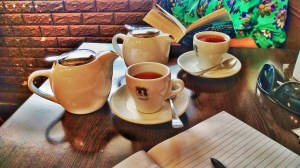
Journalling always seemed to go along with tea drinking
About a year or so ago I stopped keeping a journal. And, when I say stopped keeping, I mean keep as in both senses of the word. Let me explain.
I began writing my life in a journal in my teens. I stopped for a while in my late teens and early twenties, then later in my twenties, took to it again. I then kept my Journal going ever since. That is, until last year.
Of course, some periods saw a more intense, even daily journal keeping. And then there were periods where the journal only saw me every now and again. On the whole though, I’d been completely dedicated to my Journal for more than 40 years.
What over 40 years of journalling looks like
So, why suddenly end it? What prompted me to just stop keeping it – again in both senses of the word – after almost a lifetime committed to it?
Yes. A good, good question. First of all, it wasn’t a sudden decision; I didn’t ‘just stop’. For some time I hadn’t been feeling quite so committed, quite as excited about keeping a journal (as in using it to write my feelings, ideas, and essentially my life). And, just as with so many of the decisions we make thoughout our lives, this one had a practical, even a pragmatic ‘seed’ as well:
See the picture above? That’s my journal. The rest of the Old blue tin trunk would get itself filled with all kinds of stuff not needed on rhe road. The trunk lived with my cousin for a few years, then it was my sister’s turn; she had it on and off for many years.
As you are no doubt beginning to guess, this arrangement began to wear thin. We (the hermit pilgrims) were constantly asking ourselves, what’s the point of storing this stuff for years? Do we really need it?
My answer had always been yes. I needed my journal. I might read it again someday; I might need it to write books or whatever. So, we’d keep the trunk, filling the remaining space with stuff and things.
Then, on the penultimate occasion we had the old blue tin trunk shipped to us in our latest (then) current roadside cave, I looked at it, and thought: What’s the point?
Somehow the attachment – the compulsion to hold onto my Journal – had gone. It was a liberation, a freeing of my mind. I suddenly realised that the prospect of me ever rereading the thing, or needing it for some other purpose, was remote. Actually such a prospect was also extremely unappealing.
I should add here that that particular aversion and disinterest in rereading my journal, seemed to cement my already growing disinterest in keeping a journal in that sense I mentioned earlier of writing down feelings, ideas and so on. Now, both the idea of keeping the journal in the sense of storing the physical volumes for a rainy day, and that need to keep a journal by constantly writing my life, collided. Time to stop keeping!
So, I sat and leafed through every volume, more as a kind of farewell ritual than anything else. I did ‘rescue’ the odd bit and piece, most of which have since gone the way of their host volumes. Then I simply set the lot on its way to oblivion.
I mentioned that this whole chain of events happened on our penultimate reunification with the old blue trunk; what about the ultimate time? Well, we’d kept it full of various pieces of art by both of us; with various household things; ornaments; and other stuff I can’t remember.
Repacking it to ship back to my sister’s as we got ready to move on from that particular cave, we both just said, let’s leave it all behind.To cut a long story short, that’s exactly what we did. My son, a couple of charity shops, and the house we’d been sheltering in, were all recipients of the last of the contents of that old blue trunk – and the blue trunk itself.
Now, do I miss my journal? Well yes and no.
No I don’t miss having the thing as in owning it. Or maybe it’s better to say I don’t miss always having it in storage and out of reach the great majority of time. Like I said, I went completely off the idea of holding onto it – keeping it – just in case someday I might want to read it all again or use to for research. Now I think, why would I ever want to do that? (okay, I think I might have already said that)
The yes is kind of qualified. Yes, I miss writing in it. Yes I miss having a vehicle for expressing feelings, thoughts, and ideas.
I say that this yes is qualified because while I say this to myself from time to time, I don’t actually seem to ever really feel it. So perhaps it’s less a yes and no than it is an unequivocal no.
Besides if I have the urge to write, to put pen to paper, fingers to keyboard, then there’s nothing to stop me.
After all, that’s precisely what I’m doing now isn’t it?
The hand of the monk agéd, insistent, but gentle too, takes and holds mine. The monk sits, the Dharma before him, sacred texts resting in their saffron shroud. My presence completes this circle.
Mountain monastery calling him; it’s not home. Other mountains he’s climbed. Escape. High places divide this world from that, that time from this.
His loving touch, his smile, linger in rarefied air. Air drenched with the warmth of the Dharma, in this late monsoon restaurant of the Snow Lion, south of his land.
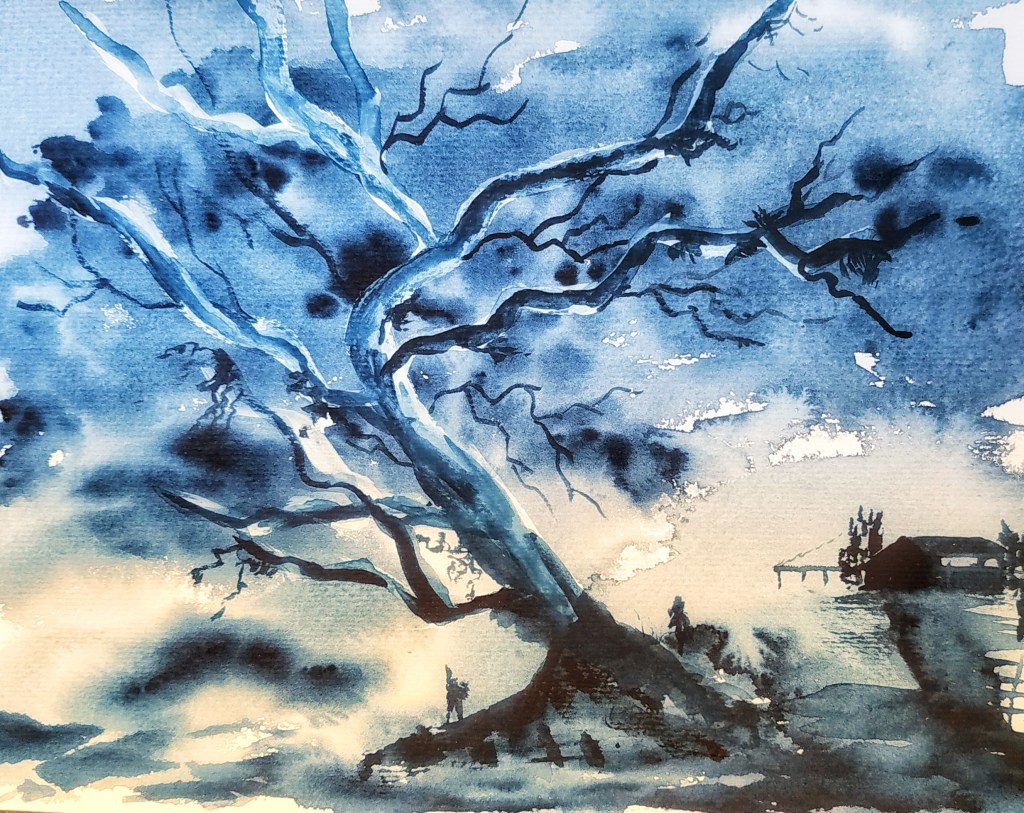
Watercolour by Pauline (with digital enhancement by the Hermit)
Vibing on the mystic trees, their upside is downside, their downside is upside selves telling me: You’ve got to cut through the attachments. Then, not a new, but old made new again, insight confirms, clarifies, brings details to, shines a light on the specifics: Stop desiring what you already have.









 Notes from the Hermit's Cave