A Lesson Learned: Love & Truth

Greetings my friends

You know it’s funny how sometimes it takes a lot of time, many years in some cases, for a life event or some happening or other to finally emerge to express itself in some kind of creative form or other.

Just this minute (literally) I was reading through some poems of mine and I came across one I wrote only two months ago. I won’t say I’d completely forgotten about it, but at the same time, I can’t recall thinking of it again since writing. Until that moment five minutes ago that is.

The poem was prompted by an event that took place thirty- seven years ago. Not a major event on the face of it, just a small interaction between a mother and son. Here’s the backstory.

My mother loved Bingo, and played it at various venues several times a week. I’d just returned from several years overseas and she asked me if I’d like to be the security guard at that night’s particular venue. The regular guy couldh’t make it and they needed someone to just hang out in the car park so everyone would feel safe.

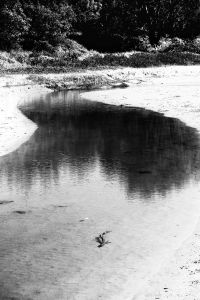
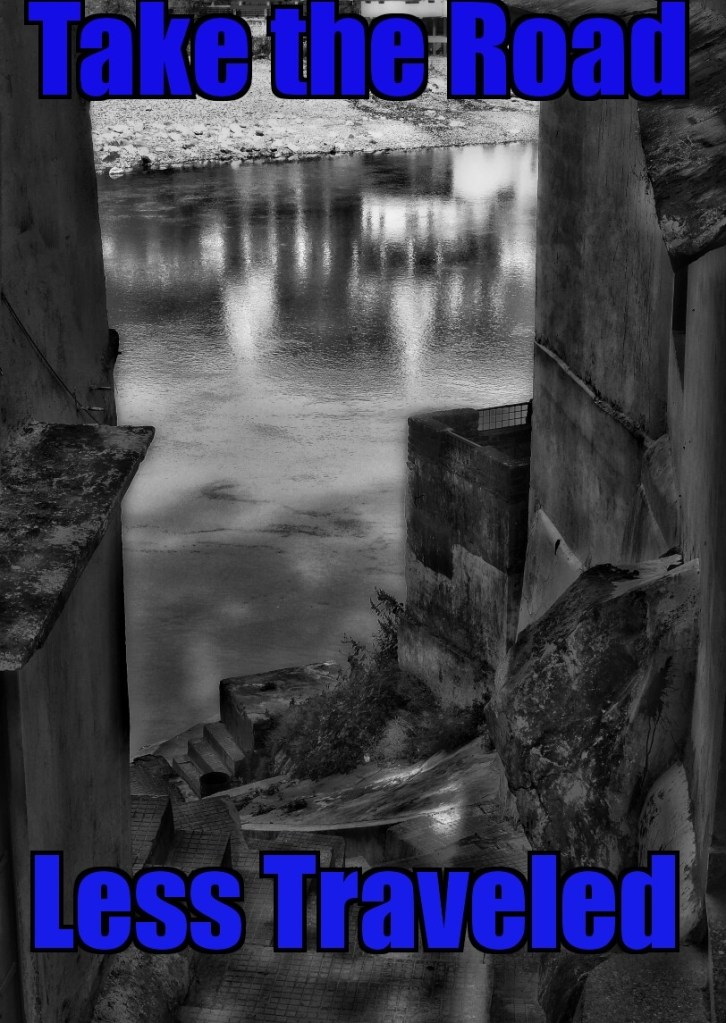
The River of Life rarely flows in a straight line

Well they were very different days, and I wasn’t who I am now, so I jumped at this very easy, relaxed, sounding gig. And off we went at the appropriate time.

It’s not part of the poem’s story but thinking about it now, I remember my mother’s joy and relaxed vibe as she interacted with her ‘Bingo family’. That’s a treasured memory.

Anyway, later in the evening I was wandering around, zigzagging through the parking lot, when I saw Mam waving at me to come to her.

And the poem takes it from there as they say.

I said the piece is about a simple mother son interaction and it is. But there is more to it really. The poem is about, at another level, Love and Truth.

It’s also about a fundamental concept I try hard to govern my life by: Ahimsa. This is an approach to life based on doing the least harm one can do in all areas of living in the world. It’s not strictly speaking a prohibition on telling untruths, nor does it mandate an absolute ban on violence. It’s complicated, as they say.

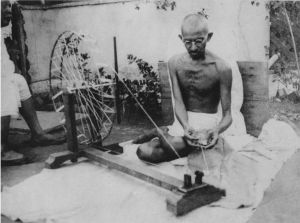
Gandhiji adhered to Ahimsa as his life’s guiding principle. While his style of living was to trust in Truth, he knew that at times, the way of least harm requires loving, compassionate discernment as we are faced with dilemmas of what’s right and what’s wrong in the infinite number of situations we are confronted with on a daily basis.

So, my friends, here is my poem. Read in peace.

WITH THE EYES OF THE HEART

I ate a hotdog once upon a time,
even though a vegan I am.
On the spot, split second decison; I considered it fine.
You see, as a fait accompli it was presented to me – by my Mam.

‘It’s a special vege kind I got for you.’
So the offered food I did receive,
though I clearly saw it wasn’t true.
Sometimes you need more than eyes to see what you believe.

My acceptance acknowledged her thoughtfulness
and validated her gesture of mother-to-son love.
So, to any karmic consequences, I will submit with grace.

Thank you for allowing me to share this story and poem with you. And even more of a thank you for reading how I learned a lesson about love and truth and how sometimes truth may actually sometimes need to be followed even if the so-called facts say different.

Blessings and love

Truth Is (Reshared)

Greetings. Just now as I scrolled my blog at random as I like to do from time to time, I came across a pair of posts from successive days almost exactly two years ago.

It was kind of neat rereading, so naturally I thought I would like to share them with you again.

Please enjoy

Peace and love

One Way to Look at Life

Yes, it’s true: life is precious.
But gold? Silver?
And what about diamonds?
Something to think about.

Peace & love

Illusion, fear and wrong thinking? A good question

Greetings to you, visitors to the cave

Let me begin this post by asking you a question. No. I’ll start again: I’m going to begin this post by asking me a question. It’s a question prompted by prayers I recite every day, not only during my morning practice, but at random times during the day. Here goes with the question:

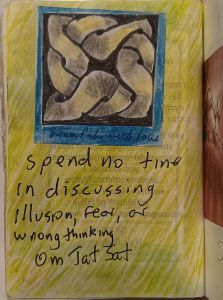
How much time do I spend discussing illusion, fear, and wrong thinking?

Well the short answer is, a lot! Despite all my efforts, prayers, meditation, discipline, and the rest, I spend way too much time pondering all kinds of illusions, indulging in an ever revolving range of fears, and thinking about all sorts of ridiculous, irrelevant, and unwanted stuff.

Oh, before I go on, I should mention that there are actually two prayers I’m referring to:

This prayer, which you might call an affirmation comes, I think, from the teachings of the ancient Indian Rishi Adi Shankara. I’ve not been able to track down the exact source. Getting a little ahead of ourselves here, but a perfect example of wrong thinking would be to berate myself for not being more careful with sources.

So, what does it mean to spend time discussing illusion, fear, and wrong thinking? Well, I know I said I was asking myself this question, but I think it would not be out of order to say that we are all prone to spending time on these things.

Discussing is obvious: talking about, thinking about, angsting over, worrying over. Illusion? Anything that isn’t real, stuff that’s ‘make believe’ as the expression goes. Anything that we are imagining for good or bad.

Our illusions are often about worst-case scenarios, or at the other end of the spectrum, they can be about some fantasy, an idealized perfect outcome to a situation. There is a lot written about how we are so very much trapped in illusion; it’s not the place here for that discussion.

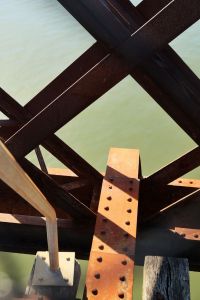
Fears: pretty obvious what fears are. I don’t know about you, but I can get to thinking of stuff to be fearful of anytime, anywhere, even things I know I can face without fear. Like a couple of days ago I was walking across a rail and walking bridge near our current hermitage. A long time ago I had huge paralysing fears of high bridges, especially over water as this one is.

But for a long time now I’ve felt I have mastered this fear and then suddenly on this occasion I looked down to the river below and shocked myself with ‘What am I doing?’ type thinking and fear returned. Mind you, it passed quite quickly as I reminded myself I’d walked over this bridge (and many others) a lot of times without a second thought.

And then there are fears about the future, fears of consequences of past actions, fears of not making the right choices now, fears for health, loved ones, the world. Anything goes when it comes to fear doesn’t it?

Ah, now we get to the biggie: wrong thinking. Again I think it’s safe to say that we all spend far too much time in the company of wrong thoughts. And again, they can be about anything, and can pop up to take over our mind without warning.

Consider how often we think about things that are either none of our business, or they are things we can’t do anything about. We obsess over what we see on the news,  or what celeb is doing what and with whom. Think about how interested we often are in what other people are doing, thinking, saying.

Then there’s blindly following fashion, thinking so much about things we don’t have (and how everyone except us has those things already) that we give into advertising, and end up buying lots of stuff we don’t need, maybe can’t afford, and might not ever use. And don’t forget about the one we all fall for: gossiping about others whether they are famous, our family or friends, or simply our neighbours.

A huge case of wrong thinking are the harsh judgements we make on ourselves; and the amount of time we spend thinking about our faults and failings. And don’t forget the other end of the ego spectrum: it’s also wrong thinking to be constantly telling ourselves how great we are.

There are endless examples of wrong thinking. We need to bear in mind Buddha’s central teachings: there is a middle path that can be taken in all things. Well, this maxim applies to thinking as well. Remember that our mind can be our enemy or our friend.

Even enlightened ones such as sages, rishis, saints and the like, fall victim to illusion, fears, and wrong thinking. Of course as they are enlightened, they perhaps are less affected, less inclined to fall to the depths, as the rest of us might.

Of course, there are ways we can put ourselves on the path to that enlightenment. But in truth, it is a subject that is dealt with very adequately by all great scriptures of the world, not to mention the visionaries who have delved deeply into psychology, philosophy, and the human condition.

And this leads me to the second prayer:

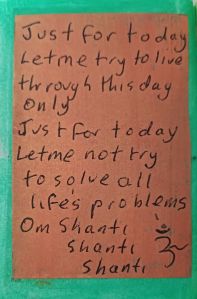
This one comes from a song by George Harrison, titled Just for Today. I actually did a post on this song a couple of years ago that you can find here. As well, if you do check out the lyrics of this masterpiece, you will see that my prayer is a rather generous paraphrase. I don’t think George would mind; I hope you don’t either.

Just for Today (the song and, a little less articulately, this, my paraphrased prayer) is a prayer for presence, a plea to be in this place, and in this time. In other words, an affirmation that I (or you) may remember that there is only here, and only now.

But, and it’s a big big but, we need to make of our entire lives a prayer.

Of course that means using the words, but it also requires a whole lot more. Discipline, self-control, deliberate actions (saying prayers is obviously also an action), meditation, silence, contemplation, and to put it simply: good behaviour in all that we do and think.

Now, this prayer inspired by George is a good place to finish. Or rather, it’s a good place to remind ourselves we can’t solve all life’s problems at once.

Being present, being here and now, really says we have no other choice but to live through this day only. Or perhaps we can paraphrase once more and say we have to actually realise what is already true: we can only live through this one, ever-evolving and moving moment.

So, how do we get to that point of spending less time discussing illusion, fears, and wrong thinking? By coming to realise that being in this moment, and in this place, we are already perfectly fine. All we can and need to do is remember that one simple fact. But don’t worry, all you need to do is remember it just for today.

peace and love

Lessons Never Too Late for the Learning

This morning I completed the penultimate lesson in a course of classes on the Bhagavad Gita. The classes were held once a week for I think 3 or 4 years and finished a few months ago. As it happens the entire course was recorded giving me and so many others the opportunity to study it online.

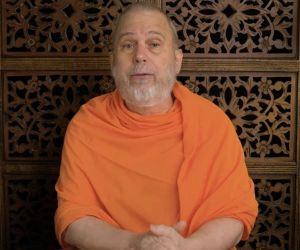
Anyway, at the start of the lesson today Swamiji ( Swami Tadatmananda, resident teacher at the Arsha Bodha Centre) reminded us that the course will soon be over. I thought (and it was by no means the first time I’ve had this thought): what an achievement; finishing this long and complicated course; fancy me sticking with it till the end.

Second thought, following a nano-second behind: What an odd idea, to think how great I am simply for finishing my study. Especially when it is not in the slightest way true. I’ll be studying the Bhagavad Gita (and I hope many other teachings) for the rest of my life. This period of study has been simply an introduction, a foretaste of what is to come.

Swami Tadatmananda

Having said all that, I have to say that this time of digging deep into the Gita has been a terrific ride. I’d been studying it by myself for a few years, but that’s nothing compared to having a qualified teacher guide me through such an in depth study and contemplation of this great teaching.

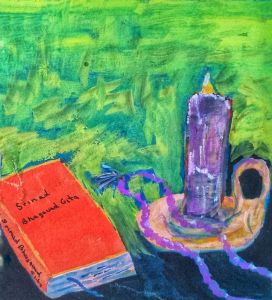
While I do know a few of the 800 verses by heart, I understand that this is not ‘ordinary’ knowledge. As the disclaimer goes: it is very much a pointer to the knowledge; the key is to not to confuse the pointer with the very much transcendental knowledge that is to be gained from what the pointer points to.

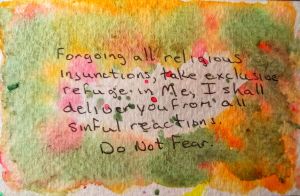
Probably my favourite verse written
on a little card that I treasure

My partner hermit has been responding to some of my photos when I post them with little Haiku-like writings. Yesterday (or was it the day before?) I said to her:

‘You’ve done 71 so far.’ I was thinking to praise the achievement.

She replied (with much wisdom as always):

‘I don’t count them. One or seventy one, it’s all the same.’ I’m paraphrasing here.

Looks as if I might be only just at the beginning of my lessons.

Peace

The Best Job in the World

Indeed, it is clear to all who dwell there that through them the world is kept in being

I jotted down this note I forget how long ago. Over the last few years I’ve read a lot about the early Christian hermits who lived in the deserts of Egypt, Syria, and other areas of that area we label the Middle East.

While I think it was one of these early hermits who uttered these words, it may instead have been a monk or hermit from the 9th or 10th Century, living in the forests of Russia or Eastern Europe. (I wish was a lot less careless with sources for things I note down).

In any case, it was spoken by a hermit or monk who, along with perhaps thousands of other men and women, fled the strict dogmatism of both government and religious institutions , as well as the corruption, materialism, noise, and all the other distractions of the cities and towns.They went to the deserts, the forests, and other remote places, in search of solitude, silence, and peace.

They longed to commune with the divine. They chose to bypass the mire of worldliness, and hoped to find a better way to serve the divine and the world. The writer or speaker of our quote is pointing our attention to all those who went to the deserts, the forests, and other sanctuaries, who in her or his words, believe they are actually keeping the world going, and its people too.

These nuns, monks, priests and hermits, knew that by communing with the divine without distractions, and living a simple life completely and absolutely centred on the divine, was the way to save the world.

‘So’, you might be saying with a slightly cynical tone in your voice: ‘These are people who have ‘escaped’ from the world and are ignoring governments and the law, rejecting social status of any kind, not associating with other people like other good citizens. They’ve gone to sit in a hut or cave or whatever and are doing nothing productive at all. They’re not buying stuff so they aren’t contributing the the economy. And you say they are the ones keeping the world spinning round? Hardly.’

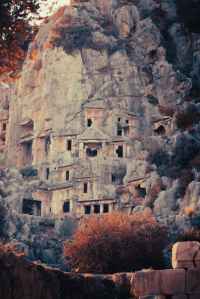
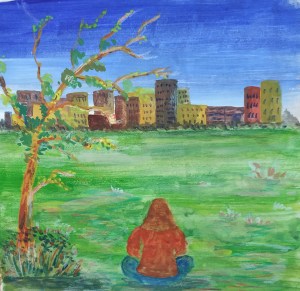
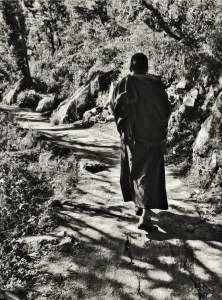
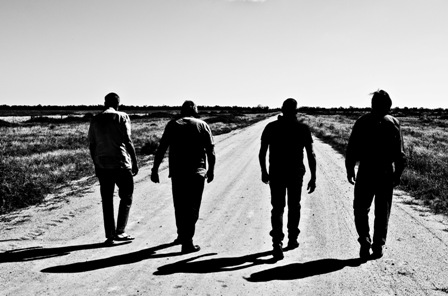
There are hermits everywhere.

Yes, I think they are. Keeping the world spinning I mean. Just as mystics from all the world’s religious traditions, these women and men of the deserts – and the forests too – knew that the world they’d left behind wasn’t real. Well, yes, it’s real enough of course: I mean we only have to look around us, and feel the workings of our bodies. It’s real alright.

But, realer (I know, it’s not a real word) than this physical world we are in and are an integral part of, is what lies within us as well as everything else in the Universe:

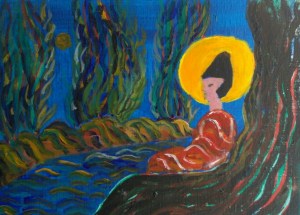
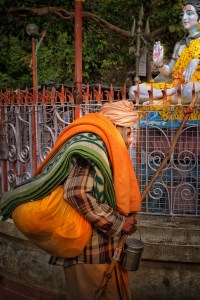
Holy Wanderer
Detached from all Worldly Entanglements

The divine, God, the life force, Consciousness. So many names for the same thing. Many of us sense that at the core of ourselves there is ‘something else’; that there is some kind of intelligence for wont of a better word. This intelligence is what illumines life, as in life, the universe, and everything.

But, we don’t see this, or not so often anyway. The mire of worldliness (a phrase I mentioned earlier and which I like very much) seems to be specifically designed to keep us in the dark so to speak, about our true nature.

Think about the seemingly endless focus on materialism with its temptations and promises to make us happy; the conflict and competition among individuals and nations to acquire more power, possessions, land and anything else that ‘they’ve got and that we want’.

Mire is a good word: We’re trapped and sinking fast in a kind of quicksand.

And this mire keeps us from becoming aware, from realizing, that we are the Consciousness (the word I prefer but, as I said, names are just names) mentioned above. It keeps us ignorant of our true nature, and we go on and on struggling to keep afloat in the world.

The hermits of the past and the present, the nuns, monks and other contemplative people of all kinds, and, in many and various places, are all engaged in a quest to know – and yes, to realise – that they and everything else in the material and non-material universe is Consciousness.

I believe that, far from being unproductive, from ‘doing nothing’, It is the engagement by such people everywhere with this quest that does indeed keep the world in being.

Courtesy Wikimedia Commons Thank you

I would like to leave you with a couple of quotes if I may.
The first is from Abba Moses, one of the greatest of the early desert fathers who was born in Ethiopia and lived in Egypt in the 4th Century:

Our objective is puritas cordis,’ Abba Moses told Cassian and Germanus [fellow monks].A heart kept free of all disturbance. The more we cultivate such inner stability, the more we can offer our lives in service to the world.’

Courtesy Wikimedia Commons Thank you

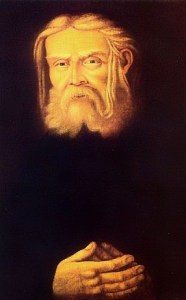
The second quote I would like to share is from Saint Seraphim of Sarov, a 19th Century Russian monk who lived as a hermit deep in the woods:

‘Acquire a peaceful spirit, and thousands around you will be saved.’

Probably the best gig in the world I would say.

Peace and love
‘Sometime Soon’: When is it?

There used to be a thing – maybe it’s still a thing – that would happen sometimes. You’d be talking to someone and suddenly they’d burst out:

‘Hey that rhymes! You’re a poet and don’t know it!’

This exclamation, this sudden and surprising interruption, was always prompted by some sort of accidental rhyming happening in something you’d said.

Or, sometimes, it even happened when you had written something and had through no fault or thought on your part, created a rhyme, even a little impromptu and accidental poem.

Well, that’s what happened to be. It was a while ago now and I was writing in my journal. It must have been ages ago because I don’t keep a journal anymore.

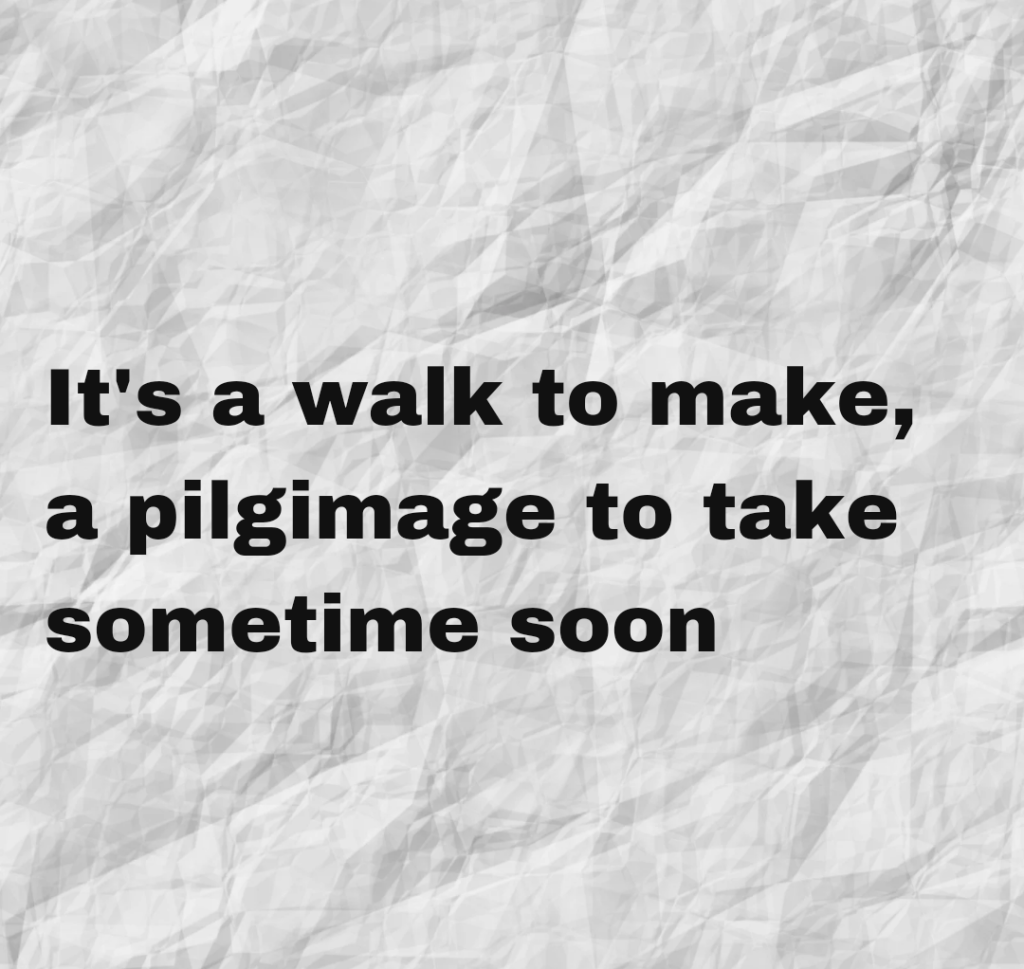
In any case, with nobody reading over my shoulder, it was left to me to express surprise at a sudden outburst of poetics on the page. And along with the surprise, I was able to make a quick note of what I’d written:

Anyway, this post isn’t about this little demonstration of spontaneous poetic genius; it’s actually about the ‘sometime soon’ tagging along on the end.

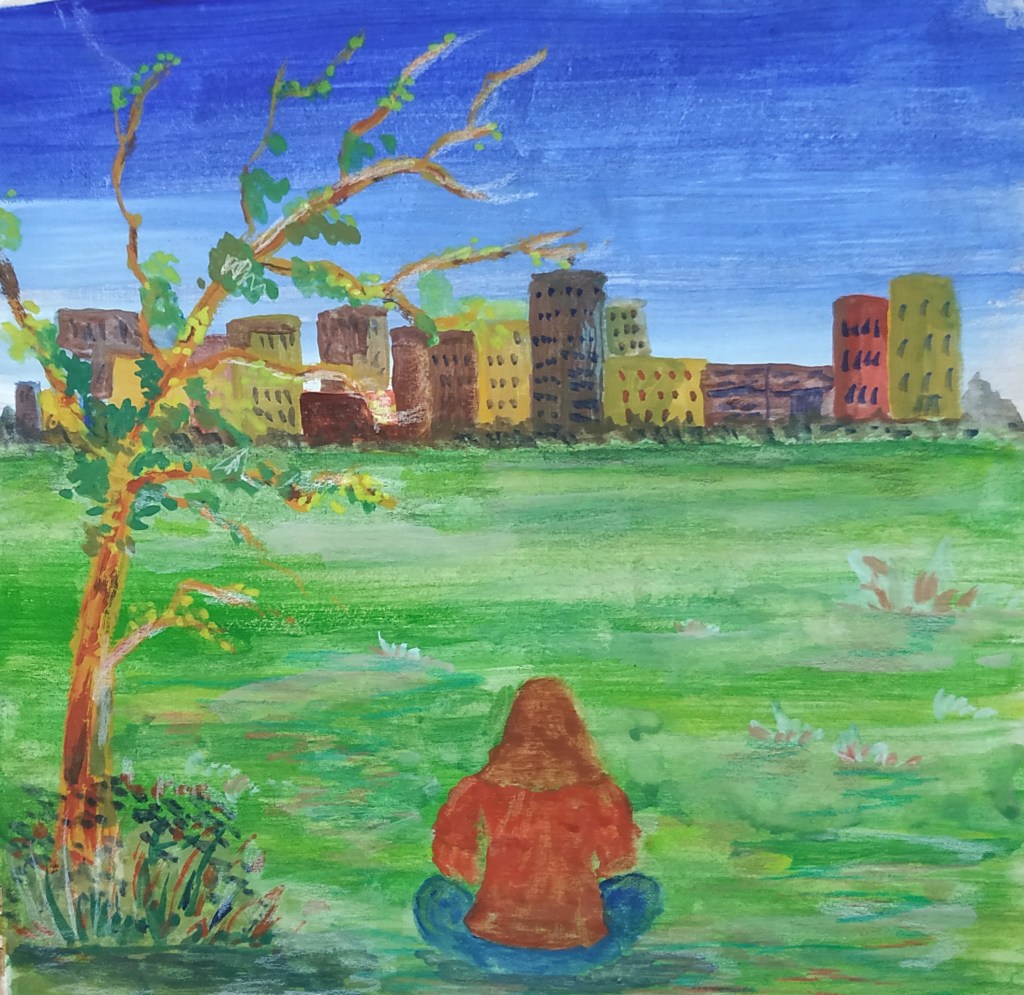
I have no idea where or what the walk to take, the pilgrimage to make, was – or is. Which suggests a rather obvious conclusion: ‘sometime soon’ never came. The walk was not taken; the pilgrimage was not made.

Now, I’m thinking to myself, if the walk under discussion was so appealing – as well as so significant that it transformed into a pilgrimage – then how come ‘sometime soon’ wasn’t right now, or rather right then. If you follow me.

Of course there’s no telling the reasons for the sometime soon. Maybe plans would have been required; travel to arrange; equipment to gather; fitness to acquire. Who knows?

Clearly I was inspired to at least put down in writing that I thought this walk, this pilgrimage, was (or would be) a good thing to do.

Meaning, in that moment, in the present that is (or was) of that moment, that walk/pilgrimage was a thing I wanted to undertake.

Now, while I might have longed to take that walk, to make that pilgrimage, in the present of that moment of writing, and even though planning may have been required, thereby putting off the actuality of the taking and making till some future time, I at the very least could have taken some action – again in the present of that moment – to get the ball rolling so to speak.

So, what’s the lesson here?

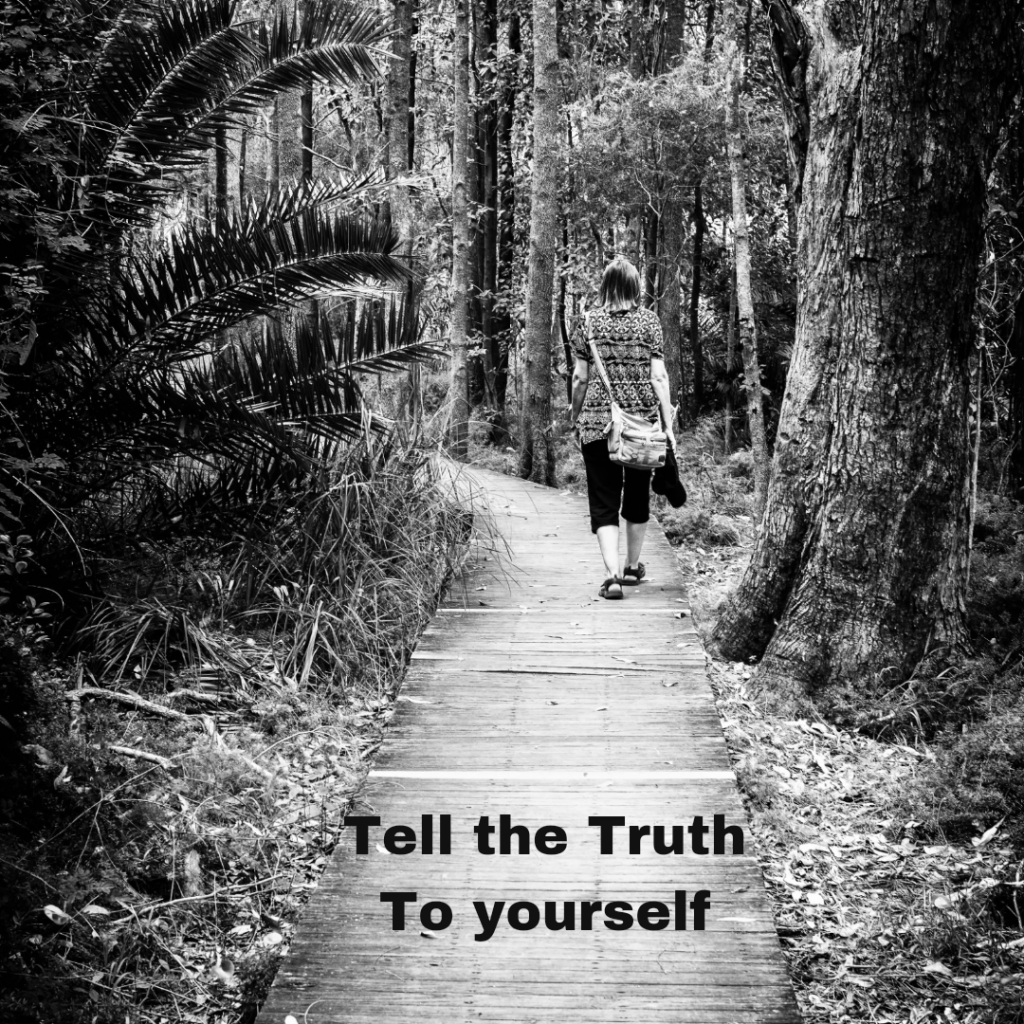
Well it’s simple really, very simple. Maybe simpler to say than to actually put into practice, but I think my lesson here is just this. Tell myself the truth as often and as much as I possibly can. In other words:

Be honest with myself

Let’s look at the options

If I’d really wanted to take this walk, to make this pilgrimage, no matter how remote, how complicated the logistics or planning, why didn’t I take action in that present? Or at least in some present before I actually forgot completely what the walk/pilgrimage was.

And why add ‘sometime soon’ if I didn’t actually desire or intend for this thing to happen? Well, possibly to put of any decision about doing or not doing. Or perhaps it was a way of saying (in completely other words), ‘Well, it sounds very nice, but I doubt I will ever end up doing it.’

So, honesty, and clear thinking about what I want and what I don’t want. That way I won’t be so attached, so keen on clinging to outcomes that I can’t see clearly, can’t easily know what I am to do or not do. Presence. Being present is what this is really about isn’t it?

To be completely present, to be fully here and now, requires me (all of us I suppose) let go of the maybes, and the ifs and buts as well as the endless ruminations about do this or don’t do that.

If I want to take a walk, or make a pilgrimage, then I say to me: just get on with it! If I don’t, then just say so, and move on.

Last little comment: I would really love for the present to remind me of what this walk/pilgrimage was. I’m a bit curious I guess(yes I know, curiosity is a present moment deflater) Maybe it’ll come back to me now I’ve written this post.
Peace
The Beginning of Devotion: A Poem

The Paradox of the Hermit Life (Courtesy of @travellinghermit3)

THE BEGINNING OF DEVOTION

Attention, paying attention.
It’s the beginning of devotion.
And when you see? When there is seeing?
Well, seeing is praise.

When we see, what we see,
is God.
Not the god, or this or that god.
There aren’t lots of gods,
or so it seems.
And in the end, there isn’t even one god:
there is only God.
So it was said by the sages.

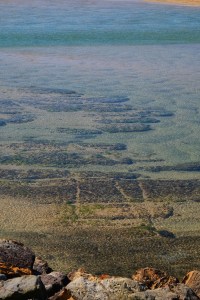
Remnants of Sea Cliffs

Here there are remnants
of sea cliffs.
Cliffs that have not towered
since ancient times.

Looks Like a Comfy Chair

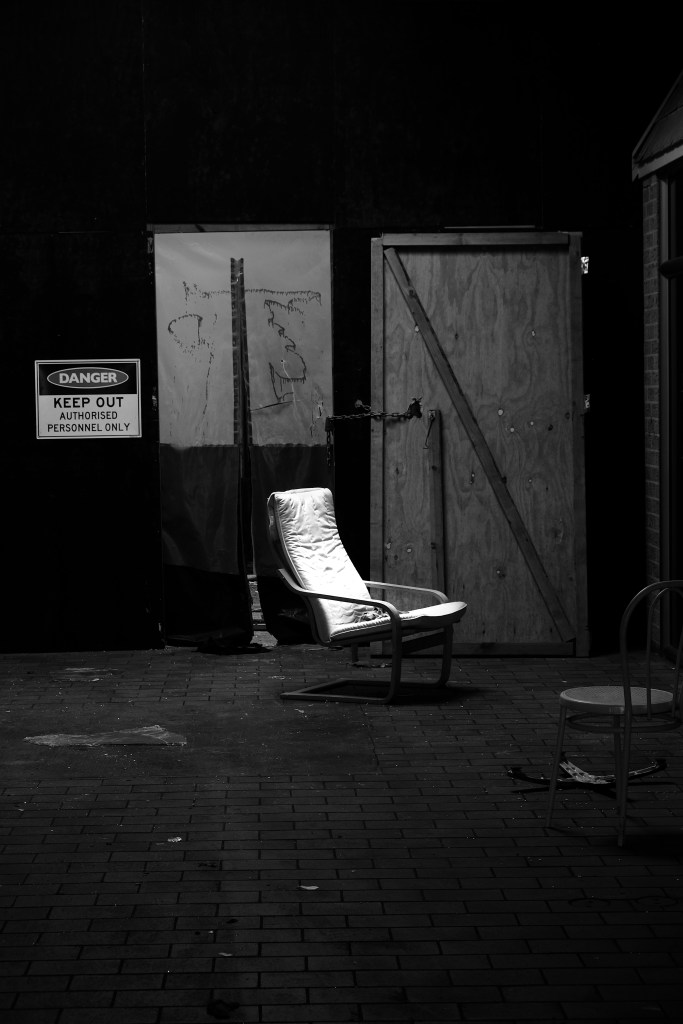
‘Looks like a comfy chair’.

That was the first thing my partner said when I showed her this photo. Her eyes – and perhaps even her heart – had found that which is illuminated by the sun, even though it’s surrounded by wreckage and ruin.

The wreckage by the way, of an abandoned and trashed store front. One of several in a small arcade, that’s long sat empty.

Ah, I thought: one more illustration of a metaphor I’ve been hearing a lot lately in my studies about consciousness.

Allow me, please, to adopt our teacher’s metaphor which, for me, really clarifies this concept of consciousness, or Atma as it’s called in Sanskrit.

Is the brilliant light streaming into this room and onto this chair affected in any way whatsoever because the chair is sitting amidst all that wreckage?

Is the sun shining any less brightly on the chair than it would if the chair was sitting in a luxuriously decorated space instead?

Of course the answer to both questions is no. The sun, and its brilliance remains undimmed, and completely unaffected, untouched, regardless of what it shines on.

The ‘I’ that photographed this scene, and my partner’s ‘I’ whose eyes were drawn to the chair in the scene, are both consciousness. Not ‘my’ consciousness; not ‘her’ consciousness. Consciousness is all; all there is. Boundaryless, infinite, all pervading. We can’t even say there is one consciousness, because there is only consciousness.

Ah, I hear you say: there is one sun shining on our world; and the sun isn’t ‘all there is’. Well, as our teacher likes to remind us, all metaphors are flawed: you can only take them so far.

Metaphors, are only meant to illustrate, to show us the way, point us in the right direction as it were. In our little example here, the metaphor is meant to help us gain some knowledge.

The knowledge that we are not what we see, hear, taste, touch, think or feel. We are that light – consciousness – that allows us to know what we experience with our senses.

One more thing: The light of the sun, flooding the chair with its brilliance, enabled my partner to see that it was comfy, even though it was sitting in that wrecked, abandoned and lonely place.

Just as in our lives, when everything seems to be crashing down around us and we feel we are the ones stranded in that wreckage, we can remember that the light of our own consciousness, is the way in which we may shine our attention on the truth of our unchanging eternal, and true nature, that is who we really are: perfect, eternal, absolutely unaffected by anything at all.

Peace and love