When Love is a Yoga and Lovers are Yogis

There was light at the end of the research tunnel

These last few days I’ve been researching and thinking about an idea for a blog post. But I’ve come to realise that I am grossly underqualified to write about the topic I had in mind. Let me put it another way: I am completely and utterly unqualified in any way whatsoever to go there. In fact, after all the research, I think I’m going to disqualify myself from ever going there in writing.

However, I’m a great believer in the idea that no quest for knowledge is ever a waste of time or effort; there is always something to be learned. During my research I came across a topic I believe I am qualified to discuss, as it forms an integral and vital part of my own personal spiritual practice.

Why I’ve decided to write this post, though, is because I made a discovery that lead to an insight that I know will lead to a great progress in that practice. It’s nothing new, not really, but it was one of those occasions we’ve all experienced of ‘I knew that, but now I really know it.’ For me, it was a realisation of something that till then had been a nice cosy theory and belief.

Bhakti Yoga is that practice. It is really a key foundation, a valuable component of my spiritual life.

Wikipedia opens its entry on Bhakti Yoga (see the link just above) with a description of the practice that mirrors what I think is the traditional understanding of Bhakti Yoga:
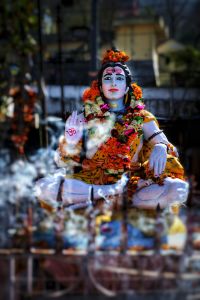
Bhakti Yoga (also called Bhakti Marga, literally the path of Bhakti) is a spiritual path or practice within Hinduism focused on loving devotion towards any personal deity.

In the same entry there is a description of the origins and meanings of the two words, Bhakti and Yoga:

The Sanskrit word Bhakti is derived from the root bhaj, which means “divide, share, partake, participate, to belong to”. The word also means ‘attachment, devotion to, fondness for, homage, faith or love, worship, piety to something as a spiritual, religious principle or means of salvation’.

The term Yoga literally means “union, yoke”, and in this context connotes a path or practice for ‘salvation, liberation’. yoga referred to here is the ‘joining together, union’ of one’s Atman (true self) with the concept of Supreme Brahman (true reality).
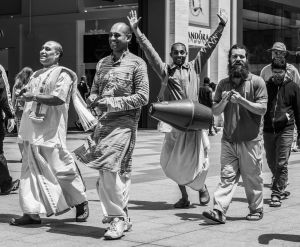
For some, dancing while chanting the names of their God, demonstrates their devotion and celebrates their union with each other and with God

In other words, those called to a religious or spiritual life, practise Bhakti Yoga whenever they pray or otherwise express devotion towards their personal conception of God, or the Divine. This particular definition seems to be saying that such a conception of the Divine, or God, is in the form of a personal deity who is a kind of representative of true reality, which the devotee is aspiring to join with.
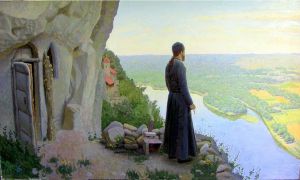
Some Bhakta Yogis are full-time, full-on practitioners. People like contemplative nuns or monks, hermits who retire from the world into seclusion. Anyone basically whose entire life and activities are spent in devotion.

So, when I discovered all this, I became intrigued; I decided to go off on a tangent and explore the word Bhakti itself. Wikipedia has a separate entry for the word on its own:

Bhakti is a term common in Indian religions which means attachment, fondness for, devotion to, trust, homage, worship, piety, faith, or love. In Indian religions, it may refer to loving devotion for a personal God

is often a deeply emotional devotion based on a relationship between a devotee and the object of devotion.

In ancient texts the term simply means participation, devotion and love for any endeavor.

May refer to devotion to a personal god? While I thought this entry doesn’t contradict our first quote above, it does seem to broaden, and deepen, the meaning of Bhakti. Expand might be the better word.
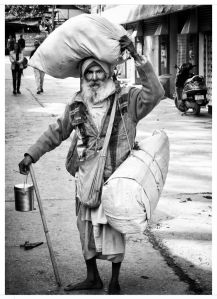
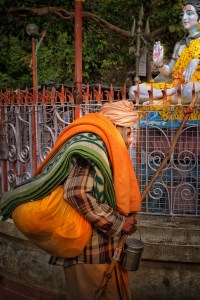
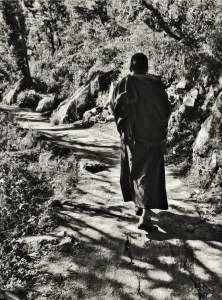
In some traditions a simple life on the road is a way to commit full time to Bhakti or devotion.

It struck me that that object of devotion might be anything. Or even everything. You see? I told you it wasn’t a new idea. It’s just that it’s resonated deeply within me now. It appears that the object of Bhakti Yoga practice doesn’t necessarily have to be a ‘personal god’.

Many many people would say ‘I like animals’ or ‘I think we should save the world’. But, while that may imply a kind of love for or at least a fondness for, I think Bhakti is something more – actually several somethings more!
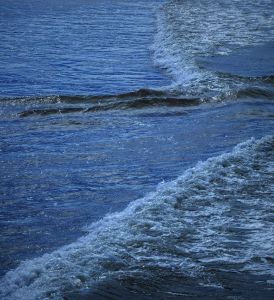
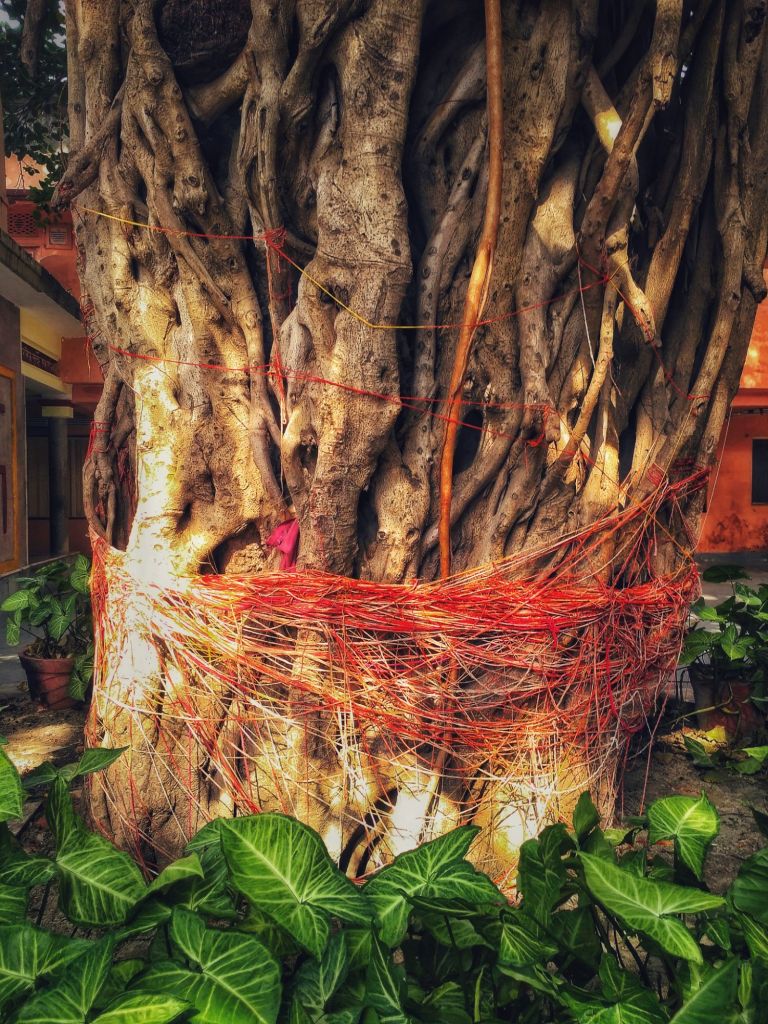
For example, some people have a particular attraction to and love for, the ocean, or it might be a river they view as, if not sacred in a religious sense, then as special to them in some deep, comforting, even therapeutic way. Others have similar relationships with and feelings for trees, or even a particular tree.

Animals as either individuals or as a species or group, can have the same appeal and call to other people. Then there are those who feel strongly in their hearts you could say, that Earth itself is a sacred object, or others have a knowing that the planet is a living entity and worthy of our devotion.

Bhakti begins with love and devotion, which is about caring for, affection towards, loyalty to, emotional engagement with the object of devotion. But even more than that, there is faith in that object of devotion; faith as in trust, confidence that the love is real, that the ‘relationship’ is sound and real.

Homage and worship too are key aspects of Bhakti. The deep inner feeling we have towards a thing, person, or other being, that is beyond what we normally call ‘love’. It’s about seeing and actually realizing ‘in our hearts’ our desire to be merged or united with that thing, person, or other being.

Actually, seeing that word other just now got me thinking. I had to go back and reread our definition of Yoga up there near the beginning. It says Yoga means ‘union, yoke’. It goes on to add: yoga refers to a ‘joining together, union’.

This passage seems to be suggesting that Yoga (in our case Bhakti Yoga) is both an already existing union, and a process of joining together to achieve union. One thing I would say here is that in my practice of Bhakti (and love as a general thing to strive for and be) it’s both.
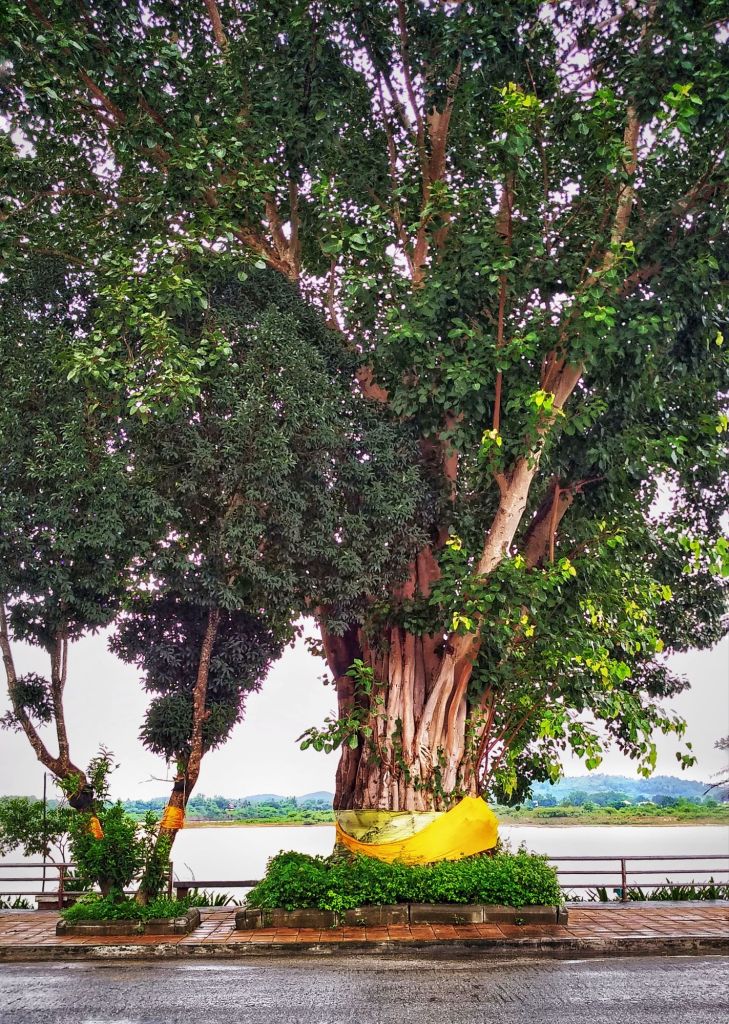
Trees are special beings for many people from a whole variiety of cultures all over the world

But, in the end, it seems to me that the process or practice, the path of Bhakti, serves to awaken us, to assist us to acknowledge, recognise, and realise in that really knowing way, our pre-existent true nature.

That true essential nature can be said to be the reality of our oneness with all things, living and non-living. And their oneness with us too of course. In fact, by putting it that way, I’m saying there is only one, or oneness. What’s that expression? One without a second.

May you be a Bhakta Yogi. Or, perhaps you already are one?

Love and peace from Paul the Hermit

Life has manifested itself as the multitudinous forms that comprise the universe. It is the one Universal Life, Power or Shakti (the laws of the universe or natural laws) that controls, guides and actuates all movements and activities in all beings, creatures and things.

                — Swami Ramdas
Making Peace with Poetry and a Prayer

Namaste my friends

The poem I want to share with you today has, I think, been shared on this blog before. I haven’t checked because I didn’t want to be tempted to censor myself and not post it again if it has been posted.
The poem, titled simply Peace Prayer, has a repeating refrain in each verse:
Our Lady Queen of Peace Pray for us.

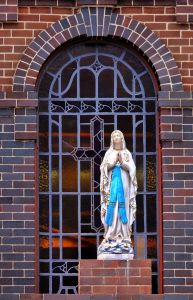
A couple of days ago I came across a church dedicated to this particular manifestation of the Divine Feminine. I know it doesn’t seem to be such a far-out coincidence, but up till then, I had never encountered a church with this name.


So, obviously, it reminded me of my poem, written a couple of years ago now. As well as the story that prompted its writing:

When I was 12 my father went to war. As a professional soldier, he went as a part of this country’s commitment to its American allies in its war against Vietnam.

Our family was, at least nominally, Christian at that time, and anyway, desperate times do indeed call for desperate measures.

Which means we, my mother, my sisters, and I, formed a tiny prayer circle every night for over a year to pray for my father and for peace.

These days I no longer label my beliefs, not if I can help it anyway. What I seek now is the Divine wherever it is to be found. Which is everywhere of course!

In any case, here is my poem. It’s always the right time to pray for peace, though we should always remember our prayers are really directed at ourselves. It’s up to us to answer the prayer as we are able and see fit.

Peace and love to you all.

Peace Prayer

The father, the husband, the man of the house
He’s away. At the war.
Our Lady Queen of Peace pray for us.

Away at the war, yes,
In a far off land. Not his own.
Our Lady Queen of Peace pray for us.

Away at the war. “Incountry”.
that’s what they call it.
Our Lady Queen of Peace pray for us.

At home the children, the wife and mother wait.
Wait and pray.
Our Lady Queen of Peace pray for us.

At home they wait yes.
Each night on their knees,
in a circle. Prayer circle.

Away at the war, he is fighting. For what?
At home, they are praying. For what?
Our Lady Queen of Peace pray for us.

The Best Job in the World

Indeed, it is clear to all who dwell there that through them the world is kept in being

I jotted down this note I forget how long ago. Over the last few years I’ve read a lot about the early Christian hermits who lived in the deserts of Egypt, Syria, and other areas of that area we label the Middle East.

While I think it was one of these early hermits who uttered these words, it may instead have been a monk or hermit from the 9th or 10th Century, living in the forests of Russia or Eastern Europe. (I wish was a lot less careless with sources for things I note down).

In any case, it was spoken by a hermit or monk who, along with perhaps thousands of other men and women, fled the strict dogmatism of both government and religious institutions , as well as the corruption, materialism, noise, and all the other distractions of the cities and towns.They went to the deserts, the forests, and other remote places, in search of solitude, silence, and peace.

They longed to commune with the divine. They chose to bypass the mire of worldliness, and hoped to find a better way to serve the divine and the world. The writer or speaker of our quote is pointing our attention to all those who went to the deserts, the forests, and other sanctuaries, who in her or his words, believe they are actually keeping the world going, and its people too.

These nuns, monks, priests and hermits, knew that by communing with the divine without distractions, and living a simple life completely and absolutely centred on the divine, was the way to save the world.

‘So’, you might be saying with a slightly cynical tone in your voice: ‘These are people who have ‘escaped’ from the world and are ignoring governments and the law, rejecting social status of any kind, not associating with other people like other good citizens. They’ve gone to sit in a hut or cave or whatever and are doing nothing productive at all. They’re not buying stuff so they aren’t contributing the the economy. And you say they are the ones keeping the world spinning round? Hardly.’

There are hermits everywhere.

Yes, I think they are. Keeping the world spinning I mean. Just as mystics from all the world’s religious traditions, these women and men of the deserts – and the forests too – knew that the world they’d left behind wasn’t real. Well, yes, it’s real enough of course: I mean we only have to look around us, and feel the workings of our bodies. It’s real alright.

But, realer (I know, it’s not a real word) than this physical world we are in and are an integral part of, is what lies within us as well as everything else in the Universe:

Holy Wanderer
Detached from all Worldly Entanglements

The divine, God, the life force, Consciousness. So many names for the same thing. Many of us sense that at the core of ourselves there is ‘something else’; that there is some kind of intelligence for wont of a better word. This intelligence is what illumines life, as in life, the universe, and everything.

But, we don’t see this, or not so often anyway. The mire of worldliness (a phrase I mentioned earlier and which I like very much) seems to be specifically designed to keep us in the dark so to speak, about our true nature.

Think about the seemingly endless focus on materialism with its temptations and promises to make us happy; the conflict and competition among individuals and nations to acquire more power, possessions, land and anything else that ‘they’ve got and that we want’.

Mire is a good word: We’re trapped and sinking fast in a kind of quicksand.

And this mire keeps us from becoming aware, from realizing, that we are the Consciousness (the word I prefer but, as I said, names are just names) mentioned above. It keeps us ignorant of our true nature, and we go on and on struggling to keep afloat in the world.

The hermits of the past and the present, the nuns, monks and other contemplative people of all kinds, and, in many and various places, are all engaged in a quest to know – and yes, to realise – that they and everything else in the material and non-material universe is Consciousness.

I believe that, far from being unproductive, from ‘doing nothing’, It is the engagement by such people everywhere with this quest that does indeed keep the world in being.

Courtesy Wikimedia Commons Thank you

I would like to leave you with a couple of quotes if I may.
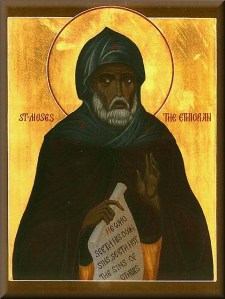
The first is from Abba Moses, one of the greatest of the early desert fathers who was born in Ethiopia and lived in Egypt in the 4th Century:

Our objective is puritas cordis,’ Abba Moses told Cassian and Germanus [fellow monks].A heart kept free of all disturbance. The more we cultivate such inner stability, the more we can offer our lives in service to the world.’

Courtesy Wikimedia Commons Thank you

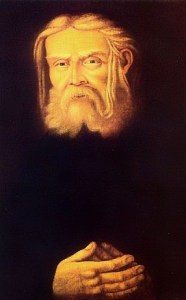
The second quote I would like to share is from Saint Seraphim of Sarov, a 19th Century Russian monk who lived as a hermit deep in the woods:

‘Acquire a peaceful spirit, and thousands around you will be saved.’

Probably the best gig in the world I would say.

Peace and love

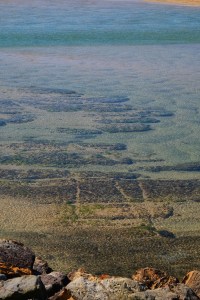
Remnants of Sea Cliffs

Here there are remnants
of sea cliffs.
Cliffs that have not towered
since ancient times.

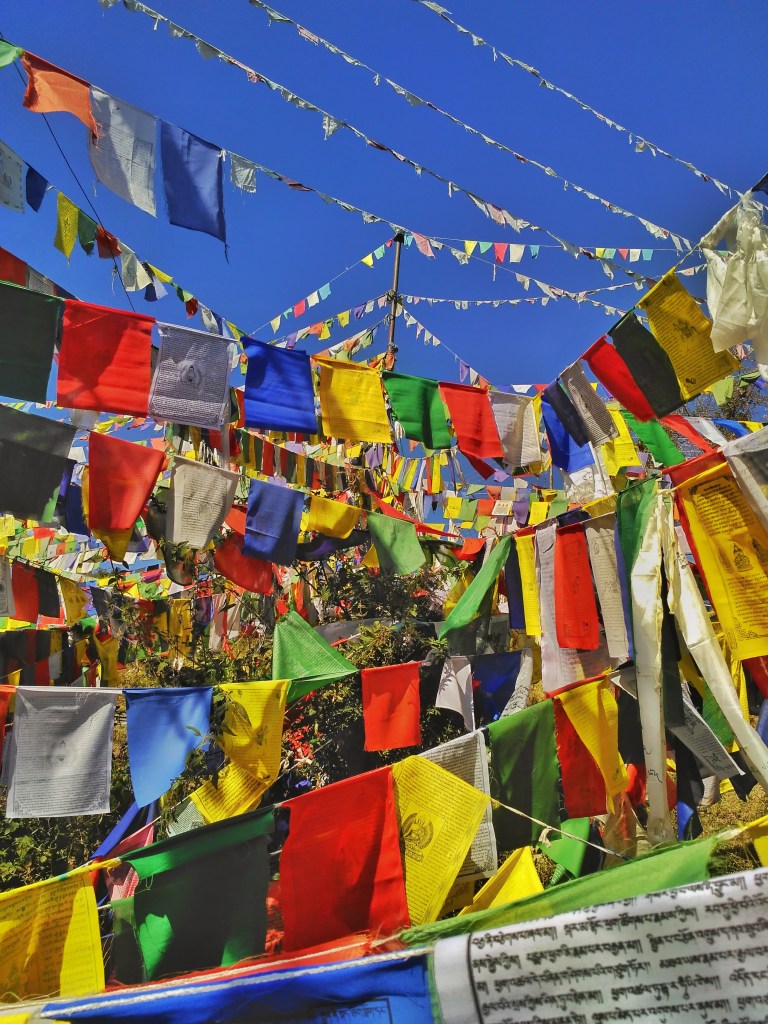
Dharamshala Dharma Dreaming

In the Forest of the Windhorses

DHARAMSALA DHARMA DREAMING


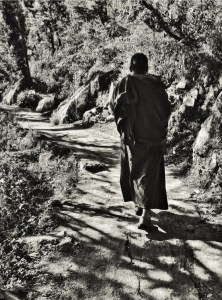
The hand of the monk 
agéd, insistent, but gentle too, 
takes and holds mine. 
The monk sits, the Dharma before him, 
sacred texts resting in their saffron shroud. 
My presence completes 
this circle. 

Mountain monastery 
calling him; it’s not home. 
Other mountains 
he’s climbed. Escape. 
High places divide 
this world from that, 
that time from this. 

His loving touch, his smile, 
linger in rarefied air. 
Air drenched with the warmth 
of the Dharma, 
in this late monsoon 
restaurant of the Snow Lion, 
south of his land.

The Mountain Monastery Calls

Illumination

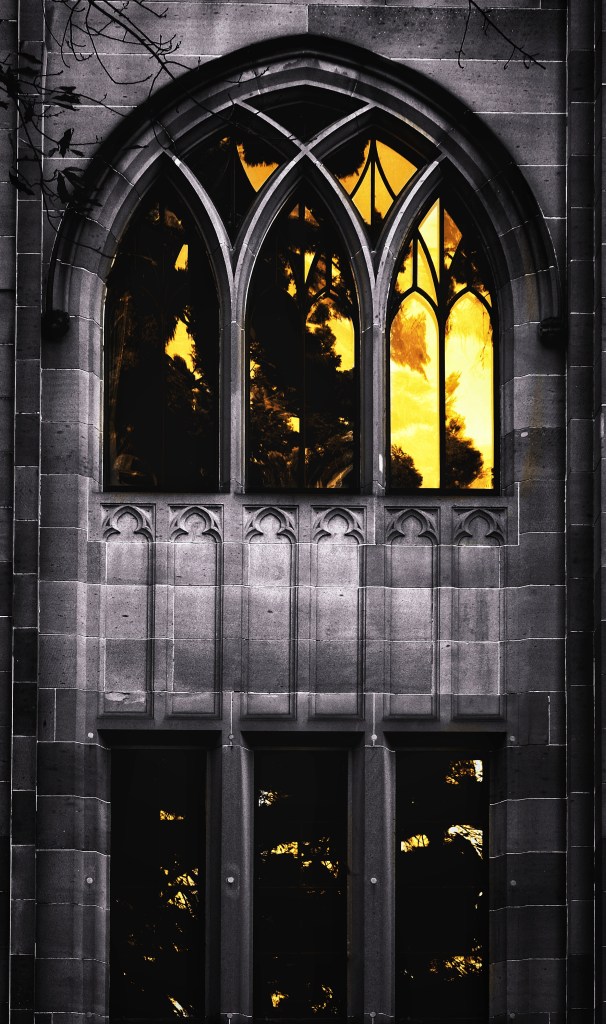
AS GAIA TURNS

Surya illumines
with his fiercely gentle life-giving light.
Gothic panes receive and reflect
golden impressions
as Gaia turns.

When Misreading is no Mistake

We’ve all  had this experience I think. I’ll be reading something, and right away I’ll come to a conclusion, become either sure of something or the complete opposite; I can be confused, force myself to ask more questions. I can even have brilliant insights or realizations.

No? Well, maybe it’s really just me then. But, wait there’s more: this is a two part experience. When that second part happens we will come to realise that what we think we read is nothing at all like what the words on the paper (or screen) actually said in a factual sense.

Yes, you’ve probably guessed by now that there’s a story coming. In fact this exact thing happened to me this morning, all the way to the brilliant insight or realisation bit.

In fact it was a brilliant realisation, the only problem was that it was based on only on what I thought I read, not what was actually being said.

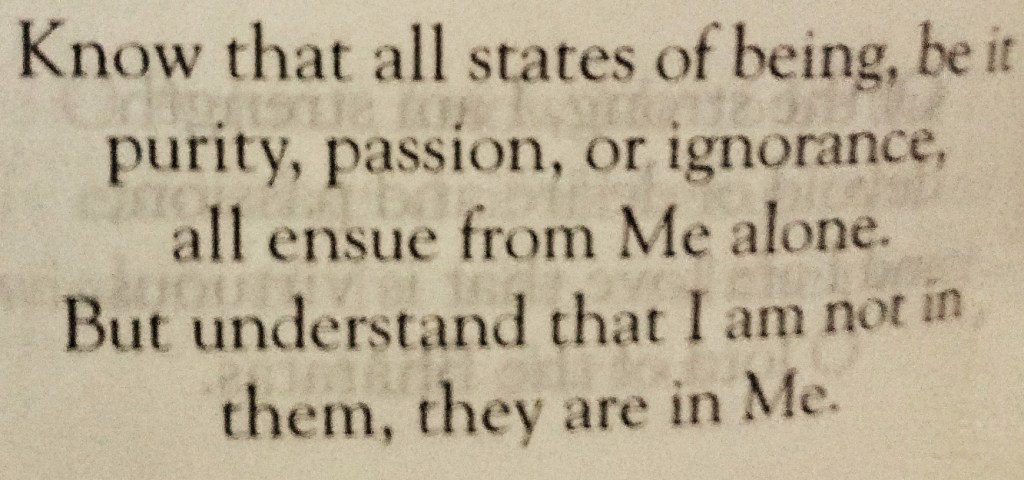
Anyway, I was reading the verse quoted below, from my Bhagavad Gita and a sudden flash of insight hit me.

Despite these five lines saying a particular thing in a clear and precise manner, I somehow misread the first three lines to say:

All beings ensue from Me.

Bhagavad Gita Ch 7:12

Somehow my mind skipped the ‘states of’ bit and made a leap that actually lead to a great realisation: Of course, I thought; God is not in us (as in living beings), it’s we who are in God.

Which to me means that we are all part and parcel of God. I’m not saying, I’m God; I’m not saying you are either. What I am saying is that all creation as one, unified whole, is in God. And if that one unified whole does indeed ensue from God, then it follows that all of creation is God.

As individualized, embodied entities, we (along with all life everywhere) are simply manifestations in the material form of that divine energy, that life, that truth; that which we often call God.

Now, this is an instance of a flash of insight leading to a truth, when the receiver of the insight (that’s me) is engaged with what you might call some other factual reality, that is, the actual words on the page.

At first I thought, that’s weird: how did I misread all those words related to states of being? I mean they are pretty clear right? But then I thought, no, maybe not so weird. In fact, it makes sense.

How can my material mind and intellect possibly be expected to always keep its millions of thoughts, ideas, impulses and the rest, in perfect order each thought or whatever following completely logically from the one before and to the one after? It’s never going to happen is it? Not for any of us (Well maybe I’m overstating my case here, but you know what I mean).

And if mind does indeed operate on what seems on the face of it to be a random basis, then it’s perfectly reasonable to suppose that one might be prompted to some momentous insight by, well by anything really. Even if it’s a conclusion jumped to after the misreading of a text.

In this case though, that jumping to conclusions, even though based a misreading, has turned out to be a genuine realisation that I feel on an intuitive level; my instincts tell me it’s Truth.

Jai Gurudev
All that I am today is by your grace.

The Desert Called, and I Answered

Eventually.

Greetings friends. I welcome you from my new hermitage in desert country.

You know, it’s an old idea, a cliché even, to say that we, all of us, are on a pilgrimage called life, a Hero’s Journey as it’s called by the Mythologists. And, on any such journey there is what those same scholars call a Call to Adventure.

They are the times when we are challenged by life to commit to an action that will stretch us somehow, take us out of our comfort zone, change our life; to make a move; take a risk; embark on a journey either internally or out in the physical world.

So, when I tell you I got a call to come out here to the desert, and that I answered it, why the necessity to add ‘eventually’? What happened to delay that journey? Well, that’s what our Mythologist friends call The Refusal of the Call.

They’re the times when, once we’ve heard the call, and when we’ve felt its rightness, we still say no. Not now. And we come up with all kinds of perfectly reasonable explanations for our refusal.

In my case, I said, hey, it’s fine here; I’m near the beach; I really have no reason to move; there are plenty of ‘other places’ to check out first. The excuses went on and on.

All along though, there was this place, this country, calling. Of course ‘the desert’ isn’t always or for everybody the literal sand covered land, that gets very hot, and is generally thought of as barren and even hostile. It can also be a metaphor for any place – or no place in particular – that is a place of retreat, a quiet place, a place for living apart from the mainstream of human life.

For some people inclined to a life of contemplation and solitude, this place might be a small hut in a forest or a wood, or a camp on a remote beach on an even more remote island. Then there are others who are called to an actual cave high in the mountains, or on the banks of some sacred river somewhere.

And, equally, the desert, the place of retreat, quiet, solitude, and living apart, may well be an apartment or house in a suburb, or even in the centre, of a big city.

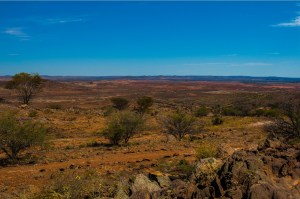
Then there’s me: called to this desert town of Broken Hill, almost but not quite in the centre of the continent of Australia. It is deep in the arid zone: it’s very far out back here in the Outback, 1500 kilometres inland from the east coast to be precise.

Yes, well this is all well and good, but shouldn’t I be answering my own question: why eventually? Well, we’ve covered the excuses, but really isn’t that just plain old procrastination? Yes indeed. If we get back to our Mythologist friends once more, we learn there is a stage in this Hero’s Journey that follows on from the Refusal: The Supernatural Act.

These are the times when things happen that seem to come at us out of the blue, from no rational, logical, or explainable source. Something that we might find hard to beleive at first because it’s way out there; supernatural like it says.

But that supernatural bit doesn’t have to take a spooky form, it might be that the ‘supernatural act’ is an internal insight or realisation triggered by a perfectly natural occurance. That’s what happened for me. What was this non-spooky, natural event that prompted such internal insights and realisations in me and got me moving?

Rain. Yes, rain. It rained almost every day for over six months. I am very very blessed that I wasn’t affected by flooding as so many in nearby area were, and I am thankful for that. But it’s safe to say that rain, mud, no sun, and limited or no access to the outside for days or weeks at a time, soured my romance with the coastal lifestyle.

You could say that through the sound of rain on the roof, I could still hear the call of the desert. In fact it got so loud that, eventually, I could no longer ignore it.

So, eventually, I answered the call, and here I am. Here is a small miner’s cottage and my new hermitage, my new safe haven by the side of the road. The cottage is situated in a mining town that sprung up in the 1880s. So this cottage has been home to miners and their families for generations, including the current owners.

In a sense it’s quite likely that I am the first occupant who hasn’t been or isn’t a miner. Though you might say that my excavations, rather than being in the dark underworld beneath the surface of Mother Earth, are taking place in the equally dark, hidden interior places of Self. A mining of another sort you might say.

Before flying out here, I was thinking about what was actually calling me to the desert (putting aside the rain for a moment). After all, I lived in a small cabin in a park like setting literally five minutes walk to a pristine Pacific Coast beach; I had trees and forest like spaces all round, as well as a small river two minutes walk. And that’s not even thinking about the abundance of wildlife.

And it occured to me that it is the stillness of the desert that was calling to me. This town of Broken Hill is a mid size town (actually a small city with about 15000 people), with the usual shops, cars, people, and the rest.

Yet there is a stillness. No longer can I hear the constant sound of seawaves crashing. No longer can I sense the never stopping coming in and going out of sea tides. And out here, it seems like even the people are moving quite a bit slower too. I’ve yet to see a single person rushing about. And they seem to smile a lot as well.

The street I live on is extremely quiet, and even on the so-called ‘busy streets’ there isn’t the mad acceleration and braking we’d see everywhere on the coast. Of course there is the odd driver who thinks every car is a racecar, but where don’t you get that?

But, actually it’s more than this. There is, beyond the actual literal quietness, a silence that seems to exist as an entity or state of being in its own right.

A stillness that is a solid thing, just as on the coast there was (is I suppose) a constant frenetic atmosphere that seemed to overlay everything. People rushing – on foot or in cars – even when there seems to be no reason for hurry (though of course you can never tell can you?). And not so many smiles either.

Contemplative people, those seeking solitude, and peace and quiet in which to pray, to live slowily, and to explore the divine, have been drawn or called to deserts (in all its forms) for thousands of years or longer. And I am fortunate enough to have finally (eventually) heeded the call myself.

Here, away from the incessant acceleration and braking (I do like this expresion), and in that stillness that envelops this land, perhaps I can dig a little deeper, uncover a bit of quiet, and discover a piece of solitude.

Out here, in the Outback, life can be harsh for all living beings, often dangerous in its aridity and isolation. It’s a long way from major cities, food and supply chains are extended to extreme limits, and the human hold on the land is precarious at best.

Yet, the paradox exists: out here far from the fertile coasts, the soft sandy beaches, the major urban centres where the mainstream of (human) life goes on, there is a quiet, a peace, a stillness that seems to pervade the very air one breathes.

A wise person wrote something short and sweet that sums all this up for me:

There is a stillness in the wildness.

When a Day Off Isn’t a Day Off

Namaste and welcome

You know by now that I study the Bhagavad Gita. I’ve been at it a few years now, and it gives me a great deal of joy and comfort, not to mention the help it is to me as I struggle to understand Self and life, the Universe and everything (to borrow a well-worn phrase).

Yes, I love this book which is the story of a warrior king and his charioteer getting ready for battle. Arjuna, the warrior, is us. Or rather he is our ego, our lower self, the us that lives as a material entity in the material world.

The charioteer is actually Krishna, and he represents our Higher Self, the Self that is what some people call God, or the Divine, spirit, universal consciousness. In other words, my Higher self is having a conversation with my lower self as I battle or struggle with living in the material world.

Anyway, it’s enough to say that I am very fond of this book, the lessons it holds, the guidance I sometimes glean from it. And I try to spend time with it as often as I can. Daily mostly, but not always. I have to admit that sometimes I just want to give it a break, leave the words alone, just be with Self for a bit.

Actually, there is a verse that I wrote down long ago that does in fact sanction the student (that’s me) to take a break.

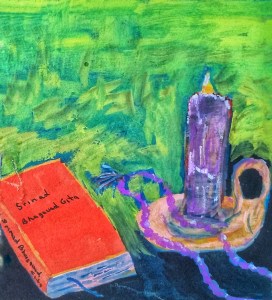
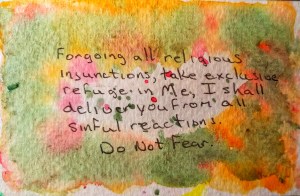
Forgoing all religious injunctions, take exclusive refuge in me. I shall deliver you from all sinful reactions. Do not fear

Bhagavad Gita Ch 18:66

This is Krishna speaking, giving instructions to Arjuna. Essentially it’s the higher Self telling our little selves to ignore outside rules, regulations and all that, and rely instead on what comes from within the Self; in other words, what our hearts tell us.

Now, he’s not saying ignore laws of the world, that’s not what this story is about. He’s telling Arjuna, look, don’t take notice so much of what the religious leaders tell you, or what instructions you read in holy books.

Then, after more or less consistent study over years, I came across yet another verse quite recently that confirms this one, but that hadn’t ever spoken to me before:

When your mind is fixed and unmoved and not confused by scriptural injunctions you shall attain yogic samadhi

Bhagavad Gita Ch 2:53

This verse actually says: don’t confuse yourself with stuff you read in the scriptures; instead keep your mind fixed and unmoved by the outside world. And if you do that, you will achieve that level of peace, self-realisation, and happiness, that you’re after.

So, do we have here a book of scripture that is in fact telling me not to take any notice of what it says in that book? That doesn’t sound very likely does it? No, I think what both these verses are getting at is this: The first and primary thing to do if you want to achieve happiness, peace, self-realisation, is focus inwards, on the Self.

Or God, or spirit, the Universe. We all call it by different names. But the point being made is that we aren’t going to find all the answers only in a book, or in the instructions from ‘religious’ leaders; overdoing the books or the slavish following of teachers only causes us (sorry I mean me) confusion.

Higher Self here (in the guise of Krishna, who is in the guise of a charioteer) is advising us to look to our Selves, not to the words of others to reach union with that Self. At least, that’s how I’ve chosen to interpret it.

What’s interesting here is that these are two of the very few verses for which I haven’t looked at commentaries or interpretations by other people. What I’ve done in other words, is take the advice given in these verses and looked inwards.

I don’t mean to suggest that I use these verses as ‘have a day off’ cards; most likely the contrary is true. On days when I don’t look at the Bhagavad Gita, I like to think I spend more time ‘just sitting’, perhaps chanting mantra, and contemplating.

Of course it doesn’t always work out like that naturally. But, at least on those occasions there is the heart and mind space available for a more direct communication or connection with Self. With that part of me that is one with all.

Peace and love

Believe It or Not

Welcome friend to another post. It’s good you are here.

Like so many other people I like documentaries on, well, all kinds of topics. I sort of go through phases and a while back I was on an historical/archaeological kick. And if it involved adventurous journeying, then so much the better.

Anyway, one I watched has stuck with me. In this show, an Indiana Jones type went in search of an ancient religious artifact. After a sombre pilgrimage across a stunning but arid landscape, a number of adventures and fascinating tours of interesting historic sites, he was forced to conclude that nobody could know for sure that this particular artifact actually existed.

This was especially the case given the fact that several hundred individual churches across a vast area claimed to possess said artifact, according to our intrepid guide. Then there was a doco I’d seen a few days prior that suggested this artifact was in fact hidden in Southern France.

Or perhaps it was destroyed in 800BC as some other ‘experts’ suggest. In any case, our fearless explorer came to the conclusion that, at the end of the day, whether the artifact still exists (or ever did exist) isn’t the point. He told us that what mattered was that people believed it existed, and that its power existed through that belief and was a force for good in people’s lives.

Actually I think even this misses the real point: I don’t think we are necessarily meant to have a belief one way or the other when it comes to the historical accuracy of myth. Myths tell us stories about truth, about our place in the Universe, and how to behave and live a good life. The facts or lack of them aren’t important.

Every culture throughout human history has had its myths: about creation, about their pasts, their gods, their futures, and how to conduct one’s life so that society can continue to function. Some will say that we in the so-called West are lacking our own myths and stories.

Well, I also believe that our myths are in many respects largely forgotten, or perhaps are only held by this group or that within our societies.

I think we all have our own myths, whether they are ones received from our society either consciously or unconsciously learned, or from our own personal life experience. Then of course there are the so called ‘modern mythmakers’: the media, politicians, and marketeers, all advertising their own ‘truths’. But that’s not what I’m talking about today.

So, moving right along. Hands up if you’ve ever owned or been given a St Christopher medal? Ah, just as I thought. Huge numbers of people out there have at one time or another had a St Christopher around their neck, or hanging from their car’s rear vision mirror, or perhaps tucked securely in their bags. And really one doesn’t have to be ‘religious’ to admit to ownership of such an artifact.

He’s an interesting character this Christopher. He is a saint of the Roman Catholic Church and here we start already to get into the myths and legends around our friend Chris. It’s widely known that he was stripped of sainthood and declared to have never existed after the reforms of the late 60s in the Catholic Church. Myth number one.

He is still a saint, and all that happened was the church found itself with an overly crowded calender of saints’ days and decided that some could be cut off because they weren’t necessarily of ‘universal importance’, and besides, he may not have actually ever existed.

Poor old Christopher was thus unceremoniously dumped. No saint’s day, but he did keep his sainthood. As for the minor question of his existence, the church said that wasn’t their decision to make.

Not much is known about the possibly historical figure of Christopher. First up (myth number two) his name wasn’t Christopher: he was a seven foot five inch (may or may not be a myth) called Reprobus. He was a Canaanite who while working for the king suddenly decided to go off on a spiritual quest to find an even greater king.

Like all good heroes, Reprobus has all kinds of adventures, until one day he meets a wise old hermit who tells him that if he wants to serve the greatest king of all then he has to help people cross a treacherous river where many drowned trying to get across.

So, Reprobus started to carry people safely across the raging river. One day he lifted a small child onto his broad shoulders and carried him safely to the other side. Reprobus told the child that he’d never carried such a heavy weight before, and so they had both been in grave danger.

The child then told Reprobus that he had not only carried the weight of the world on his shoulders, but also the one who made the world. In other words our friend was informed that he was indeed serving the greatest King of all.

And that’s how good old Reprobus got the name Christopher: the name means Christ bearer. Later, Christopher is martyred for his faith and the rest, as they say, is history. Because of his splendid lifesaving deeds serving people crossing the river, our hero over time became the patron saint of travellers. And his fame spread beyond the confines of the Catholic Church and all sorts of people have looked to him for protection for themselves or loved ones when travelling.

I have a confession to make: I love and always have loved (venerated isn’t too strong a word) St Christopher.

Mind you, I’d always had some issues around the lack of evidence for his having ever existed. Not to mention the small detail of a miraculous appearance of the Christ as a child who was as heavy as the whole planet.

Anyway, while I was never quite convinced that St Christopher was a real historical figure anyway, I agree with what our friend the Indiana Jones look-a-like says: it doesn’t matter.

And for me there is still a truth at the heart of all this: Our pal St Christopher is me. He is you; he is each of us. We all have the strength to carry the soul of Self, the heart of ourselves, across the raging rivers, through the wild storms, and across the sometimes very rocky ground that make up each of our lives here on Earth.

Do I wear a St Christopher medal? I most certainly do. Belief or non-belief in his historical existence is beside the point for me. It’s the myth I resonate with, the symbolism.

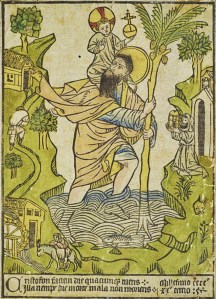
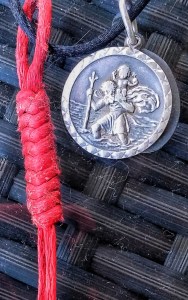
My medal shows a big, strong guy wading through knee high water carrying a small child on his shoulder. Both of them are me. Both of them are you.

Peace and Love
Paul