Even a Leaf: A Poetic Offering

Namaste and greetings my friends

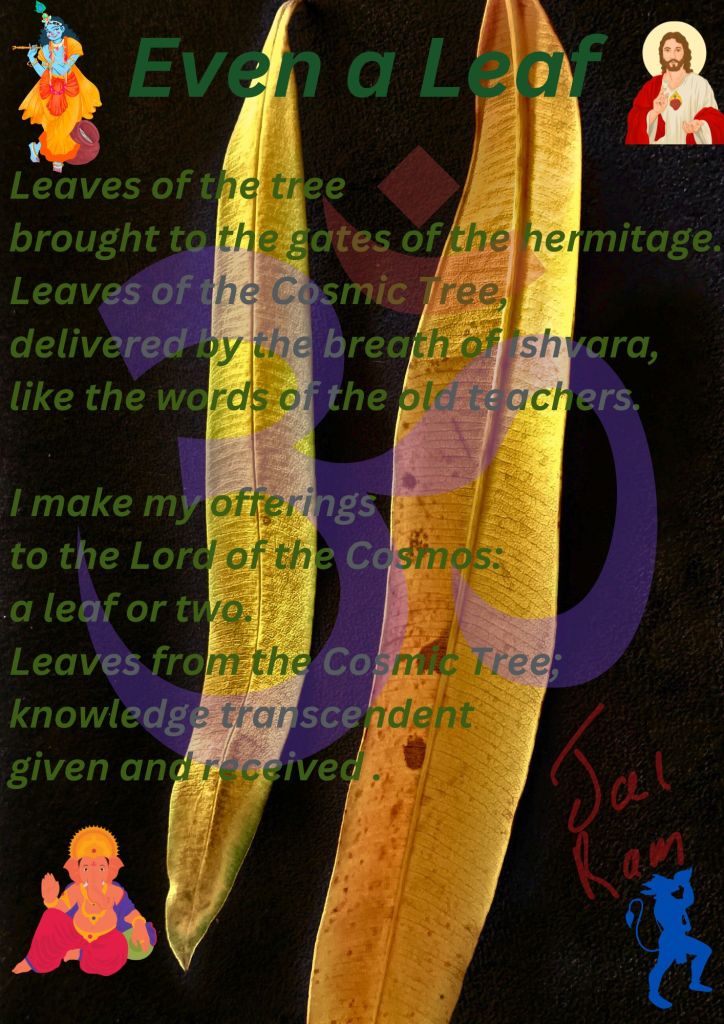
Today, a poem for your reading and contemplative pleasure. The title of the poem comes references a verse from the Bhagavad Gita in which Lord Krishna talks about what are acceptable offerings: He tells Arjuna that God, or the Divine will accept even a leaf as an offering of devotion.

So, when I returned to the Hermitage one day recently to find two leaves on the ground at the front gate, I recalled that verse and decided to make of those leaves, just such an offering.

Allow me now to share that offering with you.

Peace and love

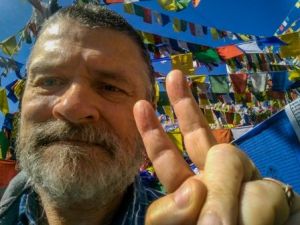
Paul the Hermit

Japa in the Dunes

Japa, or the chanting of the names of God or the Divine, is a central spiritual practice for me. In fact, as time goes by, it becomes even more important for me as I try to spend more time chanting than not!

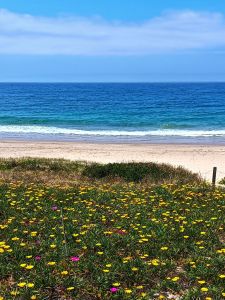
With Japa in mind I climbed yesterday to the crest of the sand dune on which our current hermitage is situated, to spend a while with the sea and the dunefield flowers, the birds, and as I planned to be doing some chanting, also with those unseen aspects of the Divine that I would be addressing with my words.

As seems to be happening quite often these days when I immerse myself in the beauty that is to be found all around me, all that is to be seen and experienced ‘up there’ as it’s come to be called, a poem wrote itself about yesterday’s particular excursion and experience.

I share it with you now in the hope you will enjoy reading it; thank you for reading it!

SAND DUNE KIRTAN

Perched upon the crest of a sand dune,
I chant the names of the Lord
Hare Krishna Hare Krishna
Hare Rama Hare Rama

I am still; the Lord’s names vibrate in my mind.
But Varuna’s energy washes saltwater back and forth
in the middle distance.
Sea waves manifest from depths unknown.
Sea waves dissolve on the shore
in the middle distance.

Now, in the near distance,
near to me where I rest and chant on sacred ground,
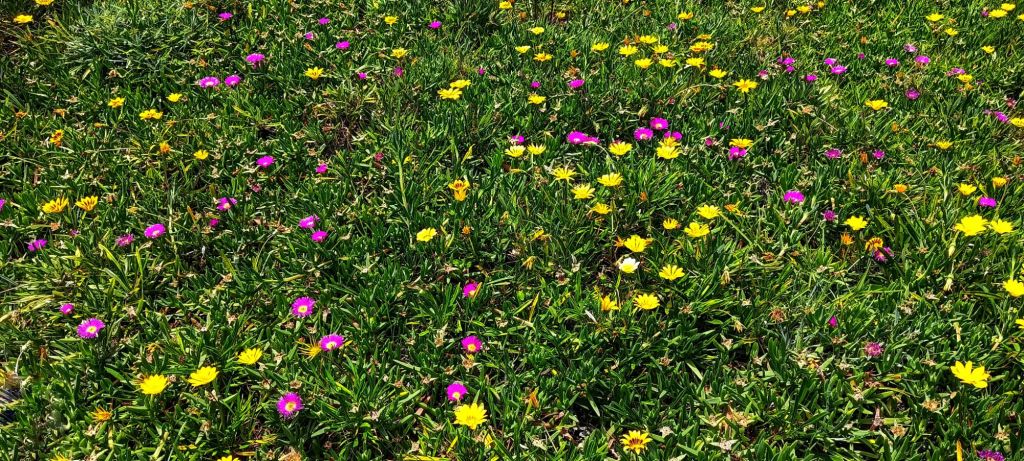
flowers with yellow heads, purple heads, wave in the wind
as if ecstatically dancing to a holy Kirtan
gifted them by the wind.

These myriad jewels in the dunefield join me in my japa.
Or is it that I merge with their sacred dances?

It’s neither, and yet it’s both:
The beautiful blooms are me,
and I am them.
We are the One,
Chanting and dancing
the names of the One.

Why do I Pray?

‘Why do you pray?’ I ask myself. It’s not a rhetorical question: I really do want to know; it’s one of those big ‘Who am I?’ kind of questions.

‘I pray because I pray,’ I hear myself answer, sounding as if I am indeed responding to a rhetorical question.

‘So’, one might think (as I well might and sometimes do) ‘you pray without any ulterior motive at all? You don’t pray to get things? You don’t pray for healing for others or yourself? You don’t pray for peace and happiness for the world or yourself? None of these things?’

These are good, valid questions. And the answer is of course I do; of course I pray for healing for others and myself; I do pray for communal and personal peace. And happiness? Well who doesn’t pray in one way or another for happiness?

I do, however draw the line at praying for material things like money and physical objects to possess, that sort of thing. I believe  I don’t pray for ‘things’. I think so anyway.

So, what do I mean when I say ‘I pray because I pray’? Well, it’s not so much that it isn’t true, its just that at this moment that praying for praying’s sake isn’t the whole of life activity that I would like it to be. I would say it is a core aspiration that I am working towards.

You see, I want to pray, and to make my whole life a prayer. A prayer of praise and devotion; a prayer of gratitude and loving; and a prayer of service to all living beings.

If that’s the aspiration, then how come I’m still praying for all that other stuff of the world? Healing, peace, happiness, and the rest? How does that work one might ask (as I might and sometimes do ask myself).

Here’s what I’ve figured out so far: I have a strong sense that any prayers or prayerful activities I might make, are like vibrations, or ripples that interact with the vibrations and ripples emanating from countless, infinite even, other beings and from the fabric of the Universe itself.

In other words, not only the ‘created’ Universe, but the consciousness that is the origin and cause of the Universe, which is in reality life and love itself. Prayet is a way, I think, to make manifest an already existent link or union with what the hermits call the ‘Invisible Community’.

For example, if I’m chanting my mantra at any time day or night, I know that there are at least tens of thousands, if not millions of other beings all over the Universe doing exactly the same thing.

What I’m trying to say here is that, until I reach that pure state of making my prayer solely for prayer’s sake, for praise, devotion, gratitude, then it’s okay that I still pray for things that speak of a clinging still to the world (within my own boundaries of course!).

After all, all those creatures in who knows how many worlds and realms, all praying at the same time? There are some very powerful vibrations we’re talking about here.

I’ve been studying and thinking abut Bhakti  – the absolute pure love for and devotion to God – for a while now. And, for me, God is all those other living beings and the Universe itself (or better to say, all that exists, which I might add includes me!). So, in that sense praying for healing, for peace, for happiness, well, it’s good for us all.

Spotted on a Sand dune: A Poetic Sharing

With the current hermitage located not so much on the side of the road, as right on the side of a large sand dune system, you might imagine that I am at and on the beach every day.

While almost every day, I walk the track that follows the crest of the dunes in this particular area, I’ve only actually gone down to the beach itself a handful of times.

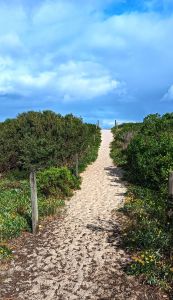
So, yesterday as start to my resolve to make amends for this omission, I climbed the dune, ignored the crest track leading left and right, and continued straight on and down the other side of the dune, and onto the beach itself. My intent was to spend an hour or so walking along the tide line.

And so it was.

Judging by such rare experience of the beach itself, I might easily say I am no ‘beachcomber’; no discoverer of coastal treasures, little natural beauties from the sea, or even the occasional oddity one might expect washed up. Until yesterday that is.

Not that I went to ‘comb’ the beach: rather I was there trying to put myself on the receiving end so to speak, to be a receptacle for what I might be blessed with (not to forget the need for exercise and movement).

And so it was.

This sense of grace and blessings, I hope I’ve conveyed in the small poetic effort (as well as its companion photo) that I now share with you.

SPOTTED ON THE SAND DUNE

Strolling (briskly mind you) along the sands,
There I was – deep in the liminal zone.
Ankle-deep – sometimes – seawater cooling my feet.
One way to receive Varuna’s blessings.

Back on dry sands (still in the liminal zone) I pause
to examine a spiral shell – an elegant and delicate sea creature.
It lives. Reverently, I move it to deeper water.

As I rise from my small task of union, of reunion,
I glance – still within the liminal zone – upwards.
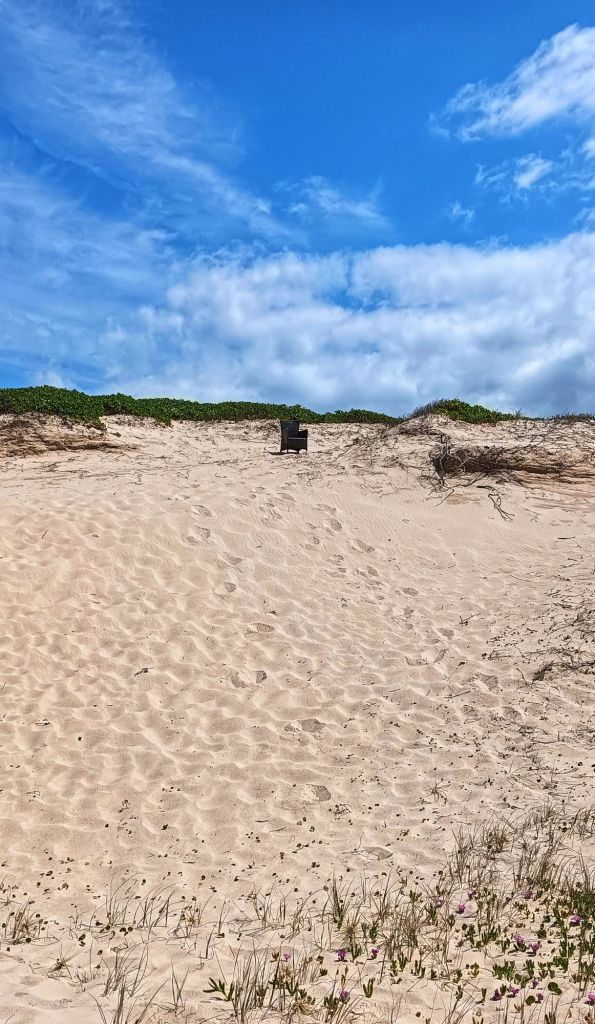
There, near the crest of the sand dune sits a chair.
An armchair I spotted right there on the sand dune.

There it was, facing me – and the sea – in the middle of nowhere.
Though this is clearly somewhere for somebody.
The perfect perch for taking in
Pacific views.

Empty chair, lonely sight
overlooking the liminal zone.

Bright Lights on the Dunefields

Namaste and Welcome friends.

A poem for your reading pleasure. Written on site today in response to an experience while out walking on the dunes next to the hermitage.

I’m including a photo I made a few weeks ago of the exact place where the poem was written,

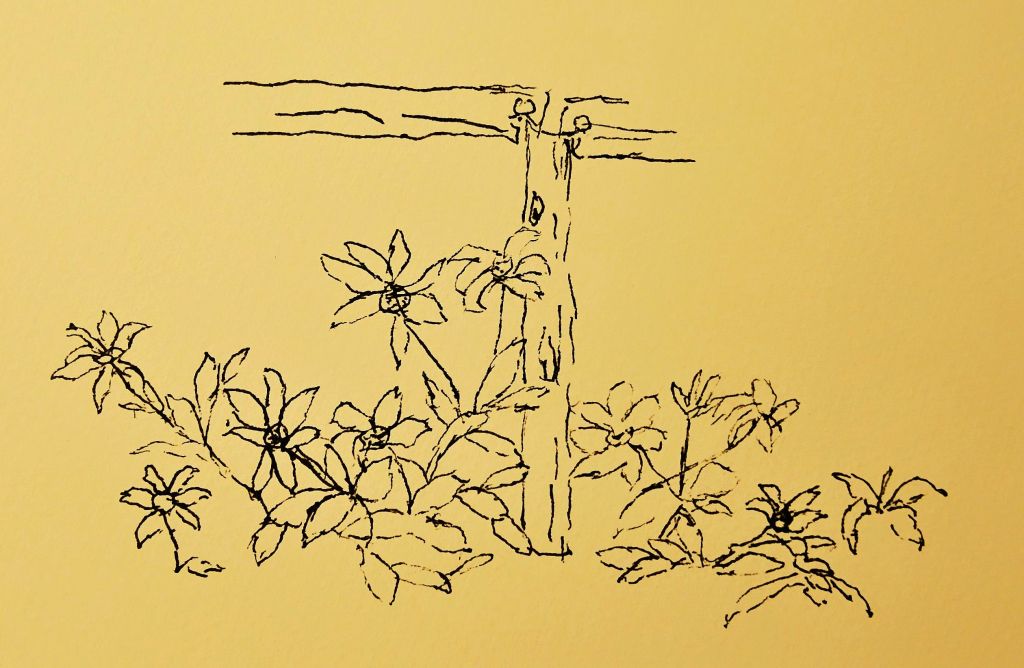
And many loving thanks to my partner hermit for the sketch made in the same area today (synchronistically it was made unknown to me and vica versa)

Please enjoy.

Love from Paul the Hermit

BRIGHT LIGHTS IN THE DUNEFIELDS


Today. On the Ocean Track.
Daily hiking across the top of the dunefields.
Not so sure-footed,
I trudge heavy-footed.

As I pass by, there are bright lights in the dunefields.
I pause in my passing as my eyes are drawn
(or is it my heart?)
to the bright lights in the dunefields.

I feast my senses upon
the bright lights in the dunefields.
They bless me, these bright lights.
They sing to me; they speak to me.

In my silence, I hear them.
But I hear not voices.
I see them.
But I see not colours, shapes or forms.

What I see, I see.
I see me, I see you.
They see me,
the bright lights in the dunefields.

They see you; can you see them?
These bright lights in the dunefields.

We are all bright lights in the dunefields.

Details in the Dunefields

On a Pilgrim’s Way

Today I went on a pilgrimage.Not that I don’t undertake all kinds of little pilgrimages all the time. And even more, it’s not as if my whole life – just like yours and everyone else’s – isn’t one ongoing and continuing pilgrimage.

All true; but this one, today, was embarked upon in what might be called, a classic manner: on foot, to a place of sacred significance, and in a spirit of contemplation of the nature of the journey as well on that which is being pilgrimed too. (I am positive there is no such word!)

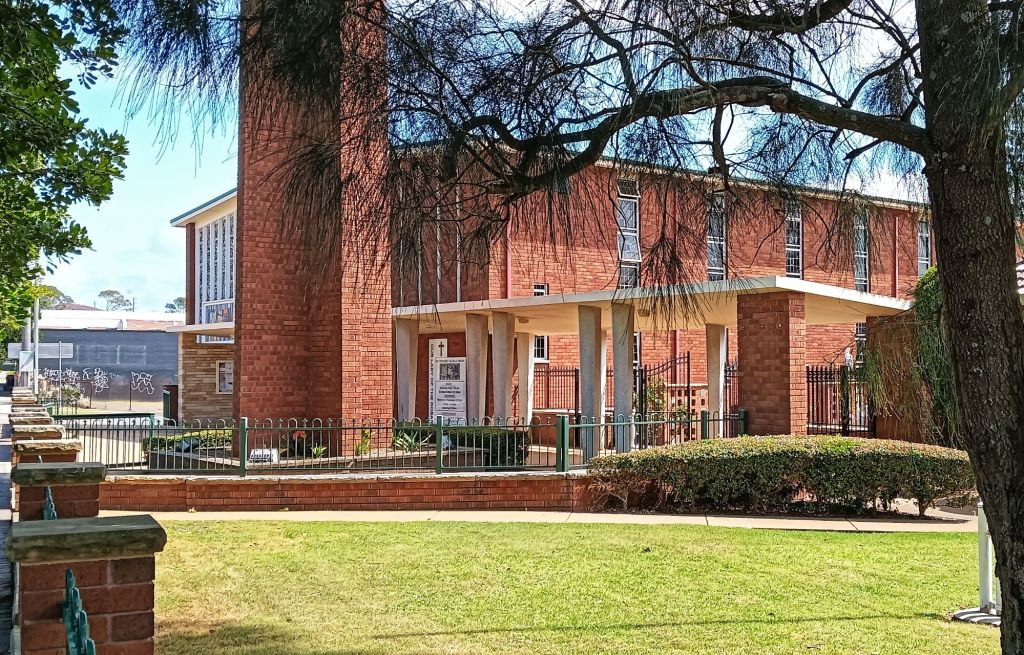
In this case, today’s pilgrimage, that place was a church about two and a half kilometres from the  hermitage. It’s a place I have visited several time, but today was the first time I set out as a pilgrim and walked in the way and spirit of the pilgrim.

Our Lady of the Rosary is a Catholic church dedicated to the Mother of Jesus in her role as patron of the Holy Rosary, a Catholic way of prayer that has evolved over time and is a key part of the lives of many Catholic people.

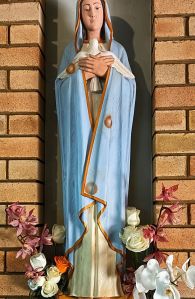
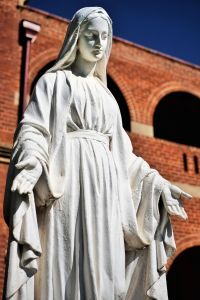
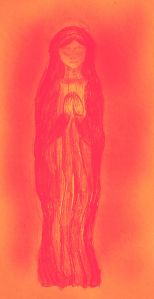
Just to the right, just inside the door there is a plain brick wall in which there is a small niche. The niche holds an almost life-size statue of Mary. She stands, hands folded over her chest on which sits the Dove of Peace.

You can see from the photo that the church itself is a lovely, quiet, serene place full of good vibes and nice peaceful energies. The object, however, of my pilgrimage was not the church in itself, but stood just inside the side door accessed through an equally peaceful, fountain centred garden.

I have come to offer her – this form or manifestation of the Divine Mother – the prayer I wrote to her which I hope you saw when I posted it on this blog recently.

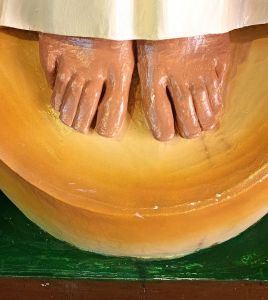
I had decided that my pilgrimage vow would be fulfilled once I had knelt at her feet and offered her the words of my heart in prayer.

My reverence for the Divine Mother is well known, and especially in her form as Mary the Mother of Jesus. Or Our Lady as we called her as good little Catholic children way back in the long ago. And I know I have said often that the entirety of the material and non-material cosmos is a manifestation of the Divine.

So, why then a special trip on foot, that I’m labeling a pilgrimage to a specific site, so I can kneel at the feet of a statue that I know perfectly well is made of stone or plaster and is simply a symbol of one aspect of the Divine?

Actually, the question has answered itself. The pilgrimage and my associated actions worded in that question tell us the why.

It is about acknowledging at a heart level and in my own way, that that symbol, that form, is actually representing a particular aspect of the Divine that I revere.

Besides, I’m not the first person who’s knelt at that spot, at Mary’s feet. I don’t know the age of the church, nor do I know the history of that particular statue, but I think we can say for certain that many hundreds, if not thousands of other people have been there where I was and spoken words from their hearts.

Being honest and true now, what I can say is that, as I said to my partner hermit: ‘I feel like i’ve been on a pilgrimage’.

And I do. I’ve walked – praying and chanting – to a sacred place where I have prayed at the feet of the Divine in the form of a likeness of Mary. I feel blessed that I actually got to offer the prayer I wrote to the Divine Mother.

Somehow I feel a link was established. A heart (mine) opened ever so slightly. I acknowledged the Divine, and I sense that I might just be – ever so slightly again! – topped up with a bit of the Grace that is in reality our true state.

Mary in the Garden (enhanced by a fellow Hermit Pilgrim. 
Thank you)

So, this is the story of my pilgrimage. I was absolutely exhausted when I arrived back at the hermitage. Most likely that was due to the heat, the traffic, and the noise encountered on the way I trod.

But, now I’ve shared this little tale with you, I’m not tired. Anyway, the Way is not always easy, and we are all very well aware of that aren’t we?

Namaste friends. The Divine in me salutes the Divine in you.

It’s a walk to take,

a pilgrimage to make.

Sometime soon.

Said by me long ago, I don’t know when or where. It was one of those ‘You’re a poet and don’t know it’ moments.

Peace!

New Series Coming Soon: An Introduction

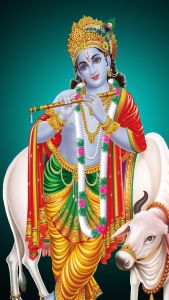
Lord Krishna

Namaste and greetings friends

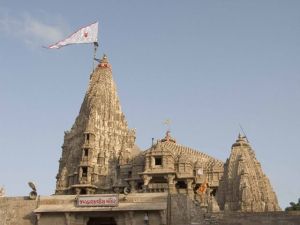
Not long ago I began studying an Indian scripture called The Uddhava Gita. It’s quite a lovely book actually: it’s poetic, actually it is a poem, or song, and beautifully written. The title means The song of Uddhava and is an account of a conversation between Krishna wearing his God of the Universe hat, and his cousin Uddhava.

The story takes place in their home town of Dwarka in the state of Gujarat (Krishna was also a regular family man with a huge extended family) which is about to explode in a destructive civil war. Soon Krishna is leaving to return to his heavenly abode, and at the opening of our story, he advises Uddhava that he too should leave town ASAP.

I should point out at this juncture that I do not see this Gita as a historical document. It’s a story created as a backdrop against which to place a long conversation in which Krishna, or God, passes some spiritual teaching to Uddhava.

Dwarkadheesh Temple Dwarka India
By Scalebelow – Own work, CC BY-SA 3.0, https://commons.wikimedia.org/w/index.php?curid=5739970

Although the location of the story is a real place and exists today, we don’t learn anything beyond that this is the setting for this little chat.

The purpose was to present these teachings in an entertaining and accessible format. Like so many scriptures around the world, this one is a song, making it easier to learn and pass from one person to another over time in a society that was not yet universally literate.

So, why am I writing about this text? Well, in one section Uddhava is asking his cuz all sorts of questions, that have obviously been on his mind for a while. He knows Krishna is leaving he planet soon and he thinks that this might be his last chance to get some answers.

He asks questions like: What are reality and truth? And, What is a person’s strength. Then there are queries like: Who is a friend? What is home? Many are related to spiritual matters and practice, and all are concerning qualities and attributes a person should possess to live a good life, a honest life. A Dharmic life.

Actually, if I were to condense all of Uddhava’s questions into one big question, it would probably go something like this:

How can I change my lifestyle so I might live a righteous life, a good and honest life in which I can learn the truth and live my whole life according to that truth?

Now, here’s the thing: Uddhava asks a total of 36 questions, some singularly, some are multiple questions containing two or three queries. Krishna then proceeds to answer the questions, all of them in fairly quick succession.

I would like to share a few of those answers with you. I don’t get the sense that the questions are asked or answered in any particular order or pattern, so perhaps those I share will be an idiosyncratic selection, or it may be entirely random. Not that there is such a thing of course, so I guess you will just have to wait and discover for yourself the chosen questions.

Don’t worry! I have no intention of burdening you with the complete set of 36. In addition to saving you that fate, some of the questions and or answers didn’t resonate; others didn’t feel overly relevant to this blog.

I’d like to devote an individual post to each of the questions, bearing in mind some of them are multiples. I learned about all 36 questions and their answers in an hour long class. Needless to say that experience was more than slightly mind-blowing. One or two (or maybe three) at a time will be just fine for all concerned I think.

So, next post, I look forward to sharing with you the first of Uddhava questions along with Krishna’s answer. It will in fact be literally the first one asked; I thought discussing it at the start would sort of set the scene and the tone for us.
After that one there will be further posts. Again don’t worry, I’m planning a fairy short and occasional only series.

A Prayer to the Divine Mother

Growing up Catholic, attending Catholic schools from age six to fifteen, going to Confession most weeks, going to mass once a week, oftentimes more, I was deeply immersed in a particular cultural environment of Catholicism. Over time I was (we all were) inculcated with, among other things, a deep love and a reverence for Mary, the mother of Jesus.

I say deep love. No, I’m not being quite precise enough to let it slide. Sure we were taught to love her, but in a kind of limited way. We should love her because she is the mother of Jesus. Not that being the mother of Jesus was what you would label a ‘limited’ role of course. But other than that we were taught to view Mary as an intercessor for us, a conduit if you like between us and our wants, and her son Jesus. So love yes, but a kind of conditional love.

Mind you I was always very fond of Our Lady as we called her. Through a serious dedication (for a time) to The Rosary, and the numerous Hail Marys imposed as penances in Confession, I grew close to her.

And, even as I moved on and out of that Catholic sub-culture and began to explore other ideas and ways of being,  I still maintained that fairly deep reverence for Mary, a reverence that has pretty much stayed with me all my life. I only realised today that it wasn’t until quite recently that I stopped calling her Our Lady.

But, in truth, my concept of her evolved beyond her being the mother of Jesus. Indeed, I came to a point when I realised it wasn’t at all relevant if Mary herself was an actual historical figure or not (this was much much later though).

For me Mary had come to represent or symbolise the female aspect of the Divine. Still, in the early days, very dualistic of course, but a huge step from the ‘second place’ she occupied in the earlier days when we weren’t even allowed to worship her as Divine. Worship was reserved for God – who was emphatically and indisputably male, sitting in heaven, entry to which was held tightly in the hands of more males in a male controlled and dominated institution. Which, it does have to be said merely reflected the world it operated in.

Anyway, let’s jump ahead half a life time of, (shall we say for our purposes here?) living, to put ourselves into the present day. Well, recent times anyway.

To put a very long story into one sentence (again for our purposes here today) I will simply say that I moved away from Christianity and especially the denomination of my childhood. Okay, we need another sentence: In more recent times, through a whole lot of circuitous meanderings, I have come to realise that there is only God.

That is to say, all there is is God, only God, nothing else. ‘Not one God, only God.’ as my teacher’s teacher used to say.

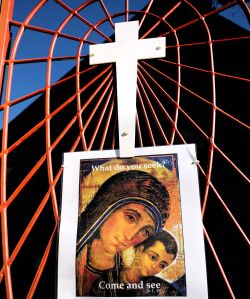
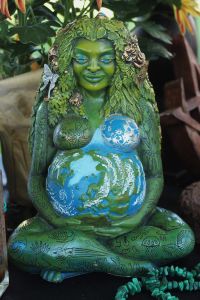
Earth Mother (Courtesy of Amber Avalona, CC0, via Wikimedia Commons)

Nowadays I still love and revere Mary. As symbol. A symbol of the creative energies responsible for bringing the Universe into existence, and which is engaged in the ongoingness of its maintainance through the laws of nature. She is one manifestation among so many of this divine creativity. In a very real sense for me, she is the Divine Mother.

So, a prayer written by me to and for the Great Mother who manifests in whatever form – or no form – in which any of us may choose to worship and love her.

To Speak or Not to Speak & What Not to Speak About When You Do Speak

Have I mentioned lately that I talk far too much? No? Well then, it’s way past time to once again confess; it’s  time that I finally get it out into the open: the thing is you see, umm, I talk too much. There I’ve said it.

But wait, there is no need for concern: I have a prayer (stuck in my Bhagavad Gita, where else?) that I pray at least a couple of times a day. Well, rather than being a prayer, it’s a kind of affirmation or instruction to myself. Okay, it’s a prayer.


It’s a nice injunction, I think. I don’t recall where I borrowed it from, but I’m grateful that I came across it. It’s important to me; a vital instruction that I feel assists me in my aspiration to be a bit more thoughtful, and a bit less vocal.

Does it work?  Well with the risk of repeating myself, I will say yes. Maybe I’m a bit more thoughtful and perhaps a bit  less vocal. But, on the other hand, I wouldn’t say I was anywhere close to the ‘spending no time’ level.

Now that I’m thinking about it, illusion, fear, and wrong thinking are common themes in many people’s lives, and we might even say that they dominate our culture whether it’s the media, celebrity gossip, or any of the rest of the illusory and speculative talk that goes on all around us.

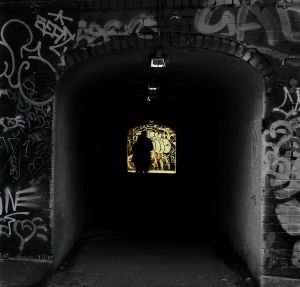
Tunnel to the Light

Anyway, fear is the biggie isn’t it? Fear of not having enough; fear of not being good enough; fear of what might happen or what might not. This list is endless. Fear of illness or ageing; fear of losing friends or fear of not having any! Fear of ‘missing out on the good life’ we imagine everyone else is living.

Then there is what’s called, the fear of the other, most often promoted and replicated by the mass media through their creation of illusions, fake news, exaggerated  or one-sided information (I hesitate to use the terms ‘facts and figures’ but you know what I mean). And then they sell us on ideas that we need to fear some other person, people, thing, time, impending catastrophe that never comes.

I don’t need to go on here: as I said, the list is endless. All that’s left to say about these fears and the illusions we are force-fed and made to believe are real, is that it all boils down to costing us a great deal of time spent and usually wasted, in wrong thinking of one kind or another.

It seems to me the media (news and social), advertising, and governments of all persuasions, are really quite happy for us all to be ‘getting the wrong end of the stick’. I think that’s the expression. Our societies are drowning in, for want of a better word, propaganda.

Buy this, do that, don’t do the other thing. Be afraid of (insert the latest scapegoat, political opponent, boogy man, the Apocalypse. Again it’s an endless list).

Then there are the fears we invent for ourselves, the illusions about ourselves that in our wrong thinking we come to believe are all real and true. One thing you can say about wrong thinking is that it makes for more and more wrong thinking. More illusions about who we are, what we do (or can’t do), what we are like, who likes (or doesn’t like) us. Here I once again risk repeating myself, but yes, it’s a long long list.

So, what can we do? Well, we could use a little reminder like the one we’re talking about here. It’s possible that it can help us correct a little of the wrong thinking that leads to fears and illusions.

Then there is what we might call discernment. Not so much deciding between one thing and another; more like coming to know what is real or illusion, a genuine, rational fear that I need to act on, or some inherited, manipulated, received  or otherwise irrational, baseless, or invented ‘fear’.

We won’t get rid of wrong thinking by trying to push it away. It’s about replacing the wrong thinking with some right thinking. We can try to recognise that wrong stuff as it comes up. We can make an effort to stop allowing ourselves to get away with our own misunderstandings, our own wild imaginations, wishful thinking, and confusions. As my teacher said just the other day, use your mind to control your mind.

One word we haven’t discussed from my little injunction is discussing. We discuss things when we talk or communicate  with others or when we talk to ourselves. Here we are at another issue for discernment: what shall we talk about?

Actually I was about to write that one excellent strategy for not spending time discussing illusions, fears, and wrong thinking is to simply stop talking altogether. That’s all there is to it: Don’t talk!

But obviously that’s a ridiculous notion right? Stop talking? Perhaps for a set time? Or perhaps as a kind of ‘time-out’ strategy? But as a principle for a whole life, it’s not going to appeal to the majority of us. Actually, that feels to me like a bit of wrong thinking creeping in: a life of no, or at least limited talking is very appealing to me. Just difficult.

Still that does seem to be what my treasured injunction suggests I do. Mind you, it’s very specific isn’t it? Spend no time, it says. Discussing what? Illusions, fear, and wrong thinking.

So, how do we manage to follow this suggestion ‘to the letter’ as they say?

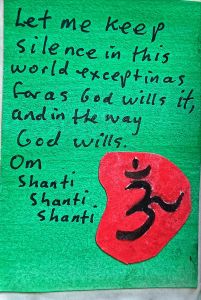
Here’s another little prayer I say everyday. This one is from Thomas Merton.


Keep silent ‘except in as far as God wills it’. For God I could say the good of all concerned; Truth; my heart; my goodwill; my love. It’s all God; it’s all the Divine.

I guess it gets back to something I said earlier about thinking before I speak. To this I would now add, feel before I speak: What’s right? What’s wrong? Does this help? Will this hurt someone else for myself.

About right and wrong: In the religious  tradition I was ‘raised in’ it was deemed that at the age of seven or eight a child is suddenly, without any preparation, able to discern right from wrong. Which means they are now responsible for the consequences of their thoughts, words, deeds. In other words, they are now capable of sinning and suffering  the consequences.

I can’t (obviously) speak for you or anyone else, but it’s been a very very long time since I was seven or eight, and I still find it tricky sometimes working out right from wrong. Of course while I know I am now responsible for my thoughts, words and deeds, I also know that we are all flawed; nobody’s perfect, so we’re going to make mistakes. 

So, all I can do – all any of us can do – is appeal to the innermost Self and use my intellect and my heart to try to discern as best I can, what is right and what is wrong.

Only in the innermost places where the real Self dwells can we know reality from illusion; it is only in our ‘heart of hearts’ as they say, combined with our rational thinking mind, what fears are real and what fear is illusion. And it is only then that heart and intellect can determine when our thinking is headed down the wrong (or the right) track.

It’s only then that we will know what and what not to spend our time discussing, either with others or internally within ourselves.  This all sounds like a long, convoluted, tricky process (told you I talk (write) too much!), but it needn’t be.

Like all things it takes practise, and once we begin to know that innermost Self, it will soon become a spontaneous way of living, when we begin to ‘just know’.

Your own inner divinity (which is the real you) wishes for you peace.

Om Shanti, Shanti, Shanti.

You Can’t Always Get What You Want

‘I wish I could write a blog post.’

So said I to my partner hermit yesterday. You see, for a few days I’d felt the coming on of a blog post: no topic, no clue as to ideas, and no hint of anything, only that it was on its way. Hence the exasperated outburst.

What’s wrong with wishing for something we want? Absolutely nothing. Sort of. Contrary to popular rumours, erroneous teachings, misunderstandings, mistranslations, or just a simple lack of information, Buddha’s Second Noble Truth does not say ‘The cause of suffering is wishes’ or we can say desires.

What he actually taught was that the cause of suffering is clinging. Clinging, being attached to a desire so strongly that failing to fulfil that desire causes us to suffer through annoyance, frustration, sadness and all those other things that impact on our mental or emotional wellbeing.

My teacher uses the word  compulsion. Compulsion to chase after what you want, compulsion to run away from what you don’t want.

Using me as an example: yesterday I wanted so badly to write, and was so frustrated that I couldn’t write just then, that I caused myself suffering. Because I couldn’t have what I wanted immediately, I made myself miserable.

Just as an aside (or perhaps not?), I realise that this little annoyance hardly means anything in the larger context of living and suffering that all of us experience simply by being alive.

But in a way, that’s my point. How many of the things we desperately want or that we desperately don’t want are the ‘little things’? Aren’t they so often the very things that, on a daily basis, cause us the most annoyance, frustration, anger, and even sorrow?

In any case, I had made myself annoyed with myself, frustrated too. However as soon as it was suggested that I needed to just down and type something – anything – if only to get the words flowing, I felt much better. I had the answer!

So, here I am, albeit a day late, and not typing as it happens, but scribbling in my notebook. Actually I don’t know why I don’t type it all up first thing, cutting out the middle step.  I mean, it really does flow better on the screen (via my fingers on the keyboard of course), and it’s also, as an added incentive, a whole lot easier to read than my scratchings.

I suppose I could say that not all old habits that have not quite died just yet, are necessarily ‘bad’ ideas. I happen to like my notebook.

Now, here’s the thing, the paradox if you like. I had felt a post coming on, and because I wished so badly for it to emerge and it wouldn’t, I suffered. And then, I sat to write something (anything as was suggested) and voila: the desperately, compulsively, longed for post obedeintly appears.

Cause and effect? I mean to say, which came first? Did I at some deeper subconscious level already have an idea to write a blog post about how clinging and compulsions and attachments to the things we want – and aversions and compulsions to get away from things we don’t want – cause us suffering?

Did that existing but deeply buried idea then manifest itself as a real world situation to give me the ‘material’ to write from?

Or, perhaps more simply, I got annoyed because I couldn’t write, so I made myself write (took a day to get to it though; remember me saying?), and well, what you see is what you get when one sits to write – words on a page.

Who can say? There are theories that propose effects can and do often precede causes. It’s a tough one to get my head around, and somehow I don’t think there’s any point in trying to.

We know instinctively that everything that exists in the Universe is constantly changing, evolving, devolving, mutating, never still. And we also know that we can affect what happens in our lives and in the world around us through our own actions. Some might disagree with me on that last one; it’s only my opinion.

The tricky bit is that oftentimes we forget that those changes as well as the lack of fulfilment or otherwise of our desires (wishes also), and even the results of our own actions aren’t always to our liking. Well, it’s not that we don’t know it in our minds and through personal experience, but when it comes down to it, we all usually as part of our normal conditioning, suffer when outcomes aren’t to our liking. It’s like we know it but we haven’t realised the truth of it yet.

Sounds like a trivial or flippant, even silly and pointless, thing to say, but it’s demanding to be said anyway: things (as in life and the rest) always work out how they work out.

But if you think about it, it’s true whether we like it or not. Actually, in a sense this is one of the very important, even pivotal points, of my ongoing studies, meditations, and contemplations. To realise fully that I, along with every other living thing, has a place within, no, not just a place within but is actually an indivisible part of, if I may be forgiven a cliché, the grand scheme of things. Not only that, but we in our essential true natures as Consciousness remain untouched and genuinely okay whatever transpires here in the material world.

I do what I do; you do what you do; and regardless of whether we like the outcomes or not, things work out as they do. Sorry to be repeating myself. Just seemed the right thing to say again.

And here’s another tricky bit: it’s not about resigning ourselves to ‘fate’ or ‘destiny; or whatever we might call not having control over our own lives.

Just by way of exploring that last point, and finishing this post, I would like to leave you with a quote. Yes, I know, we are all bombarded by quotes from famous (and not so famous) people, aphorisms of all sorts, and affirmations that claim they will improve our lives.

I truly believe this flood (mixing my metaphors here) of good words, written with good intentions, has numbed us to their actual value and usefulness to us in assisting us to live good lives.

So, here is one such, that I think puts it in a nutshell, in a very simple, straightforward way, an important Truth. It’s called the Serenity Prayer, and rereading it just now, I see clearly that serenity would indeed be the outcome if we are able to take this invocation to heart, and begin to live by it.

God grant me the serenity to accept the things I cannot change,

Courage to change the things I can,

and the wisdom to know the difference

Peace and Love from Paul the Hermit

PS: This version is only one among many. In fact, the Wikipedia entry linked above is a fascinating (though apparently quite flawed) exploration of this prayer and its origins.