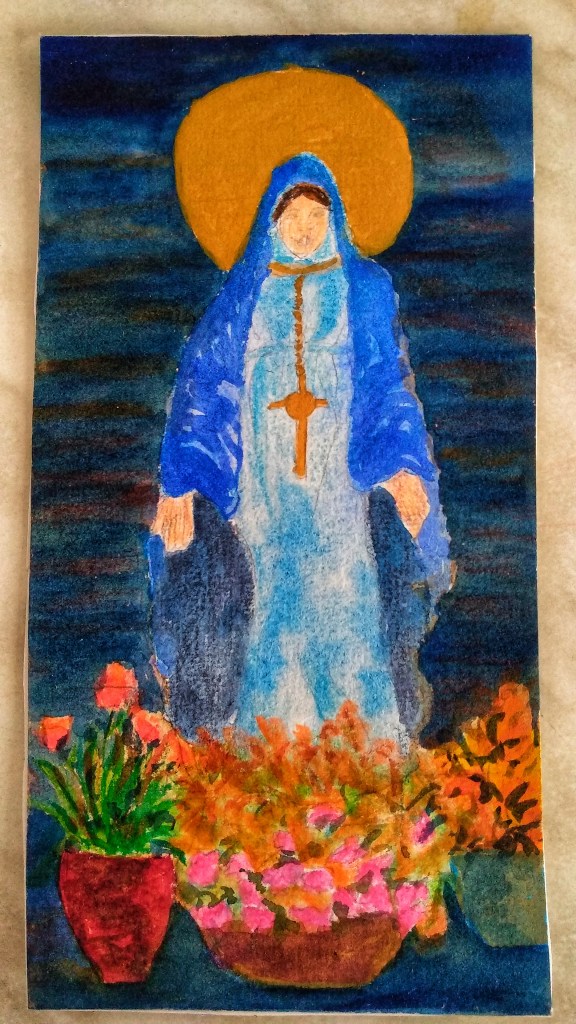
A Prayer to Share: for the Divine Mother

Namaste and Welcome

Today I would like to share with you a prayer (it’s a poem too, but …) I’ve written in praise of the Divine Mother. It’s actually the second prayer I’ve written to and for her. I shared that first one, called simply, A Prayer to the Divine Mother on the blog previously and you can find it here.

That post will also give you some background to my reverence for the Divine Mother – what she means to me; where my initial devotion comes from; my heart sense that this universal creative energy drives and sustains all creation; and finally how Divine Mother may be worshipped in many and varied (and even no) forms.

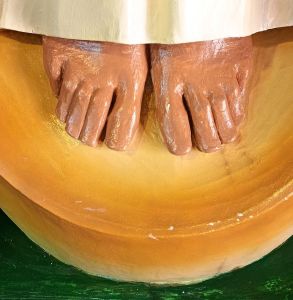
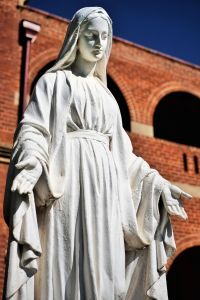
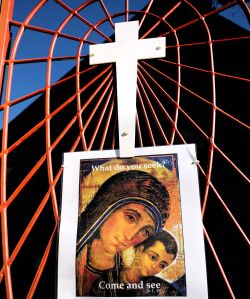
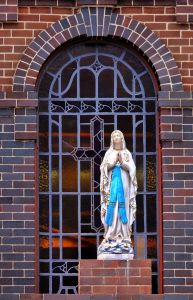
The prayer I share with you today – Jai Shree Maa –  emerged as I knelt chanting those exact word at the alter of a holy place dedicated to the Divine Mother as revered by many in her form as Our Lady of the Rosary.

It is a temple in that name I sometimes go pilgrimming to for quietness, meditation, and devotion.

Please accept my prayer. Thank you

JAI SHREE MAA

In this temple to the Divine Mother
upon my knees and praying.
Jai Shree Maa

I chant with sacred love in my heart,
sacred words upon my lips.
Jai Shree Maa

Divine Mother, with these words,
Jai Shree Maa
I invoke your holy presence;
I speak from my heart to yours.

With love and wishes for peace

Paul the Hermit

Lakshmi Visits: Timely Reminders

Today I have a story to share. It’s one of those stories in which one little random (as if!) event or occurence leads to another, then another. Like life really – one thing leading to another.

When I think about it, this small sharing is very much like many of the other stories I’ve shared: about my prayer life; about realisations and revelations I encounter along the way.

(note from inner editor: Please try to ignore him going on and on like this. You know what he’s like don’t you? You’d think he might find some shorter way to say something so simple wouldn’t you? Something like, that’s why the blog’s called Notes from the Hermit’s Cave and leave it at that. He really should just get out of the way and let me get on with the writing)

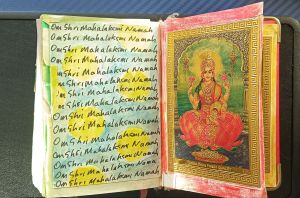
Ignoring that little interruption, I will begin our story. Yesterday morning. I was in the very act of opening my Bhagavad Gita to get to some of my inserted prayers, when without thought I turned towards the back of the little book, landing on the second to last page.

On these facing pages I have a treasured image of Lakshmi and on the facing page I have copied a mantra to her that I particularly like and sometimes chant.

Smiling to myself, I thought that, today (as in yesterday) I would spend a little time with Lakshmi.

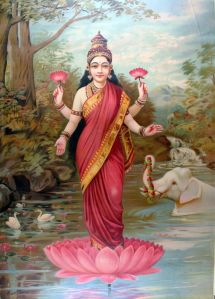
For me personally, Lakshmi represents the eventual realisation of my aspiration to complete Self Knowledge, the final realisation of the oneness of all things in one absolute reality. For me that says freedom, liberation, Moksha some call it.

So she – who is one more manifestation of the Divine Feminine and the Divine Mother – represents for me that state of peace, bliss, harmony, as well as a perfect balance in both my internal and external lives.

Sometimes when I feel in need of a little extra courage, some piece of missing knowledge, or perhaps I’m feeling the need to persevere with something or other just a bit longer, I’ll think of Maa Lakshmi, and often recite her mantra.

Really, for me, it’s simply a kind of way to remind myself that the courage, knowledge, perseverance, already exist within me. No need to go looking elsewhere.

I’ve read somewhere that many people appreciate Lakshmi’s  fickleness. You never know what she’ll do, what’s actually going to happen.

Which obviously is a way of saying that thinking of Lakshmi can remind you (or me in this instance) that life is like that: it’s all ups and downs, it’s unpredictable in that it gives us things or situations we don’t want, while also frustratingly not always giving us what we do want.

In other words, Lakshmi reminds me that, whatever happens in my life, regardless of my opinions or wishes on the matter, is happening exactly as things are supposed to be. Of course it’s not really ‘fickleness’ is it? That’s just how we see it sometimes as we seem to impose our own human changeability on the Absolute Reality which is just the way it is, no duality!

Anyway, before that pesky inner editor makes another pop-up appearance, let’s move on wth the story.

So, a ‘little time with Lakshmi’ has turned into a perfect illustration of life working out as it does, and not necessarily according to our little momentary expectations or desires. That planned ‘little time’ has morphed into, so far, a full day and a half.

Back to yesterday morning then: I chanted the Lakshmi mantra, then decided to listen to a recording of the mantra I have so I could contemplate what She means to me.

Right away I discovered that the music file was corrupted, and that sent me on a several hour long quest to find a replacement. Suffice it to say that there are what seemed like an infinite choice of candidates to choose from.

But, even after those few hours, I’d failed to find a version that satisfied all my requirements: it had to be a relaxing, clear chant I could ‘sing along to’; it had to be free of bells, whistles, and other superfluous adornments. Above all, it had to feel right.

As I went forward with this quest, I did in fact come across and listen to several lovely versions of the mantra, that while not quite right for my purposes, I did think might make for good and happy general listening.

These – or the links thereto – I emailed to myself and to my hermit partner. I then put the search aside, thinking that the right mantra will eventually turn up.

Not too long after this, I heard coming from the direction of my hermit partner, a truly magnetic and beautiful version of the Lakshmi mantra. You can find the mantra here

‘Where did you find that?’ I asked wonderingly.

‘You sent it to me,’ was the incredulous and puzzled reply.

Really? I honestly had no memory of hearing that particular version, and I still have no idea about it. In any case, once it was forwarded back to me, I set about listening to the mantra through my earbuds.

Blown away, would be one way to describe my reaction. Probably more accurate to say that listening to that twenty something minutes of beautiful music blew me not away, but inwards; completely and utterly to inner depths rarely experienced. Another full story all its own if truth be told. Perhaps another time.

The serendipitous turning to Lakshmi in my little Bhagavad Gita was yesterday morning. And the poem was written this morning as we listened to the mantra itself. A listening, I might add, that has only just now ended as other things required attention. Several hours, in other words, of exposure to beauty itself.

Anyway, my dear friends, what I share now is my response to that listening experience. Or to put it more accurately, the poem that follows is my response to my response.

Hearing the Song of the Universe, is the name of the poem. And it is an absolutely suitable and appropriate title I think.

May you also hear that song.

HEARING THE SONG OF THE UNIVERSE

Om Shree Maha Laxmi Namah.
The beauty of the words, the blessings of the melody,
infuse me with a mood prayerful.
Inner resonance has my Self reverberating
with the rhythm.
With the drumbeats accompanying the voices of angels.
Like raindrops dripping from eaves
after the storm has passed.

Words of praise for Maa Laxmi
meld with the hypnotic wind
emerging from the flute.
Wood and wind,
and angelic voices.
Together they sing.
They sing the song of the Universe.

Tears well at the corners
of the eyes of the worshipping monk.
‘Let it all go.’
The encouraging words
of the Beloved enter the heart of the monk.
Yet, the tears do not fall.
No, not yet.
In the meantime, the monk breathes.
A Prayer to the Divine Mother

Growing up Catholic, attending Catholic schools from age six to fifteen, going to Confession most weeks, going to mass once a week, oftentimes more, I was deeply immersed in a particular cultural environment of Catholicism. Over time I was (we all were) inculcated with, among other things, a deep love and a reverence for Mary, the mother of Jesus.

I say deep love. No, I’m not being quite precise enough to let it slide. Sure we were taught to love her, but in a kind of limited way. We should love her because she is the mother of Jesus. Not that being the mother of Jesus was what you would label a ‘limited’ role of course. But other than that we were taught to view Mary as an intercessor for us, a conduit if you like between us and our wants, and her son Jesus. So love yes, but a kind of conditional love.

Mind you I was always very fond of Our Lady as we called her. Through a serious dedication (for a time) to The Rosary, and the numerous Hail Marys imposed as penances in Confession, I grew close to her.

And, even as I moved on and out of that Catholic sub-culture and began to explore other ideas and ways of being,  I still maintained that fairly deep reverence for Mary, a reverence that has pretty much stayed with me all my life. I only realised today that it wasn’t until quite recently that I stopped calling her Our Lady.

But, in truth, my concept of her evolved beyond her being the mother of Jesus. Indeed, I came to a point when I realised it wasn’t at all relevant if Mary herself was an actual historical figure or not (this was much much later though).

For me Mary had come to represent or symbolise the female aspect of the Divine. Still, in the early days, very dualistic of course, but a huge step from the ‘second place’ she occupied in the earlier days when we weren’t even allowed to worship her as Divine. Worship was reserved for God – who was emphatically and indisputably male, sitting in heaven, entry to which was held tightly in the hands of more males in a male controlled and dominated institution. Which, it does have to be said merely reflected the world it operated in.

Anyway, let’s jump ahead half a life time of, (shall we say for our purposes here?) living, to put ourselves into the present day. Well, recent times anyway.

To put a very long story into one sentence (again for our purposes here today) I will simply say that I moved away from Christianity and especially the denomination of my childhood. Okay, we need another sentence: In more recent times, through a whole lot of circuitous meanderings, I have come to realise that there is only God.

That is to say, all there is is God, only God, nothing else. ‘Not one God, only God.’ as my teacher’s teacher used to say.

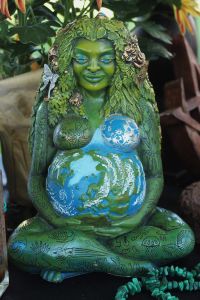
Earth Mother (Courtesy of Amber Avalona, CC0, via Wikimedia Commons)

Nowadays I still love and revere Mary. As symbol. A symbol of the creative energies responsible for bringing the Universe into existence, and which is engaged in the ongoingness of its maintainance through the laws of nature. She is one manifestation among so many of this divine creativity. In a very real sense for me, she is the Divine Mother.

So, a prayer written by me to and for the Great Mother who manifests in whatever form – or no form – in which any of us may choose to worship and love her.

A Story of Words and a Journey of Discovery

Remember that old Bee Gees‘ song Words?  It’s about one person offering all they have to another. Well, the one doing the offering must have been a writer because, while the song’s a love story, it’s words that are the big thing on offer here:

It’s only words, and words are all I have
To take your heart away

Well, as this is a blog, words are the way it hopes to reach your heart. Actually, the posts also include photos and sometimes other art, but the main vehicle used here is words.

So, with that in mind I have a couple of words to offer you today. Well, one word and its opposite. Have a look at this sentence from Thomas Merton:

If Irish monks affirmed his Celtic spirit in their mastery of cataphatic contemplation of the wonders of divinity in nature, Buddhist monks evoked his Zen mind and drew him into the apophatic path of formless ’emptiness’…

A quote from the Introduction to When the trees say nothing: nature writings of Thomas Merton

As sentences go (though this is obviously only part of a sentence) this has to rank pretty close to the top for length and denseness.

Kataphatic. What a word! Of course I had to look it up; I’d never heard the word before (this post is a rewrite from notes written a while ago that I never got around to posting.), and even though the sentence seems to  suggest the meaning, I was still curious.

Looking at Wikipedia – where they spell it with a ‘C’ like Merton, as well as with a ‘K’- I learned that cataphatic is an adjective that describes an approach to theology that uses ‘positive terminology to describe or refer to the divine (God, Truth, Dharma, Spirit. You know what I mean: the divine).

Apophatic, as you probably figured out already, is when one uses ‘negative terminology to indicate what it is believed the divine is not’. A process of negation or we could say you get to what the divine is by a process of elimination.

Pretty simple concept really, but with a couple of big words to label it, and a lot of  words to define it. No, don’t worry, I won’t bore you with the meaning and origin of the words and all the rest. Mainly because I don’t know and I’m not especially interested anyway in all that technical stuff.

I simply resonated with the word, and the concept. Cataphatic made me think of Dick Van Dyke and Julie Andrews singing Supercalifragilisticexpialidocious in Mary Poppins. But let’s not go there: this is a serious blog after all. Except to say there’s more to that word than you might imagine.

Putting aside the aesthetic appeal of the word for a minute, let’s contemplate a while on cataphatic, and it’s opposite, apothatic.

To begin thinking about these two words, it’s necessary to acknowledge the existence of the divine. We can call it God, if we like. Or Dharma, Truth, Spirit, Love, Beauty.

As the quote suggests, a cataphatic approach, ideology, theology, or whatever we call it, ascribes names and forms to the divine, as well as describing where and in what the divine may reside.

Whereas apothatic, again as the quote suggests, does not ascribe names and forms to the divine. Instead it seeks to discover what or who god is or isn’t by a process of negation as described already. 

For a long time I labelled myself as a Humanist. I had decided that this physical body is all there is; the physical or material universe is all there is, and that there is no ‘god’ separate from us or who has special powers to affect our lives. No God at all in fact.

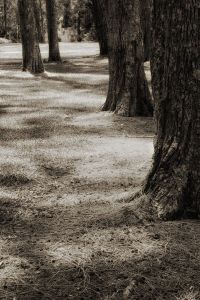
In the Grove of the Sentinals

But, all that while, I just knew that there was something else, something more than just the physical.  And over time, I came to the knowledge that there is indeed more than the simply phsical universe (including we humans).

I’ve thought about it a lot over the years and I came to the conclusion not that many years ago, that I had simply been afraid to name or define that something more. It would have meant admitting to myself that something more really did exist.

That is to say, I was scared of taking the cataphatic approach – and I’d never even heard the word.

Well brothers and sisters, I saw the light. The truth was revealed to me. And what is that truth? Well, to put it simply, I wasn’t scared anymore. Not of names and forms, and not of what I couldn’t see.

Now I could take both the Catophatic and the Apothatic approach: that the something else I had actually always known just was, really is, and can have a name and form, or not. The divine is not an omniscient being or any kind of being at all; As I’m very fond of saying, the divine (or truth, God, Dharma) simply is.  And it’s all there is.

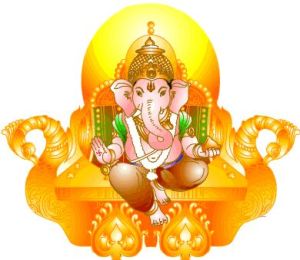
Some of you might know that I am really quite fond of the Indian deity, Ganesha . Do I believe that a man with the head of an elephant actually exists or ever existed?. Of course not. Do I actually think that he resides in the lovely painted icon that sits by my bed? Well, obviously not.

But do I believe that there is a spark or aspect or attribute in all life, in you and me, in nature, in (scary word time) creation, that we can tap into to help us overcome obstacles? Or that we can access when we begin new ventures of whatever kind, or when we need strength to face challenges? Yes, I do. Very definitely.

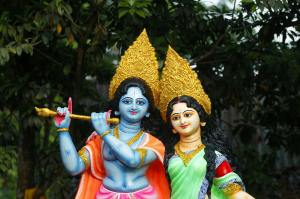
And do I believe in a blue boy called Krishna who lived in India 5000 years ago and spent his time playing in the fields with the village cows and his friends, entertaining them with his flute? Again, of course not. Does he live in the other beautiful icon by my bed? The answer is obvious: no.

But do I chant the Hare Krishna mantra in an effort to come closer to the divine that is… well, that just is? Yes, again, very definitely.

Words. It’s all only words. Only words? Only??

In the beginning was the word, and the word was  with God and the word was God. (from the opening of the Gospel of John)

It’s all I have (for now).

Peace and Love from me to you

Making Peace with Poetry and a Prayer

Namaste my friends

The poem I want to share with you today has, I think, been shared on this blog before. I haven’t checked because I didn’t want to be tempted to censor myself and not post it again if it has been posted.

The poem, titled simply Peace Prayer, has a repeating refrain in each verse:

Our Lady Queen of Peace Pray for us.

A couple of days ago I came across a church dedicated to this particular manifestation of the Divine Feminine. I know it doesn’t seem to be such a far-out coincidence, but up till then, I had never encountered a church with this name.


So, obviously, it reminded me of my poem, written a couple of years ago now. As well as the story that prompted its writing:

When I was 12 my father went to war. As a professional soldier, he went as a part of this country’s commitment to its American allies in its war against Vietnam.

Our family was, at least nominally, Christian at that time, and anyway, desperate times do indeed call for desperate measures.

Which means we, my mother, my sisters, and I, formed a tiny prayer circle every night for over a year to pray for my father and for peace.

These days I no longer label my beliefs, not if I can help it anyway. What I seek now is the Divine wherever it is to be found. Which is everywhere of course!

In any case, here is my poem. It’s always the right time to pray for peace, though we should always remember our prayers are really directed at ourselves. It’s up to us to answer the prayer as we are able and see fit.

Peace and love to you all.

Peace Prayer

The father, the husband, the man of the house
He’s away. At the war.
Our Lady Queen of Peace pray for us.

Away at the war, yes,
In a far off land. Not his own.
Our Lady Queen of Peace pray for us.

Away at the war. “Incountry”.
that’s what they call it.
Our Lady Queen of Peace pray for us.

At home the children, the wife and mother wait.
Wait and pray.
Our Lady Queen of Peace pray for us.

At home they wait yes.
Each night on their knees,
in a circle. Prayer circle.

Away at the war, he is fighting. For what?
At home, they are praying. For what?
Our Lady Queen of Peace pray for us.

The Beginning of Devotion: A Poem

The Paradox of the Hermit Life (Courtesy of @travellinghermit3)

THE BEGINNING OF DEVOTION

Attention, paying attention.
It’s the beginning of devotion.
And when you see? When there is seeing?
Well, seeing is praise.

When we see, what we see,
is God.
Not the god, or this or that god.
There aren’t lots of gods,
or so it seems.
And in the end, there isn’t even one god:
there is only God.
So it was said by the sages.

Mother Mary Come to Me

Namaste friends

During the early days of the pandemic, I lived in a small town out on the edge of the Outback. But after a few months, the time felt right to head for the coast. Slowly. With that in mind and headed in the right direction, I spent six weeks in another small town in that semiarid zone, staying in a motel.

I liked it there, at the Maria Motel in Moree. Described as a low-key 1960s era motel, the Maria is right across the street from the Artesian Hot Pools, which are Moree’s claim to fame. For me (for us), it was another temporary hermitage and safe haven on the side of the road in which to take shelter for a while.

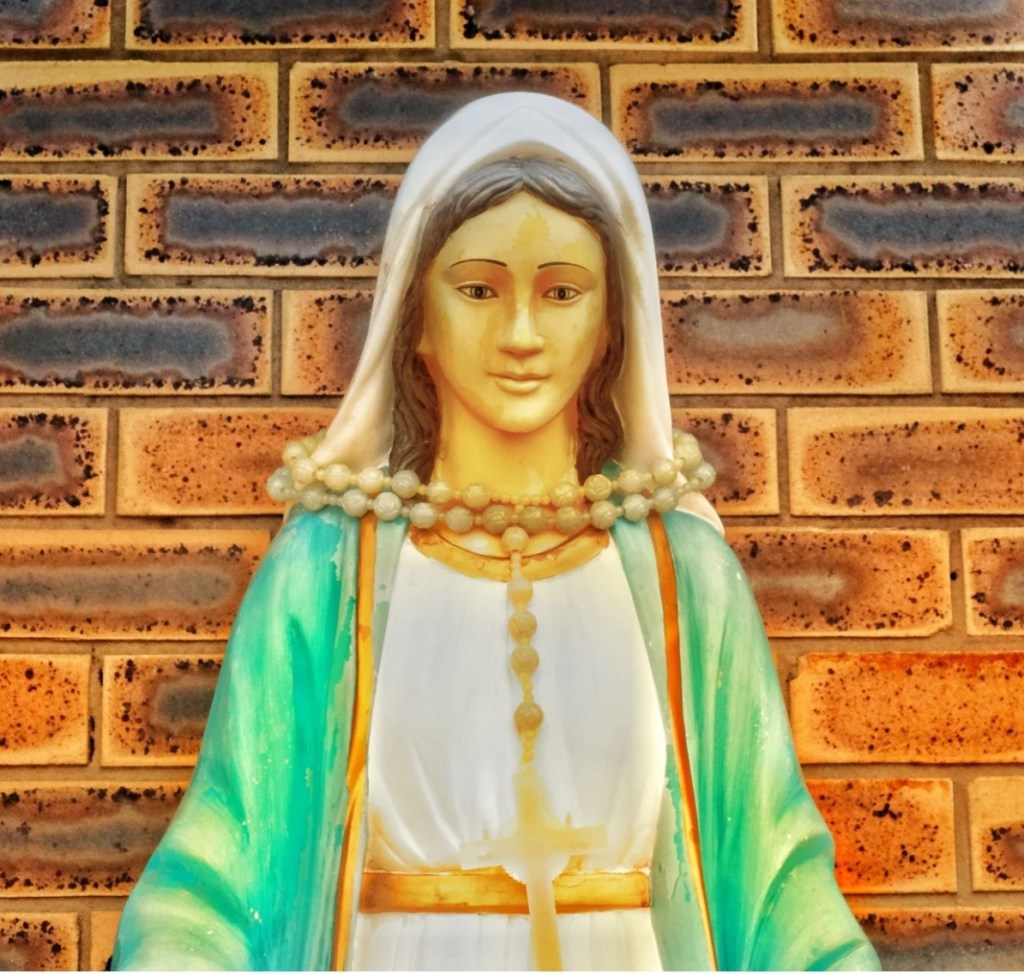
My favourite among the list of things I like about the Maria Motel is the statue of Mary out front in the courtyard. The Virgin Mary that is, Our Lady, the mother of Jesus. You know who I mean. And it isn’t only my Catholic upbringing and education that accounts for my fondness of Mary. It is more about what she symbolizes, what she stands for.

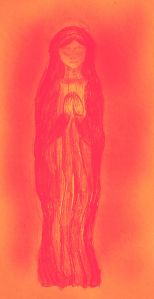
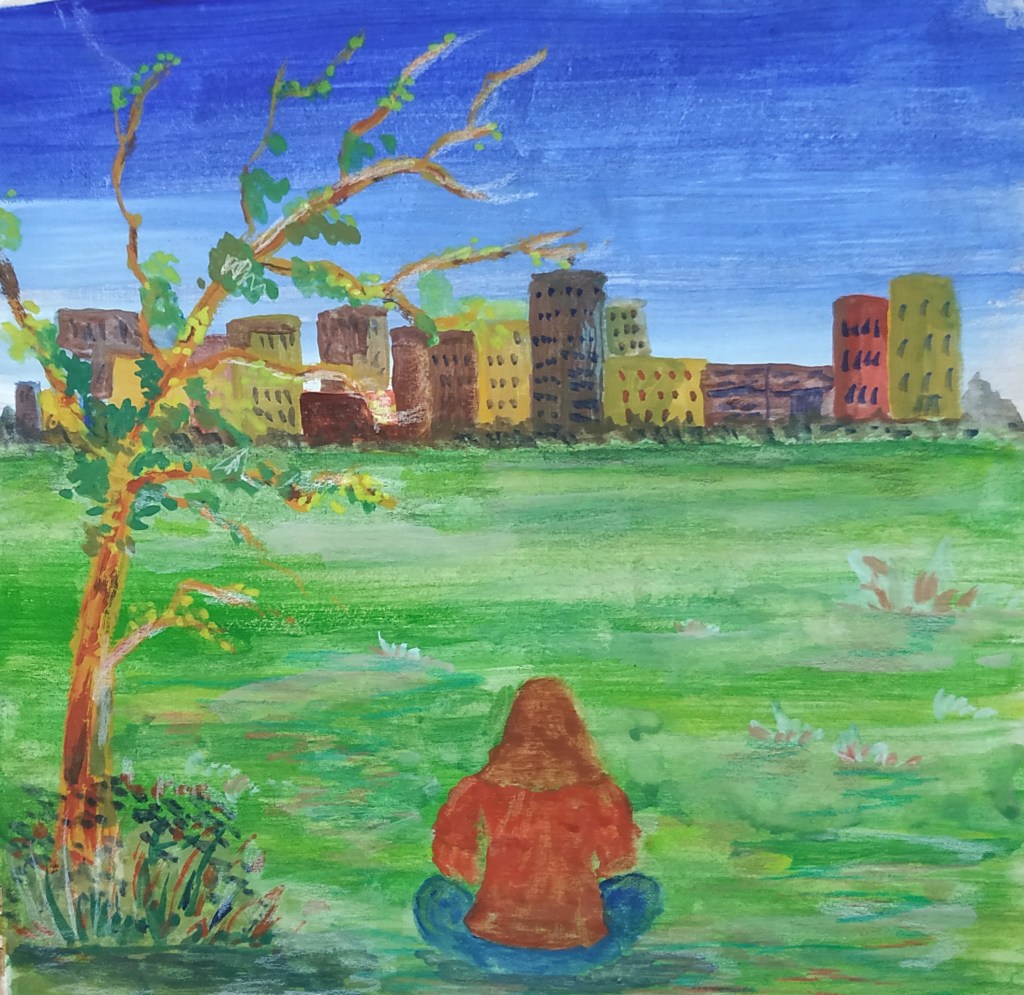
Watercolour by Pauline

For me Mary represents what I might call the feminine aspect of God. Some would call her the Earth Goddess. Mary is the mother, as in Mother Earth, Mother Nature. She is the feminine principle of the Universe. Respect and care for the mother is obviously the key to our survival.

This land from which this town was carved, has been inhabited since long before we began to mark time; since the beginning some say.

Those hot pools have been sacred for a very very long time. While nobody asked permission of the people who already lived here to build a town, at least when some of the invaders came they chose to honour the sacredness of the land they had appropriated by placing this statue representing the sacred feminine in sight of those ancient holy waters, and naming that temporary hermitage of mine, the Maria Motel.