O Lord, I take refuge in You. You are my sole guide, my master. Show me the right path and I shall follow it.
This is a prayer I like very much. It appeared one day in a previous incarnation of this notebook, then migrated to my prayer book. Its origins are lost in the mists of forgetfullness.
In any case, I like it – a lot. In a big picture kind of way it encapsulates much about the way I aspire to live my life; what I aspire to devote my life and energies to.
The prayer is addressed to the ‘Lord’ – to the Divine; to the Absolute Reality of (to borrow a favourite phrase) Life, the Universe, and Everything. Some will call this God, some think of it as the creator. For me it is simply Lord: all that is existence.
And it is there that I aspire to take refuge. I seek shelter in the knowledge of the rightness and order of the universe. Not an easy task when I think about the state of life ‘on the ground’ on our home planet; how the horrors can be almost impossible to grasp, to understand, and to keep from despairing over.
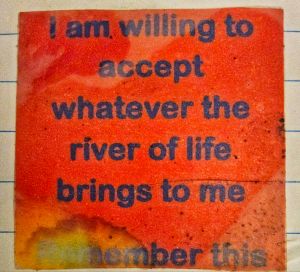
But a contented state of refuge, of safety, security, and even happiness, may be found, I sense, by a cooperation with what we might call the flow of the river of life.
And if I am to discover for myself that refuge, then there really is only one choice: to accept that flow of the river of life as my only guide to how to live, what to do, how to be.
Not surprisingly I struggle with the idea of cooperating with and accepting the often crazy and random nature of that flow of my life as my ‘sole guide’; how much harder is it to accept that very river as my master?
Again, if I ever want to be happy, if I ever hope to be free from suffering and attachments to those things that cause me to suffer, then I must accept and cooperate with the reality: the river of life is the master whether I like it or not. I may as well accept it.
Which absolutely and I hope obviously, does not mean I’m a fatalist, or that I am resigned to just let the currents toss me about willy nilly. No, not at all.
My deep sense (yet another site for other struggles) that the solution to suffering does indeed lie in an acceptance of the reality of the flow of life as it’s happening moment to moment.
By not resisting life and what it presents to me, I aspire to arrive at a state of acceptance where I might contentedly and freely ask what is my role here? What is the universe asking me to do?
If I can listen, and actually hear with the ear of my heart, then I might be able to discern the path, which if followed, will free me from suffering .
Then I shall be going with the flow, following the path of least resistence, and I’ll be contributing to my own smooth (well, smoother at least) ride through life.
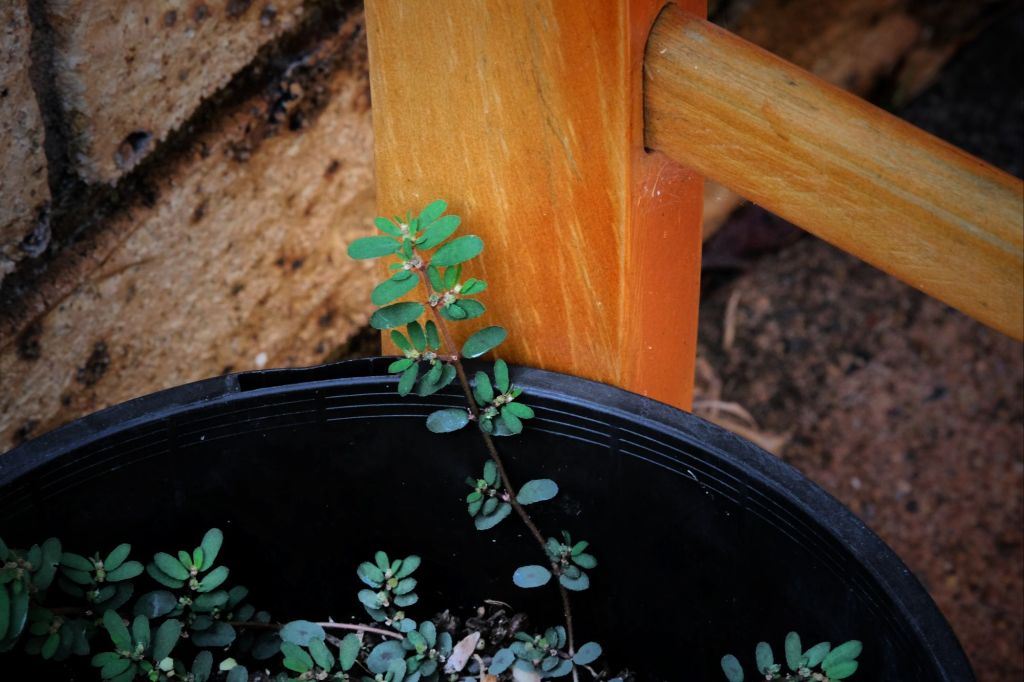
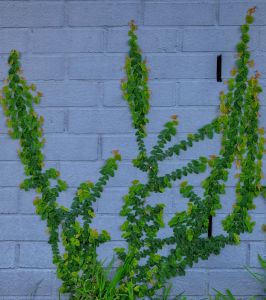
Reaching for freedom is what I called this photograph that I made today. But, is it really? I mean is the plant actually in reality ‘reaching for freedom’?
Well, thus far, science can only tell us something like: This plant is programmed by its DNA to grow upwards towards the light.
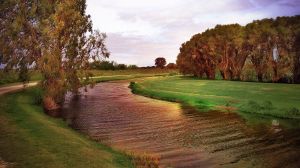
Another climbing plant, in another place. Kind of looks like a painting, but it’s real
True, of course, but, here in this scene, that one shoot in the centre does appear to be reaching for the chair leg – perhaps for support? It’s quite common for me to see plants using all kinds of supports to do their upward growing (think Ivy on a wall). I think that in a few weeks, that tiny shoot might just be half way up that chair leg – or maybe higher!
So, as I came across this little scene, I questioned. No, questioned isn’t the right word. When I saw this reaching happening only a day after placing that plant pot in that spot, I made a declarative statement: I said, ‘There is an intelligence at work here.’
Am I saying that this little plant has a brain that is continually figuring out strategies for the plant’s growth and other behaviours?
Am I saying that there is a ‘god’ up there in some heavenly domain who is in charge of getting plants down here on Earth to grow in the right direction?
No, to both questions. I don’t and can’t accept either of these supposed ‘possibilities’.
But, are there some kind of universal laws that regulate and control how the Universe flows, behaves, evolves and the rest? More likely I think.
Again I am not suggesting there is some kind of controlling ‘entity’ separate from the material universe, or a supercomputer somewhere that’s running the whole thing. More a kind of energy or essence that’s built into all material things, and that is an element of the very existence of things.
A regulatory principle, I guess you could call it. But not some imposed or externally dictated regulations, laws, or controls. I think it’s more natural than that: existence is its own regulator and controller. Or so it seems to me in my good moments – such as when I witnessed this unfolding and evolving life drama.
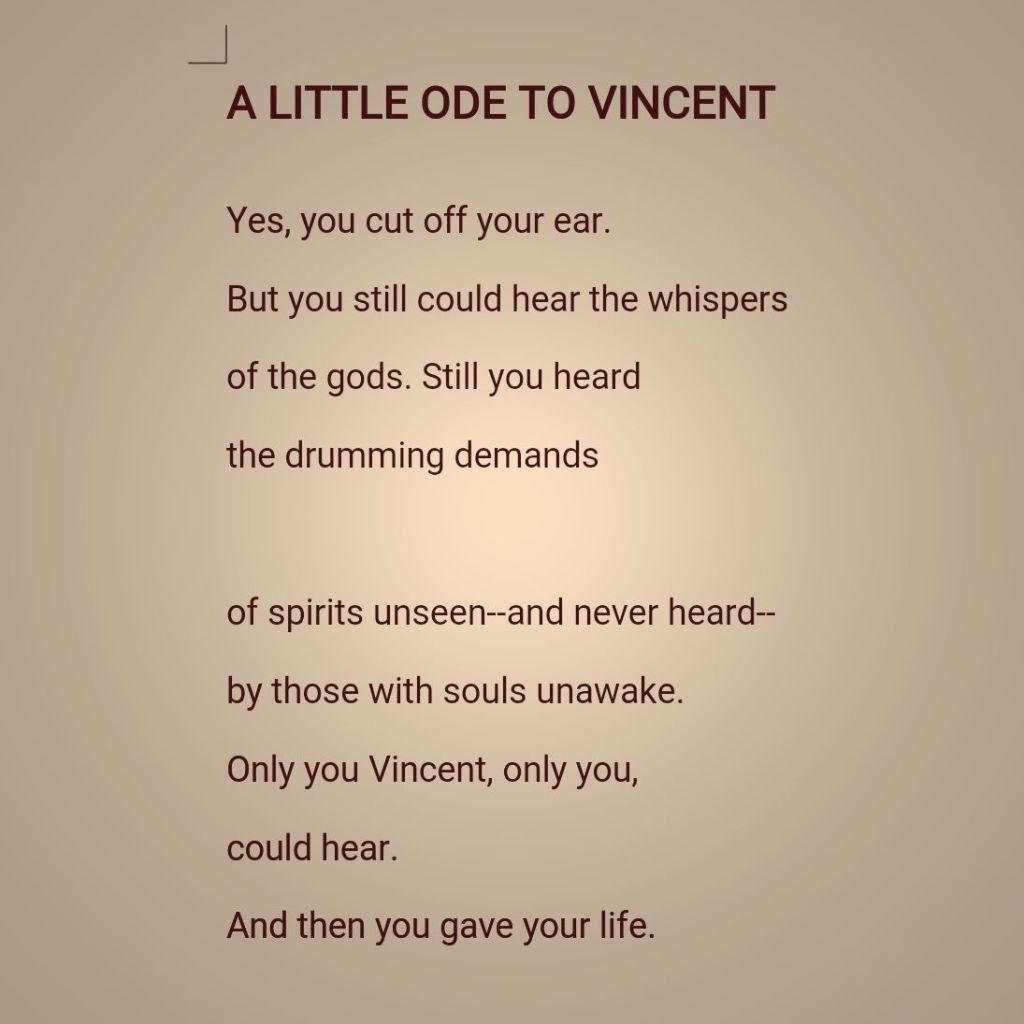
Way back long ago in late 2014 I wrote a poem. Which as a stand alone statement is hardly cause for excitement on any level I can think of.
Except to say that in that poem I expressed much of what I felt (and still feel all these years later, perhaps more so) about Vincent Van Gogh. I called it A Little Ode to Vincent, because it was a kind of love song, a celebration of Vincent and an affirmation of my reverence for that great one.
Anyway, I was reading some old poems last night and I came across A Little Ode to Vincent. I checked to see if I’d shared it with you on this blog at some point, but to my surprise I found that I hadn’t. Which is very nice for me, because I get to share it with you now.
There it is then. Thank you for allowing me to share it with you. There isn’t a word I’d change if I were writing it now.
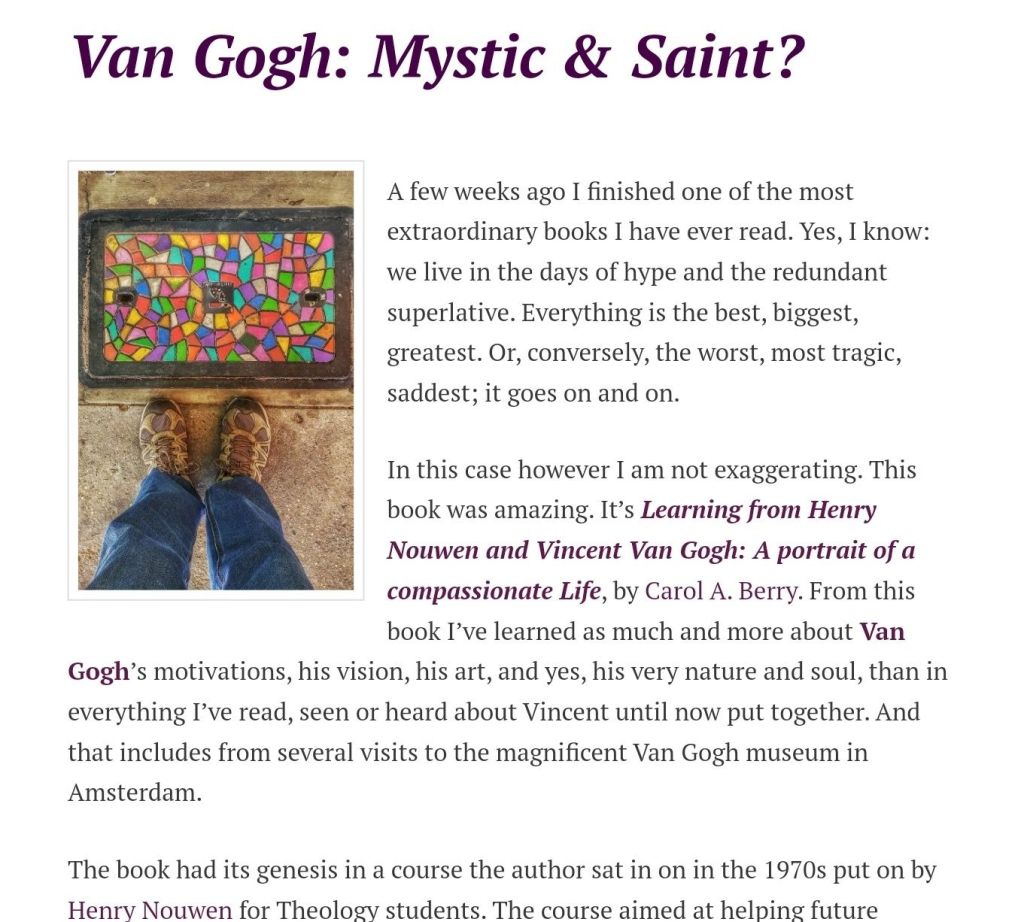
While looking through my blog checking for this poem, I came across two posts from 2022 which mention Vincent. Well, one is about a book I’d read on his spirituality and his quest to lead a compassionate life. Have a look at the beginning of that post and what I wrote about that book:
I still remember the book and its impact on me vividly. Please read the post Van Gogh Mystic & Saint, and if at all possible read the book. In fact I’m going to try to track it down and read it again, or at least do some Googling on the topic.
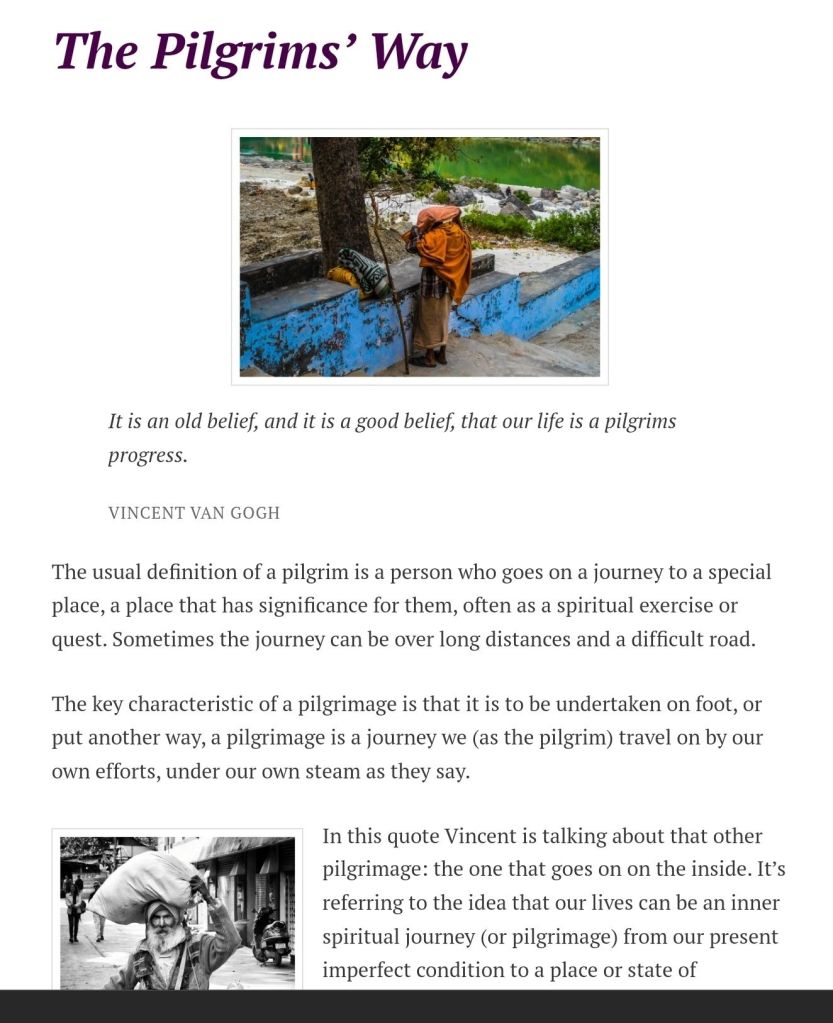
The other post I wrote at around the same time isn’t about Vincent directly, but it does open with a quote from him, and he’s referred to throughout the post. Here’e the opening section:
Again, please take the time to read it. It’s called The Pilgrims’ Way, and I think it makes a very nice sibling post for that first one I’ve linked to.
I hope you found the little Ode of mine satisfying. I have always had great reverence for Vincent, and after reading the book about his spirituality, I was even more deeply attracted to the man, the artist, and the mystic saint that was Vincent Van Gogh.
There’s nothing more genuinely artistic than to love people.
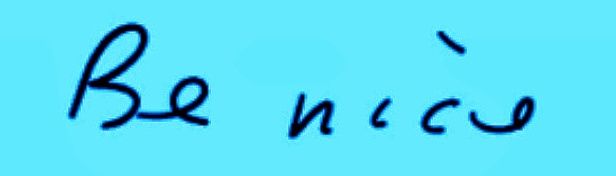
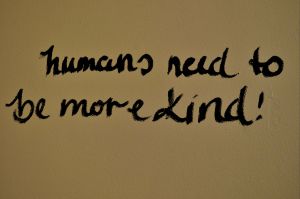
Scrawled in the margin of a page in my notebook are two words: Be nice. Nothing else on the page to suggest a context, source, or inspiration. But, here’s the interesting thing: Just below those two lonely words, and in brackets, I’ve written:
Do nice, Consume nice, Share Nice.
Most likely we’ll never know what prompted me to write that particular series of words. I mean, they’re not exactly new ideas are they? Still, discovering (or is it rediscovering) them today, I thought that, while not original, they do present us with a neat little package of behaviours, attitudes and actions; a perspective or way of looking at things that might just help us (or I should say me) along the road to spiritual growth, for being better, doing better; oops! You get the idea.
Be nice. All of us long to be nice to others, to family, friends, work colleagues, strangers, the world as a whole. Some of us would even feel better if we could only be nice to ourselves now and again.
Speak softly, go slowly in my interactions with others – loved ones or strangers, it doesn’t matter. While we all wish for others to be nice to us, we are all very aware that life doesn’t always work that way. But at the very least if we can be nice in every situation, then it’s better for everyone.
So, when slighted by another, spoken to with a loud or aggressive voice, or in some other way treated ‘not so nicely’, pause. Breathe. Then with confidence in yourself and what you have to say or do, be nice to that other.
Smile (when you can and it’s appropriate), be calm, assertive, but stay nice.
As to being nice to Self. Well, I’m trying to give up the negative self talk, and the self critical thoughts, as well as not so nice thoughts about other people or situations. Being nice to others is also an act of niceness to ourselves. We feel good when we’re nice to others (and bad when we’re not so nice to others).
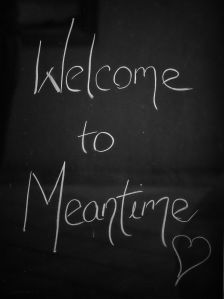
Meantime is so Yesterday. Make it Nicetime today!
Do nice
The verb do suggests doing; taking action. Do nice things for others – and for Self also. Sometimes it’s easy to do nice things for others, sometimes not so easy. Still, as with everything, it is the efforts we make that are the key: remember, nice makes nice.
Anyway, we’re all familiar with the brilliant (genius really) Random Acts of Kindness concept and movement. It’s a truly revolutionary idea that’s rightly spread far and wide and has become an integral aspcet of everyday life for many many people. Really any act of kindness, random or otherwise, is another way to describe doing nice.
And, once again, we shouldn’t forget about ourselves. Doing nice things for ourselves lifts our spirits, changes moods, enriches our lives overall. Don’t forget that doing nice things for others is just one more way we can do something nice for ourselves.
Consume nice. What am I putting into my body? What am I looking at, listening to, reading, buying – what am I consuming? How much of this consumption can I label as nice? How much of it is of benefit to myself or to any or all other beings, or to Earth herself?
And, the flip side of that question: Of all that I consume, how much is doing harm, again to myself, other beings, the planet itself?
Heaps, if you’re anything like me. I am engaged in constant struggle to change my habits of consumption. As I make these efforts, fight these battles with old old habits (I think I talked about this in a recent post?), I remind myself to be kind to myself when I fail to make forward steps – and just as or more often when I take a step (or two, or…)backwards.
Share nice. This one’s easy: reread all of the above. Well, okay, maybe there’s a little more to it than that. Actually, isn’t there an old aphorism that we’re all supposed to have heard in kindergarten? ‘Share nicely‘? I guess back then it was about sharing toys and other playthings with the other kids.
Now we are all grown ups, it means, well much the same really. If you have been blessed with material prosperity, be free with the way you share that good fortune. Be free and generous with how, and with whom, you share that wealth with.
Equally, no it’s not equally at all; it’s way more important and significant. Share your time; share your skills; share your knowledge; share your experience. The best thing of all to share – the nicest thing – is your love.
Love works well, not only with those close to us, those we call loved ones. Love can be shared in all our interactions with the world, whether it’s family, friends, work colleagues, or with strangers we encounter as we go about our day-to-day lives.
Share nicely of course isn’t only about what you share; it’s also about how we share. Share with a nice attitude. We’re right back where we started, be nice. Approach all with an attitude of love, generosity, and kindness.
So, how does all this nice stuff contribute to our spiritual growth?
The Greatest Hashtag of Them All
Well, I think as we’ve just seen, nice equals love. I feel that having nice – love – as the foundation of our being, doing, consuming and sharing, helps us move forward on the path to the realisation that happiness does not come from outside of ourselves – and certainly not from material things like money, possessions, and the like.
Nice can really only start with me – with you. From within my own Self, which in truth is non-different than your own Self.
There is a beautiful – truly beautiful – expression that has become an empty, flavourless, hollow, meaningless platitude. I’d like to rehabilitate that expression right now.
I want to say with my heart and my love, to all of you:
Well, here we are with the third and final part of our contemplations on Flee, Be silent, Pray Always, the answer discovered by our friend Arsenius who was looking for a way to be saved from the the things of the world.
In a very real sense, this third injunction might be seen as the most important of the three. Indeed, again in a very real sense, those first two seem to me to be prerequisites for the third. Certainly, many of us would like to flee to a place and state of silence in order to escape the world and its many and varied causes of our suffering. Such people are simply and completely over the noise, the chaos, war, greed, the complexity of relationships, and all the rest.
Then there are many many others who, rather than looking to escape the world, are wanting to ‘flee’ towards a place and state of silence in order to engage more fully with the world by contemplation, meditation, and most of all, prayer. Such people are working towards making their entire lives a prayer.
And then there are the third group which is made up of those who have some sense of running away from the world while at the same time they feel compelled to move towards a contemplative life that they sense will be the best way they can actually serve the world.
I think I can include myself in this last group. I’ve never coped well with masses of people, being in the workforce, or dealing with the horrors that the world seemed to be overwhelmed with.
At the same time, I’ve always wanted to (and have tried to) combat injustice, racism, violence and the rest. I guess you could sum it up by putting it this way: I was (still am) an oversensitive person who one day had had enough of trying to ‘fight the system’ when it was the system making and changing the rules of the game as it went along.
Better I thought, to turn inwards in order to reach or realise my oneness with all living things. I’ve always been predisposed to praying as well, so it was a natural evolution in many ways. My intention and commitment these last few years has been (and still is of course) to pray continuously and with all my being.
My prayer is for the release from suffering for all living beings and that’s my central focus for prayer. For me, it feels very much that I am a lot more use to others living what I think of as a prayerful contemplative life than being actively engaged with the world out there in the midst of it all so to speak.
Pray Always
Prayer for me is not so much about petitioning some all-powerful being who is seemingly on a whim able to grant or refuse my wishes. For me it is more an affirmation of the reality of my already existent oneness with the entirety of the universe. It’s a way of seeking to actually realise that this oneness is my very Self.
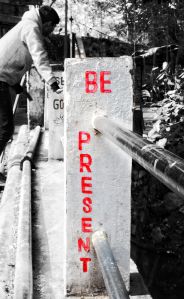
Prayer is about being present, not wishing blindly that things be different than they are. In praying I seek to affirm that the ‘universe is unfolding as it should’, as it says in a famous poem I’ve always loved. (Actually if you don’t know about Desiderata [Things Desired] then please do check it out; you’ll love it).
I think that in this sense, prayer is in fact an act of mindfulness, or rather an act which will help develop a mindfulness practice. It is a way to practise being fully focused and present to whatever is going on, whatever circumstances we find ourselves in.
And if we’re able to be present – even on a temporary or momentary basis – then we will be more calm, more at peace, and more able to achieve some clarity in our lives and with whatever is the intention with our prayer.
I know it might sound like a clumsy attempt at a clever play on words, but we’ve described mindfulness as the practice of being fully present. But we can put it another way. We can define that state of being fully present as being in presence. Like what we might say to a friend who is daydreaming while we are trying to talk to them. We might say something like ‘so and so, your presence would be appreciated’.
In presence of what? I would say everything. When we are absolutely in the present moment (again even momentarily), when we are able to realise our oneness with all things. Essentially the universe is there – or is it here? – with you in that present moment. It’s a moment when we may indeed feel we are in the presence of all that is.
Some may call that presence God, or the Divine, or Universal Consciousness. Others may see it as being in the presence of their own true and authentic Self.
That leads quite nicely to the next aspect of prayer that I want us to look at. Praying to God. I’ve spent so long on mindfulness because I wanted to stress that I don’t think it’s necessary to have a personal name or form for God, or even a notion of an unmanifested, invisible ‘force’ called God, in order to pray.
On the other hand for me, and I know for a lot of people, there are names and forms of the universal consciousness that pervades and permeates the universe, that I personally resonate with and I can reach out to them whenever the feeling or inclination arises. It sounds a bit odd to say, but for me to think that all that is, is all that is, sort of sums it up.
And as a result of that, any prayer I pray is addressed to my own Self which is simply part and parcel of all there is. In other words, it’s a personal choice for any one of us what form or name we choose to pray to. Or if we don’t pray to a name and form at all. All is one.
One thing I’ve mentioned I think a couple of times is the idea of making all our activities into a prayer, but other than the discussion on mindfulness and presence, I’ve not really addressed the how and why.
Why is pretty obvious. Because living and acting mindfully helps us in so many way such as being more peaceful, more relaxed, happier, and so on. The how, now I’m thinking about it is the purpose of this post. And it’s also true to say we’ve been talking about it since this series began.
That is to say, we flee from the aspects of our lives that don’t serve us and which can be changed. This might be a decision to spend 30 minutes every day sitting quietly and undisturbed. And as we’ve mentioned a few times already it could be going all out and moving to a desert cave somewhere.
In both those scenarios we give ourselves the opportunity to be silent and, hopefully also surrounded by silence. How to pray always? There’s an expression I love and try to live by: Follow your Dharma. Here Dharma means your own truth, being authentic to who you are, having the intention to do what’s right in all situations. And of course actually following through with that intention if at all possible. In this way you transform every action into prayer.
Living a life of prayer does seem on the face of it to not involve much use of spoken prayers, as in saying prayers with words. Well, I don’t intend to be humourous here, but a great deal of prayer does it fact involve talking to one’s Self. To the real self, that part of us that’s part of everything else. It can do us good to have these deep conversations.
Then of course there are the many many prayers that already exist to serve people from so many traditions, cultures, to suit all kinds of purposes and intentions.
Many of us will be familiar with a number of prayers learnt when we were children. If you’re anything like me, they still pop up by themselves from time to time.
Actually as I deepen my prayer practice, I’m discovering that I’m remembering all sorts of prayers from many and varied sources. I think as I dig deeper, more and more are coming up to the surface.
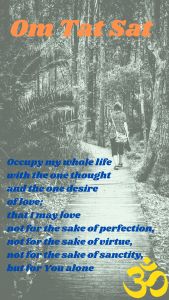
This prayer (by Thomas Merton I think) resonates deeply with me
If these ‘pre-prepared’ prayers say what you want to say and in a way that resonates with you, then you are free to choose those that feel right for you. I guess I mix and match the prayers I use; it’s always dependent on my feelings, thoughts, and intentions at the time.
Like Arsenius, I try to be open and responsive to whatever the ‘answers’ are, even though my ego does sometimes when it doesn’t like the answer, try and control outcomes.
One point about such prayers: I find it tempting oftentimes to simply recite them at what I’ve heard described as lip level. By rote and without emotion, in other words. At those times I try to slow down or pause to reflect on what I’m doing and why to get back in touch with Self.
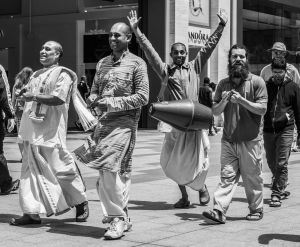
A major part of my prayer life is chanting mantra. I try to spend more time chanting as time passes. There are a number that I use depending on inclination and need.
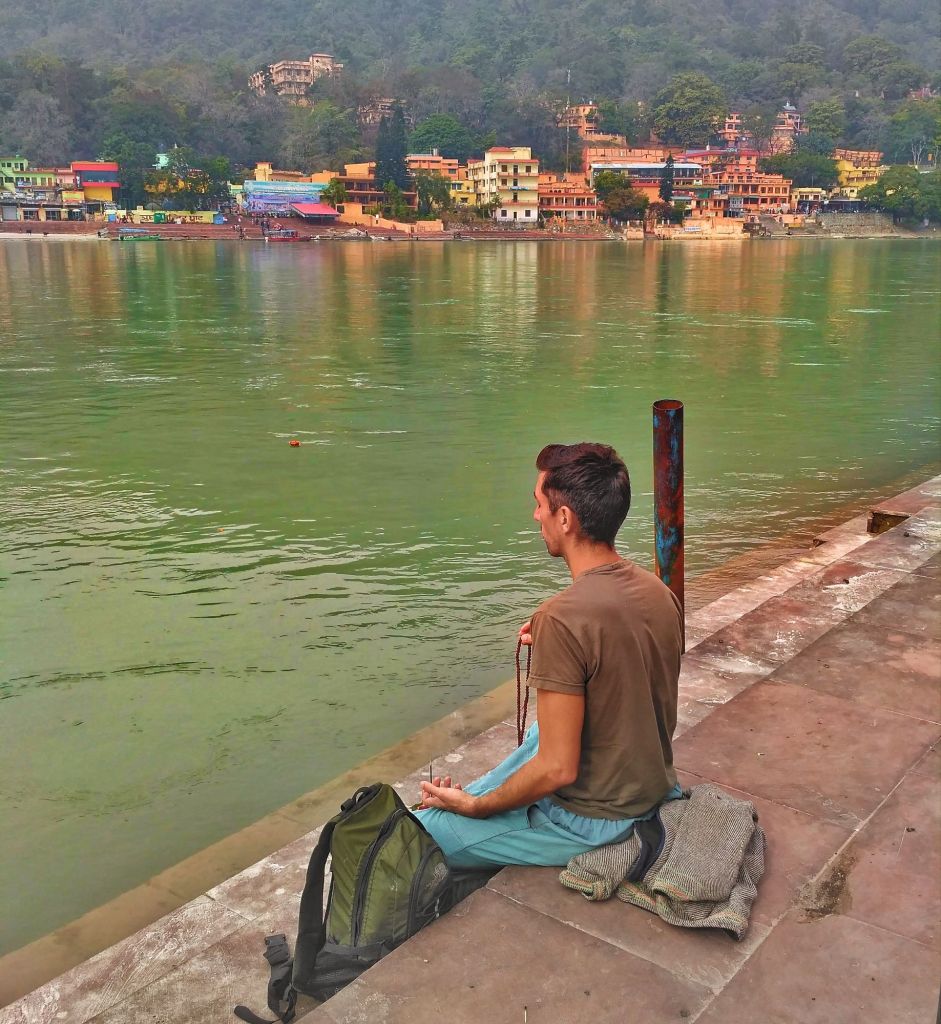
I chant anywhere and sometimes a mantra will start chanting itself, surprising me by its arrival
(This photo isn’t me by the way)
Now, probably one of the most important aspects of my own prayer life: I know I’ve mentioned my intentions in praying at all, but one aspect I haven’t mentioned is praying as devotion.
Devotion as in worship, praise, as in gratitude for the beauty in my life, as an expression of love. Knowing with the mind that all is one is fine, but these kinds of prayers help us to cement our awareness of that oneness of all living beings. As I said earlier, I, like you or anyone else, may use particular names and forms to represent this oneness, but, well, it’s all one, so we are non-different from all those names and forms.
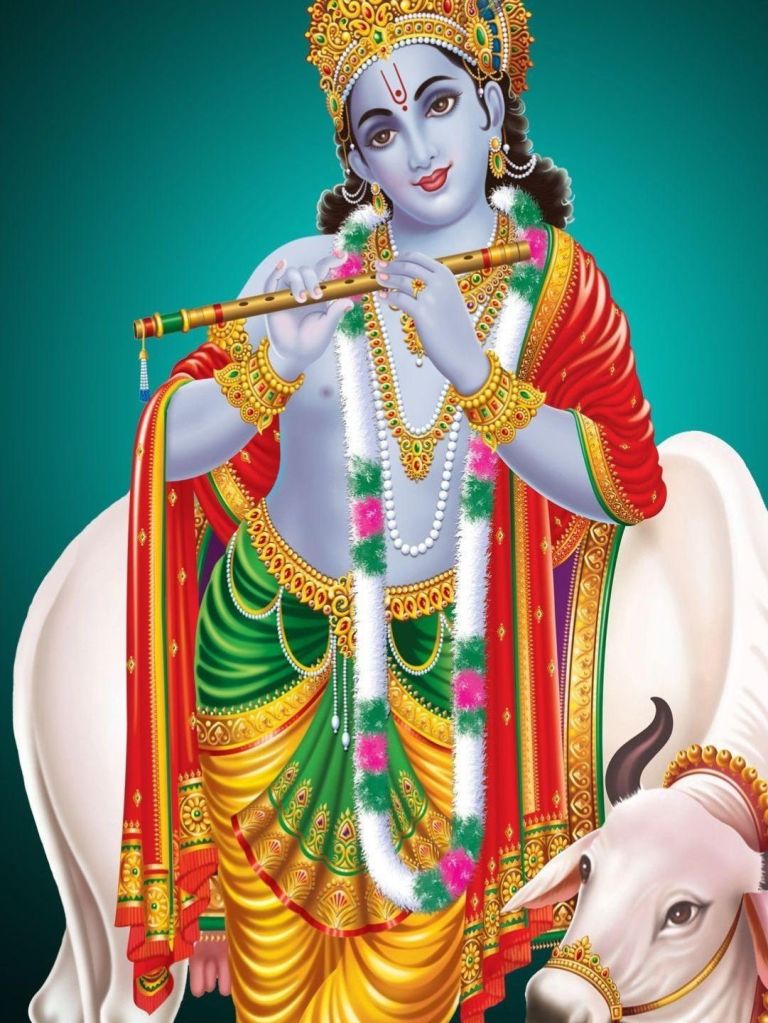
Lord Sri Krishna is among my favourite forms of Universal Consciousness (also known as Brahman)
There are many representations of the Divine, but Krishna and this picture of Him are special to me.
Focusing your devotion on a particular form seems to help make it easier or more real. It’s tricky to pray to and with a thing that has no form and is invisible.
So, my friends I hope what I’ve said here is of some little interest to you and that you have found at least something you can use for your own life.
Towards the end of my last post I looked at where I was (or is it am?) on the Do your duty front. Do I actually do my duty? And if I do, then how well am I doing it?
My conclusion was that in some areas I am doing okay,, while in others I need to work harder to get them right. Now I’m thinking about it again, I would say that being here, in a physical body, suggests that I still have a way to go in all areas of life. I suggested in that last post that my aspiration to do my duty is a good motivator and incentive to keep on moving in the right direction.
In summary I can say I do my duty as best I am able, and, at the same time I aspire to do that duty in an even more complete and satisfactory manner.
Oh, one more conclusion – and I think it’s a really important point – is that nobody can tell you (and me) what your duty is; only you know your duty. And only you can get yourself doing it.
Which leads us nicely to our next injunction: Follow Dharma. Following Dharma will be a great help in allowing you to discover the knowledge of what your duty is and how to go about actually doing that duty. Of course there are quite a lot of other benefits to be had from following Dharma.
Follow Dharma
As I did with defining duty, I will talk here about my own definition of Dharma; and as with duty, I will be thinking about what it means to me. Once again, there are a number of ways to define Dharma, and I have my own ideas.
The easiest, most straightforward way to say what Dharma is is to say that what is right is Dharma, and what is not right (or wrong) is Adharma.
Here’s where we might ask ourselves, who gets to decide what’s right and what’s wrong? Remember in my last post I mentioned that I think I know the difference between right and wrong? Well, it’s the truth; it’s a Dharmic statement. And I suspect it applies in exactly the same way to you too.
Obviously I get it wrong – quite often actually. I’m simply a human being who is flawed, who gets tired, angry, forgetful, distracted, and even just plain lazy.
On the Path
Which is another way of saying that, despite knowing right from wrong, I don’t always manage to act accordingly. So, what do I use as a guide, as a kind compass to steer me in the right direction? How do i in real life discern right from wrong? How do I know what path to follow?
When I was thinking about these questions, I thought, well, I just know: my intuition tells me how to behave, how to act. Clearly my intuition is not as foolproof as I would like, so thinking harder, I asked: is there a ‘code’ or something I follow that helps me keep on the Dharmic path?
Then it occured to me that, on a very much informal level, I try to follow Buddha’s Eightfold Path.
The Buddha taught this Eightfold Path as the means by which we might free ourselves from suffering.
The Path is not a set of commandments imposed by some outside authority. It’s not a set of rules or laws that we must obey for fear of punishment, either here in this life or in the next life.
What the Eightfold Path is is a series of pointers, a collection of concepts or ideas that can help us to navigate our lives directed by a moral compass that keeps us heading in the right direction.
The steps that make up the Eightfold Path are Right Understanding; Right Thought; Rght Speech; Right Action; Right Livelihood; Right Effort; Right Mindfulness; and Right Concentration.
A long time ago (and I’m sorry I no longer have the source) I read somewhere that one can summarise these eight steps with two short and direct sentences:
Be ethical in thought, word, and deed Be a good, kind, and moral person.
You can probably guess what I’m going to say next: This is all way easier said than done. Well, exactly. For me it really comes down, once again, to aspiration, to trying.
In fact, one of the steps on the Eightfold Path addresses this point directly: Right Effort. Buddha recognised that it was never going to be an easy path to walk, so he reminds us that effort is as vital as any of the other steps. Perhaps, knowing how flawed I am, I would say it should be the number one step.
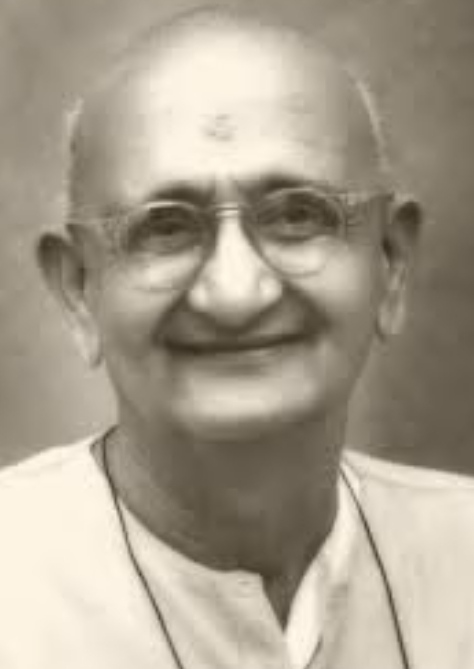
Swami Ramdas
Essentially what The Buddha is saying here is what SwamiRamdas, another favourite teacher of mine, once said (I have to paraphrase a little here):
Once you step on the path, you have already reached the destination.
Again, it’s the effort, the trying, that is the point. For me it’s actually The Way itself.
And that’s where I’m at. Deeply flawed; deeply and seriously lacking in the right ‘thought, words, and deeds’. But I try; I’m making effort.
Live a Righteous Life
Well, at this stage, I have to wonder what else I can add. It seems to me that the aspiration to be ‘ethical in thought, word, and deed’ – not forgetting the effort to persue that aspiration – is already the grounds for living a righteous life. And at least I’ve made a start over many (or is it just one?) lifetimes.
Do good, be good, seek knowledge, celebrate all that is sacred, beautiful and is truth.
By the River’s Light I’ll Live My Life out of sight of Babylon
A Note From Me: I can’t tell you who wrote these words. Maybe I did; maybe it’s a song lyric; or maybe it’s a quote from someone famous. Whatever the case, a half hour internet search failed to come up with anything even close. So, The best I can do is thank whoever did bring these beautiful words into the world. I hope you are pleased with how I’ve made use of them.
We’ve all had this experience I think. I’ll be reading something, and right away I’ll come to a conclusion, become either sure of something or the complete opposite; I can be confused, force myself to ask more questions. I can even have brilliant insights or realizations.
No? Well, maybe it’s really just me then. But, wait there’s more: this is a two part experience. When that second part happens we will come to realise that what we think we read is nothing at all like what the words on the paper (or screen) actually said in a factual sense.
Yes, you’ve probably guessed by now that there’s a story coming. In fact this exact thing happened to me this morning, all the way to the brilliant insight or realisation bit.
In fact it was a brilliant realisation, the only problem was that it was based on only on what I thought I read, not what was actually being said.
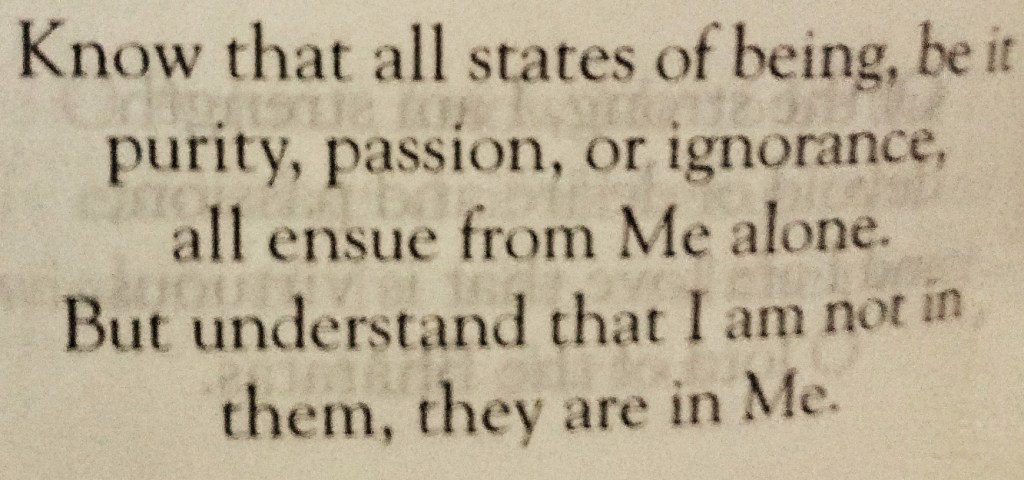
Anyway, I was reading the verse quoted below, from my Bhagavad Gita and a sudden flash of insight hit me.
Despite these five lines saying a particular thing in a clear and precise manner, I somehow misread the first three lines to say:
All beings ensue from Me.
Bhagavad Gita Ch 7:12
Somehow my mind skipped the ‘states of’ bit and made a leap that actually lead to a great realisation: Of course, I thought; God is not in us (as in living beings), it’s we who are in God.
Which to me means that we are all part and parcel of God. I’m not saying, I’m God; I’m not saying you are either. What I am saying is that all creation as one, unified whole, is in God. And if that one unified whole does indeed ensue from God, then it follows that all of creation is God.
As individualized, embodied entities, we (along with all life everywhere) are simply manifestations in the material form of that divine energy, that life, that truth; that which we often call God.
Now, this is an instance of a flash of insight leading to a truth, when the receiver of the insight (that’s me) is engaged with what you might call some other factual reality, that is, the actual words on the page.
At first I thought, that’s weird: how did I misread all those words related to states of being? I mean they are pretty clear right? But then I thought, no, maybe not so weird. In fact, it makes sense.
How can my material mind and intellect possibly be expected to always keep its millions of thoughts, ideas, impulses and the rest, in perfect order each thought or whatever following completely logically from the one before and to the one after? It’s never going to happen is it? Not for any of us (Well maybe I’m overstating my case here, but you know what I mean).
And if mind does indeed operate on what seems on the face of it to be a random basis, then it’s perfectly reasonable to suppose that one might be prompted to some momentous insight by, well by anything really. Even if it’s a conclusion jumped to after the misreading of a text.
In this case though, that jumping to conclusions, even though based a misreading, has turned out to be a genuine realisation that I feel on an intuitive level; my instincts tell me it’s Truth.
Yesterday found me (for a couple of hours anyway) out on the suburban streets close to the hermitage. Camera in hand and trying to cultivate an attitude of Contemplation. Working for the moment my heart, my head, and my mind all came together to help my camera make a photograph.
Well, in terms of contemplative photography, the outing was a bit of a struggle: getting into the Zen Zone isn’t always easy. And come to think of it, it’s not always part of the plan is it?
I don’t mean the little plans and intentions the ego comes up with about how things are going to turn out. I’m talking here about The Plan: what the Divine has in the works for us.
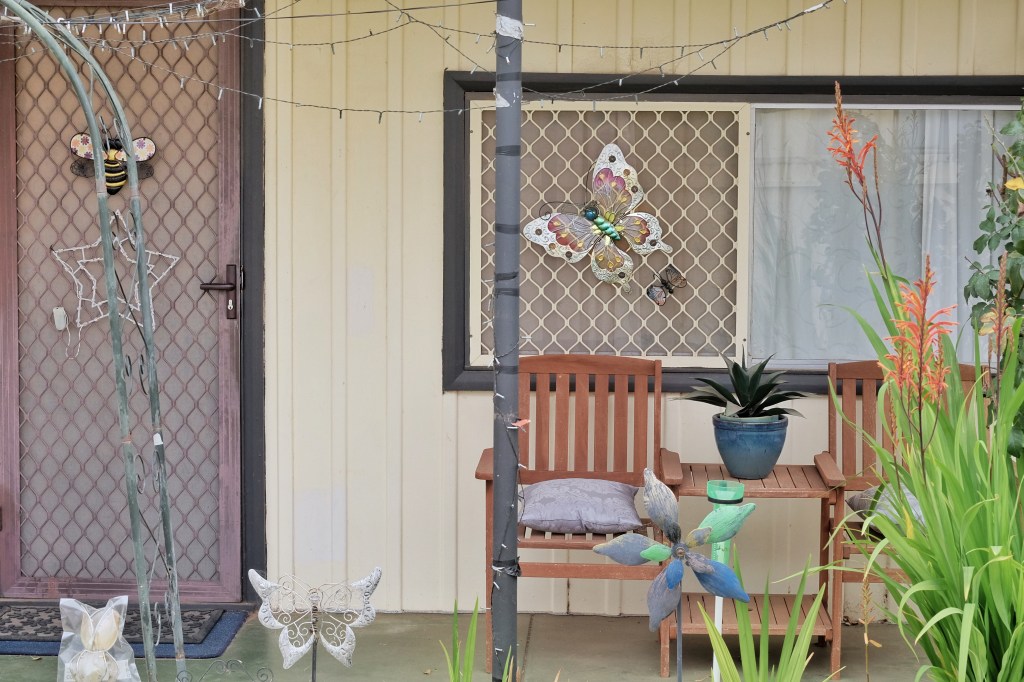
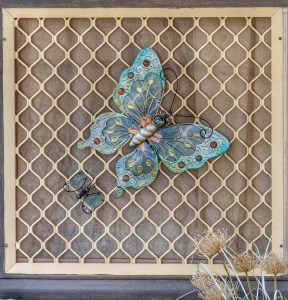
Anyway back to my walk. I kept walking, sometimes making photos. As I said, it wasn’t easy getting in the zone. Suddenly my eyes were drawn to a particular house. As I looked through the viewfinder I noticed a butterfly on the wall. On the window actually.
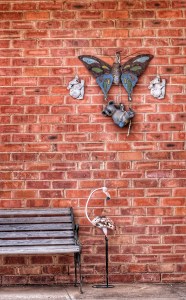
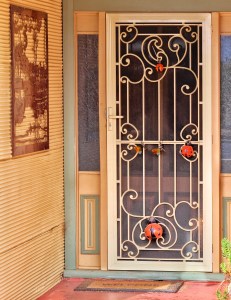
Not a living, flying, being as you can see. More of a kind of garden ornament attached to the front of the house. It struck me as I continued looking, that I’d already seen – and photographed – several ‘butterflies’ so far in that walk.
Four actually. In the space of an hour, and within a couple of streets of home. I’d seen them on walls, windows, and on doors.
Through time and in many places around the world, various cultures have looked at butterflies as symbols of transformation, for change, and renewal.
And, it seems to me, that butterflies can appear to us almost lighter than air. They kind of float on the air currents. They’re also known for their darting way of flying in what might seem to us one random direction then another.
So, butterflies have also been seen as symbolic of the human mind with its tendency to dart all over the place from one thought to another. They are said to remind us that we can in fact control and direct the mind.
In that case then, were these repeated encounters with butterflies – albeit of the ornamental variety – some sort of message for me? Perhaps I was to slow down, stop taking myself so seriously and to make changes? And of course remembering that I’m perfectly able to deal with consequences of any changes I make.
A Window for Two
Well, here’s the funny thing. Literally not until I sat down to draft this blog did it occur to me that I have in the last couple of days made what for me seem monumental changes. Or to be more exact, I have put into motion changes that are yet to reveal what if any transformations they might lead to.
You see, over the last few days I have been systematically deleting all my social media accounts (with the exception of a messenger app to speak to my son). I’ve had most of these accounts for up to 15 years or more. So, while I’m absolutely certain that this act of detachment from some of the things in the world that don’t sit well with my nature, I’m still feeling a bit lost, a little empty.
Okay, the butterflies: what have they to do with any of this? Transformation? Change? Lightness? And the ability to float through changes in life? Yes all of these. And we all know very well that butterflies undergo some pretty tough transformations as they evolve into what they are to become.
Who Invited the Lady Bugs?
Something I read once said that if you see a butterfly you should look at what you’re thinking; ask yourself what’s next for me? What changes are in store? Although all those butterflies of yesterday were ornaments on walls and so on, I have actually at other times been privileged to photograph living and flying ones.
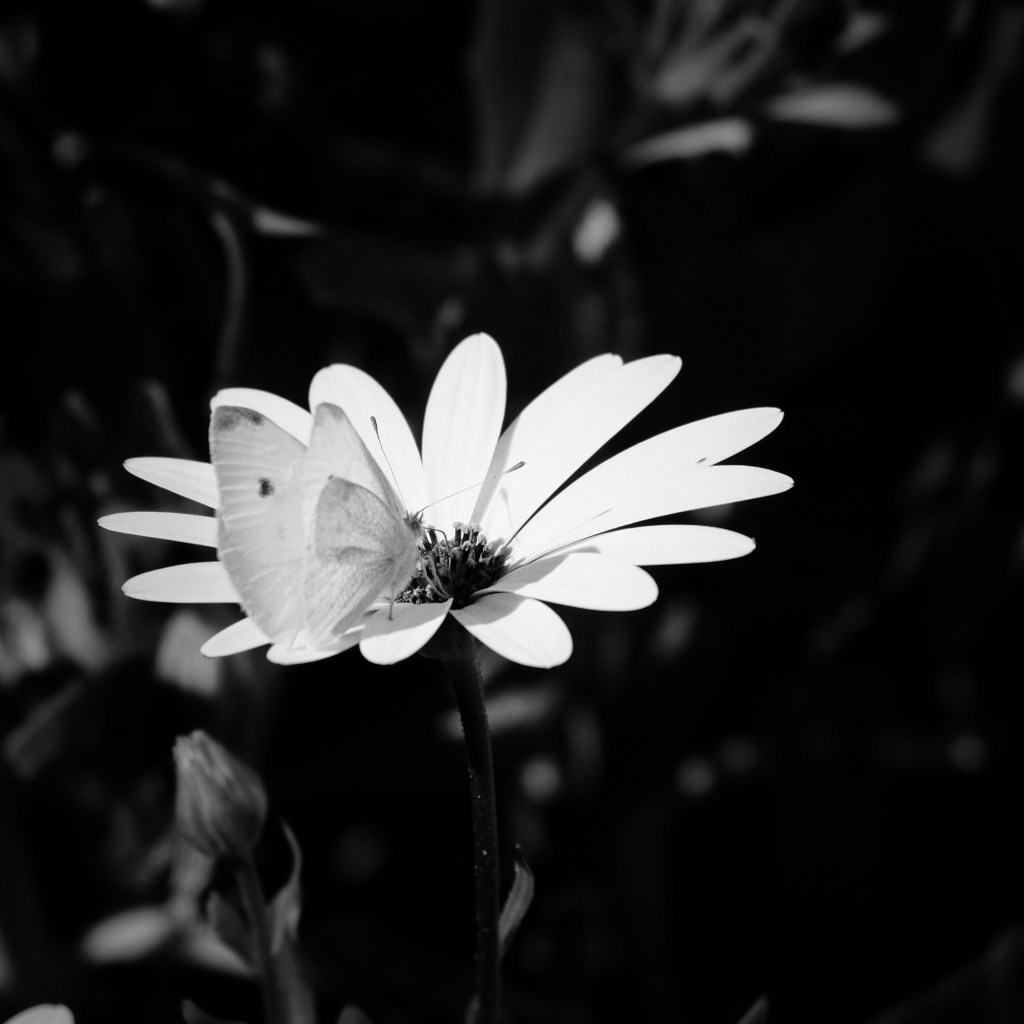
In fact just the day before yesterday I met a small white butterfly flitting from one white flower to flower. In the space of a very short time, this beautiful creature gifted me with a very small moment’s stillness, and it gave me a photograph. Here i share that one with you.
Early Christians associated the butterfly with the soul. So, yes, you could say that my meeting with that particular butterfly was a meeting of souls.
But what of the garden ornament, inanimate butterflies met yesterday?













 Notes from the Hermit's Cave