Welcome to the first in a short – and occasional – series centred on a text containing a kind of Q & A session between Krishna (God) and Uddhava (his cousin).
Thirty six questions in all, with which Uddhava asks Krishna how he can live a good and honest life, dedicated to doing right and living the truth.
If you haven’t already, it would be really helpful if you read the Introduction post here, before going much further; just so you have a better handle on the context, the background etc. It will just help to set the scene a little more.
Now that’s been said, let’s get on and into it. The very first question Uddhava puts to Krishna is actually two questions in one.
What is quietude and self-control
Good questions, the both of them, given the circumstances Uddhava finds himself in. His hometown (it’s Krishna’s too) is about to descend into a nasty civil war and is most likely a chaotic, noisy, overwhelming and frightening environment to be stuck in.
Uddhava, like the rest of us just wants a peaceful life, and as to the second question, well he’s bound to be asking himself the same question we’d ask: Why can’t these people just control themselves before it’s too late? Not to mention the onslaught of emotional and mental anguish he’d be suffering himself.
Anyway, Uddhava is about to leave town following his cousin’s advice, and would like to find out how he can go on to live a good, righteous and honest life, while he’s in exile from his home.
Krishna chooses (sensibly I’d say: they’re both big questions) to answer one question at a time and he begins by explaining what is quietude:
Quietude is fixing the mind on me.
Krishna is not saying here: ‘Look, once I’m gone [I think I’ve mentioned that he’s leaving too, going back to Heaven or wherever he lives on a permanent basis] try to remember your dear old cuz in the odd quiet moment now and again will you?’
What I think he is actually saying is: ‘If you fix your mind on me, then that’s quietude’. We could call it silence as well. He’s not saying ‘I am in the silence’, nor is he saying ‘Through silence (or quietude) you will come closer to me’. No, what he says is ‘Quietude is what I am’.
So, what about those of us not in a first names relationship with Krishna? Well, think of Krishna as being a name and form of Universal Consciousness. Yes, the same Universal Consciousness that is all created and non-created things; the sun, Earth herself, trees, the oceans, all living and non-living beings in the Universe, in all universes if there are more than one.
There are a whole list of synonyms for quietude: equanimity, calmness, peace of mind, rest, serenity, dispassion. Just to name a few.
These further definitions are really quite helpful. What I mean to say is that we rarely if ever associate that calmness, equanimity, peace, and the rest, with actually being the Universal Consciousness, that is also all of us and everything else that is. Again, think of Consciousness as the Divine, God, or by any other name and form, you attribute to the natural order and flow of the Universe.
Forgive the repetition : Quietude, calmness, peace of mind, are not where you will find God or consciousness, or whatever. They are all consciousness.
The beach is also dog friendly
Have I mentioned that the current hermitage is a cottage on the side of a large sand dune, on the other side of which is a stunning stretch of Pacific Coast beach. Sitting on the top of the dune and looking out over the beach and ocean it is easy to think of all that’s seen as divine.
It is most definitely a peace of mind, calm and quiet inducing experience to sit there. Certainly it is quietude itself with the only sounds being the song of the universe in the form of the waves and wind.
A question I asked myself, and I now pose to you: If what we’ve been calling Universal Consciousness is actually all that is, then why not a state of mind like quietude, calmness, balance, and the rest? Like everything else perhaps these states are simply elements of that consciousness or Absolute Reality, or oneness, or what some call God, the Divine, or … ?
In any case, I have a feeling that’s what Krishna was getting at with his answer, and what Uddhava somehow intuited with his question.
Thank you for joining me on this little pilgrimage. in the next post in this series (it could appear anytime, so stay tuned!) we will discuss Krishna’s answer to Uddhava’s second question: What is self-control?
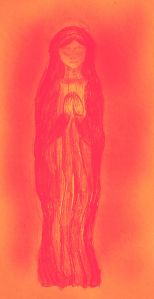
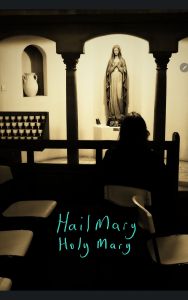
Today, a poem and a photo for you. I made the photo just over a year ago, and was very fond of it from the start. Then when I put into an editing app, it evolved to what you see today.
As well as that, as I ‘worked on’ the image, the little poem, (a kind of freestyle Haiku I think it could be called … sort of!) just emerged and I had to hurry to write it down.
Last night I was going through some poems of mine, and came across this one again. Not so much that I’d forgotten about it, more that I hadn’t thought of it since way back then.
So, I went on a search for the photo (also not forgotten, just buried deep in the hard drive!), so I could share it and the poem here with you on this blog. First the photograph:
Growing up Catholic, attending Catholic schools from age six to fifteen, going to Confession most weeks, going to mass once a week, oftentimes more, I was deeply immersed in a particular cultural environment of Catholicism. Over time I was (we all were) inculcated with, among other things, a deep love and a reverence for Mary, the mother of Jesus.
I say deep love. No, I’m not being quite precise enough to let it slide. Sure we were taught to love her, but in a kind of limited way. We should love her because she is the mother of Jesus. Not that being the mother of Jesus was what you would label a ‘limited’ role of course. But other than that we were taught to view Mary as an intercessor for us, a conduit if you like between us and our wants, and her son Jesus. So love yes, but a kind of conditional love.
Mind you I was always very fond of Our Lady as we called her. Through a serious dedication (for a time) to The Rosary, and the numerous Hail Marys imposed as penances in Confession, I grew close to her.
And, even as I moved on and out of that Catholic sub-culture and began to explore other ideas and ways of being, I still maintained that fairly deep reverence for Mary, a reverence that has pretty much stayed with me all my life. I only realised today that it wasn’t until quite recently that I stopped calling her Our Lady.
But, in truth, my concept of her evolved beyond her being the mother of Jesus. Indeed, I came to a point when I realised it wasn’t at all relevant if Mary herself was an actual historical figure or not (this was much much later though).
For me Mary had come to represent or symbolise the female aspect of the Divine. Still, in the early days, very dualistic of course, but a huge step from the ‘second place’ she occupied in the earlier days when we weren’t even allowed to worship her as Divine. Worship was reserved for God – who was emphatically and indisputably male, sitting in heaven, entry to which was held tightly in the hands of more males in a male controlled and dominated institution. Which, it does have to be said merely reflected the world it operated in.
Anyway, let’s jump ahead half a life time of, (shall we say for our purposes here?) living, to put ourselves into the present day. Well, recent times anyway.
To put a very long story into one sentence (again for our purposes here today) I will simply say that I moved away from Christianity and especially the denomination of my childhood. Okay, we need another sentence: In more recent times, through a whole lot of circuitous meanderings, I have come to realise that there is only God.
That is to say, all there is is God, only God, nothing else. ‘Not one God, only God.’ as my teacher’s teacher used to say.
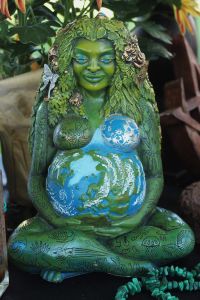
Earth Mother (Courtesy of Amber Avalona, CC0, via Wikimedia Commons)
Nowadays I still love and revere Mary. As symbol. A symbol of the creative energies responsible for bringing the Universe into existence, and which is engaged in the ongoingness of its maintainance through the laws of nature. She is one manifestation among so many of this divine creativity. In a very real sense for me, she is the Divine Mother.
So, a prayer written by me to and for the Great Mother who manifests in whatever form – or no form – in which any of us may choose to worship and love her.
So said I to my partner hermit yesterday. You see, for a few days I’d felt the coming on of a blog post: no topic, no clue as to ideas, and no hint of anything, only that it was on its way. Hence the exasperated outburst.
What’s wrong with wishing for something we want? Absolutely nothing. Sort of. Contrary to popular rumours, erroneous teachings, misunderstandings, mistranslations, or just a simple lack of information, Buddha’s Second Noble Truth does not say ‘The cause of suffering is wishes’ or we can say desires.
What he actually taught was that the cause of suffering is clinging. Clinging, being attached to a desire so strongly that failing to fulfil that desire causes us to suffer through annoyance, frustration, sadness and all those other things that impact on our mental or emotional wellbeing.
My teacher uses the word compulsion. Compulsion to chase after what you want, compulsion to run away from what you don’t want.
Using me as an example: yesterday I wanted so badly to write, and was so frustrated that I couldn’t write just then, that I caused myself suffering. Because I couldn’t have what I wanted immediately, I made myself miserable.
Just as an aside (or perhaps not?), I realise that this little annoyance hardly means anything in the larger context of living and suffering that all of us experience simply by being alive.
But in a way, that’s my point. How many of the things we desperately want or that we desperately don’t want are the ‘little things’? Aren’t they so often the very things that, on a daily basis, cause us the most annoyance, frustration, anger, and even sorrow?
In any case, I had made myself annoyed with myself, frustrated too. However as soon as it was suggested that I needed to just down and type something – anything – if only to get the words flowing, I felt much better. I had the answer!
So, here I am, albeit a day late, and not typing as it happens, but scribbling in my notebook. Actually I don’t know why I don’t type it all up first thing, cutting out the middle step. I mean, it really does flow better on the screen (via my fingers on the keyboard of course), and it’s also, as an added incentive, a whole lot easier to read than my scratchings.
I suppose I could say that not all old habits that have not quite died just yet, are necessarily ‘bad’ ideas. I happen to like my notebook.
Now, here’s the thing, the paradox if you like. I had felt a post coming on, and because I wished so badly for it to emerge and it wouldn’t, I suffered. And then, I sat to write something (anything as was suggested) and voila: the desperately, compulsively, longed for post obedeintly appears.
Cause and effect? I mean to say, which came first? Did I at some deeper subconscious level already have an idea to write a blog post about how clinging and compulsions and attachments to the things we want – and aversions and compulsions to get away from things we don’t want – cause us suffering?
Did that existing but deeply buried idea then manifest itself as a real world situation to give me the ‘material’ to write from?
Or, perhaps more simply, I got annoyed because I couldn’t write, so I made myself write (took a day to get to it though; remember me saying?), and well, what you see is what you get when one sits to write – words on a page.
Who can say? There are theories that propose effects can and do often precede causes. It’s a tough one to get my head around, and somehow I don’t think there’s any point in trying to.
We know instinctively that everything that exists in the Universe is constantly changing, evolving, devolving, mutating, never still. And we also know that we can affect what happens in our lives and in the world around us through our own actions. Some might disagree with me on that last one; it’s only my opinion.
The tricky bit is that oftentimes we forget that those changes as well as the lack of fulfilment or otherwise of our desires (wishes also), and even the results of our own actions aren’t always to our liking. Well, it’s not that we don’t know it in our minds and through personal experience, but when it comes down to it, we all usually as part of our normal conditioning, suffer when outcomes aren’t to our liking. It’s like we know it but we haven’t realised the truth of it yet.
Sounds like a trivial or flippant, even silly and pointless, thing to say, but it’s demanding to be said anyway: things (as in life and the rest) always work out how they work out.
But if you think about it, it’s true whether we like it or not. Actually, in a sense this is one of the very important, even pivotal points, of my ongoing studies, meditations, and contemplations. To realise fully that I, along with every other living thing, has a place within, no, not just a place within but is actually an indivisible part of, if I may be forgiven a cliché, the grand scheme of things. Not only that, but we in our essential true natures as Consciousness remain untouched and genuinely okay whatever transpires here in the material world.
I do what I do; you do what you do; and regardless of whether we like the outcomes or not, things work out as they do. Sorry to be repeating myself. Just seemed the right thing to say again.
And here’s another tricky bit: it’s not about resigning ourselves to ‘fate’ or ‘destiny; or whatever we might call not having control over our own lives.
Just by way of exploring that last point, and finishing this post, I would like to leave you with a quote. Yes, I know, we are all bombarded by quotes from famous (and not so famous) people, aphorisms of all sorts, and affirmations that claim they will improve our lives.
I truly believe this flood (mixing my metaphors here) of good words, written with good intentions, has numbed us to their actual value and usefulness to us in assisting us to live good lives.
So, here is one such, that I think puts it in a nutshell, in a very simple, straightforward way, an important Truth. It’s called the Serenity Prayer, and rereading it just now, I see clearly that serenity would indeed be the outcome if we are able to take this invocation to heart, and begin to live by it.
God grant me the serenity to accept the things I cannot change,
Courage to change the things I can,
and the wisdom to know the difference
Peace and Love from Paul the Hermit
PS: This version is only one among many. In fact, the Wikipedia entry linked above is a fascinating (though apparently quite flawed) exploration of this prayer and its origins.
Remember that old Bee Gees‘ song Words? It’s about one person offering all they have to another. Well, the one doing the offering must have been a writer because, while the song’s a love story, it’s words that are the big thing on offer here:
It’s only words, and words are all I have To take your heart away
Well, as this is a blog, words are the way it hopes to reach your heart. Actually, the posts also include photos and sometimes other art, but the main vehicle used here is words.
So, with that in mind I have a couple of words to offer you today. Well, one word and its opposite. Have a look at this sentence from Thomas Merton:
If Irish monks affirmed his Celtic spirit in their mastery of cataphatic contemplation of the wonders of divinity in nature, Buddhist monks evoked his Zen mind and drew him into the apophatic path of formless ’emptiness’…
As sentences go (though this is obviously only part of a sentence) this has to rank pretty close to the top for length and denseness.
Kataphatic. What a word! Of course I had to look it up; I’d never heard the word before (this post is a rewrite from notes written a while ago that I never got around to posting.), and even though the sentence seems to suggest the meaning, I was still curious.
Looking at Wikipedia – where they spell it with a ‘C’ like Merton, as well as with a ‘K’- I learned that cataphatic is an adjective that describes an approach to theology that uses ‘positive terminology to describe or refer to the divine (God, Truth, Dharma, Spirit. You know what I mean: the divine).
Apophatic, as you probably figured out already, is when one uses ‘negative terminology to indicate what it is believed the divine is not’. A process of negation or we could say you get to what the divine is by a process of elimination.
Pretty simple concept really, but with a couple of big words to label it, and a lot of words to define it. No, don’t worry, I won’t bore you with the meaning and origin of the words and all the rest. Mainly because I don’t know and I’m not especially interested anyway in all that technical stuff.
I simply resonated with the word, and the concept. Cataphatic made me think of Dick Van Dyke and Julie Andrews singing Supercalifragilisticexpialidocious in Mary Poppins. But let’s not go there: this is a serious blog after all. Except to say there’s more to that word than you might imagine.
Putting aside the aesthetic appeal of the word for a minute, let’s contemplate a while on cataphatic, and it’s opposite, apothatic.
To begin thinking about these two words, it’s necessary to acknowledge the existence of the divine. We can call it God, if we like. Or Dharma, Truth, Spirit, Love, Beauty.
As the quote suggests, a cataphatic approach, ideology, theology, or whatever we call it, ascribes names and forms to the divine, as well as describing where and in what the divine may reside.
Whereas apothatic, again as the quote suggests, does not ascribe names and forms to the divine. Instead it seeks to discover what or who god is or isn’t by a process of negation as described already.
For a long time I labelled myself as a Humanist. I had decided that this physical body is all there is; the physical or material universe is all there is, and that there is no ‘god’ separate from us or who has special powers to affect our lives. No God at all in fact.
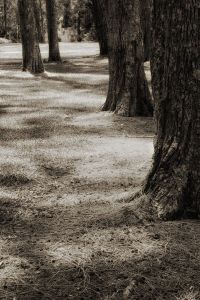
In the Grove of the Sentinals
But, all that while, I just knew that there was something else, something more than just the physical. And over time, I came to the knowledge that there is indeed more than the simply phsical universe (including we humans).
I’ve thought about it a lot over the years and I came to the conclusion not that many years ago, that I had simply been afraid to name or define that something more. It would have meant admitting to myself that something more really did exist.
That is to say, I was scared of taking the cataphatic approach – and I’d never even heard the word.
Well brothers and sisters, I saw the light. The truth was revealed to me. And what is that truth? Well, to put it simply, I wasn’t scared anymore. Not of names and forms, and not of what I couldn’t see.
Now I could take both the Catophatic and the Apothatic approach: that the something else I had actually always known just was, really is, and can have a name and form, or not. The divine is not an omniscient being or any kind of being at all; As I’m very fond of saying, the divine (or truth, God, Dharma) simply is. And it’s all there is.
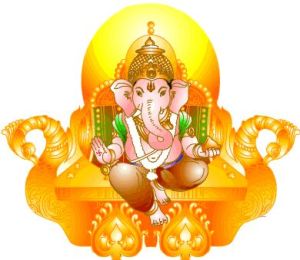
Some of you might know that I am really quite fond of the Indian deity, Ganesha . Do I believe that a man with the head of an elephant actually exists or ever existed?. Of course not. Do I actually think that he resides in the lovely painted icon that sits by my bed? Well, obviously not.
But do I believe that there is a spark or aspect or attribute in all life, in you and me, in nature, in (scary word time) creation, that we can tap into to help us overcome obstacles? Or that we can access when we begin new ventures of whatever kind, or when we need strength to face challenges? Yes, I do. Very definitely.
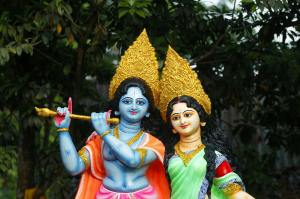
And do I believe in a blue boy called Krishna who lived in India 5000 years ago and spent his time playing in the fields with the village cows and his friends, entertaining them with his flute? Again, of course not. Does he live in the other beautiful icon by my bed? The answer is obvious: no.
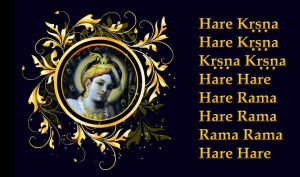
But do I chant the Hare Krishna mantra in an effort to come closer to the divine that is… well, that just is? Yes, again, very definitely.
Words. It’s all only words. Only words? Only??
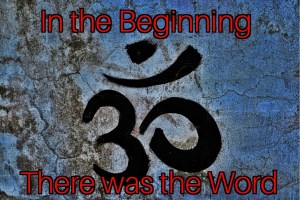
In the beginning was the word, and the word was with God and the word was God. (from the opening of the Gospel of John)
Well, here we are with the third and final part of our contemplations on Flee, Be silent, Pray Always, the answer discovered by our friend Arsenius who was looking for a way to be saved from the the things of the world.
In a very real sense, this third injunction might be seen as the most important of the three. Indeed, again in a very real sense, those first two seem to me to be prerequisites for the third. Certainly, many of us would like to flee to a place and state of silence in order to escape the world and its many and varied causes of our suffering. Such people are simply and completely over the noise, the chaos, war, greed, the complexity of relationships, and all the rest.
Then there are many many others who, rather than looking to escape the world, are wanting to ‘flee’ towards a place and state of silence in order to engage more fully with the world by contemplation, meditation, and most of all, prayer. Such people are working towards making their entire lives a prayer.
And then there are the third group which is made up of those who have some sense of running away from the world while at the same time they feel compelled to move towards a contemplative life that they sense will be the best way they can actually serve the world.
I think I can include myself in this last group. I’ve never coped well with masses of people, being in the workforce, or dealing with the horrors that the world seemed to be overwhelmed with.
At the same time, I’ve always wanted to (and have tried to) combat injustice, racism, violence and the rest. I guess you could sum it up by putting it this way: I was (still am) an oversensitive person who one day had had enough of trying to ‘fight the system’ when it was the system making and changing the rules of the game as it went along.
Better I thought, to turn inwards in order to reach or realise my oneness with all living things. I’ve always been predisposed to praying as well, so it was a natural evolution in many ways. My intention and commitment these last few years has been (and still is of course) to pray continuously and with all my being.
My prayer is for the release from suffering for all living beings and that’s my central focus for prayer. For me, it feels very much that I am a lot more use to others living what I think of as a prayerful contemplative life than being actively engaged with the world out there in the midst of it all so to speak.
Pray Always
Prayer for me is not so much about petitioning some all-powerful being who is seemingly on a whim able to grant or refuse my wishes. For me it is more an affirmation of the reality of my already existent oneness with the entirety of the universe. It’s a way of seeking to actually realise that this oneness is my very Self.
Prayer is about being present, not wishing blindly that things be different than they are. In praying I seek to affirm that the ‘universe is unfolding as it should’, as it says in a famous poem I’ve always loved. (Actually if you don’t know about Desiderata [Things Desired] then please do check it out; you’ll love it).
I think that in this sense, prayer is in fact an act of mindfulness, or rather an act which will help develop a mindfulness practice. It is a way to practise being fully focused and present to whatever is going on, whatever circumstances we find ourselves in.
And if we’re able to be present – even on a temporary or momentary basis – then we will be more calm, more at peace, and more able to achieve some clarity in our lives and with whatever is the intention with our prayer.
I know it might sound like a clumsy attempt at a clever play on words, but we’ve described mindfulness as the practice of being fully present. But we can put it another way. We can define that state of being fully present as being in presence. Like what we might say to a friend who is daydreaming while we are trying to talk to them. We might say something like ‘so and so, your presence would be appreciated’.
In presence of what? I would say everything. When we are absolutely in the present moment (again even momentarily), when we are able to realise our oneness with all things. Essentially the universe is there – or is it here? – with you in that present moment. It’s a moment when we may indeed feel we are in the presence of all that is.
Some may call that presence God, or the Divine, or Universal Consciousness. Others may see it as being in the presence of their own true and authentic Self.
That leads quite nicely to the next aspect of prayer that I want us to look at. Praying to God. I’ve spent so long on mindfulness because I wanted to stress that I don’t think it’s necessary to have a personal name or form for God, or even a notion of an unmanifested, invisible ‘force’ called God, in order to pray.
On the other hand for me, and I know for a lot of people, there are names and forms of the universal consciousness that pervades and permeates the universe, that I personally resonate with and I can reach out to them whenever the feeling or inclination arises. It sounds a bit odd to say, but for me to think that all that is, is all that is, sort of sums it up.
And as a result of that, any prayer I pray is addressed to my own Self which is simply part and parcel of all there is. In other words, it’s a personal choice for any one of us what form or name we choose to pray to. Or if we don’t pray to a name and form at all. All is one.
One thing I’ve mentioned I think a couple of times is the idea of making all our activities into a prayer, but other than the discussion on mindfulness and presence, I’ve not really addressed the how and why.
Why is pretty obvious. Because living and acting mindfully helps us in so many way such as being more peaceful, more relaxed, happier, and so on. The how, now I’m thinking about it is the purpose of this post. And it’s also true to say we’ve been talking about it since this series began.
That is to say, we flee from the aspects of our lives that don’t serve us and which can be changed. This might be a decision to spend 30 minutes every day sitting quietly and undisturbed. And as we’ve mentioned a few times already it could be going all out and moving to a desert cave somewhere.
In both those scenarios we give ourselves the opportunity to be silent and, hopefully also surrounded by silence. How to pray always? There’s an expression I love and try to live by: Follow your Dharma. Here Dharma means your own truth, being authentic to who you are, having the intention to do what’s right in all situations. And of course actually following through with that intention if at all possible. In this way you transform every action into prayer.
Living a life of prayer does seem on the face of it to not involve much use of spoken prayers, as in saying prayers with words. Well, I don’t intend to be humourous here, but a great deal of prayer does it fact involve talking to one’s Self. To the real self, that part of us that’s part of everything else. It can do us good to have these deep conversations.
Then of course there are the many many prayers that already exist to serve people from so many traditions, cultures, to suit all kinds of purposes and intentions.
Many of us will be familiar with a number of prayers learnt when we were children. If you’re anything like me, they still pop up by themselves from time to time.
Actually as I deepen my prayer practice, I’m discovering that I’m remembering all sorts of prayers from many and varied sources. I think as I dig deeper, more and more are coming up to the surface.
This prayer (by Thomas Merton I think) resonates deeply with me
If these ‘pre-prepared’ prayers say what you want to say and in a way that resonates with you, then you are free to choose those that feel right for you. I guess I mix and match the prayers I use; it’s always dependent on my feelings, thoughts, and intentions at the time.
Like Arsenius, I try to be open and responsive to whatever the ‘answers’ are, even though my ego does sometimes when it doesn’t like the answer, try and control outcomes.
One point about such prayers: I find it tempting oftentimes to simply recite them at what I’ve heard described as lip level. By rote and without emotion, in other words. At those times I try to slow down or pause to reflect on what I’m doing and why to get back in touch with Self.
A major part of my prayer life is chanting mantra. I try to spend more time chanting as time passes. There are a number that I use depending on inclination and need.
I chant anywhere and sometimes a mantra will start chanting itself, surprising me by its arrival
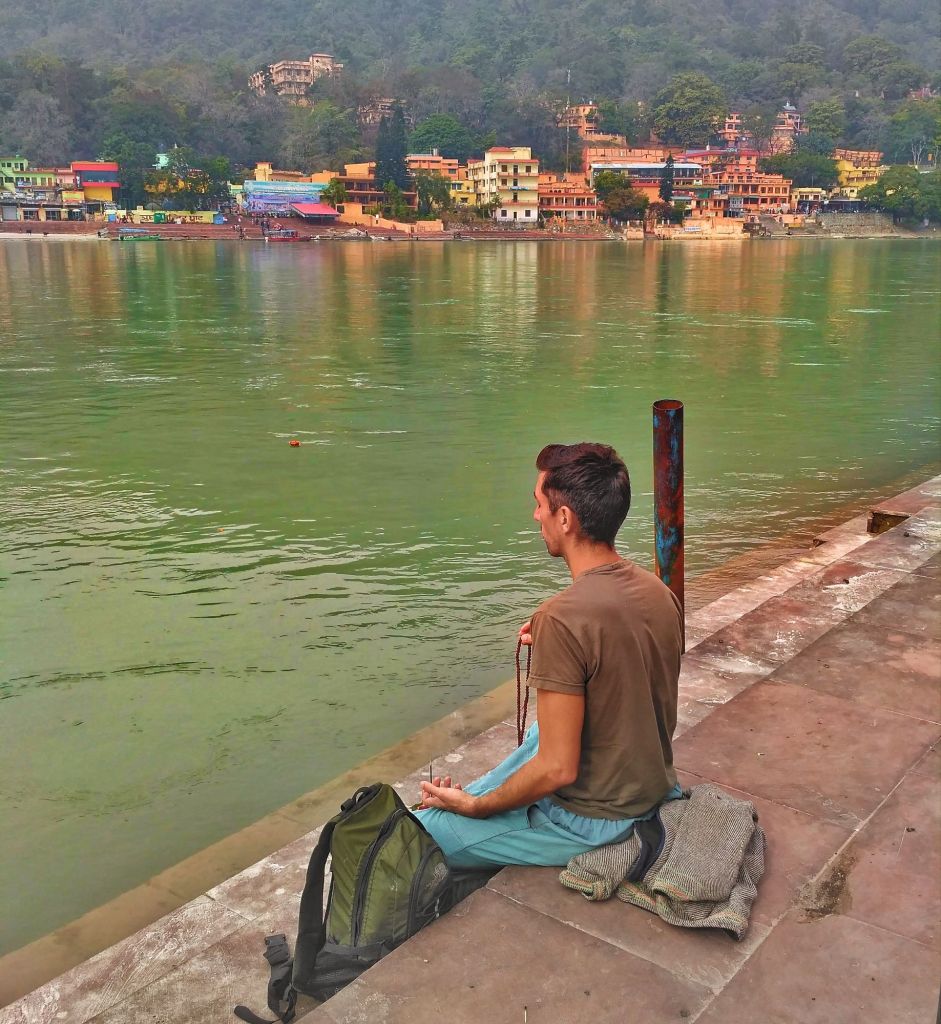
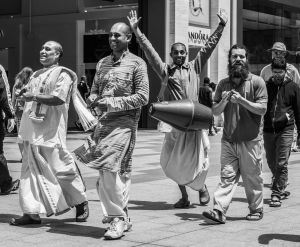
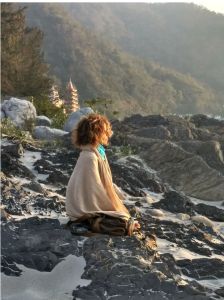
(This photo isn’t me by the way)
Now, probably one of the most important aspects of my own prayer life: I know I’ve mentioned my intentions in praying at all, but one aspect I haven’t mentioned is praying as devotion.
Devotion as in worship, praise, as in gratitude for the beauty in my life, as an expression of love. Knowing with the mind that all is one is fine, but these kinds of prayers help us to cement our awareness of that oneness of all living beings. As I said earlier, I, like you or anyone else, may use particular names and forms to represent this oneness, but, well, it’s all one, so we are non-different from all those names and forms.
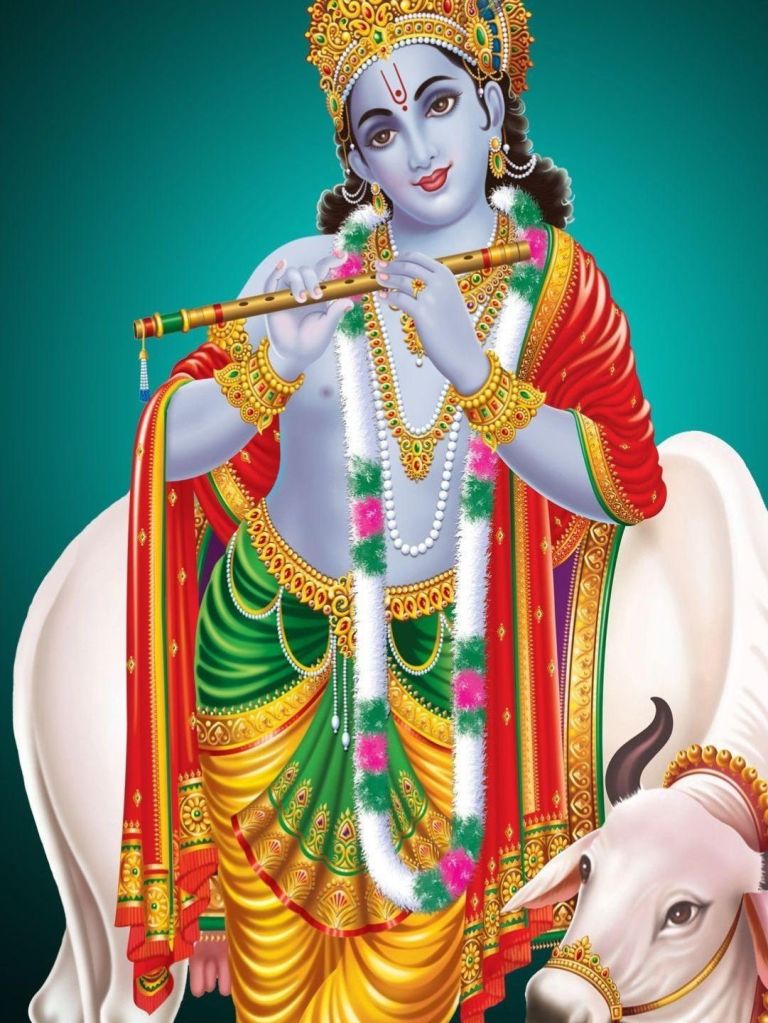
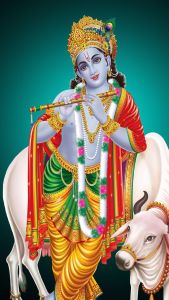
Lord Sri Krishna is among my favourite forms of Universal Consciousness (also known as Brahman)
There are many representations of the Divine, but Krishna and this picture of Him are special to me.
Focusing your devotion on a particular form seems to help make it easier or more real. It’s tricky to pray to and with a thing that has no form and is invisible.
So, my friends I hope what I’ve said here is of some little interest to you and that you have found at least something you can use for your own life.
Something quite different today. I had planned to write the second part of our contemplations on Armenius’s answer to his prayer. But then I came across a short story from quite a few years ago now, that seems to speak directly to our series title, Flee, Be Silent, Pray Always.
Grab a cup of tea, relax and enjoy the story
I offer it, I share it with you now in the hope that you will find it interesting and (or) entertaining. It’s going to make this post way way longer than usual, but I hope you find it worthwhile to spend some little time reading it.
So, with love, here is the story I once called:
LEAD ME NOT INTO TEMPTATION
The old carpetbag perched as if it ” a living thing, an alien visitor from the other world, in the middle of Brian’s old table. Its bulging bulk and musty smell, a constant reminder of its threatening presence.
It had been three days now and he knew he’d have to make up his mind soon, make some sort of decision. He had to find a way to deal with this.
Brian, or Brother Brian as he would prefer to be known, had made the long climb to this crumbling stone house a long time ago. He could no longer tell how many years it had been. All his life he had known what his destiny was to be. Even as a child, he had felt the call of the mountains and the monastic life. But, like most people, he had ignored the call, ignored his destiny, and settled for an ordinary life: school, university and a job shuffling papers for some obscure government department.
Then, one day without warning, he walked out of the office, sold his belongings, packed a small bag and caught a one-way flight to India. He didn’t know quite what he was looking for, but he did know it was something vaguely spiritual. He thought that if he couldn’t find a spiritual life in India, then he wouldn’t find it anywhere.
It didn’t take him long to find his way to the remote mountain monastery of a reclusive order of contemplative monks. For Brian, it didn’t matter what they taught, what lineage, gurus, or teachings they followed; for him it was the simple and quiet life of meditation that was the main attraction.
Now, all these years later as he sat staring at the carpetbag, he reflected on how fast time can pass when you spend your days meditating and working in the gardens that supplied the monastery. Sighing, he thought that they had been good years. Was it ten? Twelve? No, it was ten years he spent in that place. But, for some reason he could no longer fathom, he had decided that the so-called isolation of the monastery wasn’t isolated enough for him.
Then, smiling, he remembered: after a while the other monks’ constant chatter had begun to irritate him; he had begun to long for total silence.
Not our monk’s actual hermitage!
The Abbot understood Brian’s need for quiet and deeper contemplation. After all, he had been his mentor and advisor for many years and knew his student well. He told Brian of the old house, long abandoned, that lay just over a week’s walk in the hills above the monastery.
So, along with a brother monk to accompany him on his trek and help him carry cooking utensils, food and seeds for the garden he planned, Brother Brian left his home.
There weren’t many comings or goings at the monastery, so Brian’s leaving was a momentous event in the life of the community. Not sad, not happy; these monks had long since learned that what happens is simply what happens. But, for Brian, there was a sneaking sense of excitement as he began the long, but welcome, trek to what he hoped would be his home for the rest of his life.
He embraced his brother with a farewell. Brian smiled as it occurred to him that this was likely to be his last ever contact with a fellow human being. Soon the brother was gone, and Brian was alone. He surveyed the house and saw it wasn’t as bad as he’d been led to believe. Why, there was even a table and chairs to sit at.
It was the work of an hour to place his meagre belongings in their place in the house. And so his life of true isolation began. The years passed and Brian’s prediction proved accurate: he saw nobody, heard no human sounds. His only contact with that other world was the monthly cache of rice and other staples the Abbot arranged to have dropped off for him to collect a couple of hours walk downhill from the house.
Brian always ensured that he would not encounter the brother who made that long trek for him. Lately though, he had seen the tracks of a horse and cart. The monastery must have modernized, he’d laughed to himself at the time. Samsara, he thought, it’ll get you every time.
His plan for total seclusion and quiet had worked for a long time. But now as he stared at the carpetbag, he remembered the day that other visitor from the other world had come calling. It was six months ago now and he’d been at his cooking fire, about to ladle his daily rice into his bowl, when he heard the knock.
At first, it was just another sound from the old house that had over the years developed its own voice, or so Brian liked to think. But the knocking persisted, grew louder, and that did strike him as odd.
Putting down his bowl he went to the door of the house, opened it and came face to face with the first human he had seen since his brother had left him here all those years before.
‘Are you Brian?’ the apparition questioned.
Brian, for some moments, had no answer. It’d been a very long time since he had heard another human voice, and just as long since he’d had to use his own to give an answer to anyone.
‘Are you the man known as Brother Brian?’ The voice was more insistent now and Brian saw its owner seemed to be dressed in some kind of uniform. Was he a policeman? A soldier?
‘I am Brian. His voice shocked him.
‘Well, this letter is for you. It is from the government and it is necessary to deliver it to you in person. That bloody Abbot fellow tried to stop me, but it is my duty you know.’
So, this stranger was a postman. He shoved the letter into Brian’s hand, turned and marched away, leaving Brian standing dumbly in his doorway.
After some time Brian came out of his stunned reverie. He stared at the letter, which did indeed bear his name, or rather the name he once owned and was of use only in that other world he’d turned his back on. And it bore the crest of the government. Brian could not begin to work out what it was about.
But, realizing that there was only one way to find out, he opened the tattered and crumpled envelope.
Before he even read the letter’s contents, Brian’s world fell apart. The date at the top of the typewritten page transported him back into that other world. As if the long intervening years had counted for nothing, he became who he had been then.
That date told him how long he had been away from the place of his birth; it said to him that he was not alone. His years of practice, of attempting to exist in a timeless state with only nature’s seasons to guide his daily activities, suddenly seemed to have no meaning. But what he read next was almost beyond his comprehension:
Dear Sir
You have lived in our country for many years. We believe you are a member of a religious community. However, such a status does not exempt you from the very strict immigration rules that we have put in place to ensure the security and well-being of our nation and her people.
It has recently come to our attention that your original visa was for a period of six months only. Therefore, you are in this country illegally.
We have decided to be lenient in your case and have not insisted on your immediate arrest and detention pending trial for the extremely serious crime of visa violation. We hereby inform you are to leave this country by no later than three weeks from the date on this letter.
Please be warned that should you not present yourself Immigration officials at your chosen point of departure by that date, action will be taken to place you under arrest and your case will be prosecuted to the fullest extent of the law.
Yours truly
Ministerfor Immigration
Brian was calm. He folded the letter, returned it to its envelope and placed it on the little shelf he reserved for his few books and papers. It would not be correct to say that Brian’s life and routine returned normal; he was really only going through the motions, tending his garden, even meditating a little more than usual.
But he was disturbed. Not only had his isolation been broken by the visit of the postman all those months ago, he was as the letter demanded, being forced to leave his safe haven, his home of all these years.
But it was neither of these two issues that seemed to occupy him most on this day. As time passed from what he now called the Day of the Letter, Brian had grown increasingly restless. He found himself spending long hours daydreaming and remembering his old life, his life before that day he walked out of the office and bought a one-way ticket. He even sometimes caught himself wondering what life would be like if he walked back down the mountain.
And now, six months later, he sat staring at the carpetbag. He smiled now, remembering the threat in the letter: he’d had three weeks to leave. Still, he remembered from his old life how slow bureaucracy could move sometimes. He reached down to rub the soreness on the side of his lower leg. As he felt the scratches, he recalled how he’d come by them. Actually, he thought, if it hadn’t been for the carpetbag and its soft bulk, he might have been more badly injured …
Along with that general restlessness engendered by The Day of the Letter, he sensed a growing dissatisfaction, a dissatisfaction that had not passed, even after so many months.
And these feelings seemed to extend to the house itself, still as tumbledown as it was when he’d first laid eyes on it all those years ago. Suddenly it didn’t seem good enough and he had an irresistible urge to improve it, to fix it up a little, as he liked to put it.
So, it was three days ago, and he was rummaging around in one of the small outbuildings at the back of the house. He trod with care: the rough floorboards were all loose and in varying stages of decay. And, sure enough, all his care didn’t prevent the inevitable. As he reached for a bundle of metal garden stakes that he thought might make a fine tripod for his cooking pot, his foot sunk into the floor as one of the rotten boards gave way.
He didn’t sink far; something solid but soft got in the way. Pulling his leg out he saw it had been cut. A small amount of blood oozed from some long scratches. Even so, he realized hed been lucky not to have gone in further and he wondered what had broken his fall.
He peered into the hole and saw what looked like a fabric bag. He reached in and pulled it out. Nice bag, he thought, with his newly reacquired eye for things of the outside world. He seemed to remember that such a bag was called a carpetbag.
Standing up and heaving the bag from the floor, Brian was surprised by its weight. He decided to take the bag, reeking of dust and the musty smell of damp and age, into the house before opening it to see what was inside.
How different he was since the Day of the Letter, he thought as he sat three days since finding the carpetbag, staring at the thing. How many years had he been here without even setting foot in that shed? Anyway, it’d been a very long time since he had been even remotely interested in anything of a material nature.
But, at the time he found the bag, he had acted without a second thought; it was just natural to take the bag from its hiding place and into the house. And it seemed perfectly normal for him to want to open it and look inside.
He had lugged the carpetbag through the door and into his house, heaving the heavy load onto his table. The dust made him cough, but he didn’t hesitate. The bag’s zip was rusty, but came apart easily. However, the sight of the bags contents did make him hesitate.
Bundles of paper that he could see were old English banknotes. Pulling himself together, he started taking out the bundles, twenty in all. He guessed that each bundle had to contain several hundred pounds. Of course, he knew that they were no longer legal currency, but on the antique market, he was sure they would fetch a fortune.
At the very bottom of the bag, he found a large pouch, heavy and solid. Opening the drawstring, he found it full of stones. Pulling out a handful, he realized they were small diamonds, dozens of them. Mixed with the diamonds were stones of many colours: red rubies, green emeralds, purple amethysts.
Even his newfound interest in material things was defeated by this discovery. He returned the pouch and the wads of banknotes to the carpetbag and set the thing in the middle of his table. Suddenly he felt the pain from the scratches on his leg, so he left the house and went to the little stream he used for water and washed the wounds.
For those three days he went about his daily routines as best he could. But he had to pass his table and the carpetbag many times a day, and it came to preoccupy his thoughts. Its contents could ease his re-entry to the outside world in a very nice way. In fact, he doubted he would ever have to think about getting a job or earning a living. But this was his home. No matter how much the postman with his letter had pulled him back to that other world, no matter how much stuff, how many things, this carpetbag and its cargo could buy, he’d have to leave his home.
So he sat and stared. He didn’t think; he’d gone over and over his choices. He couldn’t do it anymore. He just stared, and time passed. With a start, Brian realized it was dark and that the house was cold. Still not thinking, only acting, he went to the little shelf and retrieved the letter and a pencil. He returned to the table where he sat and began to write on the back of the envelope in the tiny script he’d mastered all those years ago when he still thought keeping a journal was a useful practice.
My Dear Brother Abbot
How many years you and my other dear brothers have made the arduous trek to bring to me the staples that keep this body alive. No words of gratitude would ever be enough to tell you how I feel. Of course, I know if I were there with you now you would tell me that you and they are only doing what needs to be done for a brother. Still.
When this letter arrived, I was deeply disturbed. I found myself thinking of and longing for the old world of my youth. I found myself falling into Samsara again. I did not like this, but I found it drove me to change my world here. I began to be obsessed by the need to improve the house in a physical way.
While I went about this crazy business, I injured myself by stepping through a rotten floorboard. My fall was stopped, and my injuries lessened by this carpetbag that I now send to you.
However, in the three days since, I have not been able to engage correctly in my daily routines and practice. When you see what is in the bag you will understand my distress and confusion. On the other hand, you might not: you are so much more advanced along the path to enlightenment than I.
I have just sat through a long dark night of the soul, completely lost and not aware of this body or this material world that surrounds me. When I rose from this state, I knew what I had to do. The letter in this envelope and this carpetbag and its contents do not belong to me, nor do they belong in my world. I send them to you because I do not know what else to do with them.
As always, I rely on your help. You have always been there for me when I stumble and as I enter the bliss.
Your brother salutes you dear Abbot.
Brian
Scooping up the letter and dragging the carpetbag off the table, Brian strode out of the house, and in the darkness, trod the well-worn path to the spot his brothers brought his supplies to.
Long ago, he had built a small shelter for the brothers to rest in, and in which perishable items could be left. He placed the bag there and, with a large stone, weighted down the letter so it would not be missed when the brother next came.
As he rose from this task, Brian saw that it would soon be dawn. He would have to hurry if he was to make it back to the house for his morning meditation.
THE END
If you’ve made it this far, thank you. I hope you had an enjoyable and interesting read. Next post will truly be part 2 of the series, and we will be contemplating the second part of Armenius’s message: Be Silent.
Not too long ago, I completed what I’m now calling my first formal (structured) study of the entire Bhagavad Gita. Of course this wasn’t my first exposure to that text: I’d been reading it on my own for a few years before I came upon a teacher to act as guide.
Anyway, since that bitter-sweet day of completion, I’ve been looking at ‘random’ verses on a more or less daily basis as a way to keep in touch and to act as a reminder of what I’ve learned.
Just opening my Bhagavad Gita at random, just to see what the universe wants me to think about.
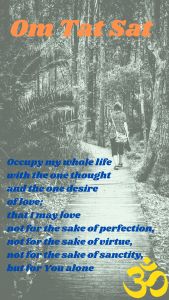
Today, I happened to open it up at what are a series of my favourite verses. (I know I’ve got a lot of favourites; it’s that kind of book). In these particular verses, Krishna describes the meaning and significance of the mantras Om Tat Sat.
In a nutshell, these three syllables, these mantras, are a way of describing the Absolute Reality of the Universe, or God, Consciousness, the Truth, the laws of nature and the universe. Whatever names we might use to encompass all existence.
Krishna details when and why to use the mantras (it’s one mantra made of three, for the technically minded). Again in a nutshell, it’s a mantra to use whenever we perform our duties, basically any actions, with a devotional mood.
By the way, that, and the inclusion of my favourite image of Krishna, doesn’t necessarily imply that our actions have to have a ‘religious’ intent or flavour: Any action we undertake, for whatever purpose as long as it is motivated by Truth, Love and right thinking, qualifies as being devotional.
While you can see the actual verses yourself via the Om Tat Sat link above, I would like to share with you my very liberal paraphrasing of Krishna’s teaching on the mantra. Also, I am adding a few observations of my own that I hope serve to clarify this great teaching. Oh, please forgive any repetitions, if they occur.
The syllables Om Tat Sat are the symbolic representation of the Supreme Absolute Truth; what I choose to describe simply as all that is. It is called by any number of names or none. It’s existence itself.
It’s an ancient practice, this chanting of these three syllables as a mantra. It is recited when one is engaged in any action in a mood of devotional service. Meaning any act that is imbued with a prayerful attitude and feeling, and with a mood or attitude of devotion to and recognition of, Truth in all things.
And it includes any and every action we undertake, from washing the dishes, to sitting in meditation or silent contemplation. And everything in between.
Om
Om is sometimes called the primordial sound, the creative principle, the word from which all creation sprung. I’ve also heard it defined as being the Big Bang, from which the universe emerged.
Om is considered the sacred sound and word by many cultures around our world. Consider the opening of John’s Gospel in the Christian New Testament :
Om is to be chanted when beginning and performing any and all actions motivated and driven by Truth. Chanting Om assists us to actually realise or understand with our heart and not just our mind, the presence of the divine or the universal consciousness in all that we do.
Tat
Tat is chanted by those wishing to be freed from attachment to material things, which includes the desire or compulsion to enjoy the fruits or rewards of our actions.
In the beginning was the word, and the word was with God, and the word was God
John 1:1 New Testament
Attachment is when we depend for our well-being or happiness (physical, mental, or spiritual) upon another thing (money, job, status, etc), person, or desired outcome. Attachment (and clinging, extreme longing, compulsivity), Buddha told us, is the cause of suffering: when things are going well with the things or people we are attached to we are elated; when things aren’t going so well, we are miserable and we suffer.
Sat
The syllable Sat indicates both reality and goodness. In other words, Sat is used to represent that Absolute Truth or Universal Consciousness that we’ve been discussing.
Sat follows very nicely on from Tat as it helps to strengthen our Dharmic (motivated by what’s right and true) actions, so that they actually become Sat – Truth.
So, chanting Om Tat Sat when performing any or all our activities in the world (as well as within) will help us to come to realise or understand that there is only the one Absolute Reality, the one consciousness that is not only universal in nature, but is actually the universe itself.
Oh one more quick note: Often you hear the chant with an extra word up front: Hari Om Tat Sat. Hari is a way to address that which removes darkness, that aids in the shining of the light of knowledge.
It’s a word that represents that Absolute Reality that we’ve talked about here. It can also refer to King or Lord, or otherwise influential entity. I find it rounds out the chant, and I like it!
Please feel free to explore Om Tat Sat for yourself. You will find a lot of great recordings of the chant on YouTube, and the wikipedia link at the beginning of this post is very Illuminating as well.
The previous post on this blog was about the notion of Kora, or the circumambulation of a sacred site or object on foot as a kind of pilgrimage. If you missed it, you can find that post here.
While researching for that blog, I came across an old file in a forgotten folder which also touched on Kora as a topic. I’d forgotten all about it as it was really only a first draft of a proposed post that, at the time didn’t go any further.
Reading it again, I right away realized it was a great theme for its own post and would follow on quite nicely. So, before I share that with you, allow me a minute to set the context.
In early 2020 we had just arrived in a small outback town in central NSW. We’d planned our arrival to coincide with the onset of the very first lockdown put in effect as a response to the outbreak of Covid 19. Our hermitage remained there for about six months before that first (of several as it turned out, though we didn’t know it at the time) lockdown eased and we moved on.
As with that last post, this one features a sports ground, and my adoption of it for the purposes of my own circular pilgrimage practice.
Thank you for your patience
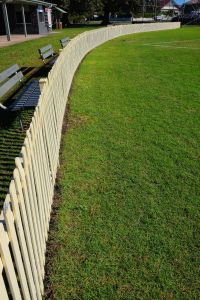
Across the road from the little apartment in which we took refuge a few months ago as fear of the Corona virus spread and travel was restricted, is a sports ground. In freer, safer times, they play cricket, and – in the winter – football there.
That ground, or rather the oval shaped fenceline surrounding it, has become a Kora for us. A Kora is a kind of pilgrimage in the form of a mindful and meditative Circumambulation.
Kora is a Tibetan word, but the concept of pilgrimages circling sacred sites is common to most religious traditions. I guess you might say, we’ve kind of adapted the practice to suit our purposes.
Anyway, a few days ago I noticed that markings had been painted on the grass: a set of giant squares and other lines. I realized that football must soon be returning, along with the reopening of cafes, restaurants, and so on in the town.
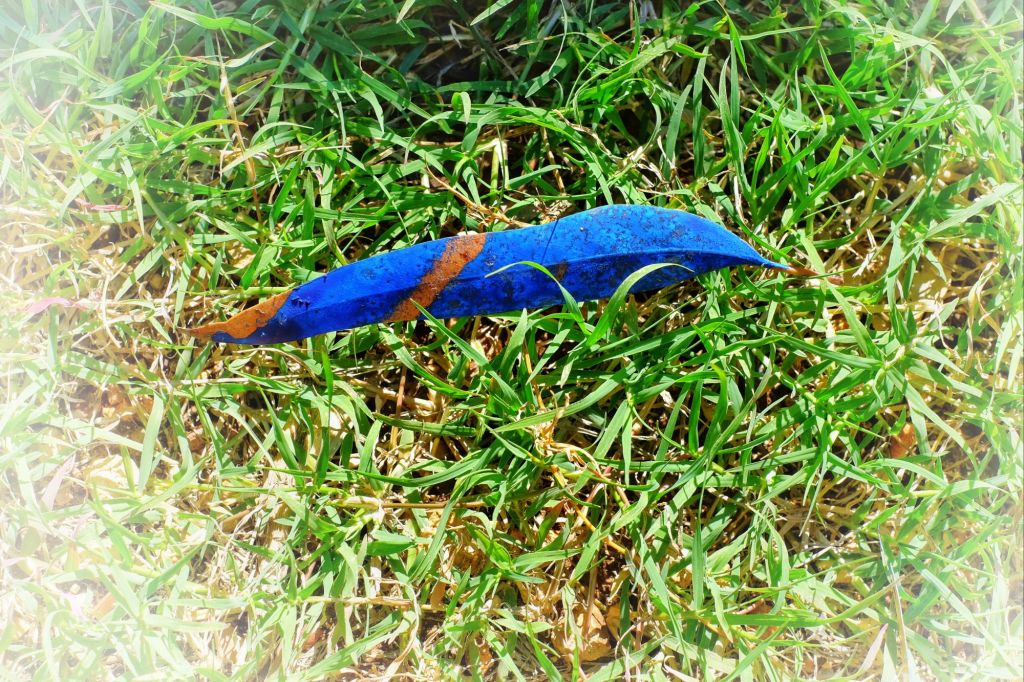
As I continued on my Kora that day, I began to notice that many leaves had been painted along with the grass. It occurred to me that these blue-hued leaves could be seen as a kind of symbol for at least one aspect of the current ‘crisis’ that I’d been thinking about already.
Since first adopting this ground as my own Kora, I’d often seen – and sometimes collected – leaves blown from neighbouring trees by winter winds. I’m always doing stuff like that. Sort of my way of connecting with nature.
Then, on the day in question, I saw the return of human activity to that grassy leaf-strewn space.
I make no comment here, no judgements about rights and wrongs. Life must go on. And with life, the cultural activities of all human communities must resume.
I simply point out that it seemed to me that blue paint on winter-blown leaves is an apt metaphor for the impacts that we, the human species, have on the world we live in.
Also, as you can see from my photo, that impact isn’t always ugly, or bad. In this case, I think it’s actually quite beautiful.
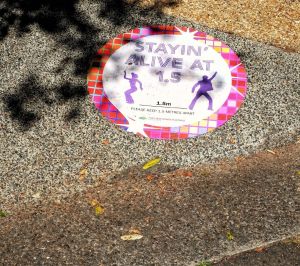
The other thing to say is (as I read on a sign taped to the fence on the same sports ground) please remember to social distance. (note: the pandemic is officially no longer with us, but when you think about it, it might be seen as a wise precaution at any time. There are always germs around waiting to spread!)
Oh okay, one more thing. In a time – in a world – where social distance has become a verb, remember that the only distance between any of us is purely physical and an invented mental construct. All life, despite seemingly unlimited names and forms, is one. There is no separation.
As a self-described Hermit Pilgrim, I aspire always to live a contemplative and secluded life, as far apart from wordly concerns as I can manage. At the same time, I am a pilgrim, in both the sense of the internal journey of the Self as I study and meditate, as well as in the world itself: I move from one living space to another – one temporary hermitage to another- as I feel directed or led.
In the last several years I’ve noticed how often I seem to find myself in one more temporary hermitage that ‘just happens’ to be located right next door or across the road from a sports-ground, or what’s often called ‘a local oval’.
At least three times in recent years, that I can recall. And it is so at the moment. This time the hermitage is in a suburb of a mid-size city (by Australian standards) that in reality is more a low-key and small seaside town on a peninsular.
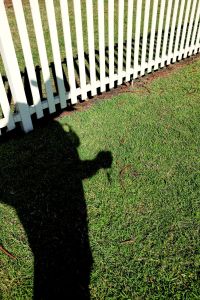
Anyway, just as with those other occasions, I have been grateful for the oval across the road: It makes for an ideal Kora.
Kora is a Tibetan words that means the act of walking around or circumamabulating a sacred place or object.
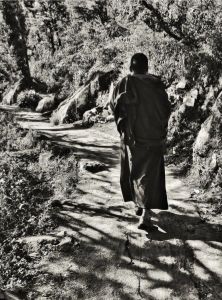
A monk on the Kora around the home and temple of the Dalai Lama in the Indian Himalayas
Tibetan Buddhists do Kora as a form of pilgrimage and walking meditation. It is a devotional practice and it is said to have transformative powers.
Of course Buddhists are not alone in practising this kind of circumamabulation (from the Latin circum (around) and ambulare (to walk).): Muslims circle seven times around the Kaaba in Mecca as the final stage of Hajj .
Many religious traditions consider Mount Kailish in Tibet a sacred place and circling it on foot, even once, is considered by some to be the equivalant of one complete lifetime.
In south India there is another sacred hill called Mount Arunachala. Each year millions of pilgrims walk around its base, which takes a couple of days. In India, the word pradakshina is used to describe such circular acts of devotion and pilgrimage.
And the list goes on: as I said many if not most religious traditions have a practice of walking around sacred sites or places as acts of pilgrimage or devotion.
So, what has any of this have to do with me walking around local ovals or sports grounds and calling what I do a Kora? Well, my intentions are similar to those other pilgrims but perhaps more humble. Let me explain.
Not being a sports-oriented person (not into competition and team sports at all really) I can’t comment too much on the idea that a sportsground is sacred ground because of the sports played there.
I do acknowledge and understand how it is that so many people do in fact consider the games played there as sacred activity with winnings and losings and full of heroic deeds. This indeed makes these places sacred sites.
Then there is the fact that many such grounds are named in memory of local people who have been prominent in the community. And, as is the case with the oval over the road from the current hermitage, ovals do actually become sites of memory.
This one, called Lynn Oval hosts several memorials at its periphery: there are tributes to miners who have died in accidents in local mines.
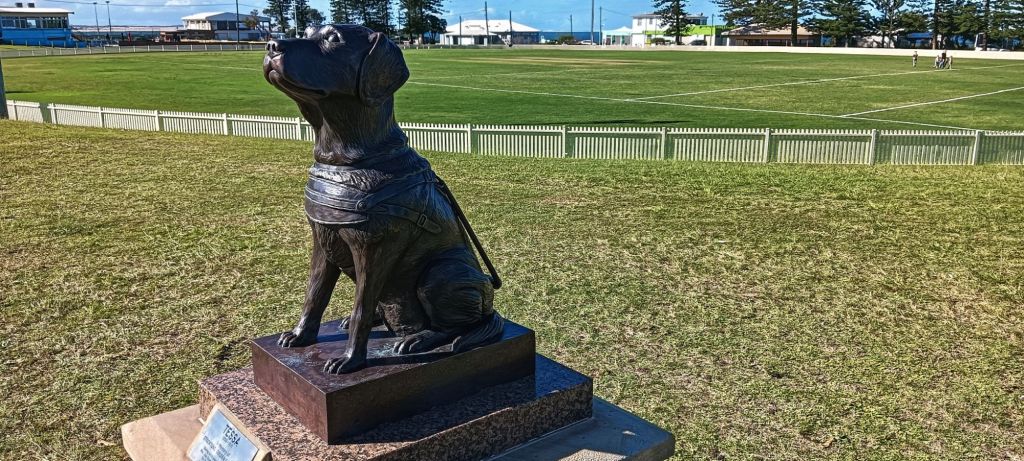
And there is a lovely statue of a guide (service dog for people who have vision impairments) dog called Tessa who is famous in the area for helping to raise a lot of money for more guide dogs.
Lastly but, for me, probably the most significant ‘evidence’ for a local oval being sacred ground is that it, well it just is. Just as all ground is sacred. An affirmation borrowed from First Nations’ Peoples says it all very nicely:
We stand always on sacred ground and beneath sacred skies.
In other words, everthing, everytwhere is sacred. All the rest, the memorials, the games played, they are not what makes the ground sacred, they are the things that people layer onto the space as a way of acknowledging the inherent sacredness.
And that is how it is for me. It’s not me walking around the oval chanting mantra (or at other times ‘just thinking’) that makes it sacred ground, despite being sacred acts in their own right.
I mentioned earlier an alternative word for Kora, pradakshina. This comes from the Sanskrit for ‘to the right’, because traditionally the idea was to always circle the sacred site or object clockwise, so the sacred object remains on one’s right.
Obvioiusly there isn’t much to see on the middle of the oval as I walk around the boundary fence (it’s about 400 to 500 meters by the way). Mind you, the other day a flock of pigeons were feeding in the centre while I walked. Then, at another oval, in another town, there would often be a lone Ibis sitting almost in the centre. It’s all sacred.
This idea of centre has me realising that the whole point for me of walking around ovals chanting my mantra, is the reach mycentre. The temple I’m circumamabulating is me; I’m the container so to speak, for the Consciousness which pervades and actually is all there is.
Peace and Love
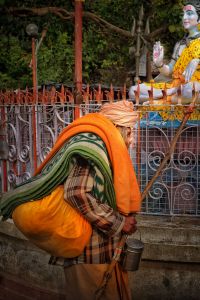
Holy Wanderer: A Saddhu performs pradakshina around a shrine to Shiva in Rishikesh India
PS: I’ve written another post, also related to Kora. Please feel free to visit that post here

















 Notes from the Hermit's Cave