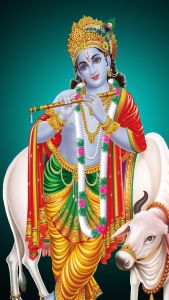
New Series Coming Soon: An Introduction

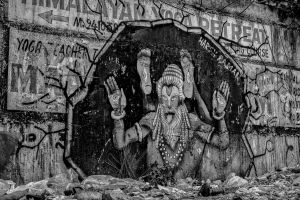
Lord Krishna

Namaste and greetings friends

Not long ago I began studying an Indian scripture called The Uddhava Gita. It’s quite a lovely book actually: it’s poetic, actually it is a poem, or song, and beautifully written. The title means The song of Uddhava and is an account of a conversation between Krishna wearing his God of the Universe hat, and his cousin Uddhava.

The story takes place in their home town of Dwarka in the state of Gujarat (Krishna was also a regular family man with a huge extended family) which is about to explode in a destructive civil war. Soon Krishna is leaving to return to his heavenly abode, and at the opening of our story, he advises Uddhava that he too should leave town ASAP.

I should point out at this juncture that I do not see this Gita as a historical document. It’s a story created as a backdrop against which to place a long conversation in which Krishna, or God, passes some spiritual teaching to Uddhava.
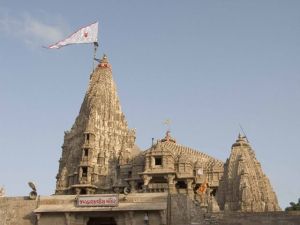
Dwarkadheesh Temple Dwarka India
By Scalebelow – Own work, CC BY-SA 3.0, https://commons.wikimedia.org/w/index.php?curid=5739970

Although the location of the story is a real place and exists today, we don’t learn anything beyond that this is the setting for this little chat.

The purpose was to present these teachings in an entertaining and accessible format. Like so many scriptures around the world, this one is a song, making it easier to learn and pass from one person to another over time in a society that was not yet universally literate.

So, why am I writing about this text? Well, in one section Uddhava is asking his cuz all sorts of questions, that have obviously been on his mind for a while. He knows Krishna is leaving he planet soon and he thinks that this might be his last chance to get some answers.

He asks questions like: What are reality and truth? And, What is a person’s strength. Then there are queries like: Who is a friend? What is home? Many are related to spiritual matters and practice, and all are concerning qualities and attributes a person should possess to live a good life, a honest life. A Dharmic life.

Actually, if I were to condense all of Uddhava’s questions into one big question, it would probably go something like this:

How can I change my lifestyle so I might live a righteous life, a good and honest life in which I can learn the truth and live my whole life according to that truth?

Now, here’s the thing: Uddhava asks a total of 36 questions, some singularly, some are multiple questions containing two or three queries. Krishna then proceeds to answer the questions, all of them in fairly quick succession.

I would like to share a few of those answers with you. I don’t get the sense that the questions are asked or answered in any particular order or pattern, so perhaps those I share will be an idiosyncratic selection, or it may be entirely random. Not that there is such a thing of course, so I guess you will just have to wait and discover for yourself the chosen questions.

Don’t worry! I have no intention of burdening you with the complete set of 36. In addition to saving you that fate, some of the questions and or answers didn’t resonate; others didn’t feel overly relevant to this blog.

I’d like to devote an individual post to each of the questions, bearing in mind some of them are multiples. I learned about all 36 questions and their answers in an hour long class. Needless to say that experience was more than slightly mind-blowing. One or two (or maybe three) at a time will be just fine for all concerned I think.

So, next post, I look forward to sharing with you the first of Uddhava questions along with Krishna’s answer. It will in fact be literally the first one asked; I thought discussing it at the start would sort of set the scene and the tone for us.
After that one there will be further posts. Again don’t worry, I’m planning a fairy short and occasional only series.
I Confess: I have an Ego

Today I scrapped a planned post that I’d been meditating on, angsting over, and making notes for, over the last several days. And now, I’m thinking about my reactions to this startling event. Startling in that it’s not as if this is the first time. Not even close. So what’s the situation with this not so rare occurence? Let me try to explain.

To begin, let me say that I haven’t quite subdued my Ego. Not in the sense of both my attachment to my own actions as well as not in my false identification with this body and mind. Both are still going quite strong.

Mind you, having said that I need to be honest and confess that I don’t feel like I’m an ego maniac (in either meaning of the word as I see it).

Stop! Get to the point will you?

Okay sorry. The point is I still get affected by having to dispose of a project I’ve worked long and hard on. There: I’ve said it.

Of course it’s not that such an event bruises my ego (the attachment and ‘pride’ meaning this time). So why? Why does such a thing still get to me? I think it is simply a sense of disappointment that I’ve failed at an endeavour that I had thought important.

Ah, so it is ego then? Yes, I suppose it’s true. Ego and attachment. Both are of the mind and they love playing those old old mind games in which they have the final word.

I’ve written before about my attachment to the desire to write more often, in more quantity , and with more quality. So, no need to revisit that topic. Unless of course you want to.

Anyway, why do I write what and how I do? Why do I publish this blog?

Well, if you have read the Welcome and About the blog page, you will learn that this blog is an element in my ongoing quest to fully realise the oneness of all life – which of course means all of you, me and everything that exists.

Also on that page I think I say that I, as a hermit retreating more and more from the entanglements of the world, nevertheless feels a strong sense that I need to share my life with the world – again, that’s you.

So, my writing is about my life. It’s about me opening up about my experiences, my learnings, my ideas, and any occasional insight I might be blessed with. As well, I write to share my aspirations for, and my reflections on, the spiritual journey – at least my little bit of it.

And I do that by thinking, meditating, sometimes writing then posting the conclusions. Or as happened today, I think, meditate, write, throw away writing, then don’t post.

In a sense there is no need for disappointment when that happens. I’m always aspiring to write from my heart, and share what I hope is in alignment with the Absolute Reality, or if you like, the Divine, or the will of God.

In other more straightforward words what comes out onto the page is supposed to, and, if at some point along the path what emerges ceases to ‘feel right with the Universe’, then throwing it all away is easy and ego and attachment free. Well that’s the theory I’m going to try to work from.

What I’m trying to say is that my writing in general and this blog in particular, is not my property; I don’t own any of it. All of it belongs to that Absolute Reality in the form of the natural order and flowing or unfoldment of the Universe.

Belonging to that Absolute Reality, to the Universe in other words, then it is yours too. Everbody’s and everything’s.
So I thank you for allowing me to share my life with you.

PS If my ego ever pops up again, just ignore it. One day I hope to do just that!

As Promised: A Prayer of Praise and Gratitude to Trees

At one point in my last post on Bhakti (if you missed it you can find it here) I mentioned that I hoped to soon publish a recently written prayer titled A Prayer of Praise and Gratitude to Trees.

Even as I typed those words in that previous post, I thought: ‘soon’? Why the delay? What’s wrong with now? So, without any further delay, here is our next post and in it I’m very glad to be sharing that prayer with you.

As my comment in that previous post explained, this prayer (and others too) is one more little step in my ongoing effort to cultivate a mood or feeling, and a practice, of Bhakti or loving devotion to the Divine.

If you’ve read that last post you will recall that I stressed my deeply held and heartfelt conviction that the Divine is everything. As I may have actually said: there is only the Divine; one, whole, partless and indivisible. Now, to knowingly repeat myself: The Divine is one without a second; that’s all there is.

This prayer to trees is an attempt to acknowledge that oneness of which each and every tree – just like you and me and all other beings – is a manifestation, each with its own unique name and form.

This prayer, though composed by this particular name and form, is in fact just one more expression of that oneness we all share. As such it is as equally yours as it is mine. As I said earlier, I am glad we are sharing this now.

A Prayer of Praise & Gratitude to Trees

Dear Aranyani

With this prayer we greet you. We offer you our praise, and our gratitude.

When we come into your presence, you remind us that in meeting and greeting you, we are in fact meeting and greeting God.

We bless you and we thank you for the shelter that you steadfastly provide to so many living beings. In so doing you support, protect, and nurture the continuance of life for all of us.

Your every exhalation is for so many other living beings the breath of life, of Prana – the life force itself.

You remind us as we witness your strength, your resilience, and your calm flowing with the winds of change that we too share that strength, resilience and the potential for calm flowing with those winds of change that are also constantly buffeting us.

Om Aranyani Namah

PS Who is Aranyani? She is a Hndu deity of the forests and all that dwell within the forests. Basically she is the Goddess of Trees and here is simply the name and form representing all trees.

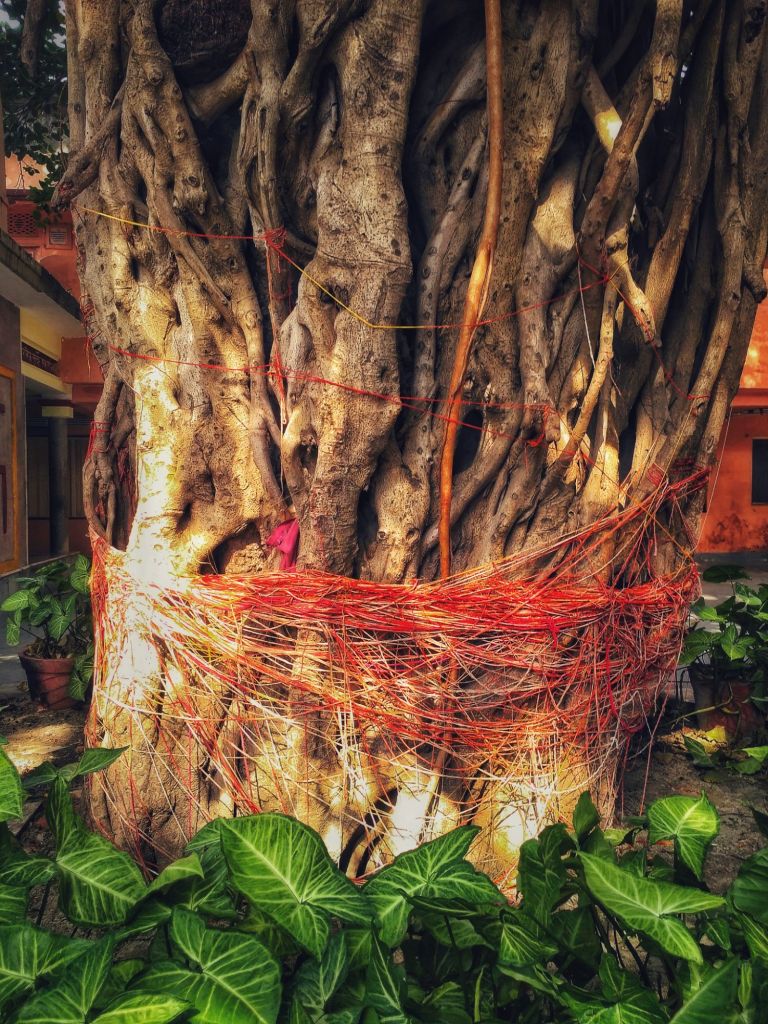
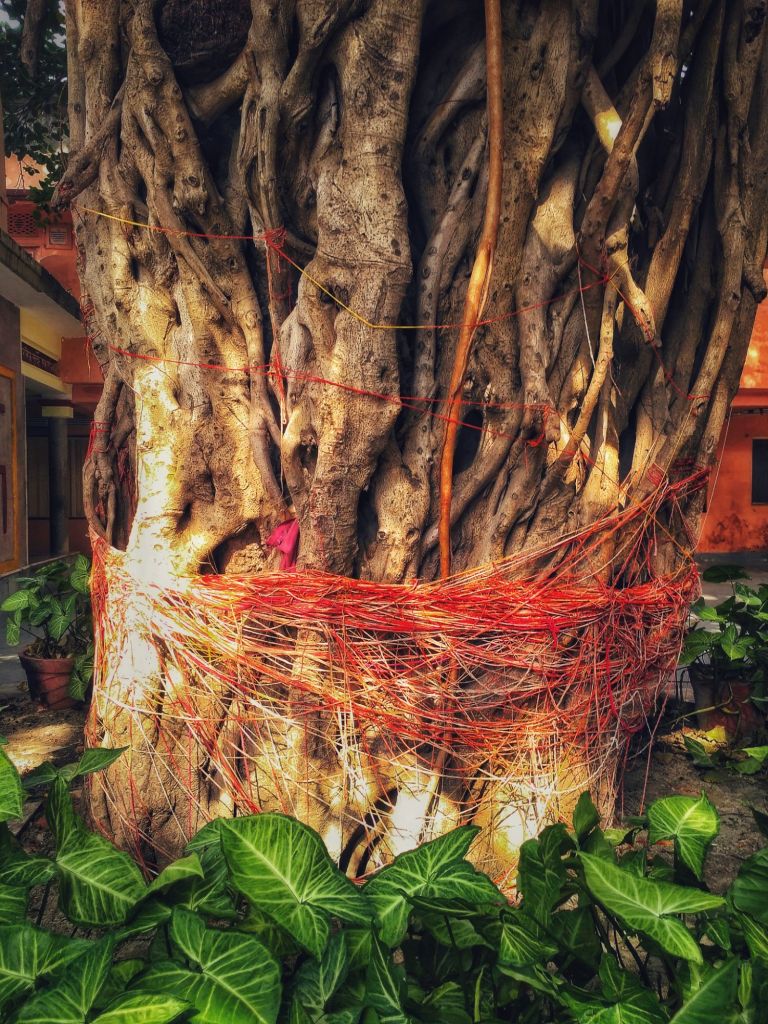
Sacred Strings, Sacred Tree

Follow the Way of Love

Bhakti  – intense devotion – leads to prayerful surrender which clears the mind of thoughts and concerns. Then, meditation is made possible.

            Swami Tadatmananda

A recent favourite quote from my teacher, that is helping me a lot on my own spiritual journey. Wikipedia also describes Bhakti in terms of intense devotion, adding words such as faith, love, homage, worship.

The wonderful Wikipedia also tells us that Bhakti is a term common in Indian religions, which may refer to loving devotion towards a personal god, a formless god or an enlightened being such as Buddha. They add:

Bhakti is often a deeply emotional devotion based on relationship between the devotee and the object of devotion.

Then what of one (AKA me) who at least aspires to see all things – all living and non-living things, all of ‘creation’ – as the Divine? How does a ‘loving devotion’ towards God work when one is striving to fully realise that there is only the Divine?

In my heart I know that all there is is the Divine, or God. Or put another way: it’s not so much that the Divine is in everything, or that everything is divine; the sense I have and aspire to realize completely, is that everything is the Divine. One without a second, the teachers say.

(Just a quick disclaimer: my heart may be telling me that there is only the Divine, but the rest of me still has a lot of catching up to do)

So, how does it work? Well writing it down in words seems to make it sound very simple: if everything is the Divine, is God, then it’s simple logic to assume that devotion to the Divine means having loving devotion towards all and everything; for all of existence, for everything that is. For all of creation as some say.

Simple to say, yes. Not so easy to easy to actually attain such a state. Of course the first thing to say is that it isn’t a state to attain. I am a part (not quite the right word) of that creation, that divinity, and as there is only one without a second, then logic again tells us that I am that creation – just like you and everyone and everything else that exists.

As such, it would seem to be an easy matter of me simply loving myself which automatically includes everyone and everything else in the Universe in that love (note to self: make this little paragraph my new mantra).

Here is where that ‘thoughts and concerns’ thing comes in. We all know how our minds like to interfere and get involved with every little thing. The mind tries to convince us of our separation from other people and the rest of life too, while its ally the ego runs wild convincing us of the urgency of status, of possessing things, of competing (also status isn’t it?), acquiring more stuff and worldly knowledge and power.

The solution? The means to realize one’s love for all? Prayerful surrender – which our quote tells us is acquired through the practice of Bhakti or loving devotion.

But hold on: Isn’t the realisation of our love the very thing we want to achieve? So, we are to use a practice involving love to realize our love?

Ah yes: the means is the end. Now that’s a nice little insight don’t you think? But, still, Bhakti or loving devotion isn’t at all easy, even if you’re talking about a personal God or deity or the Divine; how much harder it is (speaking only for me here mind you) to suddenly love everyone and everything, to suddenly recognise everyone and everything as the Divine. Including, mind you, things and people I don’t like or have a distaste for or aversion towards.

So what I try to do is be open and receptive to things, ideas, concepts, other living beings, that resonate within me as representing the Divine. Then I make those things the objects of my devotion which means my prayers are prayed with a mood of love. Good vibes you see. They spread out like (my partner hermit says) ripples in a pond or even waves in the ocean. No need to think of who or what I don’t like; they’ll be affected by those ripples too.

You’ve read my prayer to the Divine Mother – the embodiment of the Divine qualities of love, nurture, compassion. And soon I hope to post my Prayer of praise and gratitude to Trees. In that prayer I express my love, praise, respect for, and gratitude to, trees.

So many people – even the non-spiritual – view trees as symbols of creation in action, strength, resilience, even compassion and shelter. In other words, the Divine.

To surrender my heart to such representatives of the Divine is my continual effort and prayer. I pray to fully surrender to the natural order and smooth running of the universe, or the Divine.

And that surrender will come through my continuing and growing loving devotion.

Now, the ‘meditation is made possible’ bit? Well we all know what meditation means don’t we? Pretty much as many meanings as there are people meditating (and many who are not!). In this context I think the meditation that’s made possible is more a kind of contemplation leading to a clear comprehension or understanding.

Contemplation of the entirety of the Universe (which includes you obviously) as one whole, undivided expression of love or the Divine.

Comprehension is understanding, in a final, complete truly ‘knowing’ way, that the things of the world – the status, the possessions, wealth, sensual pleasures – are not and never can be the means to attaining perfect peace and happiness.
Of course, the ‘things of the world’ continue to be important. After all, we are (at least our bodies and minds) things of the world too aren’t we?

But that contemplation of the totality as the Divine will help us to reduce our suffering by helping us to reduce our excessive desires or cravings for those worldly things.

I think I mentioned that Bhakti, loving devotion, can be difficult. It’s true it is often hard to focus on love and devotion, to always have your heart available and open. But, you know, it can actually be a very satisfying and enjoyable feeling, and I can say a really nice experience.

So, I hope some of the ripples (and some of the waves too), some of those good good vibes are making themselves known to you.

Thank you and my love to you

One, Without a Second, is All There Is

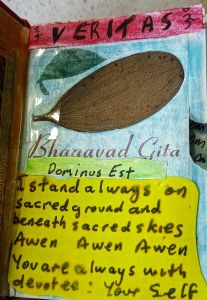
Right at the front of my Bhagavad Gita (the only book aside from the notebook I’m writing this in, that I personally own), I have recorded and inserted sayings and various words , that are important to me. Among those things is a statement I first heard many many years ago, that is common among the First Nations’ peoples of this country:

I [We] stand always on sacred ground and beneath sacred skies.


It is not an affirmation of ownership or possession. It is, instead, an affirmation of belonging to the land, to nature. It is a prayer of thanks, and it is a declaration of the knowledge of unity with the rest of the natural world, that is the hallmark and foundation for Indigenous cultures throughout the world and through time.

I’ve valued – treasured – this sentiment for a very long time – probably from even before I first heard it, which was so long ago as to be lost to memory. Perhaps I always knew it because I’ve somehow always thought this idea was a fundamental truth concerning my existence as a being living on this planet.

Well, now I have heard another statement that for me makes a perfect compliment for this one. The other day, during a lecture, my teacher mentioned that in his student days a fellow student said:

Wherever you are, you are walking through Ishwara

(Ishwara being her preferred name for the divine – for all that is.)

There is a feeling or sense of ‘belonging’, of awe and wonder when we attempt to immerse ourselves in what we term the natural world.

Once again I immediately felt the bell of Truth ringing clearly through this statement. Yes, I thought, everything is divine – including our own selves – so of course it follows that wherever we go, whatever we do, we are always in the divine.

You’ve probably read a number of times me quoting my teacher quoting his teacher:

It’s not that there is only one God, there is only God.
          Swami Dayananda Saraswati

Emphasis very much on only. Meaning of course, that it’s not that God is within us, or that we are within God; we are not surrounded by God; and it’s not that God ‘sits in our hearts’. The reality (for my teacher’s teacher) was that all that is, everywhere, everything, every thought, every word and deed, everything there is, is the divine.

Another way to describe the divine or God, that appeals to me is that Ishwara (also my own preferred name for the Divine) is in reality the natural order of the universe as dictated by the laws of nature. Those laws of nature, the rules that govern how the universe works, are also Ishwara, as are all that is manifest or in existence  as a consequence of the workings of those laws.

In other words, the Divine is the sum total of what some would call the entirety of creation.***

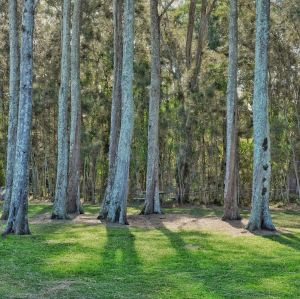
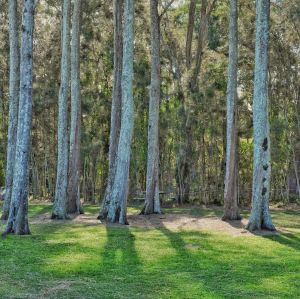
For the hermits a sacred site. Part of a grove we named The Sentinels. A place of experience of unity and oneness of creation

For me this an enormously comforting and reassuring concept. Of course, for me at least, it is also an extremely difficult one to wrap my head around. But here’s a small summary of what I think I’ve grasped so far.

Ishwara – the Divine – is all there is; everything. Also divine is the natural order of the Universe as governed by the laws of nature. These laws are neither good or bad – there is no duality. They are neutral.

You and I, as one more entity among who knows how many others, act as we do and are subject to the laws of nature, just like everything else. We can’t change or influence those laws; we can only live our lives as they unfold.

To quote from Desiderata: No doubt the Universe is unfolding as it should

And, well, then things just work out as they do. While we can’t change the laws of nature, or bend the universe to always suit our liking, it is also true to say that every action we take, every thought we think, every word we utter, even our very presence as a living being in our time and place, do indeed contribute to ‘how things work out’. Another way of saying this is to say, we do our bit, and the universe does its bit and what happens, well, happens.

For me, this is not at all as simple or as straightforward as it sounds. Naturally  we see ourselves as individual selves, as entities on our own. After all, to state the obvious, we live and operate in a material (dualistic) world. So automatically we see ourselves as individuals living in, but always separate from all the other individual entities, as well as being disconnected from the world itself.

It is part of human nature (for the most part) to long for connection; there is so often a drive within us pushing us to create family, enter relationships, feel we belong to a community or communities, and for many but not all, there is the almost instinctive urge to seek connection with the rest of nature.

Many forms, One reality

We often think of these longings as goals to achieve, as something outside of ourselves to attain, to reach for. Consequently, so very often we tend to focus our attention outwards, towards other people, or material things.

But, instead, all these inclinations, desires and longings are simply our Self (note the capital?) endeavoring to open itself to discovering (or rediscovering?) that which already exists: our oneness with, and our non-separation, and non-difference from, The All That Is.

Peace and Love from Paul the Hermit

FOOTNOTE

***Just a few thoughts about naming, or giving labels to the Universe and its laws.  Obviously it’s a personal choice for each of us what we choose to call that creation. Then, on the other hand, we don’t have to call it anything at all. For me personally it is very difficult, even near impossible to not name it. By naming the creation, I don’t think I am attributing the manifestation of the Universe to some distant entity living in some heavenly abode (as my teacher likes to say). Rather I am acknowledging the intelligence  and order, beauty, complexity of all that is and how it all works, as its own reality. At the same time, I am learning to understand that I as my true nature am not separate from the rest of creation, and I feel the need to have a name towards which I am able to focus my thanks and my reverence.

When Love is a Yoga and Lovers are Yogis

There was light at the end of the research tunnel

These last few days I’ve been researching and thinking about an idea for a blog post. But I’ve come to realise that I am grossly underqualified to write about the topic I had in mind. Let me put it another way: I am completely and utterly unqualified in any way whatsoever to go there. In fact, after all the research, I think I’m going to disqualify myself from ever going there in writing.

However, I’m a great believer in the idea that no quest for knowledge is ever a waste of time or effort; there is always something to be learned. During my research I came across a topic I believe I am qualified to discuss, as it forms an integral and vital part of my own personal spiritual practice.

Why I’ve decided to write this post, though, is because I made a discovery that lead to an insight that I know will lead to a great progress in that practice. It’s nothing new, not really, but it was one of those occasions we’ve all experienced of ‘I knew that, but now I really know it.’ For me, it was a realisation of something that till then had been a nice cosy theory and belief.

Bhakti Yoga is that practice. It is really a key foundation, a valuable component of my spiritual life.

Wikipedia opens its entry on Bhakti Yoga (see the link just above) with a description of the practice that mirrors what I think is the traditional understanding of Bhakti Yoga:

Bhakti Yoga (also called Bhakti Marga, literally the path of Bhakti) is a spiritual path or practice within Hinduism focused on loving devotion towards any personal deity.

In the same entry there is a description of the origins and meanings of the two words, Bhakti and Yoga:

The Sanskrit word Bhakti is derived from the root bhaj, which means “divide, share, partake, participate, to belong to”. The word also means ‘attachment, devotion to, fondness for, homage, faith or love, worship, piety to something as a spiritual, religious principle or means of salvation’.

The term Yoga literally means “union, yoke”, and in this context connotes a path or practice for ‘salvation, liberation’. yoga referred to here is the ‘joining together, union’ of one’s Atman (true self) with the concept of Supreme Brahman (true reality).

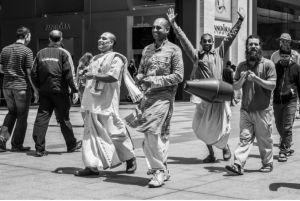
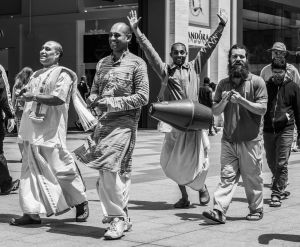
For some, dancing while chanting the names of their God, demonstrates their devotion and celebrates their union with each other and with God

In other words, those called to a religious or spiritual life, practise Bhakti Yoga whenever they pray or otherwise express devotion towards their personal conception of God, or the Divine. This particular definition seems to be saying that such a conception of the Divine, or God, is in the form of a personal deity who is a kind of representative of true reality, which the devotee is aspiring to join with.

Some Bhakta Yogis are full-time, full-on practitioners. People like contemplative nuns or monks, hermits who retire from the world into seclusion. Anyone basically whose entire life and activities are spent in devotion.

So, when I discovered all this, I became intrigued; I decided to go off on a tangent and explore the word Bhakti itself. Wikipedia has a separate entry for the word on its own:

Bhakti is a term common in Indian religions which means attachment, fondness for, devotion to, trust, homage, worship, piety, faith, or love. In Indian religions, it may refer to loving devotion for a personal God

is often a deeply emotional devotion based on a relationship between a devotee and the object of devotion.

In ancient texts the term simply means participation, devotion and love for any endeavor.

May refer to devotion to a personal god? While I thought this entry doesn’t contradict our first quote above, it does seem to broaden, and deepen, the meaning of Bhakti. Expand might be the better word.

In some traditions a simple life on the road is a way to commit full time to Bhakti or devotion.

It struck me that that object of devotion might be anything. Or even everything. You see? I told you it wasn’t a new idea. It’s just that it’s resonated deeply within me now. It appears that the object of Bhakti Yoga practice doesn’t necessarily have to be a ‘personal god’.

Many many people would say ‘I like animals’ or ‘I think we should save the world’. But, while that may imply a kind of love for or at least a fondness for, I think Bhakti is something more – actually several somethings more!

For example, some people have a particular attraction to and love for, the ocean, or it might be a river they view as, if not sacred in a religious sense, then as special to them in some deep, comforting, even therapeutic way. Others have similar relationships with and feelings for trees, or even a particular tree.

Animals as either individuals or as a species or group, can have the same appeal and call to other people. Then there are those who feel strongly in their hearts you could say, that Earth itself is a sacred object, or others have a knowing that the planet is a living entity and worthy of our devotion.

Bhakti begins with love and devotion, which is about caring for, affection towards, loyalty to, emotional engagement with the object of devotion. But even more than that, there is faith in that object of devotion; faith as in trust, confidence that the love is real, that the ‘relationship’ is sound and real.

Homage and worship too are key aspects of Bhakti. The deep inner feeling we have towards a thing, person, or other being, that is beyond what we normally call ‘love’. It’s about seeing and actually realizing ‘in our hearts’ our desire to be merged or united with that thing, person, or other being.

Actually, seeing that word other just now got me thinking. I had to go back and reread our definition of Yoga up there near the beginning. It says Yoga means ‘union, yoke’. It goes on to add: yoga refers to a ‘joining together, union’.

This passage seems to be suggesting that Yoga (in our case Bhakti Yoga) is both an already existing union, and a process of joining together to achieve union. One thing I would say here is that in my practice of Bhakti (and love as a general thing to strive for and be) it’s both.

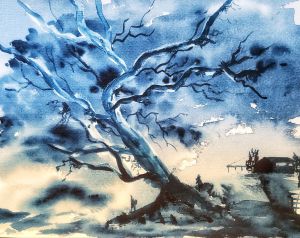
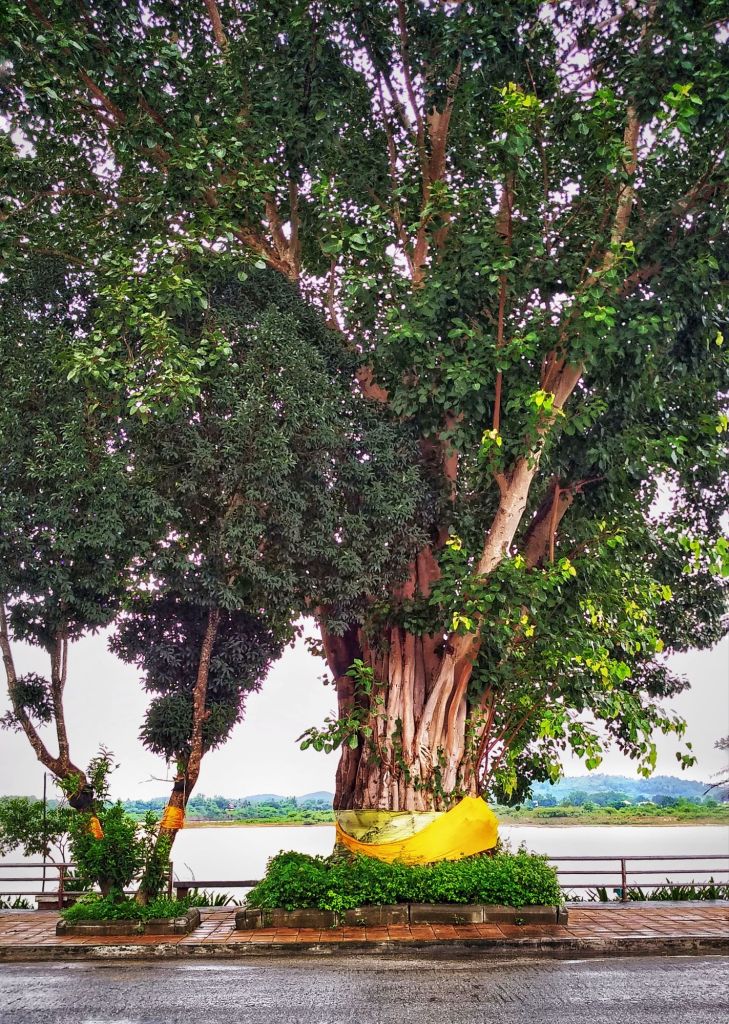
Trees are special beings for many people from a whole variiety of cultures all over the world

But, in the end, it seems to me that the process or practice, the path of Bhakti, serves to awaken us, to assist us to acknowledge, recognise, and realise in that really knowing way, our pre-existent true nature.

That true essential nature can be said to be the reality of our oneness with all things, living and non-living. And their oneness with us too of course. In fact, by putting it that way, I’m saying there is only one, or oneness. What’s that expression? One without a second.

May you be a Bhakta Yogi. Or, perhaps you already are one?

Love and peace from Paul the Hermit

Life has manifested itself as the multitudinous forms that comprise the universe. It is the one Universal Life, Power or Shakti (the laws of the universe or natural laws) that controls, guides and actuates all movements and activities in all beings, creatures and things.

                — Swami Ramdas

When Two or Three …

It would be true to say that I’ve been on a spiritual journey all my life. Perhaps there have been other lives too, who can know? Who can work it out? And, anyway, I don’t think it matters at all. This life will do.

That’s an easy generalised statement to make I know. So, being more specific, let’s just say that for as long as I can remember I’ve been interested in and studied ‘spiritual stuff’; and in more recent years I’ve narrowed my focus, so to speak, and now I am on a deliberate and committed journey towards that time when I actually recognise, when I fully realise for myself that I am already one with God. Or the Divine, Dharma, Love, Absolute reality, Truth, Spirit. Many names and no names.
During this long journey, I’ve been blessed to have been exposed to so many sacred texts, scriptures, books, teachers, and so on, from so many different spiritual and religious traditions. And of course, the Christian New Testament ranks high among these treasure troves.

Like many of us, however, long before I actually read the text itself I had heard and was familiar with many of the stories and characters in the Gospels and so on. As well, over the years of childhood (and later too) I came to know several different Gospel verses. One of these in particular has long been a favourite (actually there are a lot of ‘favourites’ but …) and I couldn’t possible tally up all the times I’ve either thought about this verse or quoted it out loud.


For where two or three are gathered together in My name, I am there in the midst of them.”

             Gospel of Matthew 18:20


Now, this verse comes in the context of a chapter with some really powerful teachings from Jesus to his disciples, in which he is telling them how things should work when people gather to pray, to praise, celebrate the Divine. Essentially in this and other verses Jesus talks about the characteristics that should be present in a community of disciples.

And everyone else too

Things like harmonious relations between people. He stresses the importance of forgiveness when people think someone has wronged them. There is a great stress placed on the value of consensus when it comes to decision making or disputes between people.

Another biggie is the emphasis on how people should not behave in any way that would cause their fellow disciples to ‘stumble’ or fall. Meaning I think, be a good influence, not a negative one on others.

I have a confession to make: I knew none of this before I read the full chapter along with a few commentaries quite recently. Let me tell you what I thought for many many years the verse meant.

For me, it was simple. It just meant what it says: If I gather with one or more other people in the name of Truth, Dharma, God, the Divine, or whatever else we might choose to call the Absolute Reality that is everything, then we are reminded to recognise that Absolute Reality is present with us and in us.

Which means we have to act accordingly, just as Lord Jesus advises. That is, with love, with an intention to foster consensus and harmony; in ways that build us all up and bring nobody down.

While Jesus was addressing the needs of the newly formed Christian communities, I believe that this verse can refer to any gathering of people of goodwill. And communication between people that has as its intent love, devotion, positive living, peacemaking of any kind. Basically any meeting of people that is infused with good intentions and the desire to pursue right action in the world, or internally within each individual. And when you think of it like this, then it pretty much covers any coming together of people doesn’t it?

I especially like the use of the phrase I am in the verse. Of course, the ‘I AMis a name for God. Essentially there is no need for any other name because ‘God’ encompasses everything and there is no need to ‘label’ that I AM because that would limit what is actually Absolute Reality to some ‘created thing’, which is less real or perhaps absolutely unreal!

Notice I seem to be labelling the I AM as Absolute Reality. That’s the trouble with us limited beings: we have to use words to help us define or describe everything. So be it. Some people will call that Absolute Reality as God. Others will call it the Divine, Truth, Love, Dharma, and a million other names (or by no name as I said earlier).

This verse promising the presence of I AM may have been uttered by the human incarnation we know as Jesus, but for me, those words in truth came from Universal Consciousness, the I AM. Meaning, again for me,  Universal Consciousness or Absolute Reality, which really is all there is.

Peace and Love

Paul

My Visit to the Beach, and a Poem Shared

Greetings friends

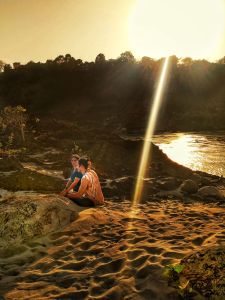
One of the key elements of the current temporary hermitage, the current safe-haven by the side of the road, is that it is literally two minutes walk from a very uncrowded and quiet coastal beach.

It is a place of golden sands (I know that’s a cliche but in this case I have the evidence!), gentle wave action, and the promise of a possible serenity of a kind I’ve not been close to for a long while.

While I don’t visit this little slice of Pacific coast every day, I get to walk and or sit there several days a week. And when I do, I find that it’s always uplifting and relaxing. A reminder too, of my oneness with all nature. All of us are actually nature, along with every other living thing on our planet (and of course elsewhere too).

Today, for the second time I built a little ‘shrine’ on the sand.  Walking away from my little temporary temple, a poetic voice entered my mind and wrote itself a few lines. Too engrossed in the moment, I neglected to record it on my phone, so when I got back to the hermitage I wrote it as remembered.

And now, I would like to share it with you. I am grateful that I am actually able to share it, so thank you.

WE STAND ON SACRED GROUND

I planted the branch,
the branch of a fallen tree person.
On the beach,
in the sand of the beach.

And I built a shrine
around that branch.
A pop-up shrine.
Shells, stones, and a piece of coal.

A shrine to Varuna.
A shrine to Surya, to Saraswati.
A shrine to all the gods
of Earth, Sky, Water.
A shrine to the gods of all beings.

A shrine on the beach
is subject to tidal flow.
And soon, this simple shrine,
pop-up and temporary in nature,
will be engulfed.

Lord Varuna will make his claim.
What has emerged, must always return.

with love and in peace