There would be some – including me – who would say that all human beings, and not just monks, need to learn to awaken their hearts, to cultivate attitudes and a life of love, compassion, empathy, and kindness.
Who would disagree with such a suggestion?
Well, I’ve already said that I am one of the ‘some’ who would welcome such an evolution in human consciousness. But, at the same time, I don’t want to make pronouncements, form judgements, hold opinions, on what anybody should do, or be like. Only me. I am only responsible for my own behaviours, attitudes, ideas, thoughts, speech, and the rest of how to live my life. I just can’t – as in I’m not entitled – to tell anyone else what to do, what to think, what to say and so on.
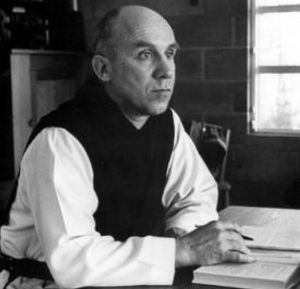
Actually I’d even speculate that Merton is in fact talking about just the one monk: himself; he’s not preaching a prescription for the behaviour of others.
I’ve read so much Merton that it’s impossible now for me to remember exactly where I read this statement of his, but I do know that when I first saw it and made a note, the concept resonated deeply for me as a great aspiration for my own life as a monk, and as a trying to be decent human being.
In other words, this monk – me, myself, and I – has a task to carry on with: to cultivate an awakened heart. And being a ‘great study’ it’s bound to be at least a lifetime’s project.
It’s an effort though, awakening one’s heart. It’s even a bit of a mystery at times what the phrase actually means in real terms.
Love, obviously, tops the list for any aspirant on the awakened heart path. And, yes, I do feel, express, and act out love – so deeply sometimes to the point of being overwhelmed or ‘flooded’; sometimes speechless (that’s the good bit), sometimes full of words.
But then there are times (oftentimes is the word) when that love is clouded or shrouded completely by angers and irritations, by regrets of what should be or shouldn’t be, could be or cant’t be, what isn’t.
The great study of the monk is to have an awakened heart Thomas Merton
All attachments to what is not as I think it should be. All barriers to love. All ways and means of keeping the heart asleep – or at best semi-awake, and still sleepy: slow to respond, slow to act, and with ongoing blockages to seeing how things actually are.
The quest to acquire an awakened heart and the outpourings of love, kindness, gentleness, generosity, that such a state would allow, is probably at the root, the foundation, of my life as a hermit monk, of my life as a pilgrim journeying through and to Self.
Living quietly and simply; developing a contemplative way of being in the world while definitely being not of the world; cultivating silence, peace and calm; all are activities and attitudes directed at cultivating an awakened heart.
All that generosity, patience, love, kindness, empathy, and all the rest are definitely all characteristics of an awakened heart. Here’s my dilemma (only one among many that riddle my crazy monkey mind): they are also precisely the elements that need to be practised in order for one to acquire an awakened heart. What’s the expression? Catch 22?
Of course, it just occurs to me now, everything that is, is exactly as it’s meant to be, happening just as it ‘should’. So, in other words, all these words of reflection are simply a commentary on what has been and gone already, that which is in the past, and is no longer existing.
All that matters – all that exists – now is that at this moment, in its ongoingness, I am as loving, as kind, as patient, and as generous (not to forget compassionate, empathetic) as I’m able. To others obviously, as well as to myself.
All that wonderful list of characteristics of an awakened heart all exist right now within me. Perhaps I need to wake up my mind a bit more so I might see that reality. Then I might actually realise that I already have an awakened heart and that I simply got forgetful somewhere along the way.
You know, for all my prayers; for all my mental discipline – efforts at mental discipline – for all my meditations, chanting, and other practices, I still just talk way too much for my liking, and often it feels like it’s only talking for the sake of talking.
I still just open my mouth and let come out any old thing that keeps the noise going. Oh, it’s worse than that: sometimes when I talk it’s rambling and waffling that I cleverly (or not so cleverly) disguise as intelligent, rational, and based logically on knowledge that I either have or haven’t got. Either way, I somehow seem to think I’m offering words of well thought out wisdom.
Whereas, as I said, the noise I make is so often rambling, contradictory , ill-informed, thoughtless waffle.
Enough! Blimey, that’s enough. Talk about opening a post on a calm, relaxed, optimistic, and compassionate note.
Here’s the thing: I want to devote my entire life to devotion and prayer. And that requires at least some silence. Yet, instead, I merely talk about the joys of silence, about the joys of full-on devotion to the divine, and as well I occupy so much time and energy to just voicing random thoughts that come and go, go and come, without rhyme, without reason.
Okay, here’s the second thing: I long with my deepest longing to be silent – to not simply stop talking, though that would be an excellent beginning. No, I want to be quiet; I want my vocal chords to have a break and let my true voice speak through my life, through this blog, my photographs and in whatever way I am lead.
So, what to do? Well, here’s the third thing, thing number three: all I need to do in order to both stop talking so much and be silent is to just sit. Sit and do nothing. There is no thing that I can do that will magically turn me into an oasis of silence and peaceful calm.
Sometime in the dim distant path I read someone paraphrasing The fouth Noble Truth in two words, Just sit. Buddha did indeed know what he was talking about. And I do get the irony: when I talk, I need to say something that helps, not just make noise and try to avoid silence.
So said I to my partner hermit yesterday. You see, for a few days I’d felt the coming on of a blog post: no topic, no clue as to ideas, and no hint of anything, only that it was on its way. Hence the exasperated outburst.
What’s wrong with wishing for something we want? Absolutely nothing. Sort of. Contrary to popular rumours, erroneous teachings, misunderstandings, mistranslations, or just a simple lack of information, Buddha’s Second Noble Truth does not say ‘The cause of suffering is wishes’ or we can say desires.
What he actually taught was that the cause of suffering is clinging. Clinging, being attached to a desire so strongly that failing to fulfil that desire causes us to suffer through annoyance, frustration, sadness and all those other things that impact on our mental or emotional wellbeing.
My teacher uses the word compulsion. Compulsion to chase after what you want, compulsion to run away from what you don’t want.
Using me as an example: yesterday I wanted so badly to write, and was so frustrated that I couldn’t write just then, that I caused myself suffering. Because I couldn’t have what I wanted immediately, I made myself miserable.
Just as an aside (or perhaps not?), I realise that this little annoyance hardly means anything in the larger context of living and suffering that all of us experience simply by being alive.
But in a way, that’s my point. How many of the things we desperately want or that we desperately don’t want are the ‘little things’? Aren’t they so often the very things that, on a daily basis, cause us the most annoyance, frustration, anger, and even sorrow?
In any case, I had made myself annoyed with myself, frustrated too. However as soon as it was suggested that I needed to just down and type something – anything – if only to get the words flowing, I felt much better. I had the answer!
So, here I am, albeit a day late, and not typing as it happens, but scribbling in my notebook. Actually I don’t know why I don’t type it all up first thing, cutting out the middle step. I mean, it really does flow better on the screen (via my fingers on the keyboard of course), and it’s also, as an added incentive, a whole lot easier to read than my scratchings.
I suppose I could say that not all old habits that have not quite died just yet, are necessarily ‘bad’ ideas. I happen to like my notebook.
Now, here’s the thing, the paradox if you like. I had felt a post coming on, and because I wished so badly for it to emerge and it wouldn’t, I suffered. And then, I sat to write something (anything as was suggested) and voila: the desperately, compulsively, longed for post obedeintly appears.
Cause and effect? I mean to say, which came first? Did I at some deeper subconscious level already have an idea to write a blog post about how clinging and compulsions and attachments to the things we want – and aversions and compulsions to get away from things we don’t want – cause us suffering?
Did that existing but deeply buried idea then manifest itself as a real world situation to give me the ‘material’ to write from?
Or, perhaps more simply, I got annoyed because I couldn’t write, so I made myself write (took a day to get to it though; remember me saying?), and well, what you see is what you get when one sits to write – words on a page.
Who can say? There are theories that propose effects can and do often precede causes. It’s a tough one to get my head around, and somehow I don’t think there’s any point in trying to.
We know instinctively that everything that exists in the Universe is constantly changing, evolving, devolving, mutating, never still. And we also know that we can affect what happens in our lives and in the world around us through our own actions. Some might disagree with me on that last one; it’s only my opinion.
The tricky bit is that oftentimes we forget that those changes as well as the lack of fulfilment or otherwise of our desires (wishes also), and even the results of our own actions aren’t always to our liking. Well, it’s not that we don’t know it in our minds and through personal experience, but when it comes down to it, we all usually as part of our normal conditioning, suffer when outcomes aren’t to our liking. It’s like we know it but we haven’t realised the truth of it yet.
Sounds like a trivial or flippant, even silly and pointless, thing to say, but it’s demanding to be said anyway: things (as in life and the rest) always work out how they work out.
But if you think about it, it’s true whether we like it or not. Actually, in a sense this is one of the very important, even pivotal points, of my ongoing studies, meditations, and contemplations. To realise fully that I, along with every other living thing, has a place within, no, not just a place within but is actually an indivisible part of, if I may be forgiven a cliché, the grand scheme of things. Not only that, but we in our essential true natures as Consciousness remain untouched and genuinely okay whatever transpires here in the material world.
I do what I do; you do what you do; and regardless of whether we like the outcomes or not, things work out as they do. Sorry to be repeating myself. Just seemed the right thing to say again.
And here’s another tricky bit: it’s not about resigning ourselves to ‘fate’ or ‘destiny; or whatever we might call not having control over our own lives.
Just by way of exploring that last point, and finishing this post, I would like to leave you with a quote. Yes, I know, we are all bombarded by quotes from famous (and not so famous) people, aphorisms of all sorts, and affirmations that claim they will improve our lives.
I truly believe this flood (mixing my metaphors here) of good words, written with good intentions, has numbed us to their actual value and usefulness to us in assisting us to live good lives.
So, here is one such, that I think puts it in a nutshell, in a very simple, straightforward way, an important Truth. It’s called the Serenity Prayer, and rereading it just now, I see clearly that serenity would indeed be the outcome if we are able to take this invocation to heart, and begin to live by it.
God grant me the serenity to accept the things I cannot change,
Courage to change the things I can,
and the wisdom to know the difference
Peace and Love from Paul the Hermit
PS: This version is only one among many. In fact, the Wikipedia entry linked above is a fascinating (though apparently quite flawed) exploration of this prayer and its origins.
Not too long ago, I completed what I’m now calling my first formal (structured) study of the entire Bhagavad Gita. Of course this wasn’t my first exposure to that text: I’d been reading it on my own for a few years before I came upon a teacher to act as guide.
Anyway, since that bitter-sweet day of completion, I’ve been looking at ‘random’ verses on a more or less daily basis as a way to keep in touch and to act as a reminder of what I’ve learned.
Just opening my Bhagavad Gita at random, just to see what the universe wants me to think about.
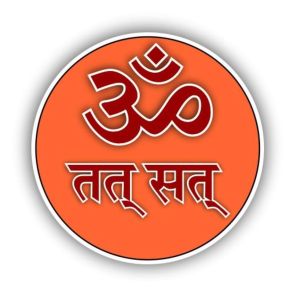
Today, I happened to open it up at what are a series of my favourite verses. (I know I’ve got a lot of favourites; it’s that kind of book). In these particular verses, Krishna describes the meaning and significance of the mantras Om Tat Sat.
In a nutshell, these three syllables, these mantras, are a way of describing the Absolute Reality of the Universe, or God, Consciousness, the Truth, the laws of nature and the universe. Whatever names we might use to encompass all existence.
Krishna details when and why to use the mantras (it’s one mantra made of three, for the technically minded). Again in a nutshell, it’s a mantra to use whenever we perform our duties, basically any actions, with a devotional mood.
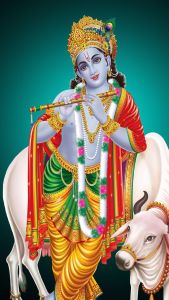
By the way, that, and the inclusion of my favourite image of Krishna, doesn’t necessarily imply that our actions have to have a ‘religious’ intent or flavour: Any action we undertake, for whatever purpose as long as it is motivated by Truth, Love and right thinking, qualifies as being devotional.
While you can see the actual verses yourself via the Om Tat Sat link above, I would like to share with you my very liberal paraphrasing of Krishna’s teaching on the mantra. Also, I am adding a few observations of my own that I hope serve to clarify this great teaching. Oh, please forgive any repetitions, if they occur.
The syllables Om Tat Sat are the symbolic representation of the Supreme Absolute Truth; what I choose to describe simply as all that is. It is called by any number of names or none. It’s existence itself.
It’s an ancient practice, this chanting of these three syllables as a mantra. It is recited when one is engaged in any action in a mood of devotional service. Meaning any act that is imbued with a prayerful attitude and feeling, and with a mood or attitude of devotion to and recognition of, Truth in all things.
And it includes any and every action we undertake, from washing the dishes, to sitting in meditation or silent contemplation. And everything in between.
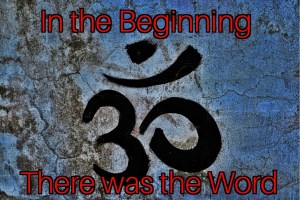
Om
Om is sometimes called the primordial sound, the creative principle, the word from which all creation sprung. I’ve also heard it defined as being the Big Bang, from which the universe emerged.
Om is considered the sacred sound and word by many cultures around our world. Consider the opening of John’s Gospel in the Christian New Testament :
Om is to be chanted when beginning and performing any and all actions motivated and driven by Truth. Chanting Om assists us to actually realise or understand with our heart and not just our mind, the presence of the divine or the universal consciousness in all that we do.
Tat
Tat is chanted by those wishing to be freed from attachment to material things, which includes the desire or compulsion to enjoy the fruits or rewards of our actions.
In the beginning was the word, and the word was with God, and the word was God
John 1:1 New Testament
Attachment is when we depend for our well-being or happiness (physical, mental, or spiritual) upon another thing (money, job, status, etc), person, or desired outcome. Attachment (and clinging, extreme longing, compulsivity), Buddha told us, is the cause of suffering: when things are going well with the things or people we are attached to we are elated; when things aren’t going so well, we are miserable and we suffer.
Sat
The syllable Sat indicates both reality and goodness. In other words, Sat is used to represent that Absolute Truth or Universal Consciousness that we’ve been discussing.
Sat follows very nicely on from Tat as it helps to strengthen our Dharmic (motivated by what’s right and true) actions, so that they actually become Sat – Truth.
So, chanting Om Tat Sat when performing any or all our activities in the world (as well as within) will help us to come to realise or understand that there is only the one Absolute Reality, the one consciousness that is not only universal in nature, but is actually the universe itself.
Oh one more quick note: Often you hear the chant with an extra word up front: Hari Om Tat Sat. Hari is a way to address that which removes darkness, that aids in the shining of the light of knowledge.
It’s a word that represents that Absolute Reality that we’ve talked about here. It can also refer to King or Lord, or otherwise influential entity. I find it rounds out the chant, and I like it!
Please feel free to explore Om Tat Sat for yourself. You will find a lot of great recordings of the chant on YouTube, and the wikipedia link at the beginning of this post is very Illuminating as well.
Makes sense, don’t you think? It is a really excellent affirmation to give oneself isn’t it? A wise piece of advice also. And I agree with you: great advice, sensible, logical, very helpful for anyone and everyone. Unfortunately, it’s not something I can honestly tell you that I practise on any kind of regular basis. It’s more likely that I would have to admit to you that:
‘I am always hurrying to get things done, and until I do, there’s no rest. Doesn’t matter how I feel’.
And it doesn’t seem to matter whether I have a lot to do, or only a little – or even if there’s nothing needing my attention. Whatever the situation, you will catch me in a hurry, going as fast as I can to get whatever there is, done. ASAP.
Okay, I admit it: I am exaggerating slightly. But not by much. Always rushing, always ‘getting ahead of myself’, always in a hurry. It’s been a problem for, well, forever really.
And I know I’m not alone. The world – as in society, economics, education, and the rest – is in a never-ending race to do whatever they do, and to get it done as quickly as possible, regardless of the cost to the planet and all of us who live on Her.
And, obviously, we are all caught up in this ‘race’, in pretty much every area of our lives.
Whether it’s an exercise program we set for ourselves, or which has been forced upon on us by advertising, cultural shaming, false identification with our bodies. Or the intense and all-pervading pressure to be ‘more productive’ at work. Or the newest mobile app that will magically make even our off-work lives more productive and (supposedly) give us that extra edge in the marketplace (whatever that means).
And remember school? High school? College? The night classes you took for fun and relaxation? How many classes began with the teacher giving the following little speech:
‘Now, we can really take our time with this class/course/semester, and we will be able to take as many breaks as we like. We have plenty of time to cover all the material. So, sit back, relax, take your time and enjoy.’
Not many I’m guessing.
Now, as a hermit, you might think I lead a quiet life. And it’s true: I do. Relatively speaking that is. All of us are required to be constantly taking some kind of action in order to maintain life.
Just like everyone else I have to do whatever it takes to just be alive: Cooking, eating, cleaning, laundry, shopping, praying, meditating, relating to loved ones as well as other people I encounter.
Then there’s reading, studying, talking (way too much in my own case), thinking. Well, that’s probably enough to be getting on with, I think.
Despite my hermit life, all these and more I do. And for me, it’s always in a rush and hurry. Well, not always perhaps, but too often for my liking, and way too often for my mental health, peace of mind and for the calm, peaceful like, I aspire to.
Whatever our personal lifestyle, or way of living, we are all in the same boat, so to speak.
Fix your mind of truth and be free from the concerns of the material world.
So, what to do? How can we slow down, get some sort of equilibrium or balance in our lives? How do we stop the rush, the panic, the pressures that besiege us and sometimes overwhelm us?
Well, there’s the problem. I won’t say I have no idea. I can’t say I don’t know. But, and here’s the point, while I can tell you how I am trying to do.If you’ve read what I’ve told you already, you will realise that whatever I try only works sometimes. And a very few sometimes’s at that.
Mindfullness
I try all the time to make everything I do, even if it’s just walking down the street, or washing the dishes, a prayer. Which is really simply another way to say that I try to do everything mindfully.
Sounds really simple when I put it like this, but of course it’s not at all. It takes discipline (I want to talk about this a little more later on). It’s about focusing on how you are interacting with the world around you, and obviously this starts with being fully mindful in each moment as you take action in the world, whatever it might be.
Simplify.
Not easy, I know. Life is full of details and complications. It’s full of conflicting priorities, each with their own sense of urgency and importance. The simple advice is to do what you can. Once again, tackle all the things you have to do one step/thing at a time.
Did you notice the italics? Be alert to the old urgent vs important dichotomy: not everything is of equal importance, regardless of appearances. Equally, we have to discern a thing’s or action’s degree of urgency for ourselves. With obvious exceptions, most things aren’t as urgent or immediate as they are presented.
Minimise.
Sound familiar?
Listen carefully to the commands to buy, buy, buy, and do, do, do that we are constantly being bombarded with from all direction. Ask yourself one of the big self enquiry questions: Do I really need … ?
Related to this is the question of how much money we actually need to have a good life, support our families, and so on. No guru, teacher, book, or anything else can help with this one; we are all different and have our own unique and specific needs. Only you can know what is right for you.
Discipline.
I mentioned this aspect of the solution to bringing a calmer, slower, less pressured vibe of equilibrium to our lives. For me (self-discipline is what we’re talking about here) is not only about willpower, though of course, it’s an important part of the picture. A quote from Bhagavad Gita that I think points us in a helpful direction:
What does it mean, ‘fix your mind on truth’? While it is very often an extremely difficult thing to do, fixing your mind on truth simply means keeping your mind (and consequently your body and heart too) focused on what is actually real, important, and meaningful to you. It means staying focused on what truly resonates with you as the way you wish to live your life.
So hard is this for me to do, that I am engaged in an ongoing project (please forgive the productivity cult lingo) to keep focused on what is true and real to me. To be honest, while I’m pretty sure that it does get easier with practise, I will always be refocusing on my truth. As they say, it comes with the job description for all of us human beings.
Now, about the second half of that Bhagavad Gita quote. If we do manage to reach that stage where we are able to focus on the meaningful and important, the truth for us, will all our troubles, problems, pressures, commitments of all kinds, just magically go away? Can we eliminate completely ‘the concerns of the material world’?
Absolutely not. The only thing that will potentially cease is our constant state of being stressed.
While the things we worry about now won’t disappear, the worry itself may lessen. Our abilities to function more effectively and happily in the world (in our family, our work, our own mind) will also improve. We really may become one of those people who always (or most of the time) take things in our stride.
But we should remember that the pressures, conflicts, health issues, the need to support ourselves and family, relationships with all their ups and downs, remain; they are part of the human condition; they are the natural order of things in this material world.
What we can do, is try as much as we can to control our minds, trying to remain focused on that which is true and meaningful to us.
Minimise, simplify as far as possible in all everything. We can focus on all that is true and meaningful in the life you are creating on an ongoing basis. And, of course, it is one considered and deliberate step at a time.
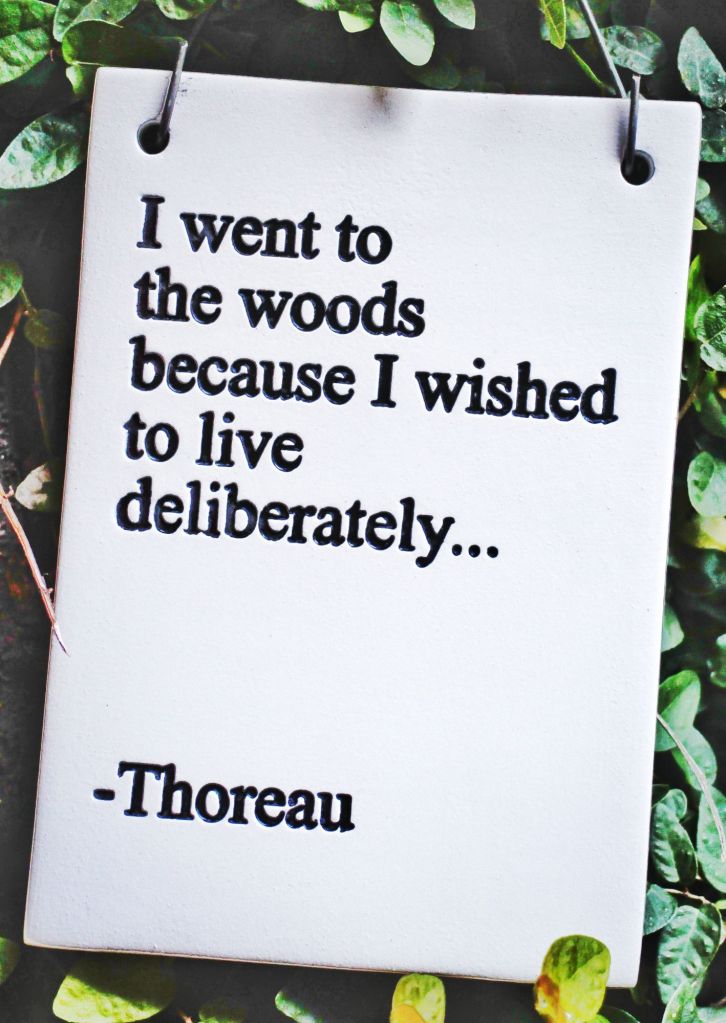
For Thoreau, going to live in the woods was the natural thing to do. It resonated with his soul and heart.
Of course going to live in the woods isn’t for everyone, but if it speaks to you; if it is in tune with your own truth and you feel it would give your life meaning, then why not?
All of us have within us our own ‘going to the woods’ equivalent. It might be anything. Go find it! Rest there.
The last words of this post are the same as the first. Actually as I think about it now, I see more clearly that this entire post with all its words and thoughts, might be summed up very nicely by that one small affirmative statement. Well, I might add three more words of my own:
In all things, I pause to rest whenever I feel the need. Peace and love from me to you.
A sculpture of a young child, on a busy street corner in the heart of downtown Sydney. I like many thousands of others, have passed it by many times only giving passing thought to the origins, meaning, or significance of the statue itself.
Until a couple of days ago that is.
As a subject for contemplation and for a photograph, it is a powerful image: striking in its presence. Once one actually stops to look and reflect that is.
After several minutes of standing with the statue and asking myself who is it? What does it mean? (there is no plaque or sign to steer the way), I made this photo and I moved on.
Only later, at home, did I notice the little plant growing through the pavement in the corner. And zooming in on the plant I saw the little moth sitting on a leaf.
I decided to research online, see if I could learn more about this site. The sculpture is called Youngster and was created by artist Caroline Rothwell. It seeks to highlight the plight of refugees, in particular children.
There isn’t much online, but you can read a media article which gives some more insight into the sculpture here.
That article focuses mainly on the sudden appearance of a plaque at the site. Presumebly placed by a citizen with strong feelings on the subject, the plaque wasn’t ‘official’, so was later removed.
Actually, the text on this plaque pretty much sums up my own strongly held and often expressed feelings. Though, these days as a contemplative monk and hermit, I try hard to not have opinions, or make judgements on the way in which things in the material world play out.
But, obviously I am still human, and this is only one of so many issues that cause me distress, sadness, even rage. Actually, rage is a big one. But then, how could anyone of goodwill not be outraged? It is the very reason I am struggling hard to get this post down, to somehow make it all clear.
You see, at the same time as being so affected on the human heart level, I am very aware at the same time that it is the conditioning of material nature that leads to the very obvious fact that life is suffering.
Eating, sleeping, mating, and defending. Every single activity of every living being is motivated by one or more of these activities or a desire for their fullfillment. They are the basic drives that rule all life.
So what to do? As I’ve said (probably many times) I am not a warrior – I used to be but not now. However I am just like every other life form motivated by conditioning, either from my experiences in this life, or by that conditioning inherent in all material nature.
To a great extent I have retreated from the world. Not in order to escape or so I can ignore the suffering. I haven’t abandoned the world.
In fact the exact opposite is true: I have withdrawn, become a hermit monk, precisely so that I might be able to dedicate every ounce of my energy, my heart, my love, to prayer; to creating and maintaining a quiet and contemplative silence.
My prayer is not of the asking or begging kind, beseeching some invisible ‘god’ to give me something. Instead, I attempt to be still (never ever easy); to free and open my mind so that I may be more receptive to the Divine, to the will of the Universe; and to become more mindful in every activity and moment.
In this way I am aspiring to realize fully my oneness with all life. All life. I want to become fully awake to the fact that everything is Self. That there is nothing else.
And of course Self includes this child and all she symbolizes; it includes that little green plant growing through the pavement in the corner; and it includes the little moth perched on one of its leaves.
As well, my prayer, my aspiration for full self realization and union includes all those who are warriors, those whose activism and engagement with the material or physical world is every day alleviating and attempting to alleviate suffering and its causes in whatever form it takes on this planet we all share.
I am extremely flawed: I’d like to tell you I am always full of love and light, but there is much of darkness in me still to be rid of. So, all I’ve shared with you till now are still only aspirations and I have far to go. Nobody can say if I will ever reach that full realisation. In the meantime I intend to keep doing what I can to participate in the work of change.
This morning as I do most mornings (trying to make it every morning) I sat for my practice starting with some prayers and reading a a few random verses from Bhagavad Gita.
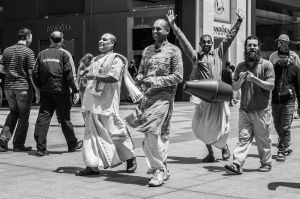
Then I settled to spend some time in devotional chanting of mantra. For a change this morning, while chanting I listened to a lovely album of devotees chanting the Hare Krishna mantra:
Hare Krishna Hare Krishna Krishna Krishna Hare Hare. Hare Rama Hare Rama, Rama Rama Hare Hare.
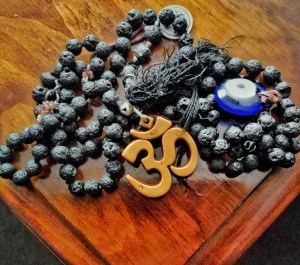
I reached for my mala (prayer beads or rosary) and as I mentally repeated these holy names in accompaniment to the recording, I held a bead between my fingers for each repetition, focusing on the chant.
Now, chanting is much like any other human activity: that is to say, the mind is always there. Usually it manages to bring up all kinds of irrelevant fears, memories, questions, you name it. Today, however, one of those supposedly random memories actually caught my attention in a good way and took me along.
As I continued handling my prayer beads I thought about a story I read in India nearly 15 years ago now. The story concerned prayer beads as it happens. Buddhist nuns, imprisoned in Tibet, were forced to resort to making their own rosaries in secret after their meagre belongings had been seized.
Almost ten years later, after another extended stay in India, I finally was able to write about this story. In this instance it came into being as a poem I called Homage to Holiness. May I share it with you here?
Homage to Holiness
Threads harvested from threadbare clothing. Pea-sized bits of bread, sliced from meagre rations, secretly hoarded for sacred purpose.
Mala makers work at night in the dark of the stinking and freezing stone cell. Chewed bits of bread become dough again,
and, by feel, frozen fingers knead the dough until tiny beads are created. An even tinier twig, again by feel, pierces each bead through.
Then in solemn prayerful silence and focus, the nun passes her harvested thread through the first bead. She ties a knot, no easy task with freezing fingers in the frozen dark.
And so it goes; all sacred duties take their own time. One by one; one bead of bread threaded; one knot knotted. The nun nears collapse. But now, at last, her task is done.
As the last knot is knotted, the last bead in its place, the nun sighs and mutters, whispers, a prayer of thanks. One hundred and eight beads – plus one – made, and strung Her Mala Om Mani Padme Hum
Probably the most sacred and significant of all Buddhist Mantra, Om Mani Padme Hum, means something like ‘the jewel is in the lotus’. But many would say it goes a lot further than the mere literal translation of the words; It is said to be the actual path to Enlightenment. There is a huge amount of information on the Internet about this mantra, so if you’re interested a good place to start is at this link.
Whatever the actual literal meaning, interpretation, or who chants it, I think we can all agree that the intent of this mantra is to have us focus on the divine, or on the Ultimate or Absolute reality. The same as any mantra one might choose actually. Remember last post? God is.
in any case, I think somewhere above I’ve used the word random. Well I should know better by now: no such thing as random. One of the Bhagavad Gita verses I read – in fact the final one I left marked with my bookmark – seems to me fit very nicely with that ‘random’ memory of a story read years ago, and my humble retelling of the story in a poem many years later
One who knows the Absolute and whose intelligence is fixed on the Absolute is not moved by pleasure or pain, pleasant or unpleasant happenings.
Bhagavad Gita 5:20
Did that nun imprisoned as she was in the dark and the cold feel that pain? Did she feel fear? Of course she did. The thing is, she was, as constantly as her circumstances allowed, fixed on the Absolute: the activity of making the mala, the intended use of the mala, and her prayerful attention and devotion as she worked, all enabling a complete fixing of mind, heart, and attention onto the Absolute.
The cold was still there; the hunger and fear too. But this nun was able to remain centred, you might even say calm and content, despite the dire situation.
Actually content was a word I read in relation to this nun and her sisters (she wasn’t alone in that prison cell): From what I read they were released after some time, and eventually escaped to India where they rejoined friends, family, and of course their leader the Dalai Lama
At the time the story was being recorded for posterity, the Mala Maker reported that she was happy and content and leading a full and fulfilling life. I imagine her as still being fixed on the Absolute.
Thank you for allowing me to share these moments with you Love and peace
One week today and I will be there. In other words, this time next week at this time I will have arrived in the desert city of Broken Hill. Almost in the heart of the continent and right in the middle of the Outback. In fact they call that whole area The Big Red after the colour of its tens of thousands of square kilometres of desert sands.
Back to Country
It’s about 1500 kilometres from the Pacific Coast where I am right now. I’d like to write about the ‘call’ to the desert, which I am finally answering, but maybe I’ll get to that in another post.
Right now I only want to say how excited I am to be going. A bit anxious too (I’ve been there before, but still …), and plain and simple looking forward to getting there.
Acturally, to be perfectly clear about it: I can’twait to be there. But, you see, herein lies the problem: I am so keen to get there that I’m feeling as if I am no longer here. I am not present; I am not living in the moment and in the place I’m in (which I love by the way, the place I mean).
I don’t mean to say that I am some sort of Buddha who is usually fully present in each moment; or who is serene and calm when he knows change is coming. Any reader of this blog will tell you that presence isn’t necessarily my greatest strength.
But, I must say that lately I have improved (slightly) my living in the moment, being here and now, way of living. It’s just that I’ve been longing for this particular change (and all that I anticipate will come with it) so much that I just can’t help myself.
Did I mention already that this is a problem for me? Well, yes, I did, and it is. I prefer very much to be where I am and when I am and fully in the flow of the ongoing present.
Of course there is nothing wrong with wanting something to happen. The problem arises when one is so anxious for whatever it is to happen, that what’s happening here and now ceases to be where one is at—in other words: the trouble is that I stop being in the present.
Buddha taught what are called The Four NobleTruths. (which pretty much form the core of Buddhist teachings) The second of these Truths says that attachment is the cause of suffering. Suffering here means anxiety, worry, regret, fear; all those kinds of things. Whenever we say something like, ‘I can’t wait to…’, then it is a sure sign we are attached to that want or desire.
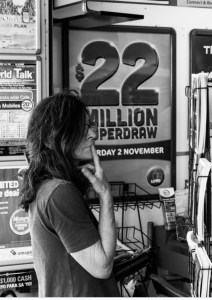
If I’m in it, will I win it?
By the way, the First Noble Truth is: Life is suffering. Suffering, The Buddha taught, is simply the price of being alive. We get hungry, we are conscious of pain (in all its guises), we grieve; we grow old; we get sick; and we die.
But, right now, I want to talk more about Noble Truths three and four. Number three says that suffering can be overcome. Nice clean, clear, and not to mention, succinct little statement. Of course, it’s easy for him to say isn’t it? He is Buddha after all.
Perfectly reasonable reaction from us suffering humans. But there is hope and we will find that in Noble Truth number four which gives us the how to overcome suffering. There are quite a few ways to put this Truth into words, but the one I like best says:
The way to overcome suffering is to sit.
What? Sit? Yes, sit. Be still; stop moving. Of course if we relate this Truth to my little dilemma for wanting to so badly to be somewhere else that I’m not able to be where I am now, we can expand this Truth to something like this:
Focus your full attention on what you are doing now, and where you are now as well. As much as you can, be open to change, but be less attached to the nature or timing of that change. After all, you can make all the plans you like, but who knows what’s really going to happen—you won’t know that till it actually happens.
So, that’s what I am trying to do. Instead of saying stuff like ‘I wish I could go sooner’, or ‘it’s only x days till I go’ (yes I know, that’s what I said way up there at the top of the post), I am going to ask myself, ‘What am I doing now?’, and I plan to look around me, and engage more with the reality of this moment. And try hard to realise the ongoingness of that everlasting moment.
Hey, that’s a great mantra isn’t it? Chanting it whenever I start getting out of the here and now mode, might just put me back there again. I mean here—and now. You know what I mean!
In my last post I mentioned I would share a poem with you in this one. And here it is!
Just Passing Through … or Seeking Noble Truths, is, like the previous post, concerned with passing through, how as I go through life, I am always in some sort of passing through place. Before we get to the poem, just let me fill you in on a bit of the back story.
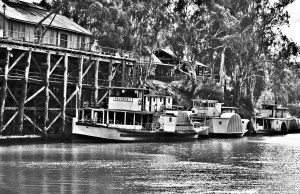
First, I wrote the poem as I walked home to our hermitage at the time in a town called Moama on the Murray River in Australia. Now, the Murray is the biggest river in the country and the then little town of Moama sits across the river from its bigger city sized sibling: Echuca, the biggest inland port in Australia.
Anyway, I’d just crossed the river bridge and the words just started coming to me. Not exactly as you read it here, but close. I am very lucky that I had only a few minutes walk left to get home, otherwise the whole lot could have been lost to memory.
The longer back back story? Well, as the poem suggests, I’d spent a lot of time hitchhiking, in Australia and a few other places too. It’s true what it says in the first lines: I’d done a lot of trudging through a rather large number of towns unknown to me then, and only some of which are better known to me now in much later years.
Okay, that’s enough back story to last a while, so let’s just present the star of the show. I share this, as I do all my efforts, with heart.
JUST PASSING THROUGH … OR SEEKING NOBLE TRUTHS
Many have been the nights I’ve trudged (and less often, strode) past illuminated windows framing. families sharing sit down meals. Or huddled worshipfully before flickering and silent (to my passing by ears) picture boxes in corners of cosy family rooms.
I am just one more invisible (to most), anonymous drifter. Just passing through the empty nighttime streets of one more anonymous town. Longing to enter the illumined frame. Longing to share one of those sit down meals. Longing to worship at the alter of the flickering picture box. Longing is loss.
The edge of town roadside summons this lonesome bodhisattva begging rides.
It’s just one more quiet and cold semi desert night. A high moon in a clear sky casts ghostly shadows through Eucalypts: my only company as the waiting game begins. Waiting to see headlights coming and going my way. Waiting to be rescued from this lonely edge of town roadside. Waiting for another ride, to another anonymous town. Waiting is wasteful
Better to be here, now, on this edge of town roadside. A place as good as any. Illumined by the moon, the ghostly gums create the frame in which this bodhisattva rests. And worships.
Thank you for allowing me to share these words with you. The road, as many of you will know, can be a teacher, a guru. I don’t hitch-hike anymore, but the road is still teaching me. And I am grateful.
In my last post, I reflected upon a lovely Buddhist mantra, an invocation for peace and happiness for all beings (Lokah Samastah Sukhino). We discovered along the way, that it is no ordinary mantra: it actually amounts to a solemn promise to contribute to the peace and happiness of others (and Self obviously).
Then we thought about how to actually go about acting on this promise: Be kind. That’s what I came to. That’s all that is required. But, as you will recall, being kind sounds easy but quite often isn’t. The Buddha himself came to our rescue with The Eightfold Path,
At the end of that last post, I declared I would devote this next one to looking at Right Understanding, the first of the principles in The Eightfold Path. I said I would just sit at the keyboard and see what emerges as I thought about what is Right Understanding.
Before we get started, let me make the point that The Eightfold Path is not a kind of ‘to do’ list where you tick off one item and move onto the next. The Path is more about integrating the principles into our lives, letting them overlap when they do and moving forward in one area, while (possibly) moving backwards in another as our lives unfold with all the usual twists and turns.
The Eightfold Path is a life-long (some would say lives-long) process; don’t think in terms of goals to be achieved.
Does this mean we will need to explore all eight principles on the Path? Well, we’ll have to see how this evolves over time. Although as I say it’s not a to-do list, I think it more than possible to at least think about the principles or steps on the Path one at a time.
The second thing to say by way of introduction is this: As I mentioned in my previous post, there are virtually unlimited places on the internet where one can source The Buddha’s Teachings, including many commentaries on The Eightfold Path.
I’ve made no use of any of these sources. I have sought only to put down some of my own ideas and learnings, as well as just letting my heart have its say.
If in that process I’ve made any errors of any kind, forgive me. I merely follow The Buddha’s own instruction: Don’t take my word for it; Ask questions; Do your own analysis; Think for yourself.
Now that’s all out of the way, let’s just describe briefly the Four Noble Truths. This is necessary because the injunction to follow The Eightfold Path, comes in the Fourth of those Noble Truths.
Putting them as succinctly as I can, The Four Noble Truths are as follows: The first truth tells us that life is suffering, the second that the cause of suffering is desire (or we can also say attachment), the third that there is a cure for suffering and the fourth tells us what that cure is.
That’s where The Eightfold Path comes in: it’s what you might call The Buddha’s prescription for the alleviation of suffering. At this point I would like to suggest that if you are not familiar with the Four Noble Truths, please take some time to check out the topic for yourself.
The Eightfold Path does, as I mentioned last time, in fact sound very easy when put it in list form like this:
Right understanding
Right thought
Right speech
Right action
Right livelihood
Right effort
Right mindfulness
Right concentration
Remember, though, as I said, it’s not a to-do list we can work through one item at a time. Or perhaps we can put it another way: It is possible to work on one item at a time, but it’s not about getting that one completed before one can move on to the next item on the list.
The first step on this Noble Path we have embarked upon is Right Understanding. Actually it’s not only the first, it is the ongoing one; and it is the final step also on this particularPath of Liberation. And it seems to me that I’m right in this: my life has been one continual search for undetstanding.
Not many people know this, but I spent some time working as a journalist. One of the fundamental principles (aside from telling the truth of course) that I followed was the, Who? What? When? Where? Why? and How? set of questions.
Now, I wouldn’t say that it was necessary to ask every one of these questions in every situation. But, as a general rule, they served as a useful guideline to getting as much information on all relevant aspects of an event, a person, or whatever the subject of a story was. And I have to say that I find myself quite often using this list or some varient of it when I’m trying to understand or figure out something.
Why those questions? Where do they lead? What am I trying to do by asking them? How do they help me? (See what I mean? I can’t help myself) If we sum it up, then we would say that asking the WWWWWandH questions have the potential to lead us closer to understanding.
Let’s say you are unhappy with the work you do on a daily basis. You don’t understand why; After all, it pays okay; the hours aren’t too onerous, the work itself is fairly easy as work goes. What’s the problem then? You just don’t understand. You know there’s something not quite right, but you just can’t put your finger on it.
Who is doing that job? I am, you say. But, really, who are you? Is it you doing the job or just a part of you that you kind of section off from the real you for the working day?
What are you doing that makes you unhappy? Is it being in that workplace? Is it the work itself? It might be ‘okay as far as work goes’, but is it really okay?
When are you at that job? I guess this question is about how many hours, what percentage of your life you spend doing that job. And, even more to the point of the when question: When are you really there? How much of your work day are you actually off somewhere else? (refer to the where question)
Where are you? Are you where you want to be? And, kind of getting back to the Who question, who is it that’s there? Is it the real you? Or is it that sectioned off bit of yourself you access during work hours while the real you is off somewhere else?
Why are you doing that job/work? Well most likely your answer will be something like: I have rent to pay, food to buy, bills to pay, family to support. Well, those answers have to do with what you do with the money you earn from doing that job. The question lingers: Why are doing that job? I mean, the real you; why?
How can you be happier at your work? By now you’ve got the hang of this. If you have answered all the W questions then you will already be getting some clues about the answer to the H question.
Asking variations of this set of W and H questions can help us in many aspects of life where we seek understanding. They don’t have to be put as formal questions, and they don’t have to all be asked in every situation. Also they don’t have to be thought based queries either, if you know what I mean.
The answers may well come by simply asking the question, and ‘sleeping on it’. By that I mean you don’t have to tirelessly mull over a question. Meditate on it, think about it, of course, but then forget it consciously and let the answer come to you. And, of course you can always literally sleep on it.
There’s a small art gallery in a desert mining down almost in the heart of Australia. On their window they used to have a quote by Claude Monet:
I know we aren’t talking about art here (or maybe we are?), but I think this quote applies to many of us as we try to understand our lives and our place in the world. Especially when it comes to what makes us happy. All of us spend a lot of time, not so much pretending as in going through the motions. That’s because sometimes it’s just too hard to try and understand.
But, keep at it. Ask the questions but don’t worry about the answers: they will emerge when they’re ready. True understanding is close to love, as Monet says.


























 Notes from the Hermit's Cave