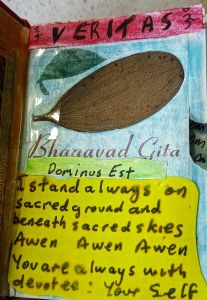
When Love is a Yoga and Lovers are Yogis

There was light at the end of the research tunnel

These last few days I’ve been researching and thinking about an idea for a blog post. But I’ve come to realise that I am grossly underqualified to write about the topic I had in mind. Let me put it another way: I am completely and utterly unqualified in any way whatsoever to go there. In fact, after all the research, I think I’m going to disqualify myself from ever going there in writing.

However, I’m a great believer in the idea that no quest for knowledge is ever a waste of time or effort; there is always something to be learned. During my research I came across a topic I believe I am qualified to discuss, as it forms an integral and vital part of my own personal spiritual practice.

Why I’ve decided to write this post, though, is because I made a discovery that lead to an insight that I know will lead to a great progress in that practice. It’s nothing new, not really, but it was one of those occasions we’ve all experienced of ‘I knew that, but now I really know it.’ For me, it was a realisation of something that till then had been a nice cosy theory and belief.

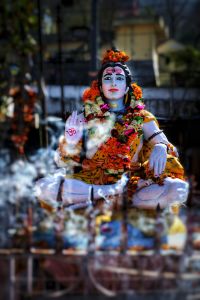
Bhakti Yoga is that practice. It is really a key foundation, a valuable component of my spiritual life.

Wikipedia opens its entry on Bhakti Yoga (see the link just above) with a description of the practice that mirrors what I think is the traditional understanding of Bhakti Yoga:

Bhakti Yoga (also called Bhakti Marga, literally the path of Bhakti) is a spiritual path or practice within Hinduism focused on loving devotion towards any personal deity.

In the same entry there is a description of the origins and meanings of the two words, Bhakti and Yoga:

The Sanskrit word Bhakti is derived from the root bhaj, which means “divide, share, partake, participate, to belong to”. The word also means ‘attachment, devotion to, fondness for, homage, faith or love, worship, piety to something as a spiritual, religious principle or means of salvation’.

The term Yoga literally means “union, yoke”, and in this context connotes a path or practice for ‘salvation, liberation’. yoga referred to here is the ‘joining together, union’ of one’s Atman (true self) with the concept of Supreme Brahman (true reality).

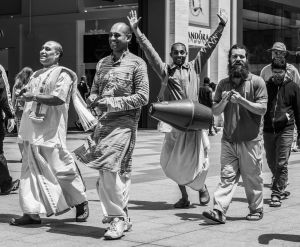
For some, dancing while chanting the names of their God, demonstrates their devotion and celebrates their union with each other and with God

In other words, those called to a religious or spiritual life, practise Bhakti Yoga whenever they pray or otherwise express devotion towards their personal conception of God, or the Divine. This particular definition seems to be saying that such a conception of the Divine, or God, is in the form of a personal deity who is a kind of representative of true reality, which the devotee is aspiring to join with.

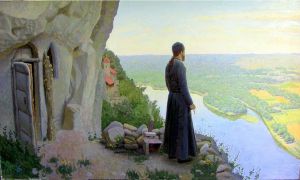
Some Bhakta Yogis are full-time, full-on practitioners. People like contemplative nuns or monks, hermits who retire from the world into seclusion. Anyone basically whose entire life and activities are spent in devotion.

So, when I discovered all this, I became intrigued; I decided to go off on a tangent and explore the word Bhakti itself. Wikipedia has a separate entry for the word on its own:

Bhakti is a term common in Indian religions which means attachment, fondness for, devotion to, trust, homage, worship, piety, faith, or love. In Indian religions, it may refer to loving devotion for a personal God

is often a deeply emotional devotion based on a relationship between a devotee and the object of devotion.

In ancient texts the term simply means participation, devotion and love for any endeavor.

May refer to devotion to a personal god? While I thought this entry doesn’t contradict our first quote above, it does seem to broaden, and deepen, the meaning of Bhakti. Expand might be the better word.

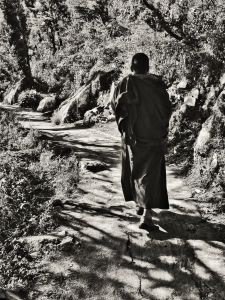
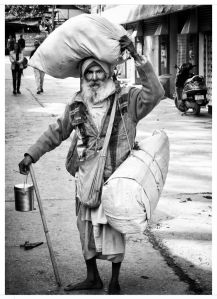
In some traditions a simple life on the road is a way to commit full time to Bhakti or devotion.

It struck me that that object of devotion might be anything. Or even everything. You see? I told you it wasn’t a new idea. It’s just that it’s resonated deeply within me now. It appears that the object of Bhakti Yoga practice doesn’t necessarily have to be a ‘personal god’.

Many many people would say ‘I like animals’ or ‘I think we should save the world’. But, while that may imply a kind of love for or at least a fondness for, I think Bhakti is something more – actually several somethings more!

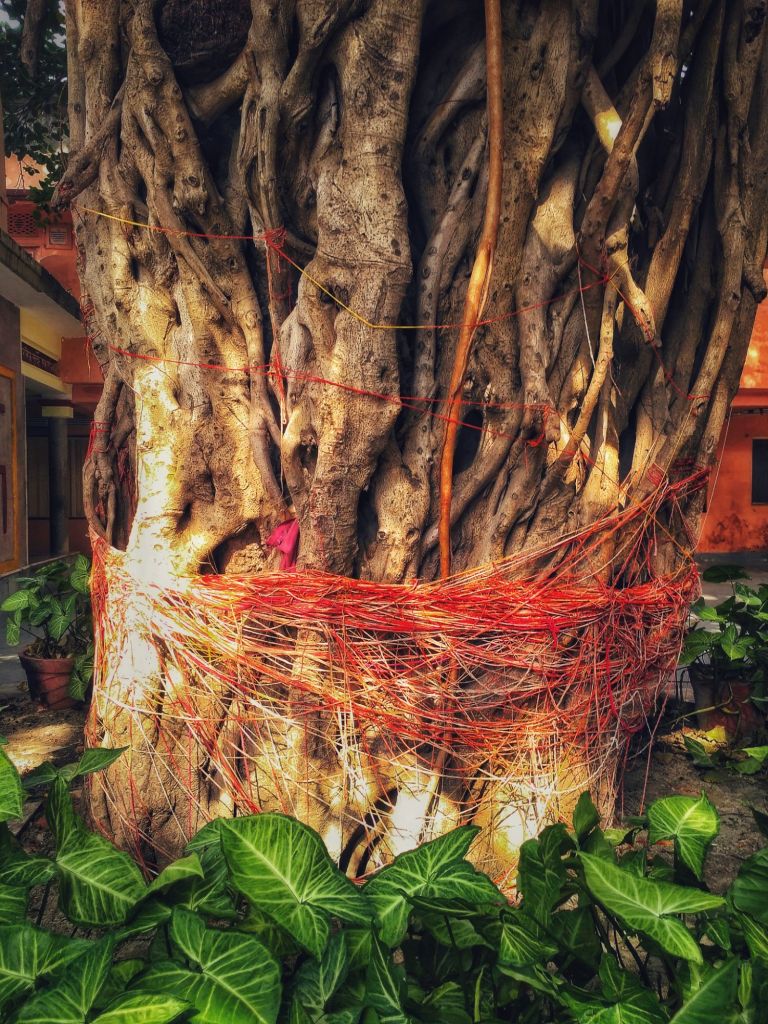
For example, some people have a particular attraction to and love for, the ocean, or it might be a river they view as, if not sacred in a religious sense, then as special to them in some deep, comforting, even therapeutic way. Others have similar relationships with and feelings for trees, or even a particular tree.

Animals as either individuals or as a species or group, can have the same appeal and call to other people. Then there are those who feel strongly in their hearts you could say, that Earth itself is a sacred object, or others have a knowing that the planet is a living entity and worthy of our devotion.

Bhakti begins with love and devotion, which is about caring for, affection towards, loyalty to, emotional engagement with the object of devotion. But even more than that, there is faith in that object of devotion; faith as in trust, confidence that the love is real, that the ‘relationship’ is sound and real.

Homage and worship too are key aspects of Bhakti. The deep inner feeling we have towards a thing, person, or other being, that is beyond what we normally call ‘love’. It’s about seeing and actually realizing ‘in our hearts’ our desire to be merged or united with that thing, person, or other being.

Actually, seeing that word other just now got me thinking. I had to go back and reread our definition of Yoga up there near the beginning. It says Yoga means ‘union, yoke’. It goes on to add: yoga refers to a ‘joining together, union’.

This passage seems to be suggesting that Yoga (in our case Bhakti Yoga) is both an already existing union, and a process of joining together to achieve union. One thing I would say here is that in my practice of Bhakti (and love as a general thing to strive for and be) it’s both.

Trees are special beings for many people from a whole variiety of cultures all over the world

But, in the end, it seems to me that the process or practice, the path of Bhakti, serves to awaken us, to assist us to acknowledge, recognise, and realise in that really knowing way, our pre-existent true nature.

That true essential nature can be said to be the reality of our oneness with all things, living and non-living. And their oneness with us too of course. In fact, by putting it that way, I’m saying there is only one, or oneness. What’s that expression? One without a second.

May you be a Bhakta Yogi. Or, perhaps you already are one?

Love and peace from Paul the Hermit

Life has manifested itself as the multitudinous forms that comprise the universe. It is the one Universal Life, Power or Shakti (the laws of the universe or natural laws) that controls, guides and actuates all movements and activities in all beings, creatures and things.

                — Swami Ramdas

A Music Star, Some Songs, and the Human Condition

The first line of this post was going to read something like: I listen to a lot of music. Then just as I put fingers to keys, I thought, no I don’t. More true to say I don’t listen to anywhere as much music as I’d like.

But I do try, and I am blessed that I have quite a large and extremely diverse music collection. All digital these days (which in itself is a great blessing), but once, I had CDs, DVDs, cassettes, as well as quite a nice range of vinyl singles and LPs.

Thank you Wikipedia No glasses?

Anyway. Moving right along. Tonight, as I cooked dinner for the hermit pilgrims, I was listening to a self-titled album called Buddy Holly. I just discovered that it was his debut studio album recorded in 1958. My copy is most likely a rerelease,though unlike most of the rereleases, this one features the original track line up.

I found myself thinking about, fantasizing I could say, about what might have happened had tragedy not called a halt to Buddy’s songs and life. Who can say? Then I mentally shook myself: this kind of daydreaming and speculation is not what one might call being present in the here and now; such thinking is an outright denial of the truth of things as they are. But, remember, I’m still learning: not yet enlightened; just another sentimental human who can’t help himself or control his wayward mind.

A Studied Pose

Some would say that the album contains songs that are typical rock and roll pop songs. And yes, they would be absolutely correct. Why? Because, as you’ve probably worked out in your own life, living on this planet as a human being is a drama in itself ready made for song lyrics, movie scripts, and novel plots. It’s not a new idea!

As such the songs’ lyrics are about love and loss, hope and despair, longing, joy, sadness; you know, the normal everyday ups and downs, ins and outs of life. Not a lot you might think to interest the likes of me. But there is something, that I’m not sure I can name in Holly’s music and lyrics that strikes a chord (sorry pun not intended) for this hermit-pilgrim, aspiring to be a monk, rock and roll fan, who just loves music from wherever and whoever.

Sure, the songs being products of their times can be a little sexist (nothing compared to the twisted misogyny we sometimes hear today though): sometimes naive and simplistic. But, for me there seems to be an innocence, even a kind of purity to the lyrics. Have a look at the lyrics of Mailman Bring Me No More Blues:

Mailman, bring me no more blues
One little letter is all I can use

She wrote me only one sad line
Told me she’s no longer mine
Mr. Mailman, that’ll do for some time

Cried like never before
So hard, couldn’t cry no more
Shoo, shoo, Mailman, stay away from my door

Mailman, bring me no more blues
One blue letter is all I can use

By the way, those two lines in the second verse are about as sexist as any of the album’s lyrics get, not that I am suggesting we minimise in any way whatsover such a sentiment. It’s abhorrent to me.

Anyway, it is pretty clear what this song is all about: it is the pleas of our rejected hero to be left alone; he can’t handle any more bad news or heartbreak.

Actually as I’ve listened to this particular song a few times tonight, I’ve realised that it’s about attachment, about compulsions and aversions. It’s about how this guy believes his wellbeing depends on someone else, that without her he is doomed to suffer.

When we think like that, we are compelled to chase after those things in the world that we think will make us happy, and run away from the things that we think make us suffer. In this song it’s all the mailman’s fault.

Obviously we are all like that; it’s part of human nature isn’t it? You might ask, am I now preaching a dualistic , clinging to your desires type of approach to living. No, but at the same time, it’s a true story isn’t it? This song. None of us want suffering, pain, rejection, and all the rest of it. I guess instead I should be saying now: let go of worldly attachments, give up your notion that things of the world can make you happy.

Now, how about these partial lyrics from Everyday. One of Buddy’s biggest hits:

Everyday, it’s a gettin’ closer,
Goin’ faster than a roller coaster,
Love like yours will surely come my way, (hey, hey, hey)
Everyday, it’s a gettin’ faster,
Everyone says go ahead and ask her,
Love like yours will surely come my way, (hey, hey, hey)

Everyday seems a little longer,
Every way, love’s a little stronger,
Come what may, do you ever long for
True love from me?

And the music. Holly has been credited with being the originator of what became the standard set up for rock and roll bands: two guitars, bass, and drums. Mind you, according the album notes I read online, many of the songs on this album also feature many other instruments, classical and contemporary. I think it’s brilliant; something about it makes me think of alchemy

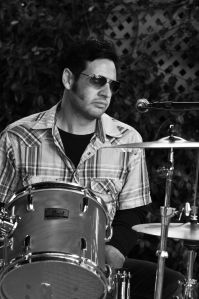
Wake me up for the drum solo

For me it’s that instrumentation, the tunes, the melodies, and sometimes great harmonies (not to mention the occasional lack of harmony) that promote or provoke a kind of mellow, reflective mood. Sometimes though it feels like the music itself goes further and actually creates or induces that mood.

I just love these songs. That’s the essence of what I’m saying. In a strange way, they serve to uplift, despite the sometimes apparant gloom and doom of many of them.

Anyway, let me leave you with a couple of verses from one more song, Valley of Tears, which was actually written and first recorded by Fats Domino.

While most of us have been at some time or another a frequent visitor to or even long term resident in that valley, in this song our hero wants to actually go there forever!

Of course, I don’t think it’s that simple. I think he wants so badly to be relieved of his suffering that the only place he can think of where he can truly belong is where everybody else is suffering like him.

I want you to take me
Where I belong
Where hearts have been broken
With a kiss and a song

The Closed Cafe at the End of Lonely Street

Spend the rest of my days, dear
Without any cares
Everyone understands me
In the Valley of Tears

I guess that’s why I love and respect Buddy Holly along with so many others: he’s telling us, reminding us, that happiness doesn’t come from outside, from out there in the world. And if it does, it’s fleeting, only temporary. He reminds us, or at least he speaks this truth to me, that the only place I can find permanent peace, love, happiness is within.

Peace and love from me to you

PS: A note of thanks

Most of the photos are mine, except for the ones depicting the record single and the LP cover. I am very grateful to Wikipedia for allowing such access to these things.

Also thank you to Wikipedia for the song lyrics. If you ask my personal opinion, I will tell you that Wikipedia is one of the greatest resources for knowledge (or rather informatioun with the potential to become knowledge), that has ever existed in the history of our species.

A TRIBUTE TO THAT WHICH IS SEEN

An affinity with trees;
crowns moved by the breeze.
    The Sentinels stand firm.

Sentinel Rising
Neighbours
In the Grove of the Sentinels

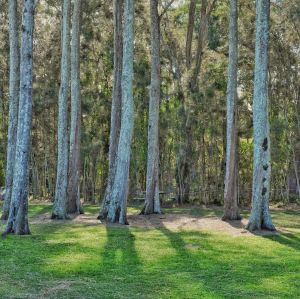
A Grove of trees we came to know well as The Sentinels, a creek, a field of grass, and nature in abundance.

Our cottage was small, but richer than all.

We do indeed stand always upon sacred ground.

Peace and love

Paul

A small remembrance and a prayer of gratitude for some old and sadly missed friends.

Sentinel Magic

Let Me Tell You a Story: It’s a Good One!


Has anyone seen Walk the Line? It’s a great movie that tells the story (or a version thereof) of the life of Johnny Cash. Yes, I know: not everyone is into country music. This movie, however, is an intriguing insight into the life and work of a  gifted but troubled artist. He was a prolific and inspired singer and songwriter.

There is a scene in the movie in which Johnny is about ten or so. He’s talking to his brother who is maybe 14. The brother is studying the Christian scriptures (he wants to be a preacher when he grows up, but dies soon after in an horrific accident) and Johnny says, ‘Why you studying so hard?’ His brother looks up from his reading and says,

‘You can’t help nobody if you don’t tell ´em the right stories.’

Yes, I thought when I heard that, you have to tell them the right stories. But, what are the right stories? It’s a good question but, fortunately, there is a simple answer: they are all the right stories. That is if they are told from and with the heart, and if they are created and shared with the intention of conveying Truth, promoting harmony, and doing or causing to be done, what’s right.

The ‘them’ of poor brother Cash’s reply are those who get to hear/see/feel the stories we tell. And we all tell stories don’t we? I mean I’m telling you a story right now. As a (cringe) blogger, that’s what I do.

But we all share stories of all kinds. Sometimes they are stories of our lives, sometimes they are from memories passed down the generations. Other times they might be something we ‘make up’ to help someone to understand a point or idea. Pretty much all of us, most of the time communicate in one kind of story or another.

Of course there’s the other kind of stories; the ones meant to spread rumour or gossip, to hurt someone, to mislead. We all know how that works, and it’s not today’s topic anyway, so let’s just leave it there.

Those we share stories with may be those we intend to share with, and they might be others who at the time are distant from us both in time and space. Just as the stories we tell each other might be decades or even centuries old, so might our stories keep on reverberating through time and space.

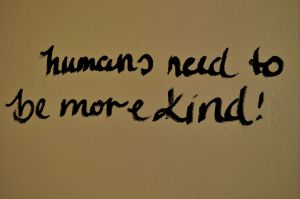
A true story written on a wall somewhere

It’s also true that the stories that ‘help’ people come in all shapes and forms and are about an unlimited variety of subjects and topics. Then there’s the matter of timing. How often have you ‘just by chance’ read something inspirational when you were needing some guidance or advice?

Or what about those times when you are feeling a bit low or under the weather and you come across a story that makes you smile or otherwise lifts your spirits? I’ve often been in need of a good cry only to come across a sad movie or story or a moving tale of one kind or another. (Just last night I read a wonderful phrase I’d never seen before: Transformational Weeping. Probably a story or two there do you think?)

A story I tell myself literally every day. One that’s a prayer and an affirmation

So, let’s keep telling stories. They are all the right ones for us to tell – if they come from the heart and told with the intention of serving Truth. Someone once wrote:

If there is a way to improve the world, it is by telling a good story.

Okay then.

Once upon a time on a dark but not so stormy night …

PS I saw the movie in Dharamsala India. On a postcard home I wrote a little rhyme about some writing work I was doing on some of the town’s environmental issues for a local magazine:

He walked the line
did Johnny Cash.
But here in Dalai Lama Land
my words will help reduce trash.

I did say stories come in all shapes and forms didn’t I?

Wish for Truth and Honour with your signature

Maybe fifteen or so years ago, I reconnected with a good friend, after losing touch for a while (we’ve lost touch again). This friend used to send his poetry to friends on his email list, and after reconnecting, I was reading through some of those old emails.

I began to notice, as I read, that along with his name, he signed each email with a really lovely sentence which at that time I’d not heard before:

Vishwa dharma ki jai

This is Sanskrit and obviously I had to look it up. Not only did it read so nicely in Sanskrit, the English translation, was just as striking: it translates to: ‘victory to universal truth and honour’. When I read this translation, I was moved. What a beautiful way to sign off an email, or (age warning here) or a letter on paper.

(And, just rechecking online now, I see that there are songs, magazines, and organizations, that carry this expression as their name or slogan. Do a search for Vishwa dharma ki jai)

what about this as a signature?

Now, I don’t have a problem with ‘yours sincerely’ or ‘kind regards’ and so on, as ways of signing off a written communication. Indeed, I think those salutations (is that the right word?) can be meaningful and can carry heartfelt and sincere wishes from one person to another.

However, as with a lot of things we do ‘automatically’ and as a matter of course, these expressions seem to have lost much, if not all their true meanings. In fact, how often do we get emails with no such signing off, and with merely the sender’s name at the bottom?

Actually, now I think about it, I remember some emails that don’t even carry the sender’s name as a way of signing off. Now, that seems on the surface to be a rude omission, but in reality it’s not rude nor is it really an omission: people and the way they communicate are changing; I guess some of these so-called ‘niceties’ are just naturally going to be lost.

So, I thought after reading the Sanskrit salutation, hey,  I would really like to use this beautiful expression as my ‘signature’ for emails. What better salutation for a truth seeker (that’s me) to sign off with? And I’ve been using it ever since.

It might be that a wish for the victory of universal truth and honour sounds a bit old fashioned, a bit formal even. Not at all: how up to date, how necessary even, in our fast-paced, materialistic, and sometimes lonely and corrupt world, is it to seek truth and to act with honour? Honour isn’t the fuddy-duddy, formal term you might think. Look it up: it’s about honesty, truth, right behaviour, integrity, all that good and right stuff.

So, I’m going to continue using this great salutation whenever I can. And my message to you, dear reader?

When Two or Three …

It would be true to say that I’ve been on a spiritual journey all my life. Perhaps there have been other lives too, who can know? Who can work it out? And, anyway, I don’t think it matters at all. This life will do.

That’s an easy generalised statement to make I know. So, being more specific, let’s just say that for as long as I can remember I’ve been interested in and studied ‘spiritual stuff’; and in more recent years I’ve narrowed my focus, so to speak, and now I am on a deliberate and committed journey towards that time when I actually recognise, when I fully realise for myself that I am already one with God. Or the Divine, Dharma, Love, Absolute reality, Truth, Spirit. Many names and no names.

During this long journey, I’ve been blessed to have been exposed to so many sacred texts, scriptures, books, teachers, and so on, from so many different spiritual and religious traditions. And of course, the Christian New Testament ranks high among these treasure troves.

Like many of us, however, long before I actually read the text itself I had heard and was familiar with many of the stories and characters in the Gospels and so on. As well, over the years of childhood (and later too) I came to know several different Gospel verses. One of these in particular has long been a favourite (actually there are a lot of ‘favourites’ but …) and I couldn’t possible tally up all the times I’ve either thought about this verse or quoted it out loud.


For where two or three are gathered together in My name, I am there in the midst of them.”

             Gospel of Matthew 18:20


Now, this verse comes in the context of a chapter with some really powerful teachings from Jesus to his disciples, in which he is telling them how things should work when people gather to pray, to praise, celebrate the Divine. Essentially in this and other verses Jesus talks about the characteristics that should be present in a community of disciples.

And everyone else too

Things like harmonious relations between people. He stresses the importance of forgiveness when people think someone has wronged them. There is a great stress placed on the value of consensus when it comes to decision making or disputes between people.

Another biggie is the emphasis on how people should not behave in any way that would cause their fellow disciples to ‘stumble’ or fall. Meaning I think, be a good influence, not a negative one on others.

I have a confession to make: I knew none of this before I read the full chapter along with a few commentaries quite recently. Let me tell you what I thought for many many years the verse meant.

For me, it was simple. It just meant what it says: If I gather with one or more other people in the name of Truth, Dharma, God, the Divine, or whatever else we might choose to call the Absolute Reality that is everything, then we are reminded to recognise that Absolute Reality is present with us and in us.

Which means we have to act accordingly, just as Lord Jesus advises. That is, with love, with an intention to foster consensus and harmony; in ways that build us all up and bring nobody down.

While Jesus was addressing the needs of the newly formed Christian communities, I believe that this verse can refer to any gathering of people of goodwill. And communication between people that has as its intent love, devotion, positive living, peacemaking of any kind. Basically any meeting of people that is infused with good intentions and the desire to pursue right action in the world, or internally within each individual. And when you think of it like this, then it pretty much covers any coming together of people doesn’t it?

I especially like the use of the phrase I am in the verse. Of course, the ‘I AMis a name for God. Essentially there is no need for any other name because ‘God’ encompasses everything and there is no need to ‘label’ that I AM because that would limit what is actually Absolute Reality to some ‘created thing’, which is less real or perhaps absolutely unreal!

Notice I seem to be labelling the I AM as Absolute Reality. That’s the trouble with us limited beings: we have to use words to help us define or describe everything. So be it. Some people will call that Absolute Reality as God. Others will call it the Divine, Truth, Love, Dharma, and a million other names (or by no name as I said earlier).

This verse promising the presence of I AM may have been uttered by the human incarnation we know as Jesus, but for me, those words in truth came from Universal Consciousness, the I AM. Meaning, again for me,  Universal Consciousness or Absolute Reality, which really is all there is.

Peace and Love

Paul

My Visit to the Beach, and a Poem Shared

Greetings friends

One of the key elements of the current temporary hermitage, the current safe-haven by the side of the road, is that it is literally two minutes walk from a very uncrowded and quiet coastal beach.

It is a place of golden sands (I know that’s a cliche but in this case I have the evidence!), gentle wave action, and the promise of a possible serenity of a kind I’ve not been close to for a long while.

While I don’t visit this little slice of Pacific coast every day, I get to walk and or sit there several days a week. And when I do, I find that it’s always uplifting and relaxing. A reminder too, of my oneness with all nature. All of us are actually nature, along with every other living thing on our planet (and of course elsewhere too).

Today, for the second time I built a little ‘shrine’ on the sand.  Walking away from my little temporary temple, a poetic voice entered my mind and wrote itself a few lines. Too engrossed in the moment, I neglected to record it on my phone, so when I got back to the hermitage I wrote it as remembered.

And now, I would like to share it with you. I am grateful that I am actually able to share it, so thank you.

WE STAND ON SACRED GROUND

I planted the branch,
the branch of a fallen tree person.
On the beach,
in the sand of the beach.

And I built a shrine
around that branch.
A pop-up shrine.
Shells, stones, and a piece of coal.

A shrine to Varuna.
A shrine to Surya, to Saraswati.
A shrine to all the gods
of Earth, Sky, Water.
A shrine to the gods of all beings.

A shrine on the beach
is subject to tidal flow.
And soon, this simple shrine,
pop-up and temporary in nature,
will be engulfed.

Lord Varuna will make his claim.
What has emerged, must always return.

with love and in peace


A Story of Words and a Journey of Discovery

Remember that old Bee Gees‘ song Words?  It’s about one person offering all they have to another. Well, the one doing the offering must have been a writer because, while the song’s a love story, it’s words that are the big thing on offer here:

It’s only words, and words are all I have
To take your heart away

Well, as this is a blog, words are the way it hopes to reach your heart. Actually, the posts also include photos and sometimes other art, but the main vehicle used here is words.

So, with that in mind I have a couple of words to offer you today. Well, one word and its opposite. Have a look at this sentence from Thomas Merton:

If Irish monks affirmed his Celtic spirit in their mastery of cataphatic contemplation of the wonders of divinity in nature, Buddhist monks evoked his Zen mind and drew him into the apophatic path of formless ’emptiness’…

A quote from the Introduction to When the trees say nothing: nature writings of Thomas Merton

As sentences go (though this is obviously only part of a sentence) this has to rank pretty close to the top for length and denseness.

Kataphatic. What a word! Of course I had to look it up; I’d never heard the word before (this post is a rewrite from notes written a while ago that I never got around to posting.), and even though the sentence seems to  suggest the meaning, I was still curious.

Looking at Wikipedia – where they spell it with a ‘C’ like Merton, as well as with a ‘K’- I learned that cataphatic is an adjective that describes an approach to theology that uses ‘positive terminology to describe or refer to the divine (God, Truth, Dharma, Spirit. You know what I mean: the divine).

Apophatic, as you probably figured out already, is when one uses ‘negative terminology to indicate what it is believed the divine is not’. A process of negation or we could say you get to what the divine is by a process of elimination.

Pretty simple concept really, but with a couple of big words to label it, and a lot of  words to define it. No, don’t worry, I won’t bore you with the meaning and origin of the words and all the rest. Mainly because I don’t know and I’m not especially interested anyway in all that technical stuff.

I simply resonated with the word, and the concept. Cataphatic made me think of Dick Van Dyke and Julie Andrews singing Supercalifragilisticexpialidocious in Mary Poppins. But let’s not go there: this is a serious blog after all. Except to say there’s more to that word than you might imagine.

Putting aside the aesthetic appeal of the word for a minute, let’s contemplate a while on cataphatic, and it’s opposite, apothatic.

To begin thinking about these two words, it’s necessary to acknowledge the existence of the divine. We can call it God, if we like. Or Dharma, Truth, Spirit, Love, Beauty.

As the quote suggests, a cataphatic approach, ideology, theology, or whatever we call it, ascribes names and forms to the divine, as well as describing where and in what the divine may reside.

Whereas apothatic, again as the quote suggests, does not ascribe names and forms to the divine. Instead it seeks to discover what or who god is or isn’t by a process of negation as described already. 

For a long time I labelled myself as a Humanist. I had decided that this physical body is all there is; the physical or material universe is all there is, and that there is no ‘god’ separate from us or who has special powers to affect our lives. No God at all in fact.

In the Grove of the Sentinals

But, all that while, I just knew that there was something else, something more than just the physical.  And over time, I came to the knowledge that there is indeed more than the simply phsical universe (including we humans).

I’ve thought about it a lot over the years and I came to the conclusion not that many years ago, that I had simply been afraid to name or define that something more. It would have meant admitting to myself that something more really did exist.

That is to say, I was scared of taking the cataphatic approach – and I’d never even heard the word.

Well brothers and sisters, I saw the light. The truth was revealed to me. And what is that truth? Well, to put it simply, I wasn’t scared anymore. Not of names and forms, and not of what I couldn’t see.

Now I could take both the Catophatic and the Apothatic approach: that the something else I had actually always known just was, really is, and can have a name and form, or not. The divine is not an omniscient being or any kind of being at all; As I’m very fond of saying, the divine (or truth, God, Dharma) simply is.  And it’s all there is.

Some of you might know that I am really quite fond of the Indian deity, Ganesha . Do I believe that a man with the head of an elephant actually exists or ever existed?. Of course not. Do I actually think that he resides in the lovely painted icon that sits by my bed? Well, obviously not.

But do I believe that there is a spark or aspect or attribute in all life, in you and me, in nature, in (scary word time) creation, that we can tap into to help us overcome obstacles? Or that we can access when we begin new ventures of whatever kind, or when we need strength to face challenges? Yes, I do. Very definitely.

And do I believe in a blue boy called Krishna who lived in India 5000 years ago and spent his time playing in the fields with the village cows and his friends, entertaining them with his flute? Again, of course not. Does he live in the other beautiful icon by my bed? The answer is obvious: no.

But do I chant the Hare Krishna mantra in an effort to come closer to the divine that is… well, that just is? Yes, again, very definitely.

Words. It’s all only words. Only words? Only??

In the beginning was the word, and the word was  with God and the word was God. (from the opening of the Gospel of John)

It’s all I have (for now).

Peace and Love from me to you

A Lesson Learned: Love & Truth

Greetings my friends

You know it’s funny how sometimes it takes a lot of time, many years in some cases, for a life event or some happening or other to finally emerge to express itself in some kind of creative form or other.

Just this minute (literally) I was reading through some poems of mine and I came across one I wrote only two months ago. I won’t say I’d completely forgotten about it, but at the same time, I can’t recall thinking of it again since writing. Until that moment five minutes ago that is.

The poem was prompted by an event that took place thirty- seven years ago. Not a major event on the face of it, just a small interaction between a mother and son. Here’s the backstory.

My mother loved Bingo, and played it at various venues several times a week. I’d just returned from several years overseas and she asked me if I’d like to be the security guard at that night’s particular venue. The regular guy couldh’t make it and they needed someone to just hang out in the car park so everyone would feel safe.

The River of Life rarely flows in a straight line

Well they were very different days, and I wasn’t who I am now, so I jumped at this very easy, relaxed, sounding gig. And off we went at the appropriate time.

It’s not part of the poem’s story but thinking about it now, I remember my mother’s joy and relaxed vibe as she interacted with her ‘Bingo family’. That’s a treasured memory.

Anyway, later in the evening I was wandering around, zigzagging through the parking lot, when I saw Mam waving at me to come to her.

And the poem takes it from there as they say.

I said the piece is about a simple mother son interaction and it is. But there is more to it really. The poem is about, at another level, Love and Truth.

It’s also about a fundamental concept I try hard to govern my life by: Ahimsa. This is an approach to life based on doing the least harm one can do in all areas of living in the world. It’s not strictly speaking a prohibition on telling untruths, nor does it mandate an absolute ban on violence. It’s complicated, as they say.
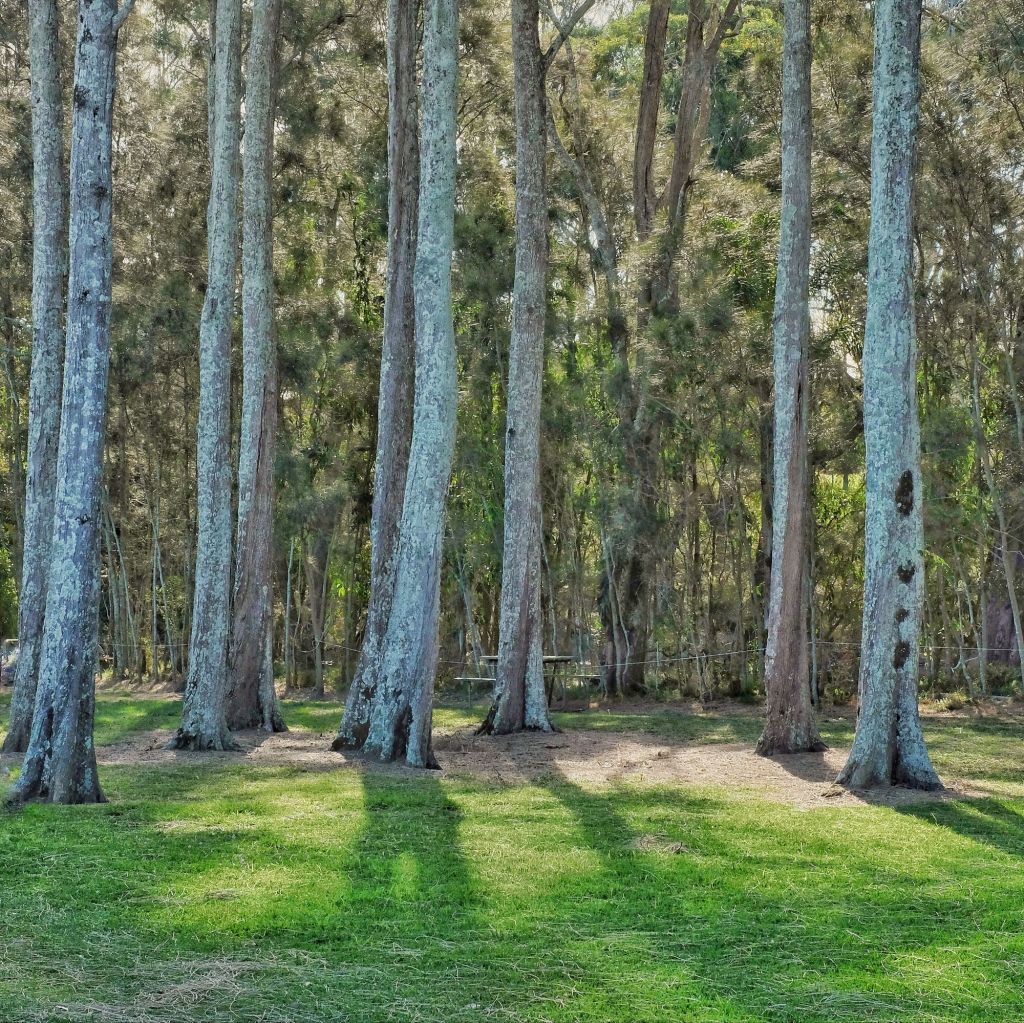
Gandhiji adhered to Ahimsa as his life’s guiding principle. While his style of living was to trust in Truth, he knew that at times, the way of least harm requires loving, compassionate discernment as we are faced with dilemmas of what’s right and what’s wrong in the infinite number of situations we are confronted with on a daily basis.

So, my friends, here is my poem. Read in peace.

WITH THE EYES OF THE HEART

I ate a hotdog once upon a time,
even though a vegan I am.
On the spot, split second decison; I considered it fine.
You see, as a fait accompli it was presented to me – by my Mam.

‘It’s a special vege kind I got for you.’
So the offered food I did receive,
though I clearly saw it wasn’t true.
Sometimes you need more than eyes to see what you believe.

My acceptance acknowledged her thoughtfulness
and validated her gesture of mother-to-son love.
So, to any karmic consequences, I will submit with grace.

Thank you for allowing me to share this story and poem with you. And even more of a thank you for reading how I learned a lesson about love and truth and how sometimes truth may actually sometimes need to be followed even if the so-called facts say different.

Blessings and love

Flee, Be Silent, Pray Always Part 3

Namaste and welcome

Well, here we are with the third and final part of our contemplations on Flee, Be silent, Pray Always, the answer discovered by our friend Arsenius who was looking for a way to be saved from the the things of the world.

In a very real sense, this third injunction might be seen as the most important of the three. Indeed, again in a very real sense, those first two seem to me to be prerequisites for the third. Certainly, many of us would like to flee to a place and state of silence in order to escape the world and its many and varied causes of our suffering. Such people are simply and completely over the noise, the chaos, war, greed, the complexity of relationships, and all the rest.

Then there are many many others who, rather than looking to escape the world, are wanting to ‘flee’ towards a place and state of silence in order to engage more fully with the world by contemplation, meditation, and most of all, prayer. Such people are working towards making their entire lives a prayer.

And then there are the third group which is made up of those who have some sense of running away from the world while at the same time they feel compelled to move towards a contemplative life that they sense will be the best way they can actually serve the world.

I think I can include myself in this last group. I’ve never coped well with masses of people, being in the workforce, or dealing with the horrors that the world seemed to be overwhelmed with.

At the same time, I’ve always wanted to (and have tried to) combat injustice, racism, violence and the rest. I guess you could sum it up by putting it this way: I was (still am) an oversensitive person who one day had had enough of trying to ‘fight the system’ when it was the system making and changing the rules of the game as it went along.

Better I thought, to turn inwards in order to reach or realise my oneness with all living things. I’ve always been predisposed to praying as well, so it was a natural evolution in many ways. My intention and commitment these last few years has been (and still is of course) to pray continuously and with all my being.

My prayer is for the release from suffering for all living beings and that’s my central focus for prayer. For me, it feels very much that I am a lot more use to others living what I think of as a prayerful contemplative life than being actively engaged with the world out there in the midst of it all so to speak.

Pray Always

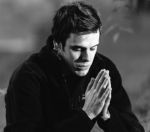
Prayer for me is not so much about petitioning some all-powerful being who is seemingly on a whim able to grant or refuse my wishes. For me it is more an affirmation of the reality of my already existent oneness with the entirety of the universe. It’s a way of seeking to actually realise that this oneness is my very Self.

Prayer is about being present, not wishing blindly that things be different than they are. In praying I seek to affirm that the ‘universe is unfolding as it should’, as it says in a famous poem I’ve always loved. (Actually if you don’t know about Desiderata [Things Desired] then please do check it out; you’ll love it).

I think that in this sense, prayer is in fact an act of mindfulness, or rather an act which will help develop a mindfulness practice. It is a way to practise being fully focused and present to whatever is going on, whatever circumstances we find ourselves in.

And if we’re able to be present – even on a temporary or momentary basis – then we will be more calm, more at peace, and more able to achieve some clarity in our lives and with whatever is the intention with our prayer.

I know it might sound like a clumsy attempt at a clever play on words, but we’ve described mindfulness as the practice of being fully present. But we can put it another way. We can define that state of being fully present as being in presence.  Like what we might say to a friend who is daydreaming while we are trying to talk to them. We might say something like ‘so and so, your presence would be appreciated’.
In presence of what? I would say everything. When we are absolutely in the present moment (again even momentarily), when we are able to realise our oneness with all things. Essentially the universe is there – or is it here? – with you in that present moment. It’s a moment when we may indeed feel we are in the presence of all that is.

Some may call that presence God, or the Divine, or Universal Consciousness. Others may see it as being in the presence of their own true and authentic Self.

That leads quite nicely to the next aspect of prayer that I want us to look at. Praying to God. I’ve spent so long on mindfulness because I wanted to stress that I don’t think it’s necessary to have a personal name or form for God, or even a notion of an unmanifested, invisible ‘force’ called God, in order to pray.

On the other hand for me, and I know for a lot of people, there are names and forms of the universal consciousness that pervades and permeates the universe, that I personally resonate with and I can reach out to them whenever the feeling or inclination arises. It sounds a bit odd to say, but for me to think that all that is, is all that is, sort of sums it up.

And as a result of that, any prayer  I pray is addressed to my own Self which is simply part and parcel of all there is. In other words, it’s a personal choice for any one of us what form or name we choose to pray to. Or if we don’t pray to a name and form at all. All is one.

One thing I’ve mentioned I think a couple of times is the idea of making all our activities into a prayer, but other than the discussion on mindfulness and presence, I’ve not really addressed the how and why.

Why is pretty obvious. Because living and acting mindfully helps us in so many way such as being more peaceful, more relaxed, happier, and so on. The how, now I’m thinking about it is the purpose of this post. And it’s also true to say we’ve been talking about it since this series began.

That is to say, we flee from the aspects of our lives that don’t serve us and which can be changed. This might be a decision to spend 30 minutes every day sitting quietly and undisturbed. And as we’ve mentioned a few times already it could be going all out and moving to a desert cave somewhere.

In both those scenarios we give ourselves the opportunity to be silent and, hopefully also surrounded by silence. How to pray always? There’s an expression I love and try to live by: Follow your Dharma. Here Dharma means your own truth, being authentic to who you are, having the intention to do what’s right in all situations. And of course actually following through with that intention if at all possible. In this way you transform every action into prayer.

Living a life of prayer does seem on the face of it to not involve much use of spoken prayers, as in saying prayers with words. Well, I don’t intend to be humourous here, but a great deal of prayer does it fact involve talking to one’s Self. To the real self, that part of us that’s part of everything else. It can do us good to have these deep conversations.

Then of course there are the many many prayers that already exist to serve people from so many traditions, cultures, to suit all kinds of purposes and intentions.

Many of us will be familiar with a number of prayers learnt when we were children. If you’re anything like me, they still pop up by themselves from time to time.

Actually as I deepen my prayer practice, I’m discovering that I’m remembering all sorts of prayers from many and varied sources. I think as I dig deeper, more and more are coming up to the surface.

This prayer (by Thomas Merton I think) resonates deeply with me

If these ‘pre-prepared’ prayers say what you want to say and in a way that resonates with you, then you are free to choose those that feel right for you. I guess I mix and match the prayers I use; it’s always dependent on my feelings, thoughts, and intentions at the time.

Like  Arsenius, I try to be open and responsive to whatever the ‘answers’ are, even though my ego does sometimes when it doesn’t like the answer, try and control outcomes.

One point about such prayers: I find it tempting oftentimes to simply recite them at what I’ve heard described as lip level. By rote and without emotion, in other words. At those times I try to slow down or pause to reflect on what I’m doing and why to get back in touch with Self.

A major part of my prayer life is chanting mantra. I try to spend more time chanting as time passes. There are a number that I use depending on inclination and need.

I chant anywhere and sometimes a mantra will start chanting itself, surprising me by its arrival

(This photo isn’t me by the way)

Now, probably one of the most important aspects of my own prayer life: I know I’ve mentioned my intentions in praying at all, but one aspect I haven’t mentioned is praying as devotion.

Devotion as in worship, praise, as in gratitude for the beauty in my life, as an expression of love. Knowing with the mind that all is one is fine, but these kinds of prayers help us to cement our awareness of that oneness of all living beings. As I said earlier, I, like you or anyone else, may use particular names and forms to represent this oneness, but, well, it’s all one, so we are non-different from all those names and forms.

Lord Sri Krishna is among my favourite forms of Universal Consciousness  (also known as Brahman)

There are many representations of the Divine, but Krishna and this picture of Him are special to me.

Focusing your devotion on a particular form seems to help make it easier or more real. It’s tricky to pray to and with a thing that has no form and is invisible.

So, my friends I hope what I’ve said here is of some little interest to you and that you have found at least something you can use for your own life.

With peace, love, and with my prayers

Paul