Cries of the Winged Ones

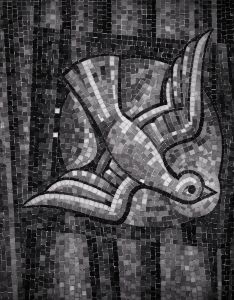
CRIES OF THE WINGED ONES

Just let go
cries the winged messenger
perched in the fence-corner tree.
Let go. Just surrender.
Surrender to what?
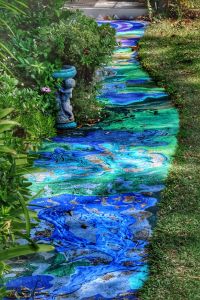
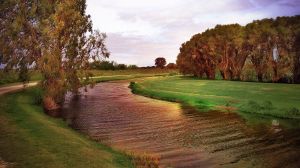
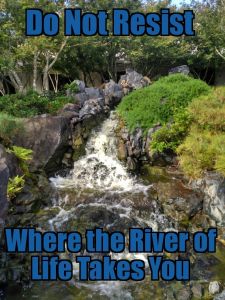
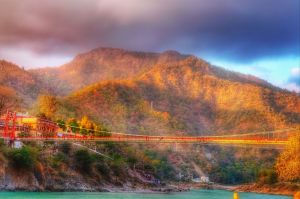
The river of life,
its flow, its vibe

Lord here I am,
I cry in reply.
Two beings, one Self.

The winged messenger cries

because she longs for us to listen

Not Talking About Time

If my life was ruled by ‘clock’ time (which generally speaking it is in spite of my many protests and despite my continuing meditation and other practices designed to assist in developing a sense of being fully present thereby enabling one to truly live in the here and now), I would be telling you now that there’s been a long gap between posts and that this has occurred because two and A half months ago I had a stroke and I didn’t leave the hospital untill less than a fortnight ago.
But there’s been no ‘gap’, the posts will carry on flowing along (or not) of their own accord; and while it is true that my brain and heart colluded in an action that has for now resulted in some damage to other bits of my body, the simple reality is that life has gone on doing what life does, and I AM still here, with perhaps a little more of a clue to the ‘how to live in the here and now’ as well as the whole ‘I AM THAT I AM and not the body’ mysteries.

Obviously, I’m not into swapping ‘You think your hospital stay was bad? Well let me tell you … .’ stories. Now I think about it, there are quite a few of the good, uplifting, kindness and compassion, decency and respect variety a couple of which I might write about if they decide they want to be shared.

But for now (when else is there?) I am here (where else is there?) trying to flow in the life I share with my partner hermit in our new (for us) hermitage just over the other side of the village Main Road.

All I Can Afford is a Loving Heart

Our post today is closely related to our last one. In fact, so close is the relationship, we can call them sibling posts, even twins.

Anyway to begin, I’d like to share one verse from a song I’ve loved and not loved for years. The song’s called You’re Just a Country Boy by Alison Krauss:

Never could afford a store bought ring
with a sparklin’ diamond stone.
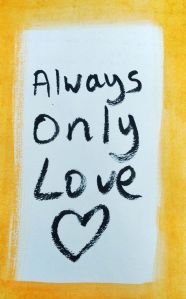
All you can afford is a loving heart,
the only thing you own.

It’s easy to start disliking this song right from reading the title: ‘Just‘? As in only? As in ‘Is that all you are?’. And ‘country boy’? What’s wrong with people – of whatever age or gender – who come from rural areas?

But, there is some to love as well: The lyrics are clever (cleverer than I’d thought, as you will see soon); the singer has a lovely and skilled voice that I like a lot; and there is a generally relaxed, easy listening kind of vibe to the whole tune.

Still, there is more to dislike: The song is addressed to said country boy, perhaps as well meant advice from a friend who is trying to let the country boy down easy as they say. ‘Get real my friend,’ she seems to be saying. ‘You have nothing that anyone wants. You’re poor, you’re from the country, and no way will anyone ever want you.’

The lyrics are like an affirmation or confirmation of what we know already: the world turns on material objects and money, and you aren’t anyone or going anywhere if you don’t have that stuff.

But, then on the other hand, there is much more to love. And this verse kind of sums it up. For the first time today, rereading the lyrics as I ate my lunch, I finally got it: it’s IRONY!

‘What?’ the lyrics seem to say. ‘You mean to say that the only thing you own is a loving heart? What use is that for goodness sake? Nobody wants that. Everyone wants money, jewels, and other material things’.

Well, I think I’d actually gotten it already; it’s just (there’s that troublesome little word again) that today is the first time the word itself came to mind. How ironic to come to the realisation of the irony of this song after all this time?

I like the use of the word afford. Clearly our country boy is broke, has no money, little material worth, and being a ‘country boy’ he obviously has limited prospects.

The irony is, of course, obvious: if one has a loving heart (or an awakened heart as we reflected on in our last post), what else do they need to be able to afford?

Our friend has most likely earned his loving heart over and over again anyway as he’s lived his life with its inevitable trials, tribulations, joys and sorrows. Riches galore right there. Afford? Of what value are material riches when one already possesses the most valuable asset to which a human being can aspire – a loving heart?

Just thought I’d look up the lyrics to another song I also quote from quite often. It’s also about that ‘all I have’ idea. The song is Words by the Bee Gees. These two lines I like:

It’s only words and words are all I have
to take away your heart

Or, as I might reinterpret it: ‘I know these are only words, but they’re all I’ve got to try to speak to your heart from my heart’.

If I’m to dig deep, be honest, and all that, I would have to say that this idea has been a major guiding force in and for my life in one way or another – whether I’ve been conscious of it or not. As has been aspiring to a loving heart, though that aspiration has at times been bogged down in the mire of the mess of life.

Words are good and sacred, and I’ve always seemed to have a lot of them (it’s not the words that are at fault, it’s the one who uses or abuses them). Really, as I think about it now, all I want is to continue using them – words – to express what’s in this (aspirational) loving heart.

All I can afford is a loving heart.

PS Now I’ve actually truly and really seen the irony in the lyrics, maybe I don’t have to dislike this song quite so much

In the Dream The Word Was Written

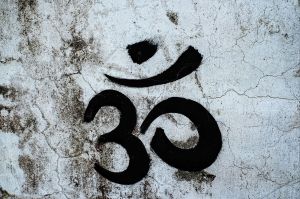
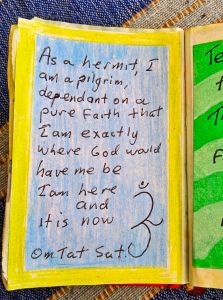
I dreamed I was drawing an OM symbol. Nothing else, no memory of a dream setting or situation, no other dream characters; only the view – as from my own eyes – of my hand making that sacred mark.

It is quiet during morning prayers today. At one point, after completing one prayer, I turned the page, and began praying the prayer there. Attentively and prayerfully, which is a really nice thing for me to notice because oftentimes I can be a lip level prayer sayer.

As I prayed, I was drawn to the part of that page labelled ‘blank space’. It was at that moment the memory of that dream began to arise.

Instinctively, without thought, I reached for my pen – this pen I now use to make these notes – and inscribed (as that dream memory seemed to demand) the sacred OM in that formerly blank space.

This all transpired as the memory unfolded; really only a matter of a just a few seconds of clock time. But, of course, what meaning is there to ‘clock time’?

In the beginning was the Word, and the Word was with God. And the Word was God. And the Word is God. No beginning. No end.

Om Om Om

PS Thank you John for allowing me to use your words. I know I have paraphrased and modified them a little with my own words, but somehow I don’t think you’d mind.

Flee, Be Silent, Pray Always: A Revisit

Courtesy Wikipedia

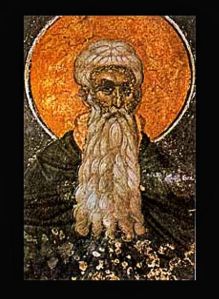
Recently I came across the story of Abba Arsenius – one of the early Christian desert fathers. I’d originally written about him a year ago in what became a short series of posts.

Coming across him and his story again prompted me to revisit those posts – the first of which you can read here – and I reread them again, though as if for the first time. Anyway, here’s a short recap before we move on.

Arsenius was a high ranking official for the Roman Empire, working for many years as a tutor to the sons of the Emperor.

Over time he grew tired of the glamour lifestyle, the politics, corruption and court intrigues, and looked for a way to free himself from the whole material trap he was in.

So he prayed, ceaselessly, the story goes. He prayed for salvation, for freedom.

And, in time the answer, according to the story came in just a few words:

Flee, be silent, and pray always.

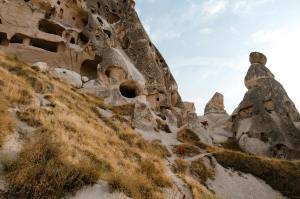
And he did. Flee I mean. He headed for the Egyptian deserts which is where he found that silence, and the space, peace, and calm to fulfil  his desire to be praying constantly. And, with some comings and goings, ups and downs, he stayed for the rest of his life.

Now, while Arsenius and his story are fascinating (in fact now I’ve rediscovered him, I’m going to look around  for a biography or something  so I can learn more), what I want to think about here is something I wrote in the first of those previous posts, and how it ties in with our decision (almost a year ago now) to stay in this one place for the present.

For these Hermit Pilgrims ‘fleeing from the world’  has meant a nomadic lifestyle, few possessions and material needs, a hermit life where our engagement or entanglement with the world is kept to a minimum, and in which we feel less of a pressure to conform, to ‘be shaped’ by the world around us.

The notion of staying in this one place – as fully now and in the present as we can be – is actually  paradoxically a fleeing of its own kind. The world of Samsara, the material world ‘out there’ continues to become less and less appealing to these Hermit Pilgrims.

Alongside this growing detachment to the world (as well as the loss of desire to move about in the world geographically speaking), is the deepening realisation that the real and true pilgrimage is within, through and to our own mind and heart.

Complimenting all this, is the growing contentment we are experiencing in this actual place, this hermitage of ours that we are creating on a daily basis. More and more it feels to be the exact place in which that inner pilgrimage is to continue.

Does this mean we have given up on that ‘nomadic lifestyle’? No, not at all. Or, more accurately, we are not niether giving up or not giving up. The present is all there is and we don’t – can’t – know anything beyond that. As the saying goes, What can we say about tomorrow?

We are here, and it is now.

with love
Paul the Hermit

Flowing With the River of Life: A Work in Progress

O Lord, I take refuge in You.
You are my sole guide, my master.
Show me the right path and
I shall follow it.

This is a prayer I like very much. It appeared one day in a previous incarnation of this notebook, then migrated to my prayer book. Its origins are lost in the mists of forgetfullness.

In any case, I like it – a lot. In a big picture kind of way it encapsulates much about the way I aspire to live my life; what I aspire to devote my life and energies to.

The prayer is addressed to the ‘Lord’ – to the Divine; to the Absolute Reality of (to borrow a favourite phrase) Life, the Universe, and Everything. Some will call this God, some think of it as the creator. For me it is simply Lord: all that is existence.

And it is there that I aspire to take refuge. I seek shelter in the knowledge of the rightness and order of the universe. Not an easy task when I think about the state of life ‘on the ground’ on our home planet; how the horrors can be almost impossible to grasp, to understand, and to keep from despairing over.

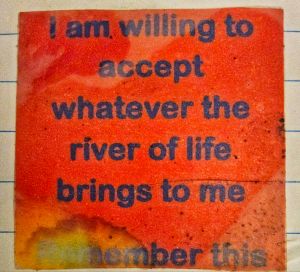
But a contented state of refuge, of safety, security, and even happiness, may be found, I sense, by a cooperation with what we might call the flow of the river of life.

And if I am to discover for myself that refuge, then there really is only one choice: to accept that flow of the river of life as my only guide to how to live, what to do, how to be.

Not surprisingly I struggle with the idea of cooperating with and accepting the often crazy and random nature of that flow of my life as my ‘sole guide’; how much harder is it to accept that very river as my master?

Again, if I ever want to be happy, if I ever hope to be free from suffering and attachments to those things that cause me to suffer, then I must accept and cooperate with the reality: the river of life is the master whether I like it or not. I may as well accept it.

Which absolutely and I hope obviously, does not mean I’m a fatalist, or that I am resigned to just let the currents toss me about willy nilly. No, not at all.

My deep sense (yet another site for other struggles) that the solution to suffering does indeed lie in an acceptance of the reality of the flow of life as it’s happening moment to moment.

By not resisting life and what it presents to me, I aspire to arrive at a state of acceptance where I might contentedly and freely ask what is my role here? What is the universe asking me to do?

If I can listen, and actually hear with the ear of my heart, then I might be able to discern the path, which if followed, will free me from suffering .

Then I shall be going with the flow, following the path of least resistence, and I’ll be contributing to my own smooth (well, smoother at least) ride through life.

You Can’t Try to Go With the Flow

Every writer, every painter, every person who makes things – and that includes all of us human beings – will sometimes get the feeling that they are never going to have another idea, or the inspiration, the creative spark or energy, to create anything ever again. Not ever again.

Certainly  that – what could we call it: crisis of confidence? Moment of fear? A feeling of inadequacy? The seeming loss of the desire to create? We could probably keep going with this, but let’s not.

Where was I? Yes. Certainly that, whatever we call it, comes over me really quite often when it comes to the writing of this blog. It’s become a standing joke in the hermitage: Whenever I’m asked if I have another post coming on, my most usual response goes something like:

‘No, and I don’t think I’ll ever write another post. The ideas are all gone. It’ over.

(As I reached for this notebook just now, I was asked that question and ironically I was able to answer with confidence and certainty, ‘Yes I do’.)

As I said, it’s a standing joke because, well, something always reveals itself to me, eventually. An idea, an inspiration, an insight is presented. Something I sense is worthy of sharing, always comes to me.

Having said that, there are times when I really do have that horrible sense that it’s finished, that I will never ever again receive an idea for another blog post.

But, here’s the great thing: Having become a standing joke, this perceived loss of ideas, insights, inspiration, the joke serves its purpose: It makes me smile, it treats the whole thing with some humour.

In other words, I’m not allowed to just get away with feeling sorry for myself. It cheers me up. It props me up a little, and gets a little part of my mind opening up to something new or fresh to write about.

There have been times during the journey of this blog when I have strayed from my intention for this blog. As it says beneath the blog title on the top of the page, this blog is meant to be:

musings on one hermit’s life and world

In the past, I’ve sometimes solved this ‘no ideas’ problem by writing about a topic from something I’ve read, teachings I’ve studied, or some other things not directly about me or my personal experience.

Lately (for some time now) I’ve resisted this ‘easy way out’, and tried more attentively to stick to the intention stated in my sub-heading – write about me and my experience.

Okay, it’s in fact not trying that’s the point, both with me writing this blog, and also with every other aspect of how I try (sorry, not try) to live my life.

Wu Wei it’s called, the path of least resistance. Certainly wracking my brain to come up with post ideas, and straying from intentions just so I can have a post, sets up much resistance on many levels.

You can’t ‘force’ musings, can you? If you muse you muse, if you don’t muse you don’t muse. It’s about letting it flow, or if it’s not flowing, let it be.

And here’s the interesting thing: it – the flow of ideas, insights, musings, whatever – flows at its own pace anyway regardless of my interference, angst, worry, or my forcing things to go this way or that.

My lesson for today – for my life too I pray:

Go with the flow

A Prayer Is a Prayer, Is a Prayer, Is a …

‘I’ll carry on with my Gita then,’ I said to my partner hermit after we’d been discussing something for a while.

‘I’m enjoying reading my prayers this morning. So I’ll read a few more then read a few verses’ (of the Bhagavad Gita).

‘Reading’ my prayers? Is that what I’m doing? Surely a prayer – prayers – are for praying? Anyway, not simply for ‘reading’.

Of course in this particular instance, the forms the prayers are taking – on the most superficial, worldly, material level –  are as words written by human hand (mine) on paper pages in a little book.

But, right now, the big question, the existential question really, is have I been merely reading those prayers? Or have I been praying those prayers?

Then there’s another, equally existential, concern that arises: How to know the difference. Reading? Or praying?

I feel like saying that the first thought that comes to mind – the first answer to reach the tip of my pen on this page – is this: Actually, the answer has come in the form of a rhetorical question:

If a prayer is prayed, how would it ever even occur to me query if  it is in fact a prayer, and not just words on a page to be read?

Yes, first thought best thought here I think. When a prayer is prayed, even if its form is words written on a page, there is a movement beyond those words on the page. In fact, there is a transcendence of all that is of the material world that takes place.

A prayer is what it’s always been: a prayer. The forms prayers take are, I think, literally endless, uncountable, and can never be submitted to categorisation by us humans.

Prayer is for praying, that’s the lesson for me. Just pray.

Slowly & Mindfully: A Reminder

Among the physical exercises I try to perform on a daily basis, are a couple for strengthening the hips. One of these begins with me standing upright, feet together, eyes level, looking ahead.

Then I swing one leg at a time for ten repetitions in a kind of arc like motion out to side, keeping it level with the side of my body, bringing the leg back to the rest position with feet together. It’s a pendulum motion.

Anyway I’d been merrily going along doing these exercises more or less every day for ages, months really, until one day my partner hermit was watching me, and said:

‘You’re supposed to be doing it slowly and mindfully’. Or words to that effect.

You see I had been quite happy swinging each leg out in turn at a fast pace, kind of like an aerobic sort of thing. Just to get it done if I’m honest. Wrong! Supposed to be slowly and mindfully.

Lift one leg slowly in an arc like motion out to the side of the body. Pay attention to the movement as it’s happening; no need to push the leg out, just lift it to a comfortable position. Just let the arm trail loosely and of its own accord, along with the leg. Then, again slowly and paying attention to the process of the movement, bring the leg back.

And I do have to say there’s been an amazing difference. I can actually feel the muscles working during the exercise, and can sense the minute incremental motion as the leg swings slowly. It’s a way better exercise than it was, and now I wouldn’t do it any other way.

I was reminded of this incident this morning as I came across a short admonition, a little reminder to myself I have stuck on a Table of Contents page in my Bhagavad Gita.

Go slowly and mindfully in everything

What’s interesting is that, despite seeing and reading this so-called reminder more or less every day, and despite proofs of the benefits of actually listening to the reminder, such as what I’ve just described with the exercise , the reminder seems to mostly go right over my head, in one ear and out the other as they say.

Today, for some mysterious reason, it actually got my attention. At the same time, again who knows why, it triggered a truly relevant and appropriate memory to act as a kind of metaphor to illustrate the point to me.

I suppose it’s stating the obvious, but I can say that doing that (or any) exercise slowly and mindfully – in a watchful and observant manner – acts as an exercise in presence. Otherwise I’d not be sensing or feeling the muscles and the movement, or the peace of no random thoughts.

Did I mention that, having corrected my modus operandi with that particular exercise , I’m feeling the benefits? It definitely feels like things with legs and hips are loosening up, getting stronger. I’m actually walking further now without my legs aching on me.

More than that, I actually find myself wanting to do the exercise as opposed to ‘wanting to get it done’. Why is this? Well, I think it’s because I’m yearning to rediscover that feeling of presence; it’s a bit like a meditation, and in the same way clears the mind of random thoughts – at least for the short duration of the exercise. Having said that, even a short duration clarity plays its part in reconditioning a stubborn mind.

So, mental clarity, good exercise for the body, for the heart, even the soul?I think it’s the perfect metaphor for how I aspire to be living my life.

Slowly and mindfully.