A Day of Silence Observed

A few days ago we observed a day of silence here in the Hermitage. Our initial idea was to have a day of less talking, more quiet, which we hoped would help us reach a state of silence. We timed our little effort to coincide with a similar event being observed in an ashram in India whose foundation teacher we admire very much. A way for us to perhaps associate with others on a similar path out there (in there?) in the invisible community.

It’s not that we don’t experience periods of quiet (no talking) and even the aspired to silence, we do. Quite often they can be reasonably extended periods too, when meditating, chanting, studying, and so on.

But, it does have to be said, that we do spend a lot of time talking with its associated thinking – and unthinking too; with its listening – and not listening.

Of course, there are things we actually want or need to talk about; just that for us, sometimes we end up talking about stuff that’s not needed, as well we fall into what we call the adharmic trap of gossip, judgement, needless repetition, and the rest of the not so right speech.

Anyway, we wanted our day of quiet to be as complete as possible, so we agreed to not even discuss mundane and practical things unless it was absolutely essential. (Who gets to decide what’s ‘essential’ and not? Good question).

Around midday on the day in question I made a few notes on how my day was going so far. I had a vague notion I would make notes periodically through the day as a kind of ‘casual log. Needless to say, an approach of such vague casualness resulted in the notes made at midday being the only ones to actually come into existence.

Still, even though the notes were made relatively early in the day, I do think that they are a pretty good summary of my feelings on the day as a whole. So, let me share those brief reflections with you now:

Thus far (about 12) we are keeping silence (or at least not talking) – mostly. Practical things are sometimes tricky, sometimes not. It’s easy for example to point to a cup which translates to ‘Would you like a cup of tea?’. The reply which was ‘no thank you but I would like half a cup of soya drink’ took a bit more translational effort. Due of course to an almost complete lack of experience in speaking without umm, speaking.

Mind you,only three or four actual words spoken, along with a ton of hand gestures and facial expressions, did result in the transmitting and receiving  of understanding.

PLUSES SO FAR  

A sample of what it is like to be quiet, and actually being in quiet. And a happy anticipation (along with a sense of relief experienced in the present) of not having to talk about all the tired old things: the weather, the world, the ins and outs of teachings, teachers or writers, as well as ‘other people’, which often end up in judgements, criticisms, and plain simple gossip.

Alongside this overall positive vibe, there is a kind of nervousness. Where it comes from, I can’t say; probably an anxiety to do with not talking about the usual things. Though of course it’s only been a few hours.

While there has been little out loud talking, my mind has been running crazy, and I’ve had a strong compulsion to keep busy. Put these issues with the nervousness? To be expected really I think given my lack of experience with intentional quiet.

One step at a time.


Well, clearly that compulsion to keep busy didn’t extend to further note keeping, but, yes I have to say I did keep busy. Ironically some of that ‘busyness’ did in fact result in a few glimpses of silence.

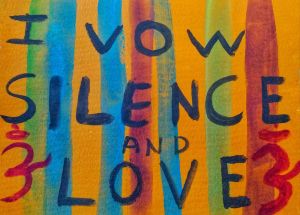
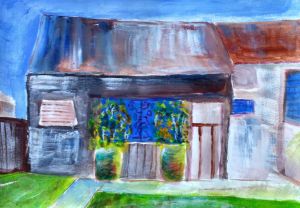
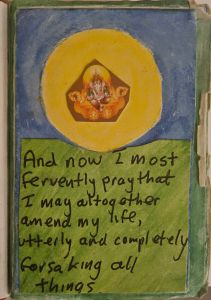
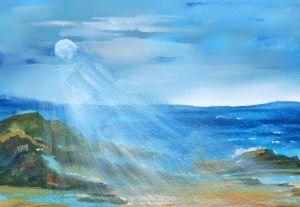
I spent time working on an art piece in a prayerful manner, and in a quiet state; none of the all too usual chatter. Silence. I meditated for longer periods than usual, which allows for a deepening of a quiet mind (in theory that is). And when I chanted mantra, I think I may have been a little calmer and quieter of mind than usual.

Clearly the cultivation of silence – and even the seemingly straightforward task of simply not talking – is a practice that requires more practise, quite a lot of practise in my case.

We need to develop alternative communication strategies – hand signals, signs, gestures – to minimise speaking even more. Having said that if we’re to develop silence then even communicating about mundane stuff in other ways would get in the way. Too much talking!

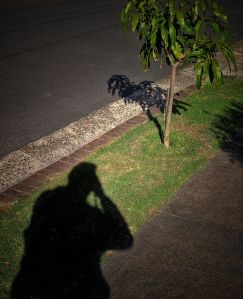
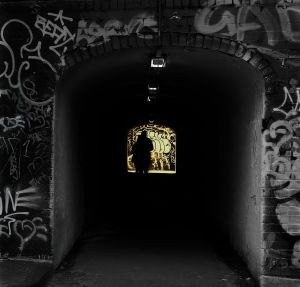
Well, I occasionally make photos out there in the world

One very pleasing outcome is that I feel slightly less inclined to ‘talk about the outside world’ and other people. Less idle chatter. It’s a good start and it can only get better with some of the aforementioned practice.

Actually, thinking about it now, you’d think that a hermit who rarely goes out of the Hermitage except for a walk or occasional visits to a shop, who doesn’t watch the news or social media and the rest, wouldn’t have a lot to gossip or blah blah about.

That’s why, you see, I say that I really do need quite a lot more practice. Making silence is a long term project, an aspiration if you like, to find inner peace and make myself more able to radiate love to the world.

Love and Peace

Paul the Hermit

Let’s Talk

I feel like talking more … Sorry. Start again. It’s not what it seems and, well rather than get into it now, just read on a bit and all shall become clear.

Anyway, there’s an old joke that goes like this: One friend says to another friend: ‘How come you’re always talking to yourself?’ To which the second friend replies: ‘Well, you see, I always like to talk to the most intelligent person in the room, so I look around and usually I find that it’s me. So I end up talking to myself’.

Okay, maybe not so funny. Could be taken as bad manners or rude come to think of it. But that’s how jokes often are isn’t it?

Anyway, and here we get to the little bit of clarity I promised, you’re probably going to remind me that I have often said I would like to talk less, and be quiet more often.

That’s still true, but this is different. You see, lately I’ve been feeling the need to talk more about various aspects of my ‘inner life’. You know the sort of thing: confusions and worries; niggling issues bugging me; that kind of stuff.

And my community hear and experience quite enough of my inner life, with its contradictions, mood swings, and the rest; I have no intention of being more of a burdon than I probably already am.

So, I look around and ask who’s left? Me! Myself! I! Not exactly the most intelligent person in the room, so there the joke breaks down, but it does indeed look like I might end up talking to myself after all.

Well, it’s kind of a yes and no sort of thing. ‘Myself’ is the individual with this mind and body, making these words appear on the screen. It’s the ego self, the me that’s the being who walks, talks, breathes, and … Well you know what else.

But, and this is the brilliant bit, if I separate the words to read My Self, will it’s a whole other story. For a start, Self is not ‘mine’. Self is that part of me that is consciousness; and it’s not a different entity than ‘your’ consciousness, or anyone or anything else’s.

So, if I start talking to this Self that’s actually anyone and everyone, and not just me, who is it that I am in fact talking to?

Sounds to me like I’d be talking to you, and you, and everyone else; to the trees, the birds; everybody!

And yes, that’s exactly right. For me, there is only Self – consciousness – that is indeed anyone, anything, everyone, and everything in the Universe, both seen and unseen.

In other words, I’d be talking to God; the Divine; the Absolute Reality; the Thou Art That described by at least one of the world’s great spiritual traditions.

Which is to say, I want – need – to spend some more time talking to, and in conversation with, God.

Phew. I’m glad I figured that out.

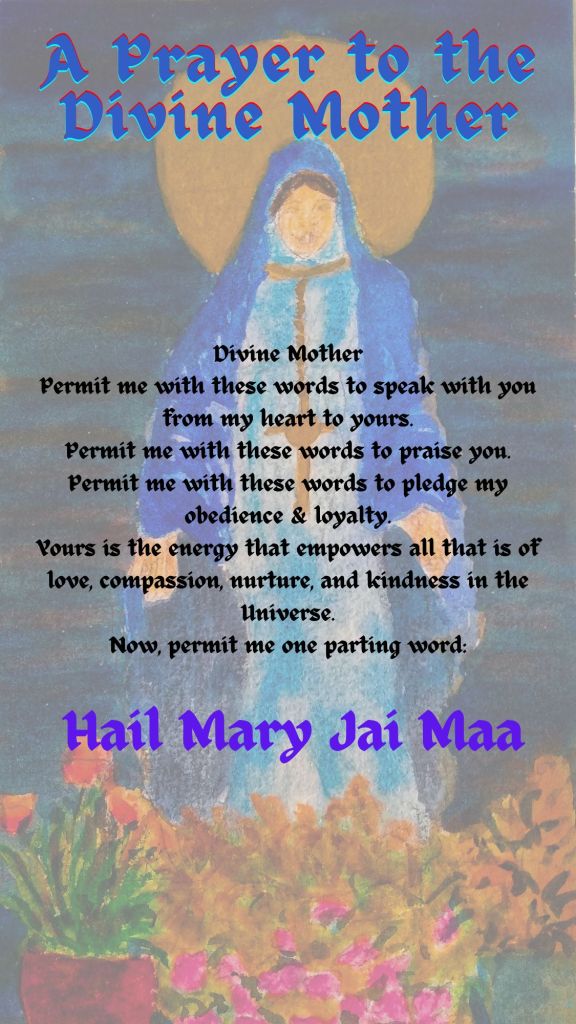
You might remember the prayer I wrote a while ago to the Divine Mother? Seems like a good place to share it with you again.

Love and Peace from Paul the Hermit

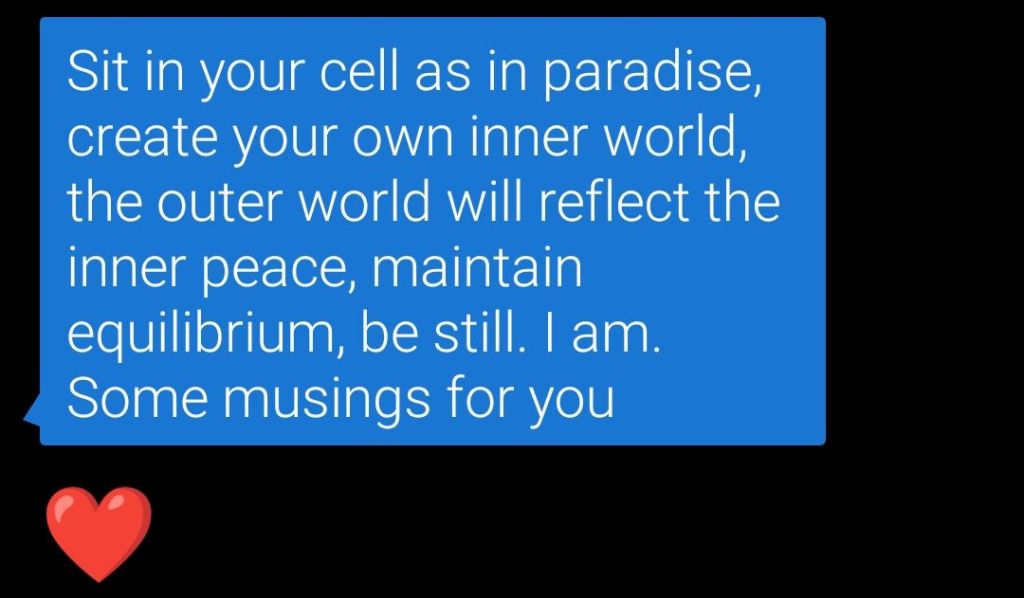
And in Conclusion: According to the Text Message

Welcome to the continuation and conclusion of the topic we were discussing in our last post. We are spending some time reflecting on a text message I received some days ago.

A multi layered text and one full of treasures on leading a purposeful and satisfying spiritual or inner life. If you missed it, please feel free to visit that post here.

In that previous post I included an image of the text in question, and we ended up looking rather deeply and prayerfully at the first sentence in the text:

Go sit in your cell and your cell with teach you everything.

In today’s post I hope to share with you my contemplation and rigorous reflections on the remainder of the text message.

So, let’s carry on with the next little bit of that text message.

Create your own inner world

This little gem speaks directly to the notion that it is your body and mind themselves that are the primary places in which you dwell; they are your cell that you carry around with you (or perhaps it is they that carry you around) always and everywhere.

And in that cell, where you dwell, you are the creator of the world. It needn’t be a fantasy world, as we might think of an inner world we create for ourselves. It need not be made up of wishful thinking, dreams, or endless thinking about the past, future, fears, regrets and all the other stuff we are prone to.

Rather it can be a place where you content yourself with the constant efforts to remain in the present; it can be a place in which your disciplined and focused mind and heart remain on those self enquiry questions which will ultimately lead you to the full realisation of who you really are, what is your true nature.

There’s a paradox here it occurs to me as I type: while everything that exists in the universe is simply a manifestation of Absolute Reality, (and that includes you and me obviously) the only way to actually discover or realise this knowledge is by delving deeply in our own hearts and minds – and sitting in our cells. We won’t find it ‘out there’.

The outer world will reflect the inner peace

So, with all this inner – self – enquiry cause the big shift? Will you see and experience only bliss and happiness? Will the ills of your body suddenly vanish never to return?
Well, yes. And no.

No because as living entities we are able to do our bit in making our lives what they can be; we can do our part in keeping a healthy body and mind; we can play our part in making the world a better place for all living beings.

Ultimately, though, it is the natural order, the natural laws of the universe that controls, directs, and manifests how all of the material world – including us obviously – operates and works itself out.

Yes, because the committed and rigorous discipline necessary to sit in our cells and enquire into our true natures, will over time and step by step help us to change the way we look at all the troubles and events of the world and our own minds and bodies. Our perspective will undergo a big shift (not quite the one mentioned earlier; this one’s for real).

You see, there are three sources from which our suffering come from: other people, nature, and our own bodies and minds. Self-Enquiry will lead us to realise that our true nature is in fact the totality of all there is, the Absolute Reality.

After this realisation of the truth of our natures, the sources of suffering (other people, nature, and our own body and mind) are still going to be there, going about their business as usual. It’s just that we won’t be as affected by them like we were before; we won’t suffer as we once did.

Maintain Equilibrium

Having read this far you might well be thinking that, yes indeed, the realisation of our true natures, the evolving knowledge that we are not simply the mind and body, and that we are in fact the Absolute Reality, just might lead to a life of balance, of equilibrium. Of calm in the face of crises and problems, peace in the wake of strife.

Well, umm yes, that’s all entirely true. But as for me, I can say I’m nowhere near that state yet. And I suspect nor are most people, and most of us will be trying for a few more lifetimes (if there are any more that is) before we make it.
Mind you, equilibrium does seem to come in little bursts, like a kind of reconditioning process. Sometimes I realise that I am indeed acting more calmly, with more equanimity to situations that might once have thrown me completely off balance.

I’ll admit, though it’s an issue that frustrates me (you see? That proves I’m still identifying with and attached to, the idea that I am a body and mind only). I ask myself, how come with all the spiritual practice, the meditation, and all the sitting in my cell, I can still suffer with annoyance and irritation or collapse with existential angst, rant at injustice … You know what I’m talking about.

All I can do, all any of us can do, is persevere with the enquiry into self; Who is it exactly that’s losing it right now?
Of course it’s ‘me’, but is it really? It is the mind and its emotions and the ego. But it isn’t me, and it’s not you.

Be Still

One of the beauties of this wonderful text message, is that the individual injunctions have built – are building – one upon the other in a nicely logical and understandable way.

Now, the advice to be still: Of course we can take it at face value and take it to mean we are to literally sit with our bodies very still in the one place, in the one spot. Not moving.

Well, it seems the Desert Fathers and Mothers  had a saying or a word of advice to fit every situation. I came across a quote from Abba Ammonas, that sits as a kind of caveat, or perhaps a sort of reality check when thinking of sitting still:

A person may remain for a hundred years in his [sic] cell without learning to live in the cell.

Meaning obviously, that thinking we are still doesn’t mean we actually are still. Well, yes it does actually. But it’s only a part of the picture that we name stillness.

For example, right this moment I am making these notes, I’m looking up references online, listening to Bob Marley on my headphones, and every few minutes I’m taking a sip of tea.

Yet I feel quite still. I sense real focus on every one of these particular tasks as I’m performing them. I am feeling pretty calm and even a tad relaxed. Believe it, for me these are big achievements. Actually this very much speaks to a concept called Action in Inaction, and Inaction in Action. If you’re interested, there’s a fascination article here.

In other words, I think I am actually being still. My thoughts are focused as I said. I’m even in the moment well enough to pause everything else to listen to something from Bob in my ear that speaks to me.

I don’t think anyone can tell you how to be still. Not only is it going to be different from every one of us, being still will always vary and fluctuate in quality and degree. You might say it’s one of those ‘it depends’ kind of things.

I am

Ask yourself: Who am I? Usually the answer comes back: I am … followed by a name, designation, label, an identity of some kind.

Nothing wrong with this. In fact it is natural: it’s how members of our species place ourselves – and everyone else – in the order of things; we need to know our position and that of others in order to negotiate our way through and in the world.

So, what happens when I ask myself that big who am I question? Well, I could answer: I am Paul, I am a hermit, I am a writer, I am servant of God, I am tall, I am a friend, I am a …

Stop! These are all things I do or roles I take on and fill by choice or otherwise. They’re not me, though they are ways for me to describe the ‘me’ that exists and acts in the material world.

It seems according to Ramana‘s teachings on Self-Enquiry that the only way we can discover who or what we are is to list instead what we are not.

Neti Neti it’s called: not this, not this. But most of us feel very strongly that we do in fact exist. In other words we are – or referring to myself – I am.

If I’m not to confuse myself with the misidentification , the temporary labels, and other limiting beliefs as I try to answer my own Who am I? question, then the best I can do is metaphorically shrug my shoulders and answer, ‘Well, I am’.

Which means I think we’ve reached the point where we may finally realise that there is actually no answer to our enquiry; we simply are.

There is nothing to ask; nothing to answer. Only pure being, as in existing: the Absolute Reality. There’s nobody to do the asking.

And in the example of this text message the expression I am, speaks as a kind of signature of the text sender. No names, no labels or self-identifiers or anything else. I aim.

Some musings for you

Last, but most definitely not least is this, a final PS if we can call it that. A reminder that I am to contemplate on all the above, that I am to reflect on the words of the text.

And I’m very happy that I’ve spent this time sharing that contemplation, those reflections, with you.

I am. You are. We are
(actually there is only I am, but you know what I mean

When You Say It All in a Text Message

It wouldn’t be quite correct to say that I never get calls or texts on my phone. What would be correct is to say is that the vast majority are to do with what I might call The Bureaucracy: Reminders of Doctor and dentist appointments, notices from various government bodies, library notices; all that kind of thing.

And there is another emerging category that’s actually a lot more welcome: while my partner hermit and I have always phoned each other, lately we’ve been texting more and more as an extra way to communicate with each other.

Sometimes these texts are about the mundane things we all have to do in the world, but then there’s another dimension in which texting allows us to keep in touch with each other’s feelings, thoughts, doings, and simply as a means of keeping the connection open and strong.

The other day, for example, such a text arrived unannounced in my phone. Like some I get from The Bureaucracy, this one was essentially a little series of reminders. But rather than being about the things of the outside world, these ones, in this text, spoke directly and deeply to the enrichment of the inner life – my inner life.

Powerful messages, all of them, that really go to the heart of one’s (my) efforts to live a life more centred on my spiritual quest and my commitment to living more in sync with Absolute Reality.

On first reading of this text (and on each rereading, of which there have been many), I really felt strongly that I needed to contemplate deeply and prayerfully on the pieces of this whole. And, as well, to share my reflections with you.

Sit in your cell as in Paradise

This little – yet tremendous – injunction references an answer to a question posed to Abba Moses, one of the early Desert Fathers:

Go sit in your cell and your cell will teach you everything.

Essentially Moses’ advice is, remain within the confines of your dwelling place – whatever and wherever form that place takes. This can be a literal geographical location, or even your own body as it moves in the world. We all have a body, we all dwell there.

Sitting in one’s cell is not a simple or passive activity. It is in fact hard work as we wrestle with the mad monkey mind, and attempt to grow spiritually.

So, what about the ‘as in Paradise’ bit? Well, to me this feels very much like thinking of one’s cell as the place to be. What I mean to say is that it’s the only you can possibly be in right now, in the present of the here and now.
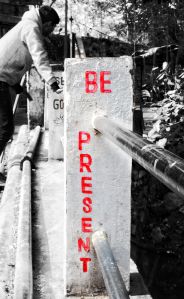
It’s not about judgements of is it good or bad, pleasant or unpleasant, painful or not. Just acceptance of where youu’re at right now. Doesn’t mean you’re stuck there and by no means suggests you resign yourself to your circumstances. It simply means you see it like it is, at this moment.

And it’s about understanding that, while you are in that place, it’s where you know you need to be. Your cell – your dwelling place – has within it everything you need to live, grow, learn, and prosper in the spiritual life.

Whatever the ‘place’ you are in is like, we can try to cocoon ourselves, make a space within the space, even if it is just being aware of our bodies sitting in the space. Cocoon myself is an expression I’ve been using lately to describe the act of isolating myself in any way I can from my surroundings. This can apply on the macro scale or the micro as we seek to centre ourselves and find quiet and a peaceful place.

It’s not as if in this cocoon (or whatever it might be)  that  all will be bliss and light all of a sudden. No, I think the suggestion here is we try to develop an attitude of non-attachment towards the things of the world that trouble us, those things that cause us suffering, precisely because we are attached to them.

That is the purpose of sitting in your cell. That is the everything that your cell will teach you.

You know my friends, I’m a bit weary tonight, and with your permission I will continue with this sharing of my contemplation, my reflections, in my next post.

Thank you for staying with me.

Peace and love

Paul the Hermit

The Q&A in the Scripture Part 4

A sooner rather than later return to our supposedly occasional series on the Q&A between Uddhava and his cousin Krishna on the eve of their departure from their soon to be engulfed in the nightmare of war hometown.

So, why sooner? After all it’s not been that long since our last installment. Well, I was just reading through my notes and the questions and answers we’re looking at today just sort of jumped out at me, asking to be contemplated. So, here we are then.

It’s another two-part question, but unlike with previous questions, we can look at these two in the one post. The reason being that the answers to both questions are, if not quite the same, are very closely related, as are the questions, come to think of it.

Okay, to the questions. Uddhava has already worked through quite a list, but now he gets to, what seem to me to be a couple of biggies:

What are reality and truth?

You see? I did say they were big questions. When you ask what’s reality and what’s truth, then you are really reaching for, well, I guess, what’s real and what’s true. No dilly-dallying, just right to the heart of things.

But, why these questions? Well, look at it from Uddhava’s perspective: his whole world, the only home he’s ever known, is about to be devastated by war. His world is completely turned upside down as he prepares to leave for an uncertain future perhaps never to return.

Like any of us, he’s probably on the verge of despairing, wondering to himself, ‘Is this really happening? I can’t tell what’s real anymore.’

Well, Krishna’s answers are short and succinct, and to the point. A lofty point, but then it would be wouldn’t it, coming from God?

Anyway, his answers:

Reality is seeing all the same.

and

Truth is the true speech uttered by the wise.

Reality does sound very dull if we take Krishna’s answer at face value. But he’s not talking about what we see with our physical eyes; he’s meaning seeing as in understanding, true realisation, as in ‘Ah yes. I get it now.’

But, ‘all the same’?

Obviously all the various beings in the Universe have their own unique names and forms and attributes; clearly they are not tall the same.

No, what Krishna is getting at here is that all beings in the Universe, all living and non-living things, are manifestations of the Divine. At that level all beings are one as the Universal Consciousness that pervades and underpins all that is in existence. Actually it’s not exactly right to say pervades and underpins: rather, consciousness is all there is, and that all is the Divine.

In other words, all beings are one and the same divinity. All the rest, all that we are and see and experience in the physical world are just those names and forms.

I’ve been told that there can’t be any exceptions to this reality, because there is only the one reality. Reality is non-dual in other words. One without a second as I like to say sometimes. One not followed by two and so on. Seems to me to be a simple way to describe this mind boggling (more like mind exploding) concept of nonduality.

Now, to the answer to Uddhava’s second question. Who are these ‘wise’ who utter ‘true speech’. And what is true speech anyway?

Well, the wise are those who have fully realised for themselves the answer to the what is reality question we just discussed. As you might guess, that’s a very small group of enlightened people.

Having said that, the answers to both questions mutually support the other. They each reinforce and promote realisation or understanding of the other.

Ritam (the Sanskrit word Krishna uses for Truth in his answer) is ‘expressive of the whole truth’, one dictionary tells me. It adds that it’s also a state of consciousness, though it’s probably more accurate to say that the ‘whole truth’ is a state of awareness, a state of being.

True Speech, is not just about what comes out of our mouths when we speak. Of course it can and does include what is spoken, written, thought and so on, but also encompasses our lives as a whole. It’s a state of being as mentioned above, and true speech includes all how we are in the world.

In other words all our thoughts, words, and actions.
True speech has to, obviously, be true. Sounds redundant  to say so, but because it’s not only about what is actually ‘spoken’ in words, it makes sense to mention it.

True Speech has to be pleasant. I think this isn’t to say that all that is true (in the world of matter) is necessarily nice; I think it means that in our attitudes, actions, speech itself, and thoughts towards other beings and ourselves too, we should be guided by courtesy, consideration, compassion, generosity and kindness. Love thy neighbours and thyself, in other words.

Last but certainly not least, True Speech is beneficial. In other words, your actual spoken words, as well as your thoughts and deeds in your life as a whole, should be intended to be beneficial for all concerned (which once again and significantly means you as well), or at least with the intent of causing no harm.

True Speech, the Truth, or Honesty, in our thoughts, word and deeds, come with these, what we can call three criteria. Just because you hate a new freind’s new hairstyle and you feel an obligation ‘to be honest’ doessn’t mean that if you hate it you are                           required to tell them it’s ugly and add for good measure it doesn’t suit them. That ‘letting it all hang out’ version of so-called ‘honesty’ is nothing of the sort, and doesn’t meet the criteria for being True Speech.

I mean to say that while it might be true in your opinion, and you deliver the bad news in a nice, pleasant and charming manner, still does not make up for the fact that, far from being beneficial to anyone, your supposed honesty is in reality hurtful, even cruel.
So, the reality – as in there is only one – is that I, and you, along with all other beings, are one consciousness . Our bodies, minds, our individual lives and ways of being in the world, may all be very different, and transient, but consciousness is one, whole, indivisible, indestructible , and never changing.

And, if we as individual entities inhabiting physical bodies, would like to act out our lives as expressive of that absolute reality that is our true nature, then our every thought, word, and deed, needs to be an expression of our acknowledgement of that oneness, that unity of one.

In other words, the only reality is that we are in fact that self same True Speech we’ve been talking about. To become wise (borrowing Krishna’s word here), all we have to do is be true. We need to fully realise that we are in fact Truth, and that Truth is all there is.

That’s it really. That’s the Reality.

When Love is a Yoga and Lovers are Yogis

There was light at the end of the research tunnel

These last few days I’ve been researching and thinking about an idea for a blog post. But I’ve come to realise that I am grossly underqualified to write about the topic I had in mind. Let me put it another way: I am completely and utterly unqualified in any way whatsoever to go there. In fact, after all the research, I think I’m going to disqualify myself from ever going there in writing.

However, I’m a great believer in the idea that no quest for knowledge is ever a waste of time or effort; there is always something to be learned. During my research I came across a topic I believe I am qualified to discuss, as it forms an integral and vital part of my own personal spiritual practice.

Why I’ve decided to write this post, though, is because I made a discovery that lead to an insight that I know will lead to a great progress in that practice. It’s nothing new, not really, but it was one of those occasions we’ve all experienced of ‘I knew that, but now I really know it.’ For me, it was a realisation of something that till then had been a nice cosy theory and belief.

Bhakti Yoga is that practice. It is really a key foundation, a valuable component of my spiritual life.

Wikipedia opens its entry on Bhakti Yoga (see the link just above) with a description of the practice that mirrors what I think is the traditional understanding of Bhakti Yoga:

Bhakti Yoga (also called Bhakti Marga, literally the path of Bhakti) is a spiritual path or practice within Hinduism focused on loving devotion towards any personal deity.

In the same entry there is a description of the origins and meanings of the two words, Bhakti and Yoga:

The Sanskrit word Bhakti is derived from the root bhaj, which means “divide, share, partake, participate, to belong to”. The word also means ‘attachment, devotion to, fondness for, homage, faith or love, worship, piety to something as a spiritual, religious principle or means of salvation’.

The term Yoga literally means “union, yoke”, and in this context connotes a path or practice for ‘salvation, liberation’. yoga referred to here is the ‘joining together, union’ of one’s Atman (true self) with the concept of Supreme Brahman (true reality).

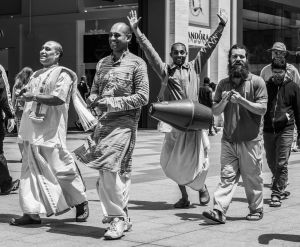
For some, dancing while chanting the names of their God, demonstrates their devotion and celebrates their union with each other and with God

In other words, those called to a religious or spiritual life, practise Bhakti Yoga whenever they pray or otherwise express devotion towards their personal conception of God, or the Divine. This particular definition seems to be saying that such a conception of the Divine, or God, is in the form of a personal deity who is a kind of representative of true reality, which the devotee is aspiring to join with.

Some Bhakta Yogis are full-time, full-on practitioners. People like contemplative nuns or monks, hermits who retire from the world into seclusion. Anyone basically whose entire life and activities are spent in devotion.

So, when I discovered all this, I became intrigued; I decided to go off on a tangent and explore the word Bhakti itself. Wikipedia has a separate entry for the word on its own:

Bhakti is a term common in Indian religions which means attachment, fondness for, devotion to, trust, homage, worship, piety, faith, or love. In Indian religions, it may refer to loving devotion for a personal God

is often a deeply emotional devotion based on a relationship between a devotee and the object of devotion.

In ancient texts the term simply means participation, devotion and love for any endeavor.

May refer to devotion to a personal god? While I thought this entry doesn’t contradict our first quote above, it does seem to broaden, and deepen, the meaning of Bhakti. Expand might be the better word.

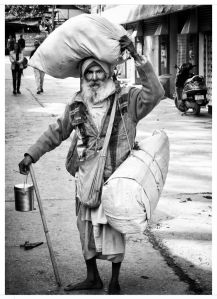
In some traditions a simple life on the road is a way to commit full time to Bhakti or devotion.

It struck me that that object of devotion might be anything. Or even everything. You see? I told you it wasn’t a new idea. It’s just that it’s resonated deeply within me now. It appears that the object of Bhakti Yoga practice doesn’t necessarily have to be a ‘personal god’.

Many many people would say ‘I like animals’ or ‘I think we should save the world’. But, while that may imply a kind of love for or at least a fondness for, I think Bhakti is something more – actually several somethings more!

For example, some people have a particular attraction to and love for, the ocean, or it might be a river they view as, if not sacred in a religious sense, then as special to them in some deep, comforting, even therapeutic way. Others have similar relationships with and feelings for trees, or even a particular tree.

Animals as either individuals or as a species or group, can have the same appeal and call to other people. Then there are those who feel strongly in their hearts you could say, that Earth itself is a sacred object, or others have a knowing that the planet is a living entity and worthy of our devotion.

Bhakti begins with love and devotion, which is about caring for, affection towards, loyalty to, emotional engagement with the object of devotion. But even more than that, there is faith in that object of devotion; faith as in trust, confidence that the love is real, that the ‘relationship’ is sound and real.

Homage and worship too are key aspects of Bhakti. The deep inner feeling we have towards a thing, person, or other being, that is beyond what we normally call ‘love’. It’s about seeing and actually realizing ‘in our hearts’ our desire to be merged or united with that thing, person, or other being.

Actually, seeing that word other just now got me thinking. I had to go back and reread our definition of Yoga up there near the beginning. It says Yoga means ‘union, yoke’. It goes on to add: yoga refers to a ‘joining together, union’.

This passage seems to be suggesting that Yoga (in our case Bhakti Yoga) is both an already existing union, and a process of joining together to achieve union. One thing I would say here is that in my practice of Bhakti (and love as a general thing to strive for and be) it’s both.

Trees are special beings for many people from a whole variiety of cultures all over the world

But, in the end, it seems to me that the process or practice, the path of Bhakti, serves to awaken us, to assist us to acknowledge, recognise, and realise in that really knowing way, our pre-existent true nature.

That true essential nature can be said to be the reality of our oneness with all things, living and non-living. And their oneness with us too of course. In fact, by putting it that way, I’m saying there is only one, or oneness. What’s that expression? One without a second.

May you be a Bhakta Yogi. Or, perhaps you already are one?

Love and peace from Paul the Hermit

Life has manifested itself as the multitudinous forms that comprise the universe. It is the one Universal Life, Power or Shakti (the laws of the universe or natural laws) that controls, guides and actuates all movements and activities in all beings, creatures and things.

                — Swami Ramdas

Wish for Truth and Honour with your signature

Maybe fifteen or so years ago, I reconnected with a good friend, after losing touch for a while (we’ve lost touch again). This friend used to send his poetry to friends on his email list, and after reconnecting, I was reading through some of those old emails.

I began to notice, as I read, that along with his name, he signed each email with a really lovely sentence which at that time I’d not heard before:

Vishwa dharma ki jai

This is Sanskrit and obviously I had to look it up. Not only did it read so nicely in Sanskrit, the English translation, was just as striking: it translates to: ‘victory to universal truth and honour’. When I read this translation, I was moved. What a beautiful way to sign off an email, or (age warning here) or a letter on paper.

(And, just rechecking online now, I see that there are songs, magazines, and organizations, that carry this expression as their name or slogan. Do a search for Vishwa dharma ki jai)

what about this as a signature?

Now, I don’t have a problem with ‘yours sincerely’ or ‘kind regards’ and so on, as ways of signing off a written communication. Indeed, I think those salutations (is that the right word?) can be meaningful and can carry heartfelt and sincere wishes from one person to another.

However, as with a lot of things we do ‘automatically’ and as a matter of course, these expressions seem to have lost much, if not all their true meanings. In fact, how often do we get emails with no such signing off, and with merely the sender’s name at the bottom?

Actually, now I think about it, I remember some emails that don’t even carry the sender’s name as a way of signing off. Now, that seems on the surface to be a rude omission, but in reality it’s not rude nor is it really an omission: people and the way they communicate are changing; I guess some of these so-called ‘niceties’ are just naturally going to be lost.

So, I thought after reading the Sanskrit salutation, hey,  I would really like to use this beautiful expression as my ‘signature’ for emails. What better salutation for a truth seeker (that’s me) to sign off with? And I’ve been using it ever since.

It might be that a wish for the victory of universal truth and honour sounds a bit old fashioned, a bit formal even. Not at all: how up to date, how necessary even, in our fast-paced, materialistic, and sometimes lonely and corrupt world, is it to seek truth and to act with honour? Honour isn’t the fuddy-duddy, formal term you might think. Look it up: it’s about honesty, truth, right behaviour, integrity, all that good and right stuff.

So, I’m going to continue using this great salutation whenever I can. And my message to you, dear reader?

Flee, Be Silent, Pray Always Part 2

Welcome friends

Thank you for bearing with me as I chose to post a short story before I got onto this post, the next part in our small series. Actually, I hope you enjoyed the story, and if you missed it, then please feel free to have a look. You will find it here.

Anyway, welcome to Part 2 in our little series of contemplations on the answer that Abba Arsenius received to his question: How can I be saved? (from the world with its  sorrows and noise and traps of all kinds)

The answer he heard from deep within his own Self – what he called God -was the succinct, to the point, no nonsense:

Flee, Be Silent, and Pray Always.

In Part 1 we realised that fleeing (from the world) doesn’t necessarily mean we have to leave everything and everyone behind and go live in a cave in the desert as he did. For some of course it might mean exactly that or some 21st Century equivalent, but I think for the vast majority of us, fleeing simply involves some modification of our current lifestyle, changes to our habitual ways of thinking and behaviours in order to rid ourselves of attachment to and entanglement in the things, situations, and people in the world that aren’t working for us.

And, now, in this post we will spend some time in contemplating the second injunction given to Arsenius: Be Silent.

Be Silent

I haven’t actually given a lot of thought to this topic since our last post. Nor have I done any online research, or watched YouTubes (I checked for fun and there seems to be hundreds, maybe thousands) about silence.

No, at least in this I have tried to remain silent and simply wait for the post to come together of its own accord in its own time. Perhaps this decision came from that same place Mr A heard from when he had his question.

So, what does it mean to be silent? Well, as I just mentioned, there are seemingly unlimited answers out there just waiting for us to grab on to. The better question would probably be, what does it mean for me to be silent?
First thing to say is that I’ve come to realise (okay, it’s an ongoing process of coming to realise, not there quite yet) that there is absolutely no person, no circumstance, and no place that I can rely on to provide me with silence. So, I’m coming to accept, there is no point in looking anywhere, or to anyone, as the source of silence, at least not in the physical world.
Of course, one key element of achieving silence may be the absence of noise. Maybe. so living where there is less traffic, less focus on materialism and commerce, fewer people, less media imput (news, TV, Internet, and all the rest) might be a place for some to start.

Even if it isn’t possible to to avoid all these things completely, I try to drop or change the things I can which for me sometimes at least, gives me a chance at a little silence.

Having said that, I’m reminded of an aphorism I once read: A hermit living alone, in a cave on a remote mountain, away from any kind of road, no radio, TV, etc, is never going to manage to be in silence if his mind and emotions are always busy with thoughts, memories, desires, fears and other emotions.

On the other hand a person living on a busy city street in the midst of all kinds of chaos and noise, may be living in perfect silence. If they have a still mind, steady emotions, that give them the ability to ‘sail through life’ as the saying goes.

But what about me? Well, this prayer says it all In order to achieve a state in which I can actually be silent, I am attempting to amend my life – utterly and completely.
I can be quite self-critical on this, badgering myself with desperate questions how come I can’t just be silent (and quiet in the accepted sense of the word as well). It’s a dilemma which frustrates and disappoints me. But, to be a little fair to myself, I suspect I’m not very different to most other people when it comes to silence. After all, if it was so easy, how come we need thousands of books, articles, YouTubes on how it’s done?

As mentioned, the absence of noise isn’t necessarily a prerequisite to achieving silence. But, I have to say, that for me, it’s pretty important. Being surrounded by the noise of the world, as well as my own hyperactive mind and seesawing emotions, are for me blocks to silence. Though, when I think about it, there are glimpses, even when one of our temporary hermitages is on a busy street, or under an airport flightpath.

As a bottom-line starting point, I don’t watch or read news; I don’t (anymore) randomly scroll the Internet even when ‘looking for something to watch’ on YouTube. And of course I don’t use television. Ever.

I’m not saying that when I do watch a video online that it’s always only spiritual or holy stuff. Nor do I only read books about saints and spiritual matters. Mind you, I would say more and more lately I’ve been tending in that direction. It’s just happening naturally I think.

A reason for that progression is effects of the amount of time I spend meditating, chanting mantra, and ‘just sitting’. Never enough time spent, but I’m getting there.

In all these three activities there is of course always lot of mental noise trying to mess things up. Not to mention the dreaded external noises. But, even then, there are gaps, spaces between breaths, pauses between repetitions of the mantra, and even when just sitting there are (if my mind has mercy on me) little moments free of thoughts, fleeting gifts of silence.

I think most of us have a tendency to focus on the problem of noise and disturbance, both external and internal, and ignore those fleeting little moments of silence.

With the momentary absence of thoughts it’s like when we ‘get lost in a beautiful piece of music’ as my teacher says. We’re still there, we can still hear, it’s just that we – as in our ego in one of its many and varied forms, our mind – is absent. And that means there is silence. Then we are in that legendary blissful state of being one with the music (or whatever the activity we are ‘lost in’).

Because our thinking mind seems to be absent (no thought equals no mind), there is nothing to judge whether there is silence or not. Just as when we are in deep sleep, as opposed to the dreaming state, there is silence, the absence of thought; no ego dialogues; all is silence. That’s why often don’t realise we have achieved that silent state: no mind to record the experience, so when we do resume thinking, we assume we’ve not stopped thinking at all.

Despite these many years of meditating, chanting, and sitting, I seem to still expect something spectacular to occur. Some blissful state, some revelation of enlightenment, or some other magical happening, maybe visions or some genius idea or something. It’s not a rational expectation of course, but …

Yes. It’s still hard to let go of the search for some kind of ‘signal’ buried under all the ‘noise’. Lately, however, I’m slowly coming to realise that looking for signal is really my ego/mind looking outside in the world for some kind of experience of silence. But to belabour the obvious, silence is silence; what’s to experience?

That doesn’t mean that there’s nothing. Nor that it’s some kind of void, just emptiness and ‘nothingness’. Silence is the space in which the seeds or knowledge are able to take root before they can become manifest in our material world.

It’s just that we might not notice untill sometime later when we see or sense a change in our thinking, our behaviour, or how we feel about the people, places, things, and circumstances of our lives.

See you next post when we look at the final of the three injunctions given to our friend Arsenius, Pray Always.

Thank you and may you realise the silence that already is present within you.

It’s only words. Or is it?

The other day, while listening to a talk by my teacher Swami Tadatmananda,  I was struck by something he said. Of course, being my teacher, there are many things that he says that have significance and that resonate with me. But these statements in particular found a home in me that day:

Words can’t get you there (ie realisation of our oneness with the Divine, God, Universal Consciousness, we may call it many things), but words can help you get rid of everything else.

Talking with my partner hermit this morning about this idea, I suddenly thought that for the vast majority of us there are only a given number of words used on a daily basis. And I think this would apply to whatever language we speak – even when you think of specialist groups like scientists, religious people, engineers, – any group.

I’m not talking here about whether me or you as an individual has a ‘wide’ vocabulary, or a ‘limited’ one; I’m just saying that there are only so many words we need to get by while living in our particular worlds.

And that thought led to a not so original idea that those words will be used to achieve all kinds of ends, including opposing goals and purposes.

In other words (no pun intended, I promise!), words may be used to attack and hurt others and ourselves; or in the relaying or writing of the news telling us (constantly and repetitively) all the bad things going on in the world; to express hate; to promote violence; in advertising for anything and everything; to threaten and dominate – have power over – other living beings or Earth herself.

Then, on the other hand, those exact same words can be used to heal others and ourselves; spread news about good things happening around us; in the prayers many of us utter every day; in the many holy scriptures and other sacred texts so many hold dear; to promote love and express love; to promote harmony and unity among peoples and with Earth and all her life; to empower ourselves and others to live well and to thrive.

So, where’s the difference? Well, I think there is a theme developing in this post: it’s going to be packed solid with obvious, even clichéd words and statements. What I’m getting at is this: Two very well worn clichés just popped into mind:

Sticks and stones might break my bones, but words will never hurt me.

And the other:

The pen (or any other means of communication) is mightier than the sword.

Behold the Mighty Pen

It seems to me that these two statements appear to be at odds with each other; kind of opposite ideas aren’t they? Well, clichés may be ‘hackneyed oft-repeated aphorisms’ (I read that definition somewhere ages ago), but I rather think that a great many clichés are merely truths passed down the ages that have been remembered and treasured precisely because they are true and have proven helpful.

Words can hurt; we have all experienced that truth for ourselves. Of course, for ‘enlightened ‘ people words might roll over them like, (forgive another cliché or two) like water off a duck’s back, or those words will go in one ear and out the other. But, I think most of us have a way to go before enlightenment, certianly it’ll be a rather high number of lifetimes before I’m even close.

Which means that before that day of enlightenment comes, words will continue to hurt. Or heal. All of us can think of many examples of words that can be used in so many ways, but let’s just take one example:

Power or powerful. In how many ways can we use that word? What does it mean if I say: ‘He’s a powerful politician’.?

Does it mean this politician is a dictator who forces people to do what he wants? Does he ban anyone who disagrees with him? Is he a believer in the myth that the people are all there to serve him? Does he raise taxes so he can live luxuriously? Does he make policies that keep people poor or hungry?

Or does it mean that this politician is a strong, good, and compassionate leader? Does he know how to empower people to move themselves and society forward? Is he sensitive to the needs of all the people he serves? Does he listen to the people and follow through on what they tell him? Does he do his best to ensure that nobody goes poor and hungry?

You probably get the point I think? Exactly the same words; two diametrically opposed meanings. Of course, we could all cite countless examples of this duality: same words, different meanings. And you know something? We all do it.

So, what’s the solution? How can we find words that don’t hurt? How are we to learn that our ‘pen’ (read voice, keyboard, paintbrush, camera, or any medium we use to ‘speak with’) is mightier? Well, until that aforementioned day of enlightenment is upon us, all we can do is practise; after all, practise makes perfect (sorry).

Okay then, how shall we practise? I can only tell you what I am trying to do myself. Focus on truth in all your actions, words, thoughts. Turn away, as your default response, from all that you know to be untrue. Develop your powers of discernment so you will know what is true and what isn’t.

And this requires that you remind yourself constantly that you already do know the difference. Your heart will tell you, so listen to it as well!

Does all this work. Yes. Maybe. Sometimes. But what I can say for sure is that practising this way of reconditioning your thoughts, words, and deeds so that they are all on the same page, (there I go again with the clichés again)  advances you ever so steadily on that road that leads to enlightenment, when we will know exactly what, when, and how to say what we need to say whenever we try to express ourselves in any given situation.