Hiccups on the Road to Enlightenment

These last couple of days I’ve been getting a good lesson in enlightenment. Wait, that’s a silly thing to say. What I mean is that these last couple of days I’ve been getting a good lesson in what it means to be not enlightened. That’s a bit better I think.

Not that I’m not receiving lessons all the time; the reality of not being enlightened, is that the entirety of one’s life is really one long ongoing lesson.

Anyway, moving right along.
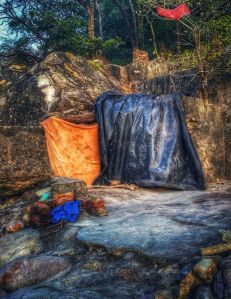
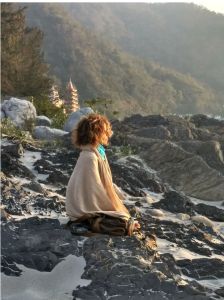
Not our actual hermitage

We’re about to move to another hermitage, to one more safe-haven by the side of the road (in this case a very small, very quiet road). Obviously it’s a process we’ve been through quite a few times. This time, the concept excited us (well it usually does!) and the arrangements began on a smooth and happy note.

But, just as when any of us make a plan, take some action to fulfil that plan, and proceed from a good start, the path forward doesn’t always remain smooth and hiccup free.

And so it is this time with the hermits’ plan to relocate: one or two quite small hiccups have cropped up that we have had no control over.

‘Quite small’ are the key words here: it’s more my reaction to said hiccups that’s the point of this post.

You see, I’m not enlightened, nor am I the toughest kid on the block, and my skin’s not that thick. As well as that I’m no expert at letting things run off me like water off a duck’s back (guess who is a cliché lover?).

You talkin’ ’bout us?

The hiccups under discussion themselves are trivial and as I say out of our hands. As such, they are not especially interesting to talk about.

Getting back to the water off a duck’s back thing: it’s actually a pretty neat description of what occurs when one in enlightened. Just a thought for now.

Contrary to popular myth, being enlightened isn’t a flash or some sort of mystical thunderbolt from heaven or from some other transcendental wherever, a flash that leads to bliss ongoing, superhuman or magical powers; It doesn’t render the enlightened one an intellectual or any other kind of giant.
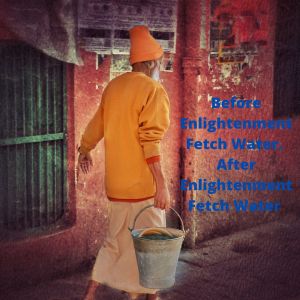
And right to the point, being enlightened will not protect the enlightened one from the normal, natural apparently real troubles, ups and downs, pain, illnesses, sorrow and grief, and all the rest of being a physical creature living in a physical world.

What enlightenment does mean – in my interpretation at any rate – is the enlightened one is able to let these perfectly normal problems, hurts, pain, illness, and so on, (Oh the joy of repeating a great cliché) to roll off them like water off a duck’s back.

Of course the enlightened ones still experience the pain, the sadness, grief, the disappointments and so on; it’s just that those ones have attained to the knowledge – been enlightened to -that none of those things can really hurt them.

Sure they are still there, the pains in the body, the sadness or whatever in the mind. But the real us – the true Self that is the consciousness that witnesses all that’s going on in our lives right now – is unaffected.

That true Self, that Consciousness, is constant, it is and has always been existent and unchanging. All those pains in our bodies, those emotions, distress and the rest in our minds, will pass; they aren’t permanent. However that Self, that ‘I’ won’t pass, and it is permanent.

Anyway, back to the current topic. What happened to me was this: the hiccups refered to were minor – less than trivial in the context of the ‘real world’ – yet the disappointment resulting from one, and the annoyance coming from the other, were profound.
An enlightened person might say ‘That was disappointing.’ Or, ‘That was annoying.’ But me? Well I sank into a pit of negative emotions and negative (to put it mildly) thinking. I may as well have declared: ‘I am disappointment embodied.  I am annoyance itself.’

Look dear reader, this was supposed to be a fairly light, quick telling of me reminding myself that the pains, sorrows and other stuff of the world can’t hurt me. That ‘me’ is the Self I talked about earlier, the ‘I’ who is, as I said, the witness to my experience here and now.

So, in conclusion as they say, all there’s left for me to say (in this post at any rate) is that I am most definitely not enlightened. Having said that, I wouldn’t say that I’m completely unenlightened. There was a time (a long stretch of time) when, far from letting things roll off me like water off a duck’s back, they very often overwhelmed and threatened to drown me.

Of course there is a lot more to be said on the subject of enlightenment. Suffice it to say that it is my dream and deep, deep aspiration to one day, one life (if there is indeed another one waiting for me) to get there, to realise enlightenment.

As The Seekers used to sing:

Some day, one day
time’s not so far away.

PS There is no need to worry. I feel a bit better now. I managed to gain a little perspective, a truer perspective. In fact gaining perspective is an important step on the path to enlightenment. The tricky thing about perspective though is hanging onto it once it’s been gained.

Bushland Contemplation

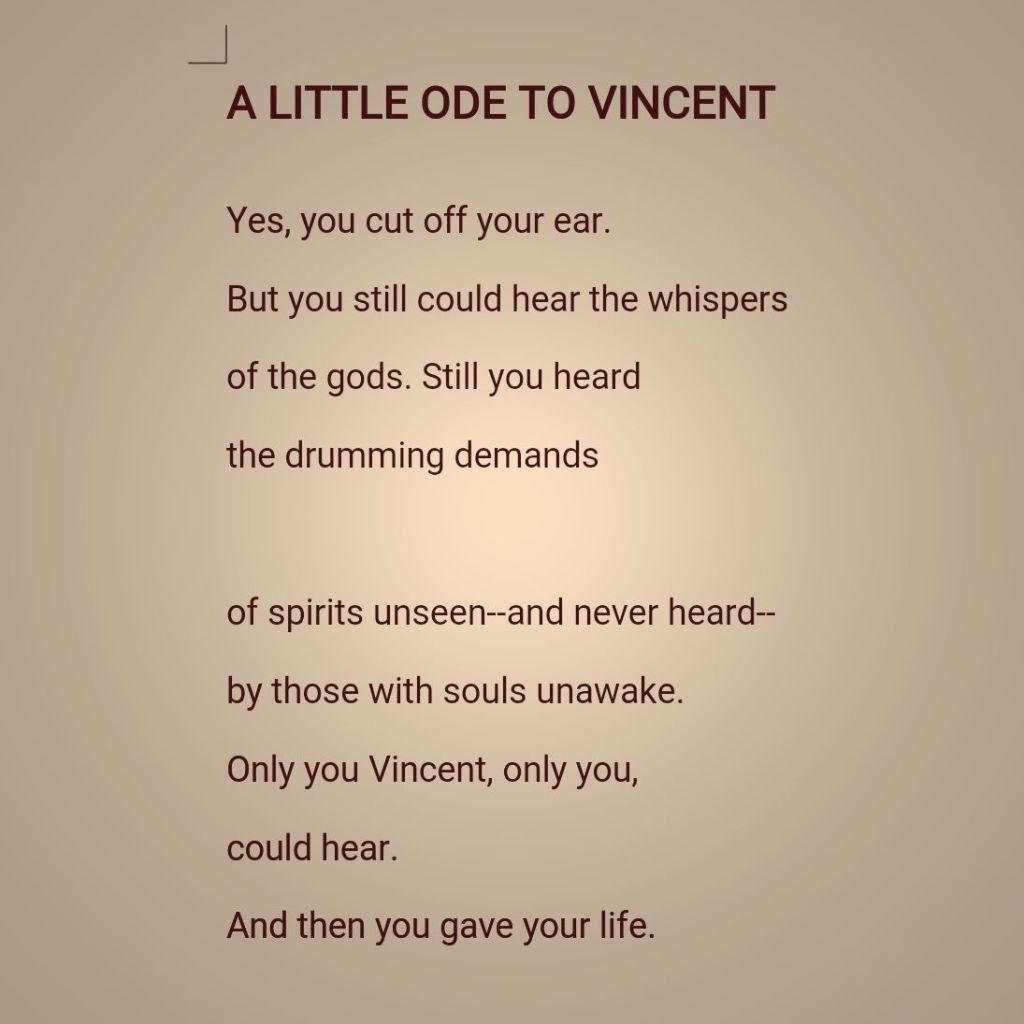
A Little Ode to Vincent: A Poem & more

Way back long ago in late 2014 I wrote a poem. Which as a stand alone statement is hardly cause for excitement on any level I can think of.

Except to say that in that poem I expressed much of what I felt (and still feel all these years later, perhaps more so) about Vincent Van Gogh. I called it A Little Ode to Vincent, because it was a kind of love song, a celebration of Vincent and an affirmation of my reverence for that great one.

Anyway, I was reading some old poems last night and I came across A Little Ode to Vincent. I checked to see if I’d shared it with you on this blog at some point, but to my surprise I found that I hadn’t. Which is very nice for me, because I get to share it with you now.


There it is then. Thank you for allowing me to share it with you. There isn’t a word I’d change if I were writing it now.

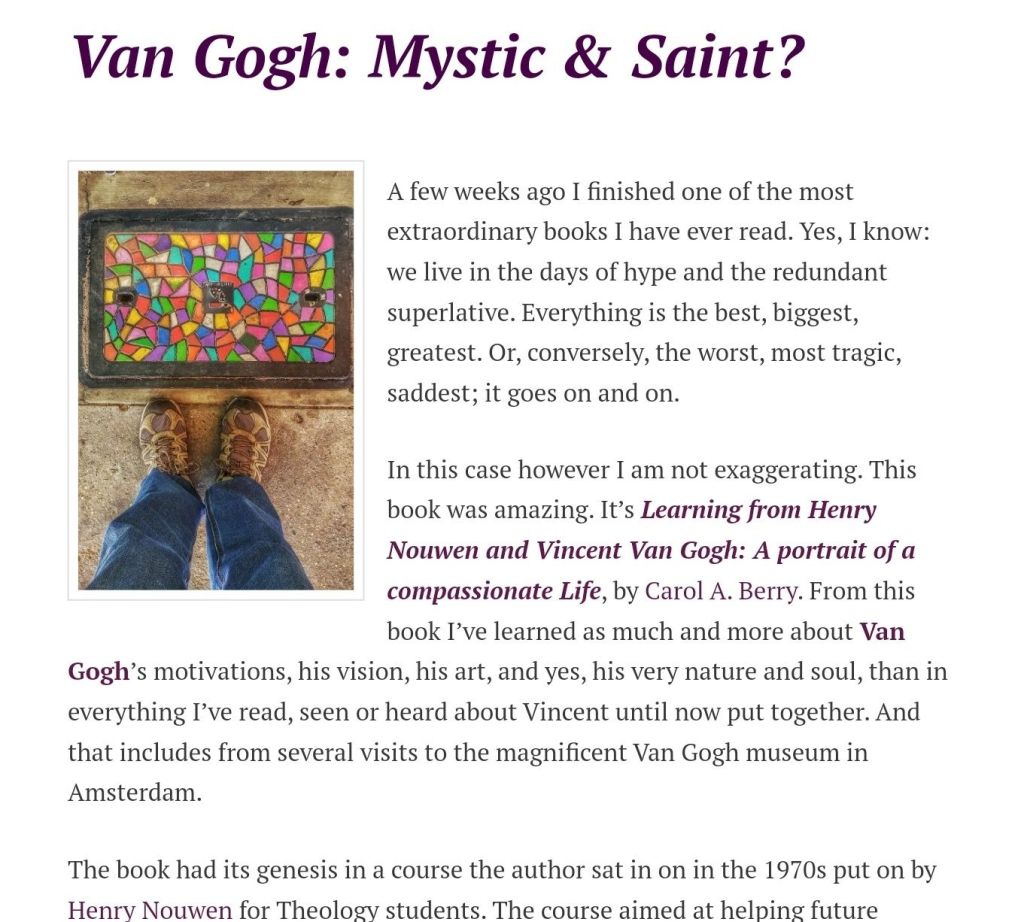
While looking through my blog checking for this poem, I came across two posts from 2022 which mention Vincent. Well, one is about a book I’d read on his spirituality and his quest to lead a compassionate life. Have a look at the beginning of that post and what I wrote about that book:

I still remember the book and its impact on me vividly. Please read the post Van Gogh Mystic & Saint, and if at all possible read the book. In fact I’m going to try to track it down and read it again, or at least do some Googling on the topic.

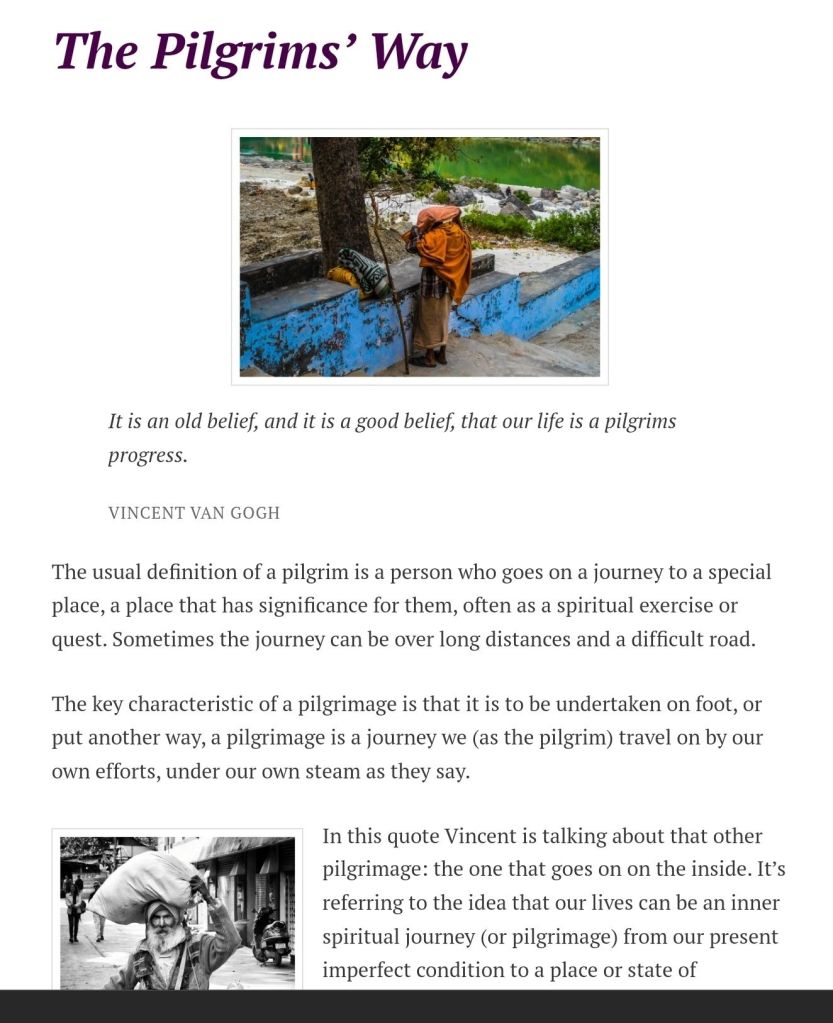
The other post I wrote at around the same time isn’t about Vincent directly, but it does open with a quote from him, and he’s referred to throughout the post. Here’e the opening section:

Again, please take the time to read it. It’s called The Pilgrims’ Way, and I think it makes a very nice sibling post for that first one I’ve linked to.

I hope you found the little Ode of mine satisfying. I have always had great reverence for Vincent, and after reading the book about his spirituality, I was even more deeply attracted to the man, the artist, and the mystic saint that was Vincent Van Gogh.

There’s nothing more genuinely artistic than to love people.

Vincent Van Gogh

Sacred Places, Sacred States

Tirtha. There is much varied, detailed and fascinating information about this word on its Wikipedia entry. While I invite you to click the link and head over there to read what is truly a riveting story, for this post I wanted to focus on the word’s actual meaning, especially the metaphoric meanings it has acquired.

Tirtha is a Sanskrit word meaning ford, as in a place one fords or crosses a river, stream or other body of water. Over time, however places of religious pilgrimage began to be called Tirthas. This evolved because so many holy sites were on or near rivers or lakes, or were the water bodies themselves, or were located nearby.

Sacred sites, and places of pilgrimage often inspire in people a sense of leaving the ordinary material existence  of their day to day lives, and entering a kind of other world, the world of the spiritual or non-material. This experience, which we might call spiritual or religious , is something people remember as being very special, even transformational; for them it speaks of a connection, even briefly, with the divine in the form or in the presence of that place or site.

Perfect example of a Tirtha as a literal crossing place that is also an ancient sacred site. Mother Ganga at Rishikesh in India

And after many years – centuries and millennia very often – the energies from sometimes countless pilgrims and their prayers, devotion, love and mere presence, accumulate and begin to permeate the atmosphere in that place as well as the very ground and sacred objects there.

To me this notion is reminiscent of the concept of thin places  as described in Celtic Spirituality (though the concept by the same or other names exists for many cultures around the world. Sorry I’m not providing any links: there are so many!).

Some would say they are places where Heaven and Earth meet. Places where the boundary between the mundane world and that ‘somewhere else’ of the transcendent, is especially thin, and where crossing over, or connecting with that transcendent may be possible, or made easier than at other places.

Of course, as I’ve written in at least one previous post, I feel that we are always standing upon sacred ground; all things are sacred or holy. At the same time, I have, like so many others, experienced what seem to be very real connections to or mergings with something  transcendent, something ‘spiritual’ as we like to call it, at specific sites or location.

A few of these places of my own transcendent experiences  have been churches, temples, and other historically recognised  sacred places. However, I would say that most of my own experiences have been at unexpected places, places where the ‘transcendent’ has been for me alone at that moment.

The Campaspe River after the floods receded

One such place for me happens to be a river called the Campaspe. It was here that the ashes of two fellow hermit pilgrims of the feline persuasion found their rest.

As I stood on the muddy bank of that river, and made my offering, I sensed that feeling I describe above; that feeling of oneness with or connection to the river, to that place. As those two little creatures whom I loved (and love now) and who are made of the same stuff as me, were returning to some kind of essential or foundational state, we were there and connected with them as they continued on their journey.

I knew then for sure the sacredness of that place, the thinness of the boundaries there. While then I didn’t yet know the word, the Campaspe River had for me became a Tirtha.

DEDICATED TO:

Shanti and Lofi. Two beautiful beings and fellow hermits and pilgrims on the journey with us. With us in our hearts and now off carrying on with their own adventures and pilgrimages.

To Speak or Not to Speak & What Not to Speak About When You Do Speak

Have I mentioned lately that I talk far too much? No? Well then, it’s way past time to once again confess; it’s  time that I finally get it out into the open: the thing is you see, umm, I talk too much. There I’ve said it.

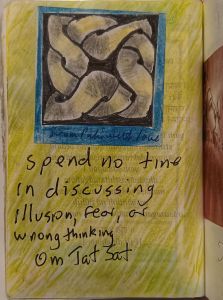
But wait, there is no need for concern: I have a prayer (stuck in my Bhagavad Gita, where else?) that I pray at least a couple of times a day. Well, rather than being a prayer, it’s a kind of affirmation or instruction to myself. Okay, it’s a prayer.


It’s a nice injunction, I think. I don’t recall where I borrowed it from, but I’m grateful that I came across it. It’s important to me; a vital instruction that I feel assists me in my aspiration to be a bit more thoughtful, and a bit less vocal.

Does it work?  Well with the risk of repeating myself, I will say yes. Maybe I’m a bit more thoughtful and perhaps a bit  less vocal. But, on the other hand, I wouldn’t say I was anywhere close to the ‘spending no time’ level.

Now that I’m thinking about it, illusion, fear, and wrong thinking are common themes in many people’s lives, and we might even say that they dominate our culture whether it’s the media, celebrity gossip, or any of the rest of the illusory and speculative talk that goes on all around us.

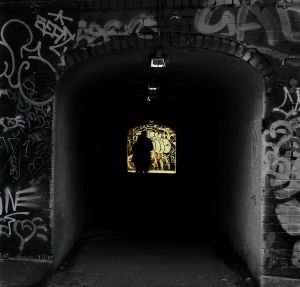
Tunnel to the Light

Anyway, fear is the biggie isn’t it? Fear of not having enough; fear of not being good enough; fear of what might happen or what might not. This list is endless. Fear of illness or ageing; fear of losing friends or fear of not having any! Fear of ‘missing out on the good life’ we imagine everyone else is living.

Then there is what’s called, the fear of the other, most often promoted and replicated by the mass media through their creation of illusions, fake news, exaggerated  or one-sided information (I hesitate to use the terms ‘facts and figures’ but you know what I mean). And then they sell us on ideas that we need to fear some other person, people, thing, time, impending catastrophe that never comes.

I don’t need to go on here: as I said, the list is endless. All that’s left to say about these fears and the illusions we are force-fed and made to believe are real, is that it all boils down to costing us a great deal of time spent and usually wasted, in wrong thinking of one kind or another.

It seems to me the media (news and social), advertising, and governments of all persuasions, are really quite happy for us all to be ‘getting the wrong end of the stick’. I think that’s the expression. Our societies are drowning in, for want of a better word, propaganda.

Buy this, do that, don’t do the other thing. Be afraid of (insert the latest scapegoat, political opponent, boogy man, the Apocalypse. Again it’s an endless list).

Then there are the fears we invent for ourselves, the illusions about ourselves that in our wrong thinking we come to believe are all real and true. One thing you can say about wrong thinking is that it makes for more and more wrong thinking. More illusions about who we are, what we do (or can’t do), what we are like, who likes (or doesn’t like) us. Here I once again risk repeating myself, but yes, it’s a long long list.

So, what can we do? Well, we could use a little reminder like the one we’re talking about here. It’s possible that it can help us correct a little of the wrong thinking that leads to fears and illusions.

Then there is what we might call discernment. Not so much deciding between one thing and another; more like coming to know what is real or illusion, a genuine, rational fear that I need to act on, or some inherited, manipulated, received  or otherwise irrational, baseless, or invented ‘fear’.

We won’t get rid of wrong thinking by trying to push it away. It’s about replacing the wrong thinking with some right thinking. We can try to recognise that wrong stuff as it comes up. We can make an effort to stop allowing ourselves to get away with our own misunderstandings, our own wild imaginations, wishful thinking, and confusions. As my teacher said just the other day, use your mind to control your mind.

One word we haven’t discussed from my little injunction is discussing. We discuss things when we talk or communicate  with others or when we talk to ourselves. Here we are at another issue for discernment: what shall we talk about?

Actually I was about to write that one excellent strategy for not spending time discussing illusions, fears, and wrong thinking is to simply stop talking altogether. That’s all there is to it: Don’t talk!

But obviously that’s a ridiculous notion right? Stop talking? Perhaps for a set time? Or perhaps as a kind of ‘time-out’ strategy? But as a principle for a whole life, it’s not going to appeal to the majority of us. Actually, that feels to me like a bit of wrong thinking creeping in: a life of no, or at least limited talking is very appealing to me. Just difficult.

Still that does seem to be what my treasured injunction suggests I do. Mind you, it’s very specific isn’t it? Spend no time, it says. Discussing what? Illusions, fear, and wrong thinking.

So, how do we manage to follow this suggestion ‘to the letter’ as they say?

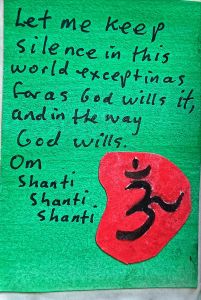
Here’s another little prayer I say everyday. This one is from Thomas Merton.


Keep silent ‘except in as far as God wills it’. For God I could say the good of all concerned; Truth; my heart; my goodwill; my love. It’s all God; it’s all the Divine.

I guess it gets back to something I said earlier about thinking before I speak. To this I would now add, feel before I speak: What’s right? What’s wrong? Does this help? Will this hurt someone else for myself.

About right and wrong: In the religious  tradition I was ‘raised in’ it was deemed that at the age of seven or eight a child is suddenly, without any preparation, able to discern right from wrong. Which means they are now responsible for the consequences of their thoughts, words, deeds. In other words, they are now capable of sinning and suffering  the consequences.

I can’t (obviously) speak for you or anyone else, but it’s been a very very long time since I was seven or eight, and I still find it tricky sometimes working out right from wrong. Of course while I know I am now responsible for my thoughts, words and deeds, I also know that we are all flawed; nobody’s perfect, so we’re going to make mistakes. 

So, all I can do – all any of us can do – is appeal to the innermost Self and use my intellect and my heart to try to discern as best I can, what is right and what is wrong.

Only in the innermost places where the real Self dwells can we know reality from illusion; it is only in our ‘heart of hearts’ as they say, combined with our rational thinking mind, what fears are real and what fear is illusion. And it is only then that heart and intellect can determine when our thinking is headed down the wrong (or the right) track.

It’s only then that we will know what and what not to spend our time discussing, either with others or internally within ourselves.  This all sounds like a long, convoluted, tricky process (told you I talk (write) too much!), but it needn’t be.

Like all things it takes practise, and once we begin to know that innermost Self, it will soon become a spontaneous way of living, when we begin to ‘just know’.

Your own inner divinity (which is the real you) wishes for you peace.

Om Shanti, Shanti, Shanti.

One, Without a Second, is All There Is

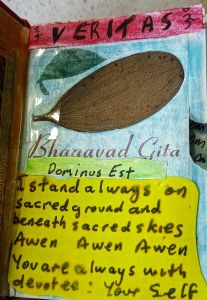
Right at the front of my Bhagavad Gita (the only book aside from the notebook I’m writing this in, that I personally own), I have recorded and inserted sayings and various words , that are important to me. Among those things is a statement I first heard many many years ago, that is common among the First Nations’ peoples of this country:

I [We] stand always on sacred ground and beneath sacred skies.


It is not an affirmation of ownership or possession. It is, instead, an affirmation of belonging to the land, to nature. It is a prayer of thanks, and it is a declaration of the knowledge of unity with the rest of the natural world, that is the hallmark and foundation for Indigenous cultures throughout the world and through time.

I’ve valued – treasured – this sentiment for a very long time – probably from even before I first heard it, which was so long ago as to be lost to memory. Perhaps I always knew it because I’ve somehow always thought this idea was a fundamental truth concerning my existence as a being living on this planet.

Well, now I have heard another statement that for me makes a perfect compliment for this one. The other day, during a lecture, my teacher mentioned that in his student days a fellow student said:

Wherever you are, you are walking through Ishwara

(Ishwara being her preferred name for the divine – for all that is.)

There is a feeling or sense of ‘belonging’, of awe and wonder when we attempt to immerse ourselves in what we term the natural world.

Once again I immediately felt the bell of Truth ringing clearly through this statement. Yes, I thought, everything is divine – including our own selves – so of course it follows that wherever we go, whatever we do, we are always in the divine.

You’ve probably read a number of times me quoting my teacher quoting his teacher:

It’s not that there is only one God, there is only God.
          Swami Dayananda Saraswati

Emphasis very much on only. Meaning of course, that it’s not that God is within us, or that we are within God; we are not surrounded by God; and it’s not that God ‘sits in our hearts’. The reality (for my teacher’s teacher) was that all that is, everywhere, everything, every thought, every word and deed, everything there is, is the divine.

Another way to describe the divine or God, that appeals to me is that Ishwara (also my own preferred name for the Divine) is in reality the natural order of the universe as dictated by the laws of nature. Those laws of nature, the rules that govern how the universe works, are also Ishwara, as are all that is manifest or in existence  as a consequence of the workings of those laws.

In other words, the Divine is the sum total of what some would call the entirety of creation.***

For the hermits a sacred site. Part of a grove we named The Sentinels. A place of experience of unity and oneness of creation

For me this an enormously comforting and reassuring concept. Of course, for me at least, it is also an extremely difficult one to wrap my head around. But here’s a small summary of what I think I’ve grasped so far.

Ishwara – the Divine – is all there is; everything. Also divine is the natural order of the Universe as governed by the laws of nature. These laws are neither good or bad – there is no duality. They are neutral.

You and I, as one more entity among who knows how many others, act as we do and are subject to the laws of nature, just like everything else. We can’t change or influence those laws; we can only live our lives as they unfold.

To quote from Desiderata: No doubt the Universe is unfolding as it should

And, well, then things just work out as they do. While we can’t change the laws of nature, or bend the universe to always suit our liking, it is also true to say that every action we take, every thought we think, every word we utter, even our very presence as a living being in our time and place, do indeed contribute to ‘how things work out’. Another way of saying this is to say, we do our bit, and the universe does its bit and what happens, well, happens.

For me, this is not at all as simple or as straightforward as it sounds. Naturally  we see ourselves as individual selves, as entities on our own. After all, to state the obvious, we live and operate in a material (dualistic) world. So automatically we see ourselves as individuals living in, but always separate from all the other individual entities, as well as being disconnected from the world itself.

It is part of human nature (for the most part) to long for connection; there is so often a drive within us pushing us to create family, enter relationships, feel we belong to a community or communities, and for many but not all, there is the almost instinctive urge to seek connection with the rest of nature.

Many forms, One reality

We often think of these longings as goals to achieve, as something outside of ourselves to attain, to reach for. Consequently, so very often we tend to focus our attention outwards, towards other people, or material things.

But, instead, all these inclinations, desires and longings are simply our Self (note the capital?) endeavoring to open itself to discovering (or rediscovering?) that which already exists: our oneness with, and our non-separation, and non-difference from, The All That Is.

Peace and Love from Paul the Hermit

FOOTNOTE

***Just a few thoughts about naming, or giving labels to the Universe and its laws.  Obviously it’s a personal choice for each of us what we choose to call that creation. Then, on the other hand, we don’t have to call it anything at all. For me personally it is very difficult, even near impossible to not name it. By naming the creation, I don’t think I am attributing the manifestation of the Universe to some distant entity living in some heavenly abode (as my teacher likes to say). Rather I am acknowledging the intelligence  and order, beauty, complexity of all that is and how it all works, as its own reality. At the same time, I am learning to understand that I as my true nature am not separate from the rest of creation, and I feel the need to have a name towards which I am able to focus my thanks and my reverence.

When Love is a Yoga and Lovers are Yogis

There was light at the end of the research tunnel

These last few days I’ve been researching and thinking about an idea for a blog post. But I’ve come to realise that I am grossly underqualified to write about the topic I had in mind. Let me put it another way: I am completely and utterly unqualified in any way whatsoever to go there. In fact, after all the research, I think I’m going to disqualify myself from ever going there in writing.

However, I’m a great believer in the idea that no quest for knowledge is ever a waste of time or effort; there is always something to be learned. During my research I came across a topic I believe I am qualified to discuss, as it forms an integral and vital part of my own personal spiritual practice.
Why I’ve decided to write this post, though, is because I made a discovery that lead to an insight that I know will lead to a great progress in that practice. It’s nothing new, not really, but it was one of those occasions we’ve all experienced of ‘I knew that, but now I really know it.’ For me, it was a realisation of something that till then had been a nice cosy theory and belief.

Bhakti Yoga is that practice. It is really a key foundation, a valuable component of my spiritual life.

Wikipedia opens its entry on Bhakti Yoga (see the link just above) with a description of the practice that mirrors what I think is the traditional understanding of Bhakti Yoga:

Bhakti Yoga (also called Bhakti Marga, literally the path of Bhakti) is a spiritual path or practice within Hinduism focused on loving devotion towards any personal deity.

In the same entry there is a description of the origins and meanings of the two words, Bhakti and Yoga:

The Sanskrit word Bhakti is derived from the root bhaj, which means “divide, share, partake, participate, to belong to”. The word also means ‘attachment, devotion to, fondness for, homage, faith or love, worship, piety to something as a spiritual, religious principle or means of salvation’.

The term Yoga literally means “union, yoke”, and in this context connotes a path or practice for ‘salvation, liberation’. yoga referred to here is the ‘joining together, union’ of one’s Atman (true self) with the concept of Supreme Brahman (true reality).

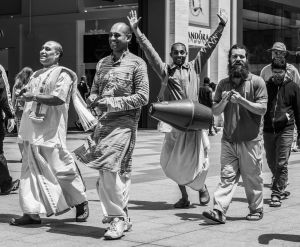
For some, dancing while chanting the names of their God, demonstrates their devotion and celebrates their union with each other and with God

In other words, those called to a religious or spiritual life, practise Bhakti Yoga whenever they pray or otherwise express devotion towards their personal conception of God, or the Divine. This particular definition seems to be saying that such a conception of the Divine, or God, is in the form of a personal deity who is a kind of representative of true reality, which the devotee is aspiring to join with.

Some Bhakta Yogis are full-time, full-on practitioners. People like contemplative nuns or monks, hermits who retire from the world into seclusion. Anyone basically whose entire life and activities are spent in devotion.

So, when I discovered all this, I became intrigued; I decided to go off on a tangent and explore the word Bhakti itself. Wikipedia has a separate entry for the word on its own:

Bhakti is a term common in Indian religions which means attachment, fondness for, devotion to, trust, homage, worship, piety, faith, or love. In Indian religions, it may refer to loving devotion for a personal God

is often a deeply emotional devotion based on a relationship between a devotee and the object of devotion.

In ancient texts the term simply means participation, devotion and love for any endeavor.

May refer to devotion to a personal god? While I thought this entry doesn’t contradict our first quote above, it does seem to broaden, and deepen, the meaning of Bhakti. Expand might be the better word.

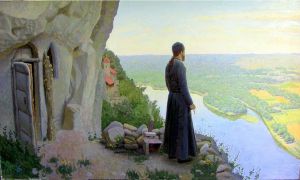
In some traditions a simple life on the road is a way to commit full time to Bhakti or devotion.

It struck me that that object of devotion might be anything. Or even everything. You see? I told you it wasn’t a new idea. It’s just that it’s resonated deeply within me now. It appears that the object of Bhakti Yoga practice doesn’t necessarily have to be a ‘personal god’.

Many many people would say ‘I like animals’ or ‘I think we should save the world’. But, while that may imply a kind of love for or at least a fondness for, I think Bhakti is something more – actually several somethings more!

For example, some people have a particular attraction to and love for, the ocean, or it might be a river they view as, if not sacred in a religious sense, then as special to them in some deep, comforting, even therapeutic way. Others have similar relationships with and feelings for trees, or even a particular tree.

Animals as either individuals or as a species or group, can have the same appeal and call to other people. Then there are those who feel strongly in their hearts you could say, that Earth itself is a sacred object, or others have a knowing that the planet is a living entity and worthy of our devotion.

Bhakti begins with love and devotion, which is about caring for, affection towards, loyalty to, emotional engagement with the object of devotion. But even more than that, there is faith in that object of devotion; faith as in trust, confidence that the love is real, that the ‘relationship’ is sound and real.

Homage and worship too are key aspects of Bhakti. The deep inner feeling we have towards a thing, person, or other being, that is beyond what we normally call ‘love’. It’s about seeing and actually realizing ‘in our hearts’ our desire to be merged or united with that thing, person, or other being.

Actually, seeing that word other just now got me thinking. I had to go back and reread our definition of Yoga up there near the beginning. It says Yoga means ‘union, yoke’. It goes on to add: yoga refers to a ‘joining together, union’.

This passage seems to be suggesting that Yoga (in our case Bhakti Yoga) is both an already existing union, and a process of joining together to achieve union. One thing I would say here is that in my practice of Bhakti (and love as a general thing to strive for and be) it’s both.

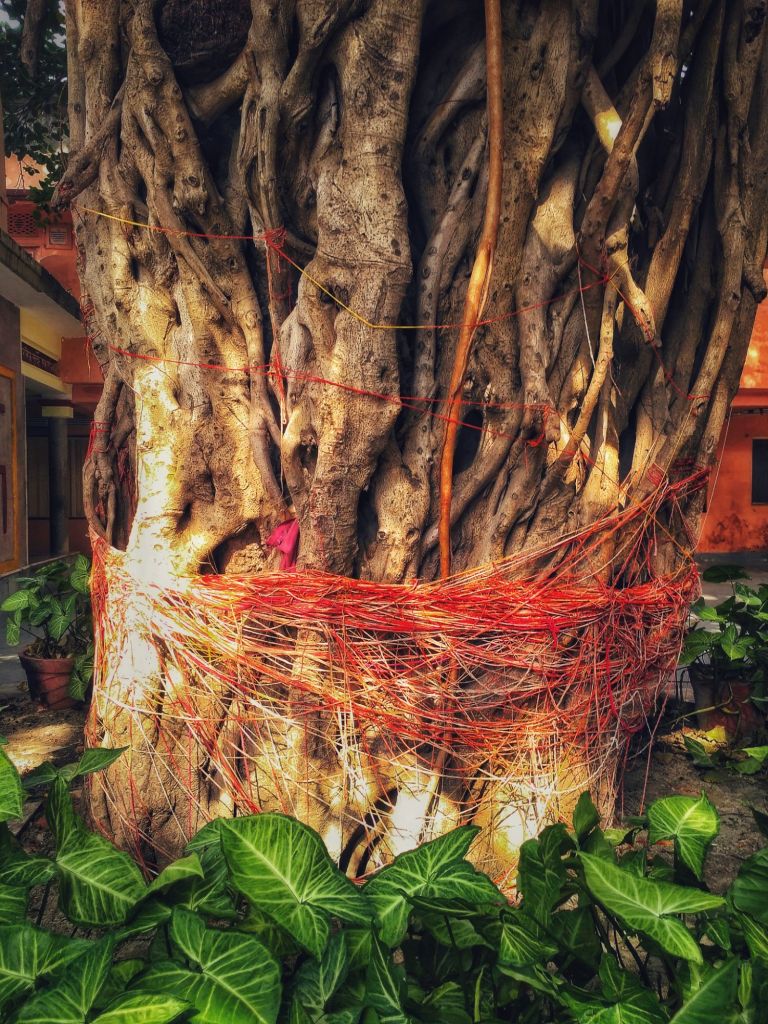
Trees are special beings for many people from a whole variiety of cultures all over the world

But, in the end, it seems to me that the process or practice, the path of Bhakti, serves to awaken us, to assist us to acknowledge, recognise, and realise in that really knowing way, our pre-existent true nature.

That true essential nature can be said to be the reality of our oneness with all things, living and non-living. And their oneness with us too of course. In fact, by putting it that way, I’m saying there is only one, or oneness. What’s that expression? One without a second.

May you be a Bhakta Yogi. Or, perhaps you already are one?

Love and peace from Paul the Hermit

Life has manifested itself as the multitudinous forms that comprise the universe. It is the one Universal Life, Power or Shakti (the laws of the universe or natural laws) that controls, guides and actuates all movements and activities in all beings, creatures and things.

                — Swami Ramdas

Let Me Tell You a Story: It’s a Good One!


Has anyone seen Walk the Line? It’s a great movie that tells the story (or a version thereof) of the life of Johnny Cash. Yes, I know: not everyone is into country music. This movie, however, is an intriguing insight into the life and work of a  gifted but troubled artist. He was a prolific and inspired singer and songwriter.

There is a scene in the movie in which Johnny is about ten or so. He’s talking to his brother who is maybe 14. The brother is studying the Christian scriptures (he wants to be a preacher when he grows up, but dies soon after in an horrific accident) and Johnny says, ‘Why you studying so hard?’ His brother looks up from his reading and says,

‘You can’t help nobody if you don’t tell ´em the right stories.’

Yes, I thought when I heard that, you have to tell them the right stories. But, what are the right stories? It’s a good question but, fortunately, there is a simple answer: they are all the right stories. That is if they are told from and with the heart, and if they are created and shared with the intention of conveying Truth, promoting harmony, and doing or causing to be done, what’s right.

The ‘them’ of poor brother Cash’s reply are those who get to hear/see/feel the stories we tell. And we all tell stories don’t we? I mean I’m telling you a story right now. As a (cringe) blogger, that’s what I do.

But we all share stories of all kinds. Sometimes they are stories of our lives, sometimes they are from memories passed down the generations. Other times they might be something we ‘make up’ to help someone to understand a point or idea. Pretty much all of us, most of the time communicate in one kind of story or another.

Of course there’s the other kind of stories; the ones meant to spread rumour or gossip, to hurt someone, to mislead. We all know how that works, and it’s not today’s topic anyway, so let’s just leave it there.

Those we share stories with may be those we intend to share with, and they might be others who at the time are distant from us both in time and space. Just as the stories we tell each other might be decades or even centuries old, so might our stories keep on reverberating through time and space.

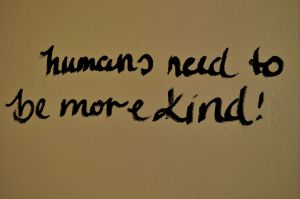
A true story written on a wall somewhere

It’s also true that the stories that ‘help’ people come in all shapes and forms and are about an unlimited variety of subjects and topics. Then there’s the matter of timing. How often have you ‘just by chance’ read something inspirational when you were needing some guidance or advice?

Or what about those times when you are feeling a bit low or under the weather and you come across a story that makes you smile or otherwise lifts your spirits? I’ve often been in need of a good cry only to come across a sad movie or story or a moving tale of one kind or another. (Just last night I read a wonderful phrase I’d never seen before: Transformational Weeping. Probably a story or two there do you think?)

A story I tell myself literally every day. One that’s a prayer and an affirmation

So, let’s keep telling stories. They are all the right ones for us to tell – if they come from the heart and told with the intention of serving Truth. Someone once wrote:

If there is a way to improve the world, it is by telling a good story.

Okay then.

Once upon a time on a dark but not so stormy night …

PS I saw the movie in Dharamsala India. On a postcard home I wrote a little rhyme about some writing work I was doing on some of the town’s environmental issues for a local magazine:

He walked the line
did Johnny Cash.
But here in Dalai Lama Land
my words will help reduce trash.

I did say stories come in all shapes and forms didn’t I?

When Two or Three …

It would be true to say that I’ve been on a spiritual journey all my life. Perhaps there have been other lives too, who can know? Who can work it out? And, anyway, I don’t think it matters at all. This life will do.

That’s an easy generalised statement to make I know. So, being more specific, let’s just say that for as long as I can remember I’ve been interested in and studied ‘spiritual stuff’; and in more recent years I’ve narrowed my focus, so to speak, and now I am on a deliberate and committed journey towards that time when I actually recognise, when I fully realise for myself that I am already one with God. Or the Divine, Dharma, Love, Absolute reality, Truth, Spirit. Many names and no names.

During this long journey, I’ve been blessed to have been exposed to so many sacred texts, scriptures, books, teachers, and so on, from so many different spiritual and religious traditions. And of course, the Christian New Testament ranks high among these treasure troves.

Like many of us, however, long before I actually read the text itself I had heard and was familiar with many of the stories and characters in the Gospels and so on. As well, over the years of childhood (and later too) I came to know several different Gospel verses. One of these in particular has long been a favourite (actually there are a lot of ‘favourites’ but …) and I couldn’t possible tally up all the times I’ve either thought about this verse or quoted it out loud.


For where two or three are gathered together in My name, I am there in the midst of them.”

             Gospel of Matthew 18:20


Now, this verse comes in the context of a chapter with some really powerful teachings from Jesus to his disciples, in which he is telling them how things should work when people gather to pray, to praise, celebrate the Divine. Essentially in this and other verses Jesus talks about the characteristics that should be present in a community of disciples.

And everyone else too

Things like harmonious relations between people. He stresses the importance of forgiveness when people think someone has wronged them. There is a great stress placed on the value of consensus when it comes to decision making or disputes between people.

Another biggie is the emphasis on how people should not behave in any way that would cause their fellow disciples to ‘stumble’ or fall. Meaning I think, be a good influence, not a negative one on others.

I have a confession to make: I knew none of this before I read the full chapter along with a few commentaries quite recently. Let me tell you what I thought for many many years the verse meant.

For me, it was simple. It just meant what it says: If I gather with one or more other people in the name of Truth, Dharma, God, the Divine, or whatever else we might choose to call the Absolute Reality that is everything, then we are reminded to recognise that Absolute Reality is present with us and in us.

Which means we have to act accordingly, just as Lord Jesus advises. That is, with love, with an intention to foster consensus and harmony; in ways that build us all up and bring nobody down.

While Jesus was addressing the needs of the newly formed Christian communities, I believe that this verse can refer to any gathering of people of goodwill. And communication between people that has as its intent love, devotion, positive living, peacemaking of any kind. Basically any meeting of people that is infused with good intentions and the desire to pursue right action in the world, or internally within each individual. And when you think of it like this, then it pretty much covers any coming together of people doesn’t it?

I especially like the use of the phrase I am in the verse. Of course, the ‘I AMis a name for God. Essentially there is no need for any other name because ‘God’ encompasses everything and there is no need to ‘label’ that I AM because that would limit what is actually Absolute Reality to some ‘created thing’, which is less real or perhaps absolutely unreal!

Notice I seem to be labelling the I AM as Absolute Reality. That’s the trouble with us limited beings: we have to use words to help us define or describe everything. So be it. Some people will call that Absolute Reality as God. Others will call it the Divine, Truth, Love, Dharma, and a million other names (or by no name as I said earlier).

This verse promising the presence of I AM may have been uttered by the human incarnation we know as Jesus, but for me, those words in truth came from Universal Consciousness, the I AM. Meaning, again for me,  Universal Consciousness or Absolute Reality, which really is all there is.

Peace and Love

Paul

A Story of Words and a Journey of Discovery

Remember that old Bee Gees‘ song Words?  It’s about one person offering all they have to another. Well, the one doing the offering must have been a writer because, while the song’s a love story, it’s words that are the big thing on offer here:

It’s only words, and words are all I have
To take your heart away

Well, as this is a blog, words are the way it hopes to reach your heart. Actually, the posts also include photos and sometimes other art, but the main vehicle used here is words.

So, with that in mind I have a couple of words to offer you today. Well, one word and its opposite. Have a look at this sentence from Thomas Merton:

If Irish monks affirmed his Celtic spirit in their mastery of cataphatic contemplation of the wonders of divinity in nature, Buddhist monks evoked his Zen mind and drew him into the apophatic path of formless ’emptiness’…

A quote from the Introduction to When the trees say nothing: nature writings of Thomas Merton

As sentences go (though this is obviously only part of a sentence) this has to rank pretty close to the top for length and denseness.

Kataphatic. What a word! Of course I had to look it up; I’d never heard the word before (this post is a rewrite from notes written a while ago that I never got around to posting.), and even though the sentence seems to  suggest the meaning, I was still curious.

Looking at Wikipedia – where they spell it with a ‘C’ like Merton, as well as with a ‘K’- I learned that cataphatic is an adjective that describes an approach to theology that uses ‘positive terminology to describe or refer to the divine (God, Truth, Dharma, Spirit. You know what I mean: the divine).

Apophatic, as you probably figured out already, is when one uses ‘negative terminology to indicate what it is believed the divine is not’. A process of negation or we could say you get to what the divine is by a process of elimination.

Pretty simple concept really, but with a couple of big words to label it, and a lot of  words to define it. No, don’t worry, I won’t bore you with the meaning and origin of the words and all the rest. Mainly because I don’t know and I’m not especially interested anyway in all that technical stuff.

I simply resonated with the word, and the concept. Cataphatic made me think of Dick Van Dyke and Julie Andrews singing Supercalifragilisticexpialidocious in Mary Poppins. But let’s not go there: this is a serious blog after all. Except to say there’s more to that word than you might imagine.

Putting aside the aesthetic appeal of the word for a minute, let’s contemplate a while on cataphatic, and it’s opposite, apothatic.

To begin thinking about these two words, it’s necessary to acknowledge the existence of the divine. We can call it God, if we like. Or Dharma, Truth, Spirit, Love, Beauty.

As the quote suggests, a cataphatic approach, ideology, theology, or whatever we call it, ascribes names and forms to the divine, as well as describing where and in what the divine may reside.

Whereas apothatic, again as the quote suggests, does not ascribe names and forms to the divine. Instead it seeks to discover what or who god is or isn’t by a process of negation as described already. 

For a long time I labelled myself as a Humanist. I had decided that this physical body is all there is; the physical or material universe is all there is, and that there is no ‘god’ separate from us or who has special powers to affect our lives. No God at all in fact.

In the Grove of the Sentinals

But, all that while, I just knew that there was something else, something more than just the physical.  And over time, I came to the knowledge that there is indeed more than the simply phsical universe (including we humans).

I’ve thought about it a lot over the years and I came to the conclusion not that many years ago, that I had simply been afraid to name or define that something more. It would have meant admitting to myself that something more really did exist.

That is to say, I was scared of taking the cataphatic approach – and I’d never even heard the word.

Well brothers and sisters, I saw the light. The truth was revealed to me. And what is that truth? Well, to put it simply, I wasn’t scared anymore. Not of names and forms, and not of what I couldn’t see.

Now I could take both the Catophatic and the Apothatic approach: that the something else I had actually always known just was, really is, and can have a name and form, or not. The divine is not an omniscient being or any kind of being at all; As I’m very fond of saying, the divine (or truth, God, Dharma) simply is.  And it’s all there is.

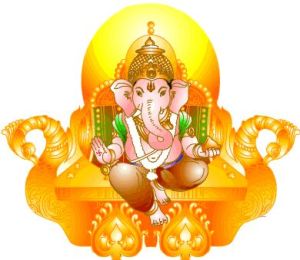
Some of you might know that I am really quite fond of the Indian deity, Ganesha . Do I believe that a man with the head of an elephant actually exists or ever existed?. Of course not. Do I actually think that he resides in the lovely painted icon that sits by my bed? Well, obviously not.

But do I believe that there is a spark or aspect or attribute in all life, in you and me, in nature, in (scary word time) creation, that we can tap into to help us overcome obstacles? Or that we can access when we begin new ventures of whatever kind, or when we need strength to face challenges? Yes, I do. Very definitely.

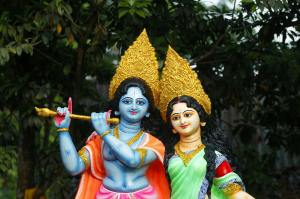
And do I believe in a blue boy called Krishna who lived in India 5000 years ago and spent his time playing in the fields with the village cows and his friends, entertaining them with his flute? Again, of course not. Does he live in the other beautiful icon by my bed? The answer is obvious: no.

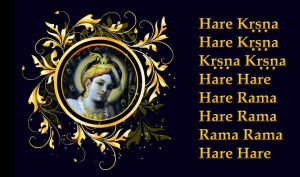
But do I chant the Hare Krishna mantra in an effort to come closer to the divine that is… well, that just is? Yes, again, very definitely.

Words. It’s all only words. Only words? Only??

In the beginning was the word, and the word was  with God and the word was God. (from the opening of the Gospel of John)

It’s all I have (for now).

Peace and Love from me to you

Circling Sacred Sites is Good for You (Me)

As a self-described Hermit Pilgrim, I aspire always to live a contemplative and secluded life, as far apart from wordly concerns as I can manage. At the same time, I am a pilgrim, in both the sense of the internal journey of the Self as I study and meditate, as well as in the world itself: I move from one living space to another – one temporary hermitage to another- as I feel directed or led.
In the last several years I’ve noticed how often I seem to find myself in one more temporary hermitage that ‘just happens’ to be located right next door or across the road from a sports-ground, or what’s often called ‘a local oval’.

At least three times in recent years, that I can recall. And it is so at the moment. This time the hermitage is in a suburb of a mid-size city (by Australian standards) that in reality is more a low-key and small seaside town on a peninsular.

Anyway, just as with those other occasions, I have been grateful for the oval across the road: It makes for an ideal Kora.

Kora is a Tibetan words that means the act of walking around or circumamabulating a sacred place or object.

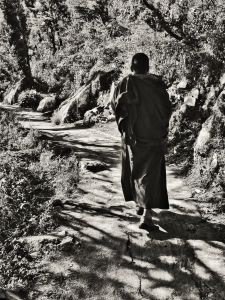
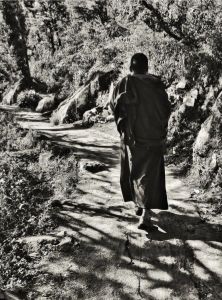
A monk on the Kora around the home and temple of the Dalai Lama in the Indian Himalayas

Tibetan Buddhists do Kora as a form of pilgrimage and walking meditation. It is a devotional practice and it is said to have transformative powers.

Of course Buddhists are not alone in practising this kind of circumamabulation (from the Latin circum (around) and ambulare (to walk).): Muslims circle seven times around the Kaaba in Mecca as the final stage of Hajj .

Many religious traditions consider Mount Kailish in Tibet a sacred place and circling it on foot, even once, is considered by some to be the equivalant of one complete lifetime.

In south India there is another sacred hill called Mount Arunachala. Each year millions of pilgrims walk around its base, which takes a couple of days. In India, the word pradakshina is used to describe such circular acts of devotion and pilgrimage.

And the list goes on: as I said many if not most religious traditions have a practice of walking around sacred sites or places as acts of pilgrimage or devotion.

So, what has any of this have to do with me walking around local ovals or sports grounds and calling what I do a Kora? Well, my intentions are similar to those other pilgrims but perhaps more humble. Let me explain.

Not being a sports-oriented person (not into competition and team sports at all really) I can’t comment too much on the idea that a sportsground is sacred ground because of the sports played there.

I do acknowledge and understand how it is that so many people do in fact consider the games played there as sacred activity with winnings and losings and full of heroic deeds. This indeed makes these places sacred sites.

Then there is the fact that many such grounds are named in memory of local people who have been prominent in the community. And, as is the case with the oval over the road from the current hermitage, ovals do actually become sites of memory.

This one, called Lynn Oval hosts several memorials at its periphery: there are tributes to miners who have died in accidents in local mines.

And there is a lovely statue of a guide (service dog for people who have vision impairments) dog called Tessa who is famous in the area for helping to raise a lot of money for more guide dogs.

Lastly but, for me, probably the most significant ‘evidence’ for a local oval being sacred ground is that it, well it just is. Just as all ground is sacred. An affirmation borrowed from First Nations’ Peoples says it all very nicely:
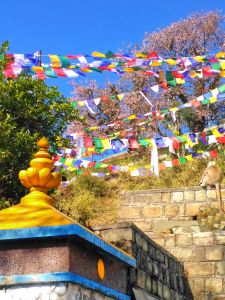
We stand always on sacred ground and beneath sacred skies.
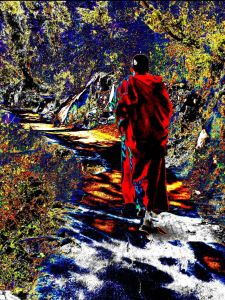
In other words, everthing, everytwhere is sacred. All the rest, the memorials, the games played, they are not what makes the ground sacred, they are the things that people layer onto the space as a way of acknowledging the inherent sacredness.

And that is how it is for me. It’s not me walking around the oval chanting mantra (or at other times ‘just thinking’) that makes it sacred ground, despite being sacred acts in their own right.

I mentioned earlier an alternative word for Kora, pradakshina. This comes from the Sanskrit for ‘to the right’, because traditionally the idea was to always circle the sacred site or object clockwise, so the sacred object remains on one’s right.

Obvioiusly there isn’t much to see on the middle of the oval as I walk around the boundary fence (it’s about 400 to 500 meters by the way). Mind you, the other day a flock of pigeons were feeding in the centre while I walked. Then, at another oval, in another town, there would often be a lone Ibis sitting almost in the centre. It’s all sacred.

This idea of centre has me realising that the whole point for me of walking around ovals chanting my mantra, is the reach my centre. The temple I’m circumamabulating is me; I’m the container so to speak, for the Consciousness which pervades and actually is all there is.

Peace and Love

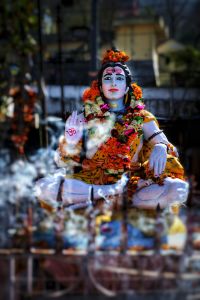
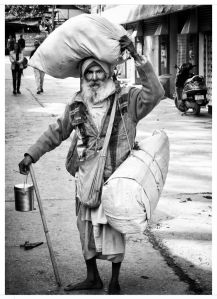
Holy Wanderer: A Saddhu performs pradakshina around a shrine to Shiva in Rishikesh India

PS: I’ve written another post, also related to Kora. Please feel free to visit that post here