How Shall I Live?

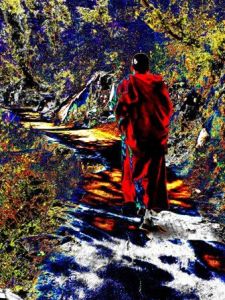
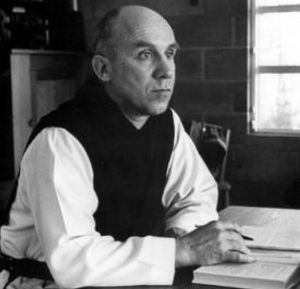
Thomas Merton in his hermitage (Courtesy Wikipedia)

The great study of the monk is to have an awakened heart

      Thomas Merton


There would be some – including me – who would say that all human beings, and not just monks, need to learn to awaken their hearts, to cultivate attitudes and a life of love, compassion, empathy, and kindness.

Who would disagree with such a suggestion?

Well, I’ve already said that I am one of the ‘some’ who would welcome such an evolution in human consciousness. But, at the same time, I don’t want to make pronouncements, form judgements, hold opinions, on what anybody should do, or be like. Only me. I am only responsible for my own behaviours, attitudes, ideas, thoughts, speech, and the rest of how to live my life. I just can’t – as in I’m not entitled – to tell anyone else what to do, what to think, what to say and so on.

Actually I’d even speculate that Merton is in fact talking about just the one monk: himself; he’s not preaching a prescription for the behaviour  of others.

I’ve read so much Merton that it’s impossible now for me to remember exactly where I read this statement of his, but I do know that when I first saw it and made a note, the concept resonated deeply for me as a great aspiration for my own life as a monk, and as a trying to be decent human being.

In other words, this monk – me, myself, and I – has a task to carry on with: to cultivate an awakened heart. And being a ‘great study’ it’s bound to be at least a lifetime’s project.

It’s an effort though, awakening one’s heart. It’s even a bit of a mystery at times what the phrase actually means in real terms.

Love, obviously, tops the list for any aspirant on the awakened heart path. And, yes, I do feel, express, and act out love – so deeply sometimes to the point of being overwhelmed or ‘flooded’; sometimes speechless (that’s the good bit), sometimes full of words.

But then there are times (oftentimes is the word) when that love is clouded or shrouded completely by angers and irritations, by regrets of what should be or shouldn’t be, could be or cant’t be, what isn’t.

The great study of the monk is to have an awakened heart
          Thomas Merton

All attachments to what is not as I think it should be. All barriers to love. All ways and means of keeping the heart asleep – or at best semi-awake, and still sleepy: slow to respond, slow to act, and with ongoing blockages to seeing how things actually are.
The quest to acquire an awakened heart and the outpourings of love, kindness, gentleness, generosity, that such a state would allow, is probably at the root, the foundation, of my life as a hermit monk, of my life as a pilgrim journeying through and to Self.

Living quietly and simply; developing a contemplative way of being in the world while definitely being not of the world; cultivating silence, peace and calm; all are activities and attitudes directed at cultivating an awakened heart.

All that generosity, patience, love, kindness, empathy, and all the rest are definitely all characteristics of an awakened heart. Here’s my dilemma  (only one among many that riddle my crazy monkey mind): they are also precisely the elements that need to be practised in order for one to acquire an awakened heart. What’s the expression? Catch 22?

Of course, it just occurs to me now, everything that is, is exactly as it’s meant to be, happening just as it ‘should’. So, in other words, all these words of reflection are simply a commentary on what has been and gone already, that which is in the past, and is no longer existing.

All that matters – all that exists – now is that at this moment, in its ongoingness, I am as loving, as kind, as patient, and as generous (not to forget compassionate, empathetic) as I’m able. To others obviously, as well as to myself.
All that wonderful list of characteristics of an awakened heart all exist right now within me. Perhaps I need to wake up my mind a bit more so I might see that reality. Then I might actually realise that I already have an awakened heart and that I simply got forgetful somewhere along the way.

with love
Paul the Hermit
Taking it Slowly, Taking it Mindfully

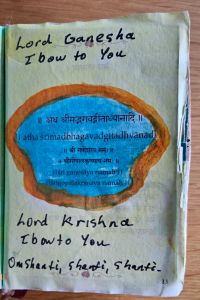
A small irony revealed itself to me just now as I prayed my way through the prayers inserted in the front of my Bhagavad Gita.

I’d completed one prayer and turned the page to the next. Then, without a pause or thought, I quickly turned the page again. I stopped, thought better of it, and turned back to attend to the prayer I’d skipped over.

Now, here’s the irony: The prayer on the first side of that carelessly and mindlessly leafed past page read simply:

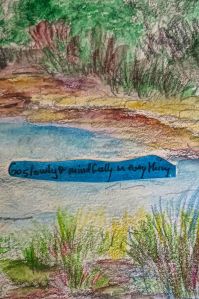
Go slowly and mindfully in everything.

Well, that’s not the ironey itself. But, given that this was the page I had simply passed over without a thought, with no pause, the words written there obviously were a lesson for me.

A message to contemplate, to actually stop and pause with, mull over, meditate on, and perhaps make resolutions over. Advice to me to stop, to slow down.

Couldn’t be clearer really.

There’s no telling why I skimmed past that page, that prayer, without a pause. Could be a simple case of absent-mindedness, or a rush to see what was on the next page; a grass is greener type of thing.

Why I was rushing through the pages isn’t the point. What is to the point is here I am, doing morning prayers, praying some, then skipping others. The other point is that in this instance, for some reason I stopped, went back, and prayed the skipped prayers.

So, moving to the resolution.

It’s extraordinary to me when that kind of thing happens. (It does happen quite a lot, but unfortunately I only notice it occasionally) We will have an intuition, or receive a message from ourself that helps to us get back on track when we mess up.

In any case, it’s obvious that I’ve found what I might call the prayer of the day, the mission statement, so to speak, informing whatever activities I undertake today.

Slow and mindful in everything I do, say, and think. For now, for the present, that will the guide on the path of today that I will follow. Keeping in mind the adage that practise makes perfect, for when I falter.

Oh, another irony wrapped up with this one. The prayer on the facing page was also skipped, and in itself sheds another light on the message from that first one. That second prayer actually puts forward one, important, way in which I can actually set about achieving  that first one:

In other words: place more focus on, pay more attention to, the Divine in whatever form, and by whatever name, I encounter it today.

Works both ways I think: Making the effort to go slowly, to be mindful, puts us in the present moment. And, the present moment is the only place we’re going to be able to become aware of the Divine.

Then, as we become aware of the presence of the Divine, we are right where we need to be, when we need to be there in order to actually slow down and be more mindful.

PS These notes were made a few hours ago. Since then, I have on the whole practised being slow and mindful. Not perfectly, mind you, but then as I say, practise makes perfect. Even now as I type this – very attentively – my mind wanders, so there is a way to go for me. The day is not over yet!

You Can’t Try to Go With the Flow

Every writer, every painter, every person who makes things – and that includes all of us human beings – will sometimes get the feeling that they are never going to have another idea, or the inspiration, the creative spark or energy, to create anything ever again. Not ever again.

Certainly  that – what could we call it: crisis of confidence? Moment of fear? A feeling of inadequacy? The seeming loss of the desire to create? We could probably keep going with this, but let’s not.

Where was I? Yes. Certainly that, whatever we call it, comes over me really quite often when it comes to the writing of this blog. It’s become a standing joke in the hermitage: Whenever I’m asked if I have another post coming on, my most usual response goes something like:

‘No, and I don’t think I’ll ever write another post. The ideas are all gone. It’ over.

(As I reached for this notebook just now, I was asked that question and ironically I was able to answer with confidence and certainty, ‘Yes I do’.)

As I said, it’s a standing joke because, well, something always reveals itself to me, eventually. An idea, an inspiration, an insight is presented. Something I sense is worthy of sharing, always comes to me.

Having said that, there are times when I really do have that horrible sense that it’s finished, that I will never ever again receive an idea for another blog post.

But, here’s the great thing: Having become a standing joke, this perceived loss of ideas, insights, inspiration, the joke serves its purpose: It makes me smile, it treats the whole thing with some humour.

In other words, I’m not allowed to just get away with feeling sorry for myself. It cheers me up. It props me up a little, and gets a little part of my mind opening up to something new or fresh to write about.

There have been times during the journey of this blog when I have strayed from my intention for this blog. As it says beneath the blog title on the top of the page, this blog is meant to be:

musings on one hermit’s life and world

In the past, I’ve sometimes solved this ‘no ideas’ problem by writing about a topic from something I’ve read, teachings I’ve studied, or some other things not directly about me or my personal experience.

Lately (for some time now) I’ve resisted this ‘easy way out’, and tried more attentively to stick to the intention stated in my sub-heading – write about me and my experience.

Okay, it’s in fact not trying that’s the point, both with me writing this blog, and also with every other aspect of how I try (sorry, not try) to live my life.

Wu Wei it’s called, the path of least resistance. Certainly wracking my brain to come up with post ideas, and straying from intentions just so I can have a post, sets up much resistance on many levels.

You can’t ‘force’ musings, can you? If you muse you muse, if you don’t muse you don’t muse. It’s about letting it flow, or if it’s not flowing, let it be.

And here’s the interesting thing: it – the flow of ideas, insights, musings, whatever – flows at its own pace anyway regardless of my interference, angst, worry, or my forcing things to go this way or that.

My lesson for today – for my life too I pray:

Go with the flow

Slowly & Mindfully: A Reminder

Among the physical exercises I try to perform on a daily basis, are a couple for strengthening the hips. One of these begins with me standing upright, feet together, eyes level, looking ahead.

Then I swing one leg at a time for ten repetitions in a kind of arc like motion out to side, keeping it level with the side of my body, bringing the leg back to the rest position with feet together. It’s a pendulum motion.

Anyway I’d been merrily going along doing these exercises more or less every day for ages, months really, until one day my partner hermit was watching me, and said:

‘You’re supposed to be doing it slowly and mindfully’. Or words to that effect.

You see I had been quite happy swinging each leg out in turn at a fast pace, kind of like an aerobic sort of thing. Just to get it done if I’m honest. Wrong! Supposed to be slowly and mindfully.

Lift one leg slowly in an arc like motion out to the side of the body. Pay attention to the movement as it’s happening; no need to push the leg out, just lift it to a comfortable position. Just let the arm trail loosely and of its own accord, along with the leg. Then, again slowly and paying attention to the process of the movement, bring the leg back.

And I do have to say there’s been an amazing difference. I can actually feel the muscles working during the exercise, and can sense the minute incremental motion as the leg swings slowly. It’s a way better exercise than it was, and now I wouldn’t do it any other way.

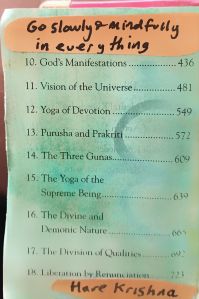
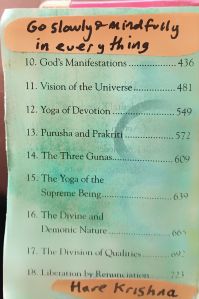
I was reminded of this incident this morning as I came across a short admonition, a little reminder to myself I have stuck on a Table of Contents page in my Bhagavad Gita.

Go slowly and mindfully in everything

What’s interesting is that, despite seeing and reading this so-called reminder more or less every day, and despite proofs of the benefits of actually listening to the reminder, such as what I’ve just described with the exercise , the reminder seems to mostly go right over my head, in one ear and out the other as they say.

Today, for some mysterious reason, it actually got my attention. At the same time, again who knows why, it triggered a truly relevant and appropriate memory to act as a kind of metaphor to illustrate the point to me.

I suppose it’s stating the obvious, but I can say that doing that (or any) exercise slowly and mindfully – in a watchful and observant manner – acts as an exercise in presence. Otherwise I’d not be sensing or feeling the muscles and the movement, or the peace of no random thoughts.

Did I mention that, having corrected my modus operandi with that particular exercise , I’m feeling the benefits? It definitely feels like things with legs and hips are loosening up, getting stronger. I’m actually walking further now without my legs aching on me.

More than that, I actually find myself wanting to do the exercise as opposed to ‘wanting to get it done’. Why is this? Well, I think it’s because I’m yearning to rediscover that feeling of presence; it’s a bit like a meditation, and in the same way clears the mind of random thoughts – at least for the short duration of the exercise. Having said that, even a short duration clarity plays its part in reconditioning a stubborn mind.

So, mental clarity, good exercise for the body, for the heart, even the soul?I think it’s the perfect metaphor for how I aspire to be living my life.

Slowly and mindfully.

To Sleep or To Not Sleep?

One of the stories I’ve been telling myself for pretty much as long as I can remember, is that my life has been impacted, influenced, directed, controlled, by depression and fatigue. As with all stories, there are elements of fact, fiction, fantasy, real life experience, truth, and the not so true in this one.

Anyway, with the fatigue factor in mind, I’ve recently made an intention (I call it a sankalpa) to lie down for an hour or two every day whether I ‘felt like’ it or not. The idea was that a daily break would be like a catch up, a preemptive measure if you like. Even if I didn’t sleep, it’d be an opportunity to just be still, listen to nice music, relax for a while, a quiet time.

Today, just after breakfast, and getting deeply into my spiritual practice, I suddenly experienced an epiphany. Or to be a little less grandiose about it, I had a little insight which has lead to me to make these notes.

Despite that feeling of exhaustion, and despite the previously mentioned intention to rest more, I resisted going to lie down, thinking I can lie down later in the day.

Why? Surely a person who thinks their life has been ruled by depression and fatigue, would welcome any pretext to lie down, to sleep, to shut the world out for a while.

And, then comes the insight: All of a sudden I realised why I was resisting taking rest: Well, the fact was that I didn’t want to sleep because, well, I’d be asleep. I’d not be able to continue my practice, read, write, to ‘live now’. Putting it another way, I simply wanted to keep on keeping on doing exactly what I was doing.

But wait, I hear you asking: how can you fully live now when you’re so tired?

Excellent question; the exact question in fact that I asked myself. The answer I got from Self was interesting: fatigue as a symptom and outcome of depression is one thing; fatigue resulting from living a full life with enthusiasm (sort of sometimes) is quite a different thing.

Actually, now I think about it, there’s another little insight making its way to the surface of this over-active, over-full mind: The very fact that I thought I had living to do now is a very clear signal that, for at least the moment, depression is not dragging me around, or down, or anywhere else.

Just that concept of wanting to be awake to live this moment? Well, isn’t that a joyful thing? But what about being so tired? Should I go and lie down now anyway?

Ummm… Actually I don’t know; I can’t say really. So, I think I will just keep on doing what I was doing when I began these notes.

Which was chanting the names of God.

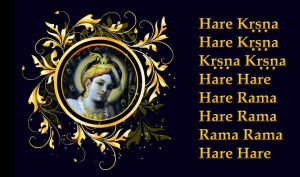
Hare Krishna Hare Krishna Krishna Krishna Hare Hare
Hare Rama Hare Rama Rama Rama Hare Hare.

Now that should wake me up for a bit.

PS It’s a bit later in the day, and I’m typing up the notes as a post for the blog. I did in fact carry on chanting for a while, I’ve had lunch, and I think after I post this, I might go for a walk around the neighbourhood. And no, I haven’t had to lie down yet.

Maybe later!

Contemplation: It’s a Gift of the Moment

Earlier today I took my camera out for a walk. Which is to say, I had an intention that the walk would be more than exercise for the body (very much needed as it is), but also an opportunity for my eyes and heart to open up a little to the tiny part of the world I was to pass through.

I also hoped that my mind would join in so that I would be able to actually recognise what I was seeing and feeling, allowing me to perhaps make images of what I saw and felt.

One final prayer: In doing its job, I hoped my mind would stay focused, and work behind the scenes very quietly.

A few minutes walk from the Hermitage is the shore of a fairly large lake, and when I reached that spot, I sat on a conveniently placed little wall, so I could, well, just sit for a bit.

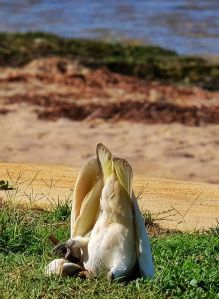
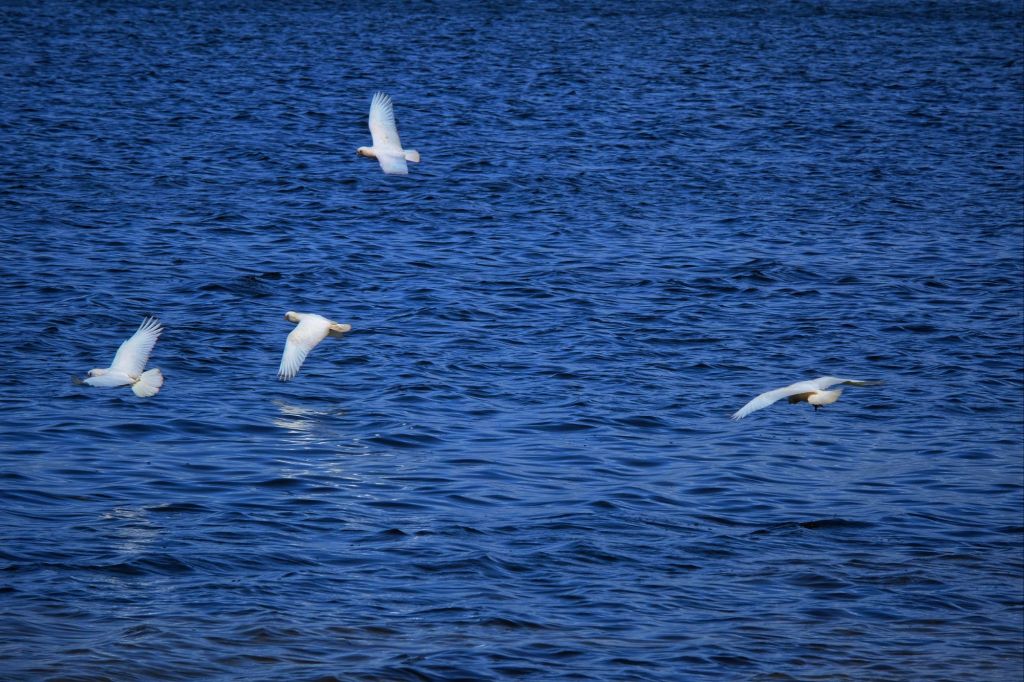
By chance, um. Sorry, let me rephrase that. By the brilliant synchronicity that results from the perfect working out of the natural laws of the Universe, right in front of me, nearer to the water’s edge, a dozen or more Corellas played and foraged. At least to my limited human eyes, that’s what they were doing.

Zoom in and share the fun!!

It’s mesmerizing watching them: tumbling with each other or on their own; picking up and wrestling with twigs and other small things. I was blessed too, to witness several of these creatures taking off, in flight, and landing.

You might have heard me say (or read when I wrote) that ‘I was just not there’. Well, not today; today I was definitely there. In a contemplative reverie in which I felt connected with what I was witnessing through my lens.

‘I had a small sense of being relaxed,’ I commented casually to my community when I arrived back at the Hermitage. And that’s what it felt like: I had relaxed for a time. I can’t say I was aware of the passage of time; it was more an eternal being in the moment if I was to try to label it now. It might have been thirty minutes or ten by the world’s measure; I have no idea really.

I’m only ever going to be a beginner when it comes to paying full attention, to contemplating and being completely immersed in the moment, and not forgetting trying to control the monkey mind. Practise will never make perfect in that department!

Anyway that’s why spiritual practices are called practices: they require the spiritual seeker to be committed to a life of ongoing and continual practise.

Of course encountering those birds at the lake today is definitely a practice I would be happy to practise anytime!

It’s a gift to witness birds in flight

Tripping On the Sidewalk

Walking home, returning to the sanctuary of the hermitage, I fell over. Or to be exact, I tripped.

It’s not the first time I’ve tripped in my life, and I’m sure it won’t be the last. Mind you, I’m not supposed to be making speculations about the future; after all, I may never fall over (or trip) again.

Let me share with you how I came to find myself lying on the ground, fully conscious thankfully, with only a few grazes on arms and knees, and a sore spot on the side of my head.

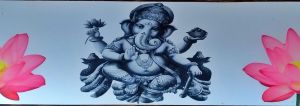
Walking along the sidewalk quite freely, earbuds feeding my ears and my heart my favourite mantra to Ganesha – known as the remover of obstacles and the God of wisdom. (more on the earbud issue later)

At one point I noticed, a few metres ahead, what appeared to be the back of a largish sign board leaning against the base of an electricity pole growing out of the pavement.

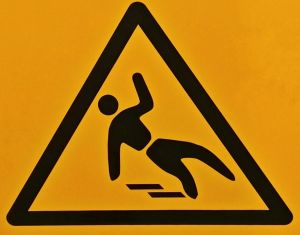
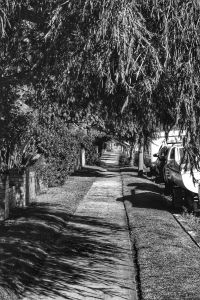
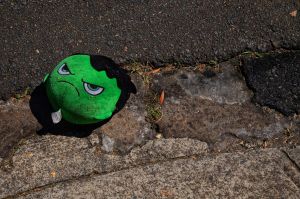
Not the actual sidewalk

Without any thought whatsoever, as I came up to that pole, I turned my head to the left to see what the sign read. Next thing I know, is I have the sense of falling. Later I remembered that at the exact moment I turned my head, my foot caught the broken and uneven edge of a slab of the pavement.

I was blessed by two passersby who stopped and helped me back to my feet, and stayed with me as I regained some semblance  of my bearings. Thank you to those two good and kind ones.

Now, I don’t like falling over (well, when you think about it, who does?), but in this case I can say through this fall, I have learned a couple of good lessons.

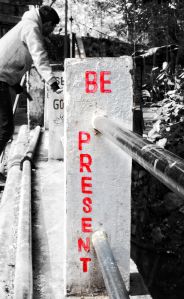
Presence – or lack thereof. Here I am, the hermit monk who is supposedly constantly practising being present, in the moment, here and now; yet I tripped over what I later discovered was a really obvious, clear obstacle on my path.

We all get distracted, you might be thinking. And, yes, it’s true. We can be paying close attention, fully focused, riveted to and in the moment, and, suddenly distraction barges in – in the form of a thought, an external noise, visual imput, and even a broken pavement. You name it, and mind will use any excuse it can to manifest a distraction.

Another lessen – intimately related to presence –  is pausing, or not! As I noticed that sign coming up, I could have chosen to pause to look at it once I reached it.

Then, rather than being a distraction, looking at that sign would have simply been another moment in the ongoing flow of the present. In other words, there’d have been no tripping.

The actual earbuds in question

Now, to the earbud issue. To be honest, my earbuds have more or less replaced my regular over the ears headphones. Because I was never comfortable going out and about with those clunky things on my head and earbuds have allowed me to listen to music pretty much whenever and wherever  I go. Even to me wearing them, they are barely noticeable. It’s possible that’s the problem right there: unnoticeable.

More than 30 years ago now, I spent every Tuesday evening for a year attending classes at a school of philosophy . To this day I still follow some of the practices I learned there. And, passed to me were so many good lessons, so much good knowledge drawn from many of the world’s spiritual and intellectual traditions. So many of these lessons have stuck with me.

Presence, or rather the benefits and rewards of realizing  the present is all there is, was I would say, one of the cornerstones of those teachings.

One illustration about presence concerned driving, and although at the time I haddn’t learned to drive, it resonated with me. Our teacher told us that, when she was driving, she never listened to music or anything else. She told us that she simply put her full attention on the task at hand: driving.

She described how it often happened that when driving she’d reach her destination with little or no memory of the actual act of driving or any landmarks or events on the trip itself. She said it was if she was somehow unconscious, yet still able to drive ‘on autopilot’ was how she put it.

And of course it’s not a phenomenon limited to driving: how much of our routine daily activity runs on autopilot?

Anyway, back to the other day and me grooving to Ganesh in my ears and tripping in a moment of inattention.

I don’t recall being distracted by the mantra in my head, or moving on autopilot. But, thinking back, I was in one of the busiest sections of the little town that hosts our hermitage. I’d been to the supermarket, the parking lot of which is as busy – and crazy –  as one you would find in any big city.

Just another sidewalk tripper

So, I realise now, I had already kind of set myself up to fall for any distraction that happened to come along. While I don’t really remember myself as being ‘unconscious’ of my surroundings or of the path itself, clearly I wasn’t completely there, not in the here and now sense if you know what I mean. Just an after thought: who remembers ‘being unconscious? Nobody I think!

Whatever I say now, I wasn’t present; I wasn’t fully in the moment, not paying attention to either what I was doing or what was going on around me.

Since my little trip, I have vowed before my hermit community to not ever walk again in a built up and busy area wearing my earbuds.

Not only do I have a sense of danger lurking when I think of the idea of wearing them in those situations, but I also feel that it’s not exactly being present, in the here and now is it?

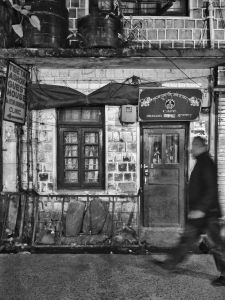
Another closed cafe on some other trip

Okay, I am very sure you are waiting with great anticipation to learn what what fateful sign, put in my way by the Universal Traffic Controller to push me into changing direction, actually said:

It was a handwritten advertisement for ‘great coffee’ to be had in a cafe across the road. A closed cafe I might add.

On Main Road –  a road that more than lives up to its name –  perhaps there are worse fates awaiting the inattentive than merely tripping on the sidewalk.

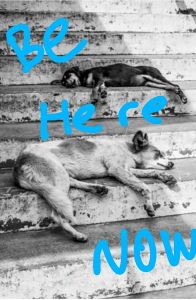
Where? & When? Here & Now


There, dear friends, right there, in the title are our next two W questions, as well as the answers to both.

The answer is brief, succinct, right to the point, yes indeed. But somehow to me it doesen’t seem very helpful, a bit vague.

Here and now. Let’s look at this tricky little phrase. On the face of it Here and Now has an obvious meaning: if we choose to think on it in the spirit of our ongoing contemplation on my prayer life, it’s very clear. Here and now is a timely reminder to me to pray right where I am, right now, wherever I might be; and whatever the time, day or night.

But it’s not really a very satisfying answer is it? Here and Now? It seems too flippant to me, too bland, even a bit of a ‘catch all’ cliche thrown around without any real insight into its meaning or importance.

Anyway, moving right along …

We are exhorted to pray without ceasing in the Christian Bible with similar exhortations found in so many other texts and scriptures from many faith traditions.

Remember my aspiration to make of my life a prayer? Well, that’s the idea: to pray without ceasing. Which translates to mean that everything I do, say, think, feel (what else?) will be prayer – or I can also say a prayer. Life is a prayer, life is lived as a prayer.

Of course the precise forms my prayer takes are – and will ever be – many and varied. We’ll be looking at some of those forms and types later in the How post of this series. But, for now, allow me to brainstorm on the topic for a bit.

Consider washing the dishes, a task we all find ourselves engaged in to some degree or other. I have a sense that my feelings towards dish washing is actually quite neutral. Don’t get me wrong: if I never had to wash a dish again you would not hear me complain.

At the same time, I have absolutely no hard feelings against washing dishes.I just get on with it, just like most everybody else.

Sticking with dish washing …

Most often dishes need washing as a consequence of preparing, cooking, and eating food, for a meal or meals. Right there is an obvious opportunity for a simple prayer of gratitude.

It might be a simple whispered thank you for the gifts of the nourishment, satisfaction, even pleasure of the meal. Anyway, just a random first thought on the subject.

There are a few other points to be made in our little dish washing thought exercise as it fits into my own prayer life.

Sometimes, while actually dish washing and cleaning up, I might chant mentally, or otherwise pray with words – set prayers. Prayers of praise or gratitude; mainly whatever pops into mind. Go with the flow is the theme here.

Now, that’s one thought. Next: I might decide to be quiet while washing up. That is not speaking and being as silent inside as I can be.

On these occasions I just focus as intently as I can on what I’m doing: washing dishes. I make it an occasion for not doing the dishes just to get them done, or to get them out of the way, or to put an end to an onerous chore.

Rather, it’s more an opportunity to simply wash the dishes, by being with the dishes and the actions required to clean them. Just a little aside: this particular form of mindful (prayerful) dish washing actually results in cleaner dishes. It’s been proven scientifically.

These two approaches to washing dishes – not to mention all the other means and forms of prayer – are not necessarily mutually exclusive, nor are they the only one: a given dish washing event might involve several prayer modes.

Which leads me to the next thought that I had more or less forgotten…

Sometimes I do indeed slip into that old ‘Just get the blank blank things done’ frustration mood. And it doesn’t just happen when faced with the dishes!

It goes without saying that I wouldn’t need an aspiration if I was already acting full time in that prayerful manner. I do practise – sometimes with more determination than others – performing all my actions mindfully (aka prayerfully), though there’s far to go for me in the praying ceaselessly department.

So, to a good question you may be asking: Is there somewhere (or multiple somewheres) that I go to to pray? Some special sacred or holy place?

Well, I know that we are always all of us standing on sacred ground – it is all the Divine. Still, there are places that help me, all of us, feel closer to that divinity, to the sacred, to God, or whatever we call it.

There are places that exude that special vibe, or have a certain  atmosphere of calm, quiet, or stillness, that are conducive to prayer.

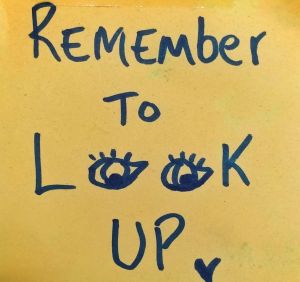
An apparently random glance skyward blessed me with this moment and this place of prayer

Talking about the idea that we are always standing and walking on sacred ground,  there are often places I come across that speak to me as places of prayer. It might be a tree, like the one pictured here; it might be a  distant view of a lake and the hills beyond.

Such places call to me to stop. Perhaps for a moment, perhaps to sit and linger and pray with words, or with silence.

In the Hermitage, there is  temple, a room we have set aside for that purpose, and no other. From the very first day I set this room aside as a temple, I have felt a stillness there, a tranquil vibe.

Among such spontaneous  little moments, there are times I simply stop and stare at a flower, or without thought put my hand on a tree. I will whisper a quiet thank you and a blessing to the Divinity I sense there.

Temples, churches, chapels, prayer rooms, mosques, and other types of sacred sites from andy and all spiritual and religious traditions, attract me as well.

These are all places people have spent time in praying, contemplating their lives and their union with the Divine. All that energy, all that love and devotion has caused an atmosphere of holiness, or sacredness to build up over what can be years, centuries, even millennia, in some places I have prayed.

But, really, when all is said and done, anywhere and anywhen can be and is a place for prayer. Here, in this booth, in the cafe at the lakeshore near the Hermitage, I make these notes in a mood of prayer, a prayer of love and devotion.

Being present, mindful, and prayerful in all I do, that’s my aspiration. Here and Now. Anywhere and anywhen; it’s all prayer.

Well, that’s my prayer anyway.

Be Here Now: There’s No There and Then

Earlier today I thought I might write a post to let you know what’s going on at the Hermitage at the moment. That’s it. One thought, no follow up.  One more idea that might or might not work out.

And then just now my partner hermit and I were talking about how we’re not feeling present where we are and how frustrating  that is.


Then I made a joke about how I’d had the thought about updating you on where we’re at right now and how useless that idea is because we aren’t actually here and it’s not actually now. We have already moved in our minds to our next temporary hermitage.

Let me explain.

You see, we move around a lot. Every few months, sometimes even more often. It’s just the way we are, pilgrims and nomads. Still hermits mind you, but the pilgrimage takes us wherever and whenever it wants.

Anyway, we are scheduled to move in about a month. It happens that our next safe haven is in a familiar town that we actually like quite a lot. So, naturally, we’ve been thinking and talking about all the great things about that place. But worse, all that forward thinking, fantasizing, speculating, has lessened our hold on the present, on the here and now.

Like I said, it’s as if we aren’t here anymore and that’s a pity. You’d think that someone who writes and thinks so much about presence would be a little more skilled at actually being present. At least sometimes. But, no. It often feels like the more I think about it, the less it happens. Being in the present, in the here and now I mean.

I know that my last post was about story and its central place in pretty much all our communication with each other and the world. With that in mind, there is a story I’d like to tell you now that I’ve heard a couple of times from a favourite teacher of mine.

It’s a story about presence, yes, but it’s also about having an attachment to some kind of anticipated and (in one’s own mind) fixed outcome. It’s really about how we can never really know anything at all about the future for absolute certain, and how that attachment to the outcome can easily obscure from us other possibilities, other outcomes that are available here and now.

Imagine you work in a city office and have just finished work for the day. You head out onto the street in a casual way because you know for sure the bus isn’t due for another 15 minutes and the stop is just across the road.

So, there you are, just about to cross the road, eyes on the ticket home (aka the busstop), and a car pulls up right in front of you. It’s a friend of yours you haven’t seen for a while (this part of the story is my little embellishment, added for extra clarity and detail you might say).

‘Hop in,’ your friend smiles and opens the passenger door to let you in. ‘I’ll drive you home. It’ll give us a chance to catch up.’

You are in a little world of your own after a long tiring day. You’re, already planning what to watch on TV, and thinking about dinner. So, after the hellos and the how are yous, you politely tell your friend that you’re okay, the bus is due in five minutes (time flies!) and you checked and you know it’s coming on time.

Your friend drives off with a shrug and a wave, and you get ready to cross the road .Just as you are about to step out onto the road the light changes leaving you stuck on the spot. Then you see the bus – your bus – pull into the stop. No worries, the light will change again in a few seconds. But it doesn’t. It’s a busy time of day and the traffic keeps on flowing.

Then, as you stand watching, the bus pulls away and your eyes follow it down the road, round the corner, and out of sight. Now, you also know that the next bus isn’t due for an hour and a half. And that is for sure going to ruin dinner and you won’t be watching much TV tonight either. An exhausting end to an exhausting day.

In your attachment to the idea of the bus arriving on time, and on your thinking about the evening ahead, you refused the other option that just by way of serendipity had presented itself.

Now, like all of us who miss opportunities because we’re busy thinking about the future (and of course it could just as easily be the past), you are asking yourself why was I so sure the bus was coming on time? How could I possibly know? Timetables can be wrong can’t they? You’re already regretting saying no to your friend. You were only being polite anyway.

While you sit annoyed and frustrated at the bus stop, you start to think a little differently. It might have been nice to catch up, after so long. Not only that [my friend’s] car would have been way more comfortable than a crowded bus. Not only that I would be almost home by now.

So, what about me? What will I miss because I’m not here while I’m still here? What won’t I see or experience because I’m attached to the next place? Well, unlike our bus timetable know-it-all, I don’t want to find out.

Time now to recentre. Time to practise what I preach. Time to return to where I already am, here and now. Mindfulness in even the smallest activity. When I remember that is; after all, it isn’t called practise for nothing: it’s a practice that never ends.

Time to remind myself that I can’t ever know for certain what’s going to happen from one moment to the next, much less at any moment between now and a planned event in a month. Nothing wrong with planning, with preparing. The trick is to not be so attached to that plan that you are compelled to either ignore the present or fixate on that possible future.

So then, it’s time to open my eyes, ears, mind and heart to what’s around me, where I am and what is happening. Same disclaimer as above mind you! It’s the effort we make that really matters after all.

The real bonus, though, of being as fully in the moment as you can be, is that being there (sorry I mean here) is the only place you can actually be, which means you are fully in the presence of all there is. There’s nothing else. Not in that (this?) moment anyway.

peace and love

Paul the Hermit

A Story of Words and a Journey of Discovery

Remember that old Bee Gees‘ song Words?  It’s about one person offering all they have to another. Well, the one doing the offering must have been a writer because, while the song’s a love story, it’s words that are the big thing on offer here:

It’s only words, and words are all I have
To take your heart away

Well, as this is a blog, words are the way it hopes to reach your heart. Actually, the posts also include photos and sometimes other art, but the main vehicle used here is words.
So, with that in mind I have a couple of words to offer you today. Well, one word and its opposite. Have a look at this sentence from Thomas Merton:

If Irish monks affirmed his Celtic spirit in their mastery of cataphatic contemplation of the wonders of divinity in nature, Buddhist monks evoked his Zen mind and drew him into the apophatic path of formless ’emptiness’…

A quote from the Introduction to When the trees say nothing: nature writings of Thomas Merton

As sentences go (though this is obviously only part of a sentence) this has to rank pretty close to the top for length and denseness.

Kataphatic. What a word! Of course I had to look it up; I’d never heard the word before (this post is a rewrite from notes written a while ago that I never got around to posting.), and even though the sentence seems to  suggest the meaning, I was still curious.

Looking at Wikipedia – where they spell it with a ‘C’ like Merton, as well as with a ‘K’- I learned that cataphatic is an adjective that describes an approach to theology that uses ‘positive terminology to describe or refer to the divine (God, Truth, Dharma, Spirit. You know what I mean: the divine).

Apophatic, as you probably figured out already, is when one uses ‘negative terminology to indicate what it is believed the divine is not’. A process of negation or we could say you get to what the divine is by a process of elimination.

Pretty simple concept really, but with a couple of big words to label it, and a lot of  words to define it. No, don’t worry, I won’t bore you with the meaning and origin of the words and all the rest. Mainly because I don’t know and I’m not especially interested anyway in all that technical stuff.

I simply resonated with the word, and the concept. Cataphatic made me think of Dick Van Dyke and Julie Andrews singing Supercalifragilisticexpialidocious in Mary Poppins. But let’s not go there: this is a serious blog after all. Except to say there’s more to that word than you might imagine.

Putting aside the aesthetic appeal of the word for a minute, let’s contemplate a while on cataphatic, and it’s opposite, apothatic.

To begin thinking about these two words, it’s necessary to acknowledge the existence of the divine. We can call it God, if we like. Or Dharma, Truth, Spirit, Love, Beauty.

As the quote suggests, a cataphatic approach, ideology, theology, or whatever we call it, ascribes names and forms to the divine, as well as describing where and in what the divine may reside.

Whereas apothatic, again as the quote suggests, does not ascribe names and forms to the divine. Instead it seeks to discover what or who god is or isn’t by a process of negation as described already. 

For a long time I labelled myself as a Humanist. I had decided that this physical body is all there is; the physical or material universe is all there is, and that there is no ‘god’ separate from us or who has special powers to affect our lives. No God at all in fact.

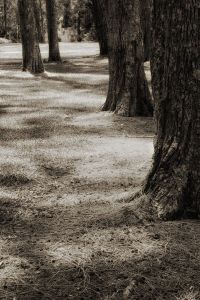
In the Grove of the Sentinals

But, all that while, I just knew that there was something else, something more than just the physical.  And over time, I came to the knowledge that there is indeed more than the simply phsical universe (including we humans).

I’ve thought about it a lot over the years and I came to the conclusion not that many years ago, that I had simply been afraid to name or define that something more. It would have meant admitting to myself that something more really did exist.

That is to say, I was scared of taking the cataphatic approach – and I’d never even heard the word.

Well brothers and sisters, I saw the light. The truth was revealed to me. And what is that truth? Well, to put it simply, I wasn’t scared anymore. Not of names and forms, and not of what I couldn’t see.

Now I could take both the Catophatic and the Apothatic approach: that the something else I had actually always known just was, really is, and can have a name and form, or not. The divine is not an omniscient being or any kind of being at all; As I’m very fond of saying, the divine (or truth, God, Dharma) simply is.  And it’s all there is.

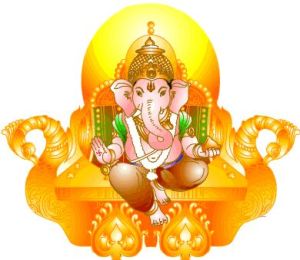
Some of you might know that I am really quite fond of the Indian deity, Ganesha . Do I believe that a man with the head of an elephant actually exists or ever existed?. Of course not. Do I actually think that he resides in the lovely painted icon that sits by my bed? Well, obviously not.

But do I believe that there is a spark or aspect or attribute in all life, in you and me, in nature, in (scary word time) creation, that we can tap into to help us overcome obstacles? Or that we can access when we begin new ventures of whatever kind, or when we need strength to face challenges? Yes, I do. Very definitely.

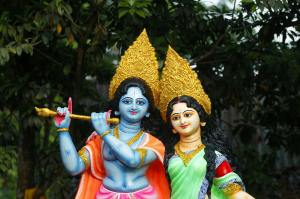
And do I believe in a blue boy called Krishna who lived in India 5000 years ago and spent his time playing in the fields with the village cows and his friends, entertaining them with his flute? Again, of course not. Does he live in the other beautiful icon by my bed? The answer is obvious: no.

But do I chant the Hare Krishna mantra in an effort to come closer to the divine that is… well, that just is? Yes, again, very definitely.

Words. It’s all only words. Only words? Only??

In the beginning was the word, and the word was  with God and the word was God. (from the opening of the Gospel of John)

It’s all I have (for now).

Peace and Love from me to you