Physiotherapy, formal exercises as well as the myriad of day-to-day activities required to maintain a physical body, is prescribed as the way forward for people like me who have experienced a stroke.
Quite right too. Exercises and activities to build and strengthen muscle to help recover mobility; to repair broken – and develop new – brain pathways to help recover dexterity and increase both micro and macro motor functioning.
But what of psychotherapy? Not the talking, talking and more talking kind that aims to uncover past traumas, root out the cause of current psychological and emotional issues in an attempt to ‘fix’ you. While talking can be hugely helpful, (I mean it. Talking to a trusted friend, relative or professional, provides not only emotional support, but can give you new perspectives and fresh insights into even the most intractable issues).
What I’m getting at here is more about therapy for the complete psyche: the emotions and the mind and including the spirit or soul.
It is about the rebuilding of confidence – the ‘I am able’ attitude – and it is about filling the void to evolve a meaningful life.
The refuge that each day I commit to take in the divine will of the universe is where this care of the psyche -the inner me, if you like – begins.
Pause for reflection #1: If I take refuge in the will of that which is on the face of it ‘a higher power’ than my own, then why the big efforts at ‘filling the void’. Sounds like I’m resisting that divine will, or somehow refusing to acknowledge the reality of my life as it is.
Of course the ‘making of effort’ and doing our bit is absolutely vital and necessary. So I pray, I meditate, I read, I sit quietly, I create what and when I can. And I make blog notes like this and they also count.
But it doesn’t feel enough. It’s like I’m trying too hard to get to some point I’ve actually acknowledged I’m already at: in the shelter of the will of the universe.
I don’t like to say it, but I’m bored, and I think it is the constant ‘trying’ that is the big obstacle to having a more rounded and holistic approach and attitude to living here and now with life as it actually is for me at this moment.
‘Trying’ suggests the going outside of the present. Making huge straining efforts to make things other than they are. Hardly living in the moment is it?
There are long periods when I find myself sitting with ‘nothing to do’ (I cant read, write, create and pray all the time as in 24/7 can I?)
Pause for reflection #2: Why not? You may very well be asking, as indeed I am asking myself right now. Perhaps these spaces and times are the will of the Divine specificallydesigned for me to learn to sit in silence and to simply be. Maybe they offer spaces and times for me to be quiet; opportunities to simply be open to receive, lessons in presence.
Not only that, perhaps they are healing times when all the fragments of my psyche can settle back into their rightful place.
So, the problem is the solution, is what I seem to be saying here. The times I am describing here and which I often face and experience with dread, are precisely gifts of grace granted to me to help me heal, and teach me to sit in silence learning to listen.
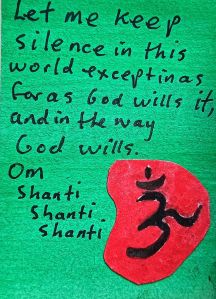
Yes, keeping silent except when and how it is the divine will of the universe might be quite nice.
One of the things I like about one of our local coffee shops is that they play a nice wide selection of music. Mostly popular songs from pretty much every decade back to the ’60s. I think they have one of those looping playlists you hear sometimes in shops and cafés.
It must be quite a long list because you don’t necessarily hear the same songs repeated at every visit. Which is a nice thing too.
Anyway, yesterday the chorus of a song I heard played got stuck in my head. The song, You’re the Voice, was a hit around the world in 1986 when it was released by Australian singer John Farnham.
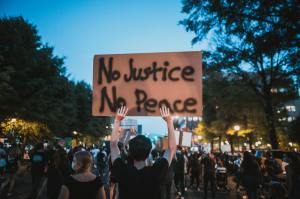
It’s essentially a protest song reminding us that we all have a voice, and encouraging us to use our voices to stand up against corruption and war. One of the co-writers Chris Thompson missed out on going to an anti-nuclear protest because he slept late. He felt so badly about sleeping in that he wrote the lyrics reminding us about taking personal responsibility and making our voices heard.
Okay, back to the chorus getting stuck in my head.
You’re the voice, try and understand it Make a noise and make it clear Oh woah. We’re not gonna sit in silence We’re not gonna live in fear Oh woah
You see? It’s very catchy, and an excellent piece of advice too. And, for a hermit monk, it’s actually advice I could and do aspire to live by. Just not quite in the sense the song intends perhaps.
This morning, when my partner hermit suggested we just sit in silence for a while, I spontaneously started singing the chorus, though a slightly modified version:
We’re just gonna sit in silence We’re not gonna live with fear.
Then, as I sat in said silence, I got to thinking about the words of the chorus. Nobody wants to live in fear, yet it is an aspect of the human condition and something so many people live with constantly all over the world. All through human history as well.
The message of the song reminds us all that we have a voice which we can use to help create a state of affairs in which we don’t have to live in quite so much fear, fear that’s coming at us from so many sources.
For me, this is a vital, fundamental, and absolutely essential principle. Without those who do stand up, those who do use their voices to try to right wrongs, then, well I can’t think of what that might mean.
Yet, for me, I’ve chosen silence. Not only chosen I must admit: temperament, my own nature, health, all are factors that have made silence the best course for me to take. Silence as in seclusion from the world, minimizing outside imput, and reducing as much as possible the attachment to the world and its things and fears.
And this way of living ironically allows me to use my voice in my own ways to address the Truth as I see it; to help effect change and contribute to the healing so sorely needed.
Being ‘out there’ and engaged with worldly things and activities and interacting with people constantly causes me so much anxiety that it threatens my health and ability to act in the world.
There is also the personal choice aspect, common to so many who live a contemplative life. Silence – when I can actually achieve such a state – gives me the energy and clarity to write; it gives me the mental, emotional and spiritual ‘space’ and energy to pray, to contemplate, and to foster the ‘good vibrations’ I feel are also necessary to turn the world towards peace, healing, and truth, as well as to assist in maintaining the wellbeing of all life.
The world, and all of life, needs both those who can’t or won’t be silent (I’m definitely not suggesting the world needs more noise). We all need people who can and do raise their voices against war, poverty, corruption, and all the ills that plague us.
And it needs those who are able to ‘just sit in silence’. The work to be done is the same; the outcomes perused are the same; and in essence the means themselves aren’t all that different either. Silence as mentioned can include the use of our voices in ‘quiet’ ways, in ways that don’t have to relate so directly the affairs of the world.
It really is a symbiosis: Those of us living secluded and contemplative lives with our prayers, our witness, our creative endeavours, support those active and vocal ones out there trying to heal the world.
And at the same time those out there in the world support the secluded and contemplative ones. Their efforts and hard work, and simply knowing they are there, are encouraging and nurturing for the secluded and contemplative ones.
We are One after all. Yet our voices are all unique, each and every one. That’s what I understand to be true.
It’s been just over a week now since the new page on the blog went live. I have to say that it’s been very satisfying setting it up, then uploading some of my devotional poems.
Actually, it was while uploading one yesterday that I thought, I’ll feature this one in its own post. I did mention that I would like to continue this occasional practice.
There’s not too much to say about this particular poem really – best to leave it to speak for itself. I’m only introducing it like this because I wanted to include a Wikipedia link that might help clarity a couple of the terms and some of the details mentioned in the poem.
The poem speaks about the concept of Viakuntha, which as you’ll see is the supreme heaven for some Indian traditions. The link leads to an interesting and short read, well worth the time I think.
The myth of Vaikuntha was a trigger for this poem, as was the meaning of the word itself. Is it a real place? Who knows. Fact and truth don’t always agree, and as for me, I don’t think about the question.
Myth has been the way we humans have always used to tell our story. To try to sort out the big questions: where are we from? Who are we? Where are we going? All the ‘big questions’ are addressed by mythologies from every culture – every family, country, you name it – on Earth.
In any case I think that my poem came about as a result of my own contemplation on the story, on those big questions, on Self really.
I hope you will visit my Poems of Devotion page. I’m still adding poems to the page, and of course, with grace, I will continue to write.
Now, please enjoy reading my poem, and I hope it’s a nice experience for you.
Love and Peace Paul the hermit
OUT BEYOND CAPRICORN & DEEP WITHIN EACH HEART
Vaikuntha: Without anxiety. Is there such a place? Free from worry? Out there, they say, beyond Capricorn. There’ll you’ll find the highest heaven, the abode of God.
No need to look to the stars: Vaikuntha is here. Vaikuntha is now. Within and without you.
Vaikuntha is indeed beyond; beyond the material world, beyond the realm of bodies and minds; beyond the illusions of places and spaces. Atma – Universal Consciousness – you and me, that’s Vaikuntha. You and me, all there is. No anxiety
Occasionally, on this blog, I have had the good fortune to be able to share with you a poem I have written.
I say occasionally because, at best, I am an occasional poet – or rather than take on that label, it’s better to say that sometimes words in some kind of poetic form emerge.
From time to time said poetic emergences could be called devotional. Devotional in the sense that my words seek to express praise, recognition, gratitude or similar sentiments, ideas, thoughts, and so on, directed towards those things I regard as sacred.
That might be ‘God’ in the direct sense that we all would understand right away, or it might be the divine as manifested through objects, people, or other beings in the material or non-material world.
Actually, come to think of it now as I make these notes, I realise that according to that not so short definition, most if not all my poetry has been devotional for quite some time now. Yes. I think that’s right.
Anyway, to get this post moving along a bit. A few days ago, I mentioned to my community, ‘I’ like to write devotional poetry.’
‘You do already,’ was the unanimous response. To which I replied, ‘I suppose so, but I want to sing praises.’
Hare Krishna Hare Krishna Krishna Hare Hare Hare Rama Hare Rama Rama Rama Hare Hare
And that, my friends, became the title of a poetic effort from me expressing just that exact prayer.
Now I share with you those words that were given me as I ‘just sat’ in our temple.
I WANT TO SING PRAISES
Devotional poetry. That’s what I want to compose. Actually, is there a calling to such composition? Yes, for I do hear the call; it resonates deeply. But, my ego-mind, it’s not listening. Anyway, composing poetry devotional is of the heart; It leaves the mind behind. Looks like one more ‘make the mind your friend’ moment. Praise be all that is.
Today I scrapped a planned post that I’d been meditating on, angsting over, and making notes for, over the last several days. And now, I’m thinking about my reactions to this startling event. Startling in that it’s not as if this is the first time. Not even close. So what’s the situation with this not so rare occurence? Let me try to explain.
To begin, let me say that I haven’t quite subdued my Ego. Not in the sense of both my attachment to my own actions as well as not in my false identification with this body and mind. Both are still going quite strong.
Mind you, having said that I need to be honest and confess that I don’t feel like I’m an ego maniac (in either meaning of the word as I see it).
Stop! Get to the point will you?
Okay sorry. The point is I still get affected by having to dispose of a project I’ve worked long and hard on. There: I’ve said it.
Of course it’s not that such an event bruises my ego (the attachment and ‘pride’ meaning this time). So why? Why does such a thing still get to me? I think it is simply a sense of disappointment that I’ve failed at an endeavour that I had thought important.
Ah, so it is ego then? Yes, I suppose it’s true. Ego and attachment. Both are of the mind and they love playing those old old mind games in which they have the final word.
I’ve written before about my attachment to the desire to write more often, in more quantity , and with more quality. So, no need to revisit that topic. Unless of course you want to.
Anyway, why do I write what and how I do? Why do I publish this blog?
Well, if you have read the Welcome and About the blog page, you will learn that this blog is an element in my ongoing quest to fully realise the oneness of all life – which of course means all of you, me and everything that exists.
Also on that page I think I say that I, as a hermit retreating more and more from the entanglements of the world, nevertheless feels a strong sense that I need to share my life with the world – again, that’s you.
So, my writing is about my life. It’s about me opening up about my experiences, my learnings, my ideas, and any occasional insight I might be blessed with. As well, I write to share my aspirations for, and my reflections on, the spiritual journey – at least my little bit of it.
And I do that by thinking, meditating, sometimes writing then posting the conclusions. Or as happened today, I think, meditate, write, throw away writing, then don’t post.
In a sense there is no need for disappointment when that happens. I’m always aspiring to write from my heart, and share what I hope is in alignment with the Absolute Reality, or if you like, the Divine, or the will of God.
In other more straightforward words what comes out onto the page is supposed to, and, if at some point along the path what emerges ceases to ‘feel right with the Universe’, then throwing it all away is easy and ego and attachment free. Well that’s the theory I’m going to try to work from.
What I’m trying to say is that my writing in general and this blog in particular, is not my property; I don’t own any of it. All of it belongs to that Absolute Reality in the form of the natural order and flowing or unfoldment of the Universe.
Belonging to that Absolute Reality, to the Universe in other words, then it is yours too. Everbody’s and everything’s. So I thank you for allowing me to share my life with you.
PS If my ego ever pops up again, just ignore it. One day I hope to do just that!
These last few days I’ve been researching and thinking about an idea for a blog post. But I’ve come to realise that I am grossly underqualified to write about the topic I had in mind. Let me put it another way: I am completely and utterly unqualified in any way whatsoever to go there. In fact, after all the research, I think I’m going to disqualify myself from ever going there in writing.
However, I’m a great believer in the idea that no quest for knowledge is ever a waste of time or effort; there is always something to be learned. During my research I came across a topic I believe I am qualified to discuss, as it forms an integral and vital part of my own personal spiritual practice.
Why I’ve decided to write this post, though, is because I made a discovery that lead to an insight that I know will lead to a great progress in that practice. It’s nothing new, not really, but it was one of those occasions we’ve all experienced of ‘I knew that, but now I really know it.’ For me, it was a realisation of something that till then had been a nice cosy theory and belief.
Bhakti Yoga is that practice. It is really a key foundation, a valuable component of my spiritual life.
Wikipedia opens its entry on Bhakti Yoga (see the link just above) with a description of the practice that mirrors what I think is the traditional understanding of Bhakti Yoga:
Bhakti Yoga (also called Bhakti Marga, literally the path of Bhakti) is a spiritual path or practice within Hinduism focused on loving devotion towards any personal deity.
In the same entry there is a description of the origins and meanings of the two words, Bhakti and Yoga:
The Sanskrit word Bhakti is derived from the root bhaj, which means “divide, share, partake, participate, to belong to”. The word also means ‘attachment, devotion to, fondness for, homage, faith or love, worship, piety to something as a spiritual, religious principle or means of salvation’.
The term Yoga literally means “union, yoke”, and in this context connotes a path or practice for ‘salvation, liberation’. yoga referred to here is the ‘joining together, union’ of one’s Atman (true self) with the concept of Supreme Brahman (true reality).
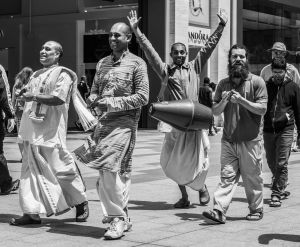
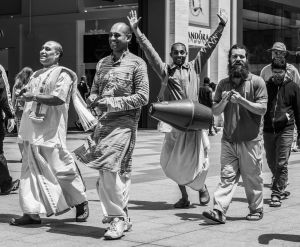
For some, dancing while chanting the names of their God, demonstrates their devotion and celebrates their union with each other and with God
In other words, those called to a religious or spiritual life, practise Bhakti Yoga whenever they pray or otherwise express devotion towards their personal conception of God, or the Divine. This particular definition seems to be saying that such a conception of the Divine, or God, is in the form of a personal deity who is a kind of representative of true reality, which the devotee is aspiring to join with.
Some Bhakta Yogis are full-time, full-on practitioners. People like contemplative nuns or monks, hermits who retire from the world into seclusion. Anyone basically whose entire life and activities are spent in devotion.
So, when I discovered all this, I became intrigued; I decided to go off on a tangent and explore the word Bhakti itself. Wikipedia has a separate entry for the word on its own:
Bhakti is a term common in Indian religions which means attachment, fondness for, devotion to, trust, homage, worship, piety, faith, or love. In Indian religions, it may refer to loving devotion for a personal God
…
is often a deeply emotional devotion based on a relationship between a devotee and the object of devotion.
…
In ancient texts the term simply means participation, devotion and love for any endeavor.
May refer to devotion to a personal god? While I thought this entry doesn’t contradict our first quote above, it does seem to broaden, and deepen, the meaning of Bhakti. Expand might be the better word.
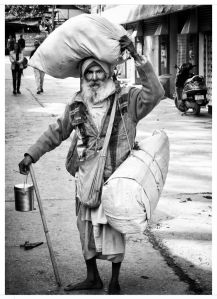
In some traditions a simple life on the road is a way to commit full time to Bhakti or devotion.
It struck me that that object of devotion might be anything. Or even everything. You see? I told you it wasn’t a new idea. It’s just that it’s resonated deeply within me now. It appears that the object of Bhakti Yoga practice doesn’t necessarily have to be a ‘personal god’.
Many many people would say ‘I like animals’ or ‘I think we should save the world’. But, while that may imply a kind of love for or at least a fondness for, I think Bhakti is something more – actually several somethings more!
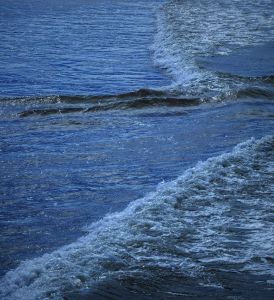
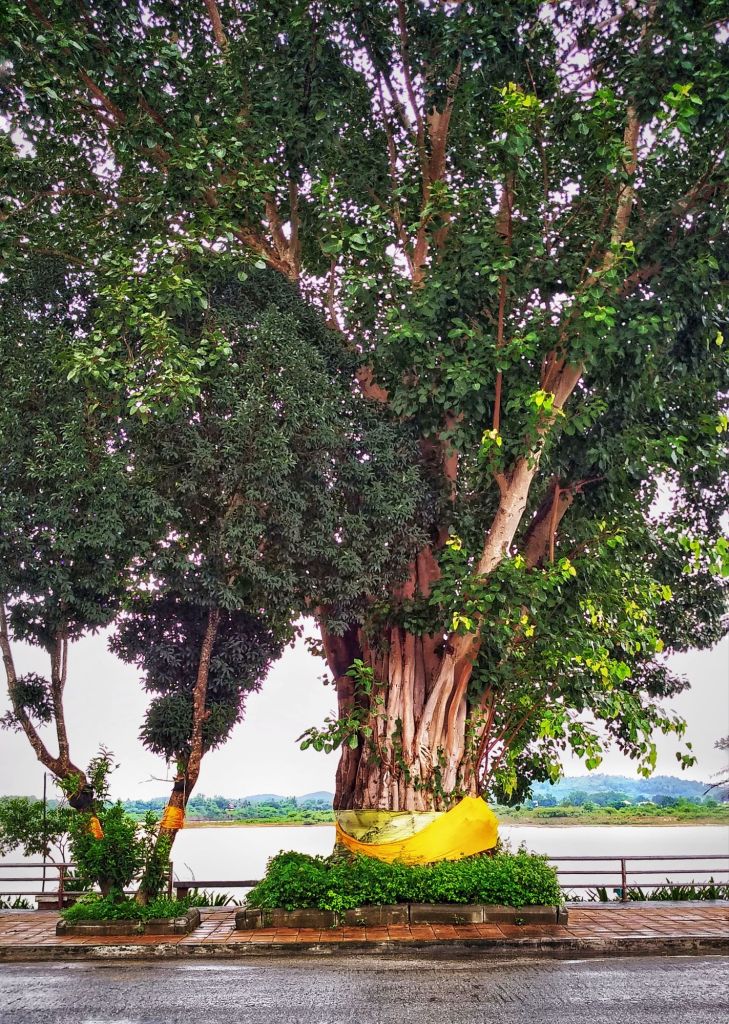
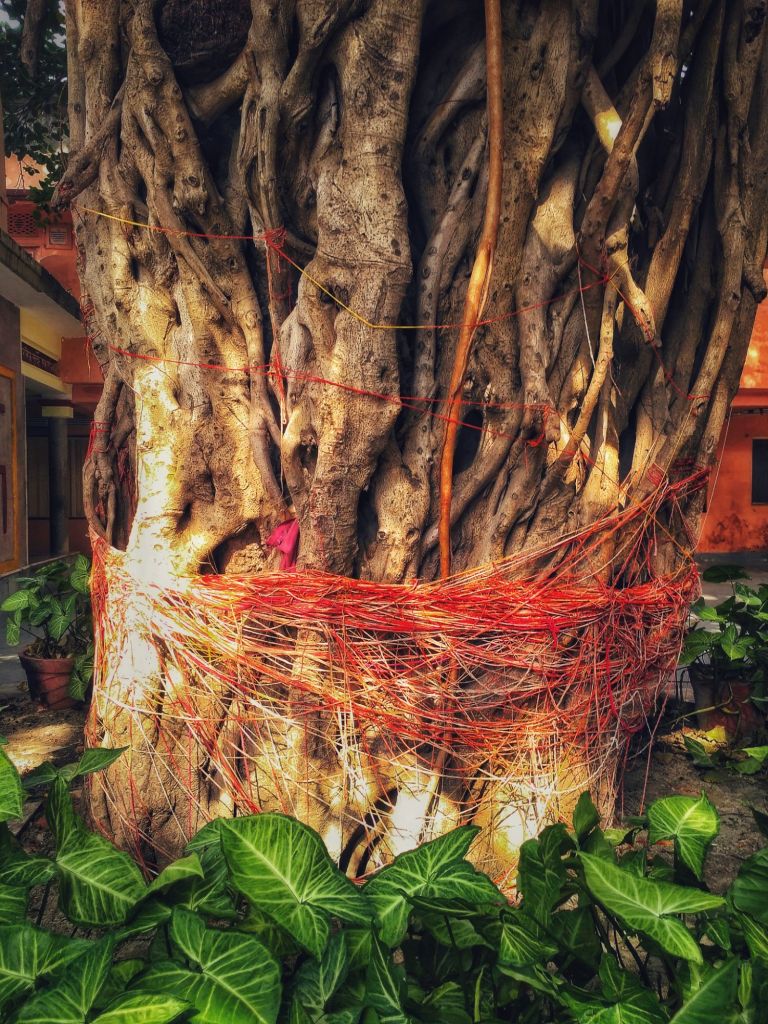
For example, some people have a particular attraction to and love for, the ocean, or it might be a river they view as, if not sacred in a religious sense, then as special to them in some deep, comforting, even therapeutic way. Others have similar relationships with and feelings for trees, or even a particular tree.
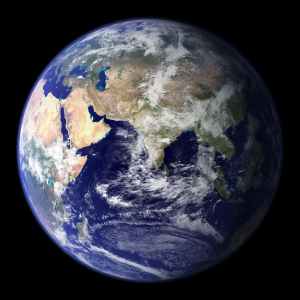
Animals as either individuals or as a species or group, can have the same appeal and call to other people. Then there are those who feel strongly in their hearts you could say, that Earth itself is a sacred object, or others have a knowing that the planet is a living entity and worthy of our devotion.
Bhakti begins with love and devotion, which is about caring for, affection towards, loyalty to, emotional engagement with the object of devotion. But even more than that, there is faith in that object of devotion; faith as in trust, confidence that the love is real, that the ‘relationship’ is sound and real.
Homage and worship too are key aspects of Bhakti. The deep inner feeling we have towards a thing, person, or other being, that is beyond what we normally call ‘love’. It’s about seeing and actually realizing ‘in our hearts’ our desire to be merged or united with that thing, person, or other being.
Actually, seeing that word other just now got me thinking. I had to go back and reread our definition of Yoga up there near the beginning. It says Yoga means ‘union, yoke’. It goes on to add: yoga refers to a ‘joining together, union’.
This passage seems to be suggesting that Yoga (in our case Bhakti Yoga) is both an already existing union, and a process of joining together to achieve union. One thing I would say here is that in my practice of Bhakti (and love as a general thing to strive for and be) it’s both.
Trees are special beings for many people from a whole variiety of cultures all over the world
But, in the end, it seems to me that the process or practice, the path of Bhakti, serves to awaken us, to assist us to acknowledge, recognise, and realise in that really knowing way, our pre-existent true nature.
That true essential nature can be said to be the reality of our oneness with all things, living and non-living. And their oneness with us too of course. In fact, by putting it that way, I’m saying there is only one, or oneness. What’s that expression? One without a second.
May you be a Bhakta Yogi. Or, perhaps you already are one?
Love and peace from Paul the Hermit
Life has manifested itself as the multitudinous forms that comprise the universe. It is the one Universal Life, Power or Shakti (the laws of the universe or natural laws) that controls, guides and actuates all movements and activities in all beings, creatures and things.
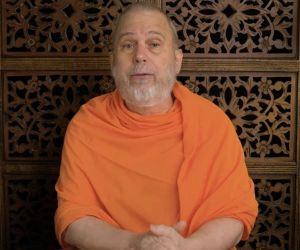
This morning I completed the penultimate lesson in a course of classes on the Bhagavad Gita. The classes were held once a week for I think 3 or 4 years and finished a few months ago. As it happens the entire course was recorded giving me and so many others the opportunity to study it online.
Anyway, at the start of the lesson today Swamiji ( Swami Tadatmananda, resident teacher at the Arsha Bodha Centre) reminded us that the course will soon be over. I thought (and it was by no means the first time I’ve had this thought): what an achievement; finishing this long and complicated course; fancy me sticking with it till the end.
Second thought, following a nano-second behind: What an odd idea, to think how great I am simply for finishing my study. Especially when it is not in the slightest way true. I’ll be studying the Bhagavad Gita (and I hope many other teachings) for the rest of my life. This period of study has been simply an introduction, a foretaste of what is to come.
Swami Tadatmananda
Having said all that, I have to say that this time of digging deep into the Gita has been a terrific ride. I’d been studying it by myself for a few years, but that’s nothing compared to having a qualified teacher guide me through such an in depth study and contemplation of this great teaching.
While I do know a few of the 800 verses by heart, I understand that this is not ‘ordinary’ knowledge. As the disclaimer goes: it is very much a pointer to the knowledge; the key is to not to confuse the pointer with the very much transcendental knowledge that is to be gained from what the pointer points to.
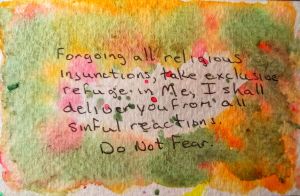
Probably my favourite verse written on a little card that I treasure
My partner hermit has been responding to some of my photos when I post them with little Haiku-like writings. Yesterday (or was it the day before?) I said to her:
‘You’ve done 71 so far.’ I was thinking to praise the achievement.
She replied (with much wisdom as always):
‘I don’t count them. One or seventy one, it’s all the same.’ I’m paraphrasing here.
Looks as if I might be only just at the beginning of my lessons.
There used to be a thing – maybe it’s still a thing – that would happen sometimes. You’d be talking to someone and suddenly they’d burst out:
‘Hey that rhymes! You’re a poet and don’t know it!’
This exclamation, this sudden and surprising interruption, was always prompted by some sort of accidental rhyming happening in something you’d said.
Or, sometimes, it even happened when you had written something and had through no fault or thought on your part, created a rhyme, even a little impromptu and accidental poem.
Well, that’s what happened to be. It was a while ago now and I was writing in my journal. It must have been ages ago because I don’t keep a journal anymore.
In any case, with nobody reading over my shoulder, it was left to me to express surprise at a sudden outburst of poetics on the page. And along with the surprise, I was able to make a quick note of what I’d written:
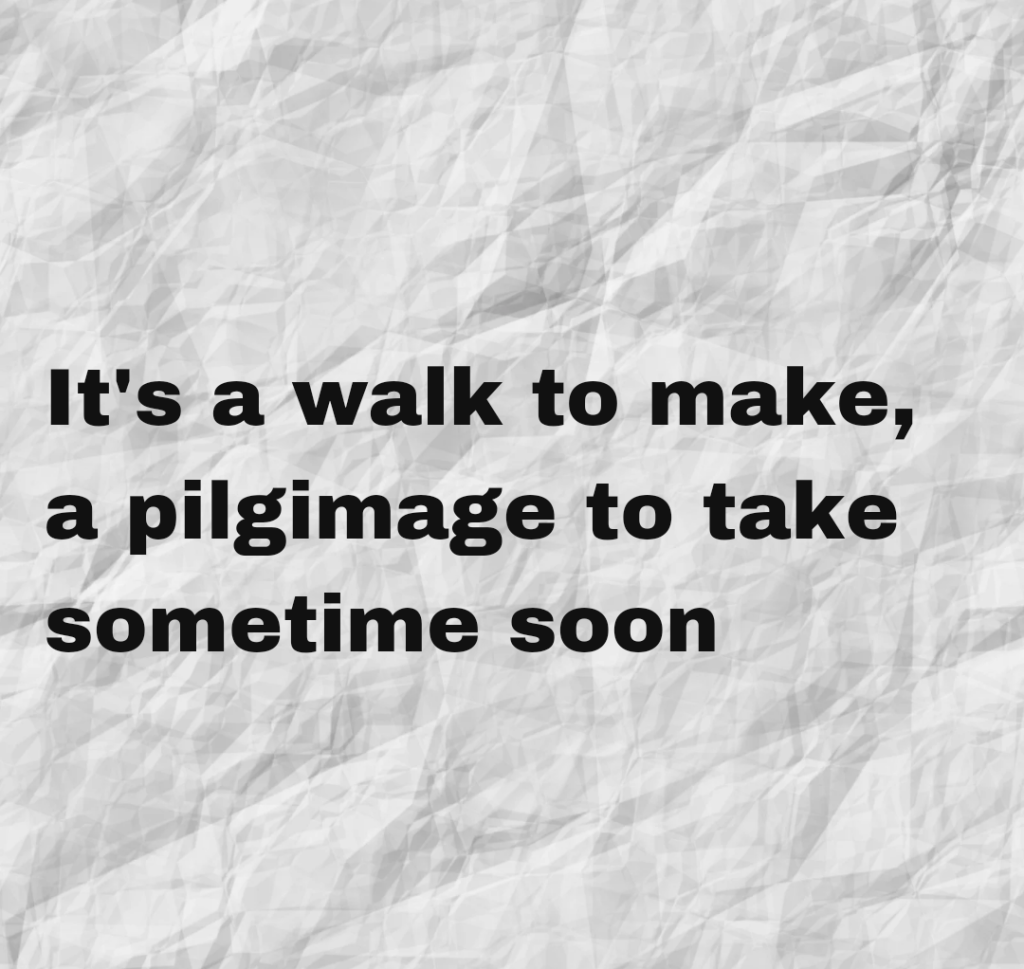
Anyway, this post isn’t about this little demonstration of spontaneous poetic genius; it’s actually about the ‘sometime soon’ tagging along on the end.
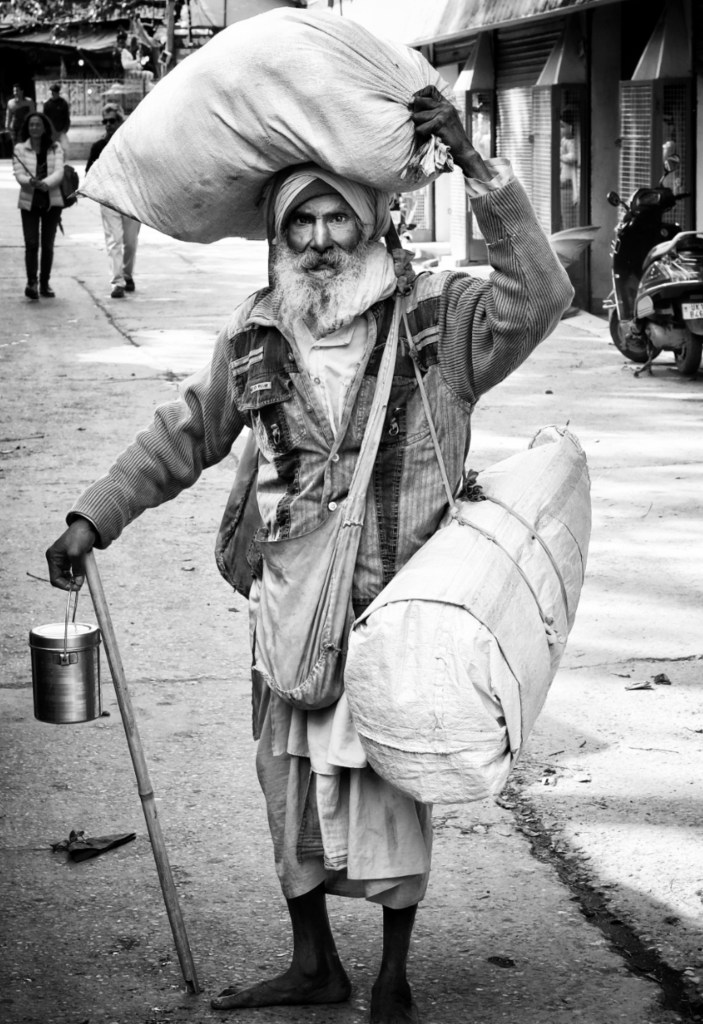
I have no idea where or what the walk to take, the pilgrimage to make, was – or is. Which suggests a rather obvious conclusion: ‘sometime soon’ never came. The walk was not taken; the pilgrimage was not made.
Now, I’m thinking to myself, if the walk under discussion was so appealing – as well as so significant that it transformed into a pilgrimage – then how come ‘sometime soon’ wasn’t right now, or rather right then. If you follow me.
Of course there’s no telling the reasons for the sometime soon. Maybe plans would have been required; travel to arrange; equipment to gather; fitness to acquire. Who knows?
Clearly I was inspired to at least put down in writing that I thought this walk, this pilgrimage, was (or would be) a good thing to do.
Meaning, in that moment, in the present that is (or was) of that moment, that walk/pilgrimage was a thing I wanted to undertake.
Now, while I might have longed to take that walk, to make that pilgrimage, in the present of that moment of writing, and even though planning may have been required, thereby putting off the actuality of the taking and making till some future time, I at the very least could have taken some action – again in the present of that moment – to get the ball rolling so to speak.
So, what’s the lesson here?
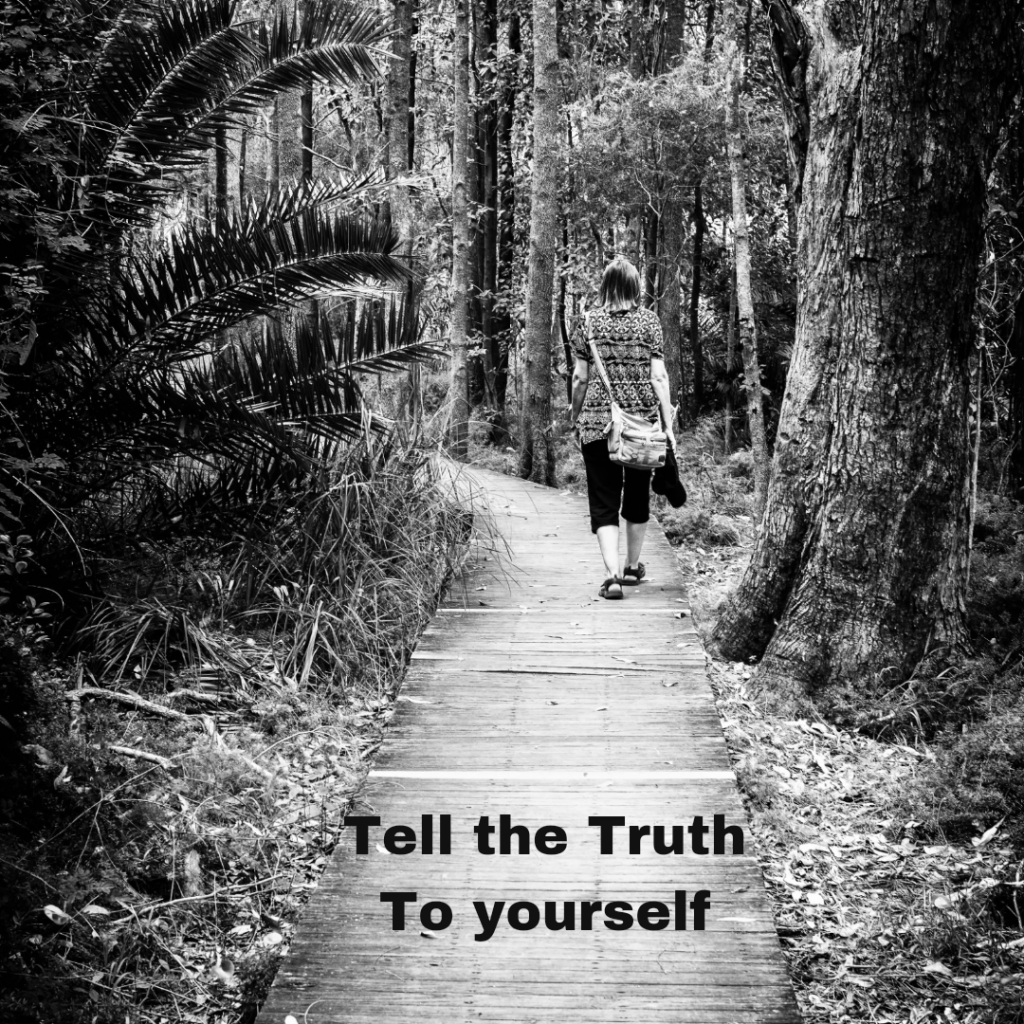
Well it’s simple really, very simple. Maybe simpler to say than to actually put into practice, but I think my lesson here is just this. Tell myself the truth as often and as much as I possibly can. In other words:
Be honest with myself
Let’s look at the options
If I’d really wanted to take this walk, to make this pilgrimage, no matter how remote, how complicated the logistics or planning, why didn’t I take action in that present? Or at least in some present before I actually forgot completely what the walk/pilgrimage was.
And why add ‘sometime soon’ if I didn’t actually desire or intend for this thing to happen? Well, possibly to put of any decision about doing or not doing. Or perhaps it was a way of saying (in completely other words), ‘Well, it sounds very nice, but I doubt I will ever end up doing it.’
So, honesty, and clear thinking about what I want and what I don’t want. That way I won’t be so attached, so keen on clinging to outcomes that I can’t see clearly, can’t easily know what I am to do or not do. Presence. Being present is what this is really about isn’t it?
To be completely present, to be fully here and now, requires me (all of us I suppose) let go of the maybes, and the ifs and buts as well as the endless ruminations about do this or don’t do that.
If I want to take a walk, or make a pilgrimage, then I say to me: just get on with it! If I don’t, then just say so, and move on.
Last little comment: I would really love for the present to remind me of what this walk/pilgrimage was. I’m a bit curious I guess(yes I know, curiosity is a present moment deflater) Maybe it’ll come back to me now I’ve written this post.
I was out and about photographing for a few hours this morning. On such walkabouts I like to walk at a slow but steady pace, and in a contemplative frame of mind.
Usually I’ll also chant mantras as a way of focusing my mind, of keeping random thoughts from distracting my attention. And so it was today.
Deep into today’s walk, I was feeling ‘in the zone’, as I like to call it. Making photos and chanting mantra. All of a sudden I heard myself singing a bhajan (sacred song or hymn) in place of the mantra I’d been reciting.
This particular bhajan was By Your Grace, by Krishna Das, It’s a beautiful devotional song that you can listen to here. I’ve been listening to it and singing it for years, and I love it. I find it puts me in a nice prayerful state of mind, Anyway, here are the lyrics:
Closer than breath, you are the air Sweeter than life itself, you are here I am a wanderer, you are my peace I am a prisoner, you are release
Jai Gurudev…
I am a pilgrim, your road so long I am the singer, you are the song Held in the open sky, so far above I am the lover, you are the love
Jai Gurudev…
I follow your footsteps through the flame All that I ever need is in your name Carry your heart in mine, vast as space All that I am today is by your grace. By your Grace… I live by your grace.
One more way to chant sacred songs
Now, the song was written by Krishna Das as a way of thanking and praising his Guru. But, the words and the power of the song can be dedicated to any of our own individual concepts of the Truth. Whether we call it the Absolute Reality, the Supreme Being, the Life Force, the inner Divinity, Nature, Consciousness, God, Guru, the Universe. After all, these are all simply names and forms.
I guess what I’m saying here is that the song is a fine prayerful and meditative way to express our gratitude to, our love for, and devotion to whatever it is in our heart of hearts we know as our support, our teacher, our creator, our Guru. Our very own Truth
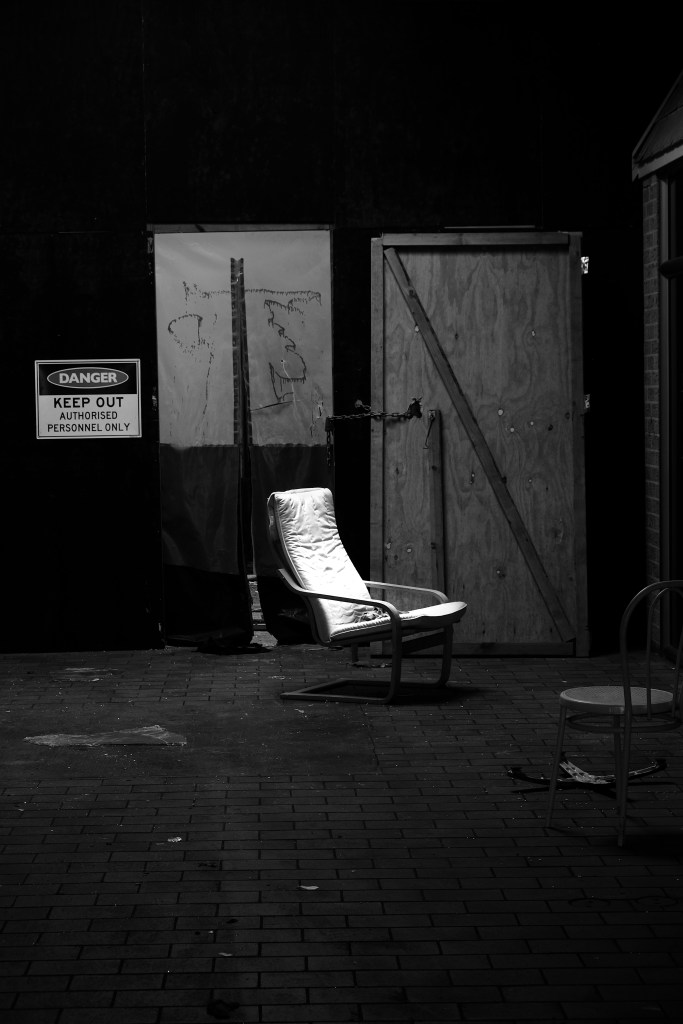
That was the first thing my partner said when I showed her this photo. Her eyes – and perhaps even her heart – had found that which is illuminated by the sun, even though it’s surrounded by wreckage and ruin.
The wreckage by the way, of an abandoned and trashed store front. One of several in a small arcade, that’s long sat empty.
Ah, I thought: one more illustration of a metaphor I’ve been hearing a lot lately in my studies about consciousness.
Allow me, please, to adopt our teacher’s metaphor which, for me, really clarifies this concept of consciousness, or Atma as it’s called in Sanskrit.
Is the brilliant light streaming into this room and onto this chair affected in any way whatsoever because the chair is sitting amidst all that wreckage?
Is the sun shining any less brightly on the chair than it would if the chair was sitting in a luxuriously decorated space instead?
Of course the answer to both questions is no. The sun, and its brilliance remains undimmed, and completely unaffected, untouched, regardless of what it shines on.
The ‘I’ that photographed this scene, and my partner’s ‘I’ whose eyes were drawn to the chair in the scene, are both consciousness. Not ‘my’ consciousness; not ‘her’ consciousness. Consciousness is all; all there is. Boundaryless, infinite, all pervading. We can’t even say there is one consciousness, because there is only consciousness.
Ah, I hear you say: there is one sun shining on our world; and the sun isn’t ‘all there is’. Well, as our teacher likes to remind us, all metaphors are flawed: you can only take them so far.
Metaphors, are only meant to illustrate, to show us the way, point us in the right direction as it were. In our little example here, the metaphor is meant to help us gain some knowledge.
The knowledge that we are not what we see, hear, taste, touch, think or feel. We are that light – consciousness – that allows us to know what we experience with our senses.
One more thing: The light of the sun, flooding the chair with its brilliance, enabled my partner to see that it was comfy, even though it was sitting in that wrecked, abandoned and lonely place.
Just as in our lives, when everything seems to be crashing down around us and we feel we are the ones stranded in that wreckage, we can remember that the light of our own consciousness, is the way in which we may shine our attention on the truth of our unchanging eternal, and true nature, that is who we really are: perfect, eternal, absolutely unaffected by anything at all.
















 Notes from the Hermit's Cave