It Is What It Is

Right at the end of our last post, I mentioned – in an almost off-handed manner – that the hermitage has moved. Better to say the hermits were lead by the ever not so subtle universe to leave our refuge of a year for the safety and seclusion of another abode a few hundred metres away.

Why? Why did the hermits have to move? Well here’s the thing, the owner of that space that had graced us with its protection for that year decided to revive his on and off again campaign to sell the property. And with great success too: very soon there was a buyer very keen to move in ASAP

So, the search was on for a new abode to house the hermits. Cutting a long story short, and leaving out a multiplicity of praises, gratitude, and details, here we are.

Now you know why we moved into a new hermitage. Or do you? You have a few of the facts about how the process of us moving actually manifested in the material world, but as to proper answers to the why questions? You’ll agree that it’s all a bit vague, mundane, and that I haven’t given any answers to why at all.

That’s because I don’t know either; no idea at all.

It’s true, there were some unusual obstacles and pressures – but aren’t there always for everyone as they negotiate and try to manage their lives in the world?

And I could add that the timing could have been better – see above rhetorical question for my response to this one.

No. Like so much (actually everything really) that happens in the on-going, non-stop re creation of the physical world (constant flux, change,seeming chaos, conflicts, setbacks, advances, ups and downs) as it flows along in its own way at its own pace, I have to admit, its a mystery to be unravelled. Or not: there are some who would dare to label this constant re creation, God’s will.

So, we can ask why here? Why now? What’s the lesson to be learned from the move to the new hermitage.

Or we could just tell ourselves that that’s just the way the Cosmos does things. By any standards it’s been a no hitches, no hassles, change of address. But let’s not get distracted by dualities: It is what it is, as I like to say.

And there’s no good or bad, but thinking makes it so.

A Case of Mixed Feelings & Questions of Identity

Yesterday, after getting back to the Hermitage from a walk around the block, I went to take off my shoes.

Actually, I thought, while I’ve got my shoes on I may as well spray the weeds out the front and out the back in the courtyards of the Hermitage.

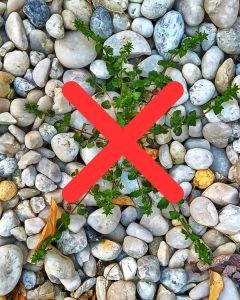
Sounds like an innocent and innocuous thing to say and do doesn’t it? Well, in fact it is a far from innocuous euphemism which in reality has me saying: I’ll apply some poison through a spray bottle to the leaves and stems of plants somebody or other has classified weeds, in order to kill them slowly over a few days.

Needless to say, this activity always evokes mixed feelings in me. Like everything else in the material life, this issue has two sides concerning the rightness and wrongness of ‘spraying the weeds’.

On the one hand, I understand that we humans are merely one more species along with so many others. We have to do what we need to do in order to feed, clothe, and shelter ourselves.

Weeds, I know, interfere with humans’ ability to grow food for example. In this context weeds are those plants that threaten to overrun, damage, or reduce supplies of ‘acceptable’ food plant species. Thinking about it now, it strikes me that the decisions about is it a weed or is it not a weed, can be pretty subjective.

On the other hand I personally do not want – nor do I think it right – to kill other living things. Of course, and clearly obvious too, it’s a bit more nuanced than a simple choice between do I? or don’t I?

I eat plants of many varieties, and in many forms, and I understand very well that they are all living beings. And, add to that, how many insects, lizards, snails, small mammals, birds, and other animals are displaced, injured, or killed in the planting, growing, harvesting, packaging, transport, and sale of the fruits, vegetables, nuts and so on that I eat?

Like I said earlier, the human species, like all others, must do what it has to to survive. Obviously, again being human, we have minds capable of discernment and decision making that can help us minimise the harm we cause as we pursue survival.

For me, a major component of that harm minimization takes the form of not eating the flesh of animals, as well as my choice to not utilise items made from animals.

Even with this there is a problem: Who’s to say what life forms are acceptable as food, and which aren’t? Humans have invented the scary idea of the Food Chain. We simply decide who is higher and who is lower on that chain and eat accordingly.

Needless to say, humans have appointed themselves to be the highest species on that ‘food chain’. Meaning of course, anything else is lower and hence okay as food.

Anyway, I digress a bit. Getting away from food questions, to look specifically once again at the ‘weeds’ to be sprayed in the Hermitage garden.

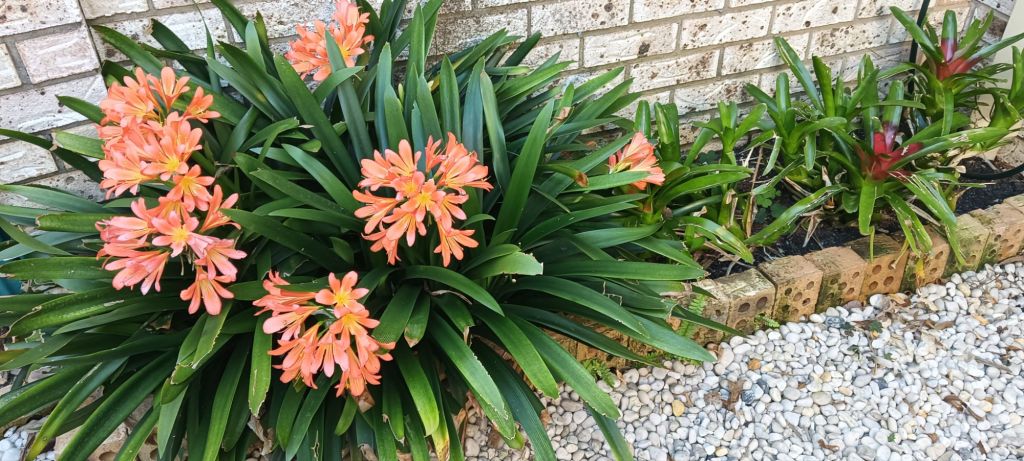
I often ask myself what is it that makes one plant with big orange flowers acceptable as a garden plant? Of course it’s beautiful, ornamental, and a pleasure to have nearby, but what else?

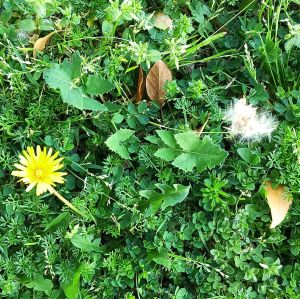
But, what is it that makes another plant, with its delicacy and little flower that are equally beautiful and as pleasing to be around in my view, not acceptable as a garden plant? What makes this one a weed, while that first one we met in the previous paragraph not?

Well, it seems to me that the first answer has to do with necessity dictated by circumstances or conditions beyond one’s control.

As I’ve said, when it comes to growing food, it’s necessary to control plants that threaten that growth. Discernment comes in when we decide how to eliminate that threat with the least harm. One aspect of discernment is actually related to that subjectivity I mentioned before: one person’s weed, is another person’s delicious and nutritious food – and vice versa.

At the Hermitage we don’t grow our own food, so we don’t face that dilemma. Here, at the Hermitage, it is a condition of living here that we control the weeds. And the plants classed as weeds are well known to us due to this condition being a routine clause in most rental contracts.

Besides, it seems that another major factor that makes a plant a weed, is where it grows, how hard it is to keep in bounds and behave.

I guess it’s not only a requirement, that we control the weeds. It’s an issue for our discernment as we try to find ways to share this little patch of the world with the other life forms who also live in this space with us.

It is a wise discernment that tells us to follow the rules of the contract. And our discernment also shows us that, in this human built environment we live in, we can’t allow the space to be taken over by plants that would then provide a safe harbour for insects, rodents, and other creatures that might or would threaten our health and wellbeing and that of our neighbours.

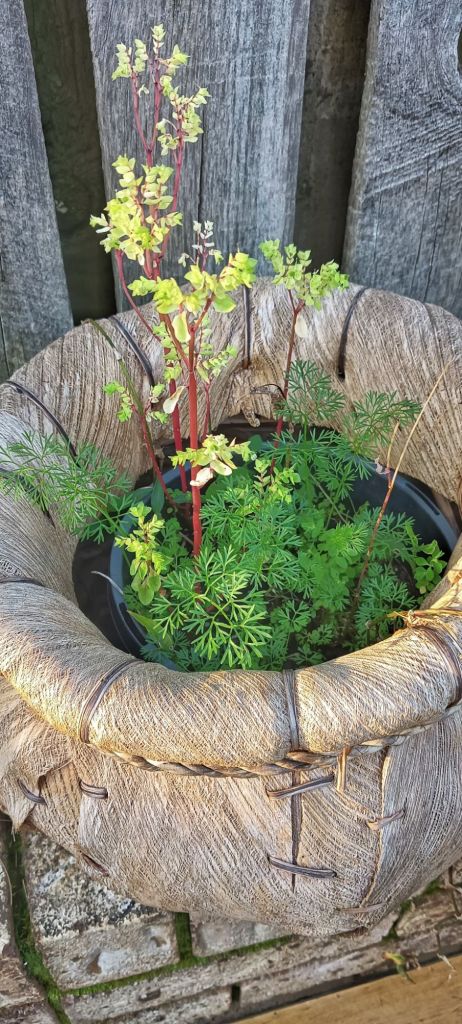
In a pot rescued from a roadside pile of domestic discards, a variety of plants – weeds also rescued over a few months of ‘spraying the weeds’ as a kind of offering to and celebration of life – grow in a group.

It’s a pretty group, I think, of delicate, yet sturdy little lifeforms.

Are they still weeds? Now that I’ve placed them to grow in an ‘approved’ space? Now that they are confined by bounds within which I can control them?

Confined? Controlled? Perhaps for now, but not for long. It’s a comforting thought, realising they all have allies: the sun, the rain – and the wind.

At the same time, we consider all life forms, including humans, to be manifestations of the Divine. All life is one, as I assert so often. Speaking personally, I am sad that any lifeform that is harmed because of my actions and my material needs.

Discernment, compassion, love and mindful action. As we seek to coexist in peace with those beings we share our world and lives with, these things are all required. Empathy too: We are the weeds, the weeds are us.

And the inner editor is insisting I finish by reminding myself  that life, the universe, and all that happens, is unfolding exactly as it’s meant to; all we can do is play our part in that unfolding.

How Shall I Live?

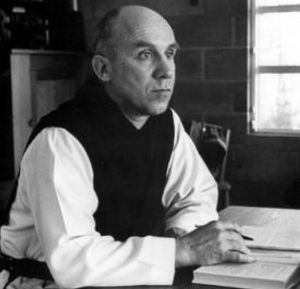
Thomas Merton in his hermitage (Courtesy Wikipedia)

The great study of the monk is to have an awakened heart

      Thomas Merton


There would be some – including me – who would say that all human beings, and not just monks, need to learn to awaken their hearts, to cultivate attitudes and a life of love, compassion, empathy, and kindness.

Who would disagree with such a suggestion?

Well, I’ve already said that I am one of the ‘some’ who would welcome such an evolution in human consciousness. But, at the same time, I don’t want to make pronouncements, form judgements, hold opinions, on what anybody should do, or be like. Only me. I am only responsible for my own behaviours, attitudes, ideas, thoughts, speech, and the rest of how to live my life. I just can’t – as in I’m not entitled – to tell anyone else what to do, what to think, what to say and so on.

Actually I’d even speculate that Merton is in fact talking about just the one monk: himself; he’s not preaching a prescription for the behaviour  of others.

I’ve read so much Merton that it’s impossible now for me to remember exactly where I read this statement of his, but I do know that when I first saw it and made a note, the concept resonated deeply for me as a great aspiration for my own life as a monk, and as a trying to be decent human being.

In other words, this monk – me, myself, and I – has a task to carry on with: to cultivate an awakened heart. And being a ‘great study’ it’s bound to be at least a lifetime’s project.

It’s an effort though, awakening one’s heart. It’s even a bit of a mystery at times what the phrase actually means in real terms.

Love, obviously, tops the list for any aspirant on the awakened heart path. And, yes, I do feel, express, and act out love – so deeply sometimes to the point of being overwhelmed or ‘flooded’; sometimes speechless (that’s the good bit), sometimes full of words.

But then there are times (oftentimes is the word) when that love is clouded or shrouded completely by angers and irritations, by regrets of what should be or shouldn’t be, could be or cant’t be, what isn’t.

The great study of the monk is to have an awakened heart
          Thomas Merton

All attachments to what is not as I think it should be. All barriers to love. All ways and means of keeping the heart asleep – or at best semi-awake, and still sleepy: slow to respond, slow to act, and with ongoing blockages to seeing how things actually are.

The quest to acquire an awakened heart and the outpourings of love, kindness, gentleness, generosity, that such a state would allow, is probably at the root, the foundation, of my life as a hermit monk, of my life as a pilgrim journeying through and to Self.

Living quietly and simply; developing a contemplative way of being in the world while definitely being not of the world; cultivating silence, peace and calm; all are activities and attitudes directed at cultivating an awakened heart.

All that generosity, patience, love, kindness, empathy, and all the rest are definitely all characteristics of an awakened heart. Here’s my dilemma  (only one among many that riddle my crazy monkey mind): they are also precisely the elements that need to be practised in order for one to acquire an awakened heart. What’s the expression? Catch 22?

Of course, it just occurs to me now, everything that is, is exactly as it’s meant to be, happening just as it ‘should’. So, in other words, all these words of reflection are simply a commentary on what has been and gone already, that which is in the past, and is no longer existing.

All that matters – all that exists – now is that at this moment, in its ongoingness, I am as loving, as kind, as patient, and as generous (not to forget compassionate, empathetic) as I’m able. To others obviously, as well as to myself.

All that wonderful list of characteristics of an awakened heart all exist right now within me. Perhaps I need to wake up my mind a bit more so I might see that reality. Then I might actually realise that I already have an awakened heart and that I simply got forgetful somewhere along the way.

with love
Paul the Hermit

Taking it Slowly, Taking it Mindfully

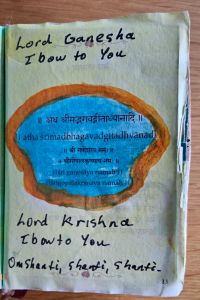
A small irony revealed itself to me just now as I prayed my way through the prayers inserted in the front of my Bhagavad Gita.

I’d completed one prayer and turned the page to the next. Then, without a pause or thought, I quickly turned the page again. I stopped, thought better of it, and turned back to attend to the prayer I’d skipped over.

Now, here’s the irony: The prayer on the first side of that carelessly and mindlessly leafed past page read simply:

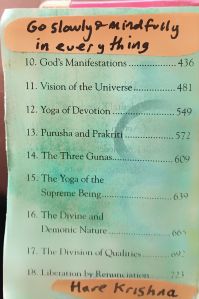
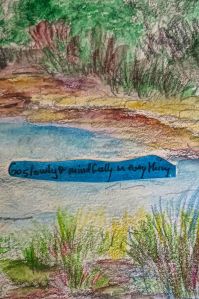
Go slowly and mindfully in everything.

Well, that’s not the ironey itself. But, given that this was the page I had simply passed over without a thought, with no pause, the words written there obviously were a lesson for me.

A message to contemplate, to actually stop and pause with, mull over, meditate on, and perhaps make resolutions over. Advice to me to stop, to slow down.

Couldn’t be clearer really.

There’s no telling why I skimmed past that page, that prayer, without a pause. Could be a simple case of absent-mindedness, or a rush to see what was on the next page; a grass is greener type of thing.

Why I was rushing through the pages isn’t the point. What is to the point is here I am, doing morning prayers, praying some, then skipping others. The other point is that in this instance, for some reason I stopped, went back, and prayed the skipped prayers.

So, moving to the resolution.

It’s extraordinary to me when that kind of thing happens. (It does happen quite a lot, but unfortunately I only notice it occasionally) We will have an intuition, or receive a message from ourself that helps to us get back on track when we mess up.

In any case, it’s obvious that I’ve found what I might call the prayer of the day, the mission statement, so to speak, informing whatever activities I undertake today.

Slow and mindful in everything I do, say, and think. For now, for the present, that will the guide on the path of today that I will follow. Keeping in mind the adage that practise makes perfect, for when I falter.

Oh, another irony wrapped up with this one. The prayer on the facing page was also skipped, and in itself sheds another light on the message from that first one. That second prayer actually puts forward one, important, way in which I can actually set about achieving  that first one:

In other words: place more focus on, pay more attention to, the Divine in whatever form, and by whatever name, I encounter it today.

Works both ways I think: Making the effort to go slowly, to be mindful, puts us in the present moment. And, the present moment is the only place we’re going to be able to become aware of the Divine.

Then, as we become aware of the presence of the Divine, we are right where we need to be, when we need to be there in order to actually slow down and be more mindful.

PS These notes were made a few hours ago. Since then, I have on the whole practised being slow and mindful. Not perfectly, mind you, but then as I say, practise makes perfect. Even now as I type this – very attentively – my mind wanders, so there is a way to go for me. The day is not over yet!

No Internet Reception? Is It a coincidence?

My last post spoke of the need for spiritual seekers to have association with devotees, fellow travellers on a spiritual path. I extolled the virtues for hermits living more secluded lives with the little physical contact, such as me, of accessing the Internet to find stories of past and present spiritual seekers, as a means to satisfy that need for association.

Watching videos, reading books and articles online, exploring websites managed by individuals or groups, all present opportunities for association.

I pointed out how all these activities are blessing in that they help instill a sense of connection and belonging, how they confirm the reality that I am not alone. Encouraging and inspiring, I said it was – and it is.

However, I did neglect to point out that there are hazards, pitfalls, slippery slopes, triggers for depression, anger, sadness. For me, spending time ‘online’ should come with an ‘enter at your own risk’ warning.

This is especially the case when spending time on the video watching apps, where you can watch unlimited videos on an unlimited range of topics.

Call it temptation; call it the magnetism of old attachments and conditioning; call it what I like: the reality is that, after too much time watching videos online, I will often start to drift, just for a ‘quick look’, just a short spell of lookin but ‘just a bit’. Not forgetting the sad resolve to only look at ‘stuff that’s good for me’.

A sad resolve I said because so often what I ‘have a quick look’ at is news, movie clips; anything that tugs at my old ways and habits, anything that pushes old buttons and triggers my old depressive and decidedly non-peaceful, melancholic self.

It doesn’t happen that often, not anymore. But when it does, I have a sense of sinking back into the mire of worldliness as it’s called. I feel the falling into the aforementioned pit. Even stuff I have strong aversions to, such as certain political leaders, reach out to grab me when such moments arise.

Anyway, such a slide down the slippery slope has been threatening the last couple of days. So, tonight I decided: no videos or other web stuff. Time for a break; time to clear my mind and relax.

The only online thing I thought I’d do is post some photos on a photo sharing site I belong to. Watching videos and other web stuff, causes me to neglect important things, like sharing my photos, sitting quietly, reading; all the good things. Time to settle. Time to catch up.

So, all set up to begin sharing, all that was missing was an Internet connection. I tried rebooting devices; all the usual remedies. Still no connection. Twenty minutes later I finally got it: the Universe wasn’t going to allow me anywhere  near the Internet.

Interesting timing, I thought. I decide no Internet (sort of) but the Universe has other ideas: Absolutely no Internet.

Of course Internet dropping out is hardly a unique event. It’s not as if it’s even a rare or occasional occurance.

Still, the last few days, the connection has been excellent. Then, tonight, nothing. Could be a coincidence? But then I don’t believe in coincidences.

Whatever. Now I am happily writing a blog post to share with you, then I’m going to actually make some pictures – been neglecting that too. Then, after that I’m going to get back to a partly read but excellent book I’ve lost touch with. Time to reengage.
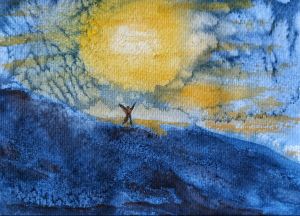
Meanwhile, I will choose to think that the Universe is unfolding exactly as it’s meant to.

No Internet? No problem.

You Can’t Try to Go With the Flow

Every writer, every painter, every person who makes things – and that includes all of us human beings – will sometimes get the feeling that they are never going to have another idea, or the inspiration, the creative spark or energy, to create anything ever again. Not ever again.

Certainly  that – what could we call it: crisis of confidence? Moment of fear? A feeling of inadequacy? The seeming loss of the desire to create? We could probably keep going with this, but let’s not.

Where was I? Yes. Certainly that, whatever we call it, comes over me really quite often when it comes to the writing of this blog. It’s become a standing joke in the hermitage: Whenever I’m asked if I have another post coming on, my most usual response goes something like:

‘No, and I don’t think I’ll ever write another post. The ideas are all gone. It’ over.

(As I reached for this notebook just now, I was asked that question and ironically I was able to answer with confidence and certainty, ‘Yes I do’.)

As I said, it’s a standing joke because, well, something always reveals itself to me, eventually. An idea, an inspiration, an insight is presented. Something I sense is worthy of sharing, always comes to me.

Having said that, there are times when I really do have that horrible sense that it’s finished, that I will never ever again receive an idea for another blog post.

But, here’s the great thing: Having become a standing joke, this perceived loss of ideas, insights, inspiration, the joke serves its purpose: It makes me smile, it treats the whole thing with some humour.

In other words, I’m not allowed to just get away with feeling sorry for myself. It cheers me up. It props me up a little, and gets a little part of my mind opening up to something new or fresh to write about.

There have been times during the journey of this blog when I have strayed from my intention for this blog. As it says beneath the blog title on the top of the page, this blog is meant to be:

musings on one hermit’s life and world

In the past, I’ve sometimes solved this ‘no ideas’ problem by writing about a topic from something I’ve read, teachings I’ve studied, or some other things not directly about me or my personal experience.

Lately (for some time now) I’ve resisted this ‘easy way out’, and tried more attentively to stick to the intention stated in my sub-heading – write about me and my experience.

Okay, it’s in fact not trying that’s the point, both with me writing this blog, and also with every other aspect of how I try (sorry, not try) to live my life.

Wu Wei it’s called, the path of least resistance. Certainly wracking my brain to come up with post ideas, and straying from intentions just so I can have a post, sets up much resistance on many levels.

You can’t ‘force’ musings, can you? If you muse you muse, if you don’t muse you don’t muse. It’s about letting it flow, or if it’s not flowing, let it be.

And here’s the interesting thing: it – the flow of ideas, insights, musings, whatever – flows at its own pace anyway regardless of my interference, angst, worry, or my forcing things to go this way or that.

My lesson for today – for my life too I pray:

Go with the flow

You’re the Voice, Try and Understand It

One of the things I like about one of our local coffee shops is that they play a nice wide selection of music. Mostly popular songs from pretty much every decade back to the ’60s. I think they have one of those looping playlists you hear sometimes in shops and cafés.

It must be quite a long list because you don’t necessarily hear the same songs repeated at every visit. Which is a nice thing too.

Anyway, yesterday the chorus of a song I heard played got stuck in my head. The song, You’re the Voice, was a hit around the world in 1986 when it was released by Australian singer John Farnham.

It’s essentially a protest song reminding us that we all have a voice, and encouraging us to use our voices to stand up against corruption and war. One of the co-writers Chris Thompson missed out on going to an anti-nuclear protest because he slept late. He felt so badly about sleeping in that he wrote the lyrics reminding us about taking personal responsibility and making our voices heard.

Okay, back to the chorus getting stuck in my head.

You’re the voice, try and understand it
Make a noise and make it clear Oh woah.
We’re not gonna sit in silence
We’re not gonna live in fear Oh woah

You see? It’s very catchy, and an excellent piece of advice too. And, for a hermit monk, it’s actually advice I could and do aspire to live by. Just not quite in the sense the song intends perhaps.

This morning, when my partner hermit suggested we just sit in silence for a while, I spontaneously started singing the chorus, though a slightly modified version:

We’re just gonna sit in silence
We’re not gonna live with fear.

Then, as I sat in said silence, I got to thinking about the words of the chorus.  Nobody wants to live in fear, yet it is an aspect of the human condition and something so many people live with constantly all over the world. All through human history as well.

The message of the song reminds us all that we have a voice which we can use to help create a state of affairs in which we don’t have to live in quite so much fear, fear that’s coming at us from so many sources.

For me, this is a vital, fundamental, and absolutely essential principle. Without those who do stand up, those who do use their voices to try to right wrongs, then, well I can’t think of what that might mean.

Yet, for me, I’ve chosen silence. Not only chosen I must admit: temperament, my own nature, health, all are factors that have made silence the best course for me to take. Silence as in seclusion from the world, minimizing outside imput, and reducing as much as possible the attachment to the world and its things and fears.

And this way of living ironically allows me to use my voice in my own ways to address the Truth as I see it; to help effect change and contribute to the healing so sorely needed.

Being ‘out there’ and engaged with worldly things and activities and interacting with people constantly causes me so much anxiety that it threatens my health and ability to act in the world.

There is also the personal choice aspect, common to so many who live a contemplative life. Silence – when I can actually achieve such a state – gives me the energy and clarity to write; it gives me the mental, emotional and spiritual ‘space’ and energy to pray, to contemplate, and to foster the ‘good vibrations’ I feel are also necessary to turn the world towards peace, healing, and truth, as well as to assist in maintaining the wellbeing of all life.

The world, and all of life, needs both those who can’t or won’t be silent (I’m definitely not suggesting the world needs more noise). We all need people who can and do raise their voices against war, poverty, corruption, and all the ills that plague us.

And it needs those who are able to ‘just sit in silence’. The work to be done is the same; the outcomes perused are the same; and in essence the means themselves aren’t all that different either. Silence as mentioned can include the use of our voices in ‘quiet’ ways, in ways that don’t have to relate so directly the affairs of the world.

It really is a symbiosis: Those of us living secluded and contemplative lives with our prayers, our witness, our creative endeavours, support those active and vocal ones out there trying to heal the world.

And at the same time those out there in the world support the secluded and contemplative ones. Their efforts and hard work, and simply knowing they are there, are encouraging and nurturing for the secluded and contemplative ones.

We are One after all.
Yet our voices are all unique, each and every one.
That’s what I understand to be true.

Self Enquiry: Listen to Your Self

This last little while I’ve been going through some serious contemplation, some deep questioning, on how to be ‘more of a monk’. Things like how to pray more deeply, and often; how to have a more focused and concentrated devotional practice; how to be a nicer person. Things like that.

Actually, that’s not exactly right is it? These are questions, enquiries, that for a number of years (is all my life too big a stretch?) habe occupied me. I’ve consistently been making enquiries, addressing questions, to Self – as well as to God or the Divine.

Still, like all things in life, self-enquiry goes through more intense, then less intense phases or periods. Let’s just say that lately I’ve been immersed – sometimes to the point of distraction – in one of those more intense periods.

(note from internal editor: Do I have to remind you once again to get on with the story you are here to tell?)

Okay then; let me see. Oh yes, right. Last night I was looking forward to beginning a new book. I’d read the introduction and thought that it was going to be just my cup of tea as it were, that it was something I would enjoy and learn from.

Anyway, as I opened the book on my tablet, I was suddenly stopped by a sort of wordless warning. The sense I had was that this book would indeed be a little piece of the answers I’ve been seeking.

Not so much in the contents I felt, it was more about approaching the book with more openness, less skepticism, more generosity of spirit and mental attitude. And the idea seemed to also include taking these qualities with me later as I thought about what I had read (or was about to read I should say).

You see, being more open, less skeptical, and more generous, come under the umbrella of being nicer. Still given the subject I was about to read about, I was a bit surprised by this ‘warning’.

As it turned out, I finished the entire book, so enthralled was I by the contents. The only things that tested my resolve to ‘be nicer’ was a number of occasions when the author’s worldview and interpretation of events, stretched my patience.

But, I managed. I didn’t become inpatient or outraged or irritable . When threatened by such responses I simply reminded myself that I was reading about another person, and I didn’t have to have an opinion one way or the other about what they believed or how they lived. Not only do I not have to have an opinion, I’m not sure I really have the right to an opinion about someone else’s life at all.

Besides, haven’t I just got through describing how I am myself deeply engaged in a process of self-enquiry? And wouldn’t such a process involve exposing myself to ideas, worldviews, kinds of information, new to me or not in alignment with my own beliefs? Surely bursts of impatience, indignance, judgement, and the like, would close me off in my search for answers?

Anyway, as I said I was so enthralled by the book – my reading informed by a little more generosity, a little less judgement, a renewed attempt at openness – that I finished the book in that one sitting.

Mind you it was only one hundred and something pages long. Still, for me, it was pretty good going.

PS Speed reading wasn’t – isn’t, nor ever will be – a part of my ongoing self-enquiry into the depths of my monkhood. Perhaps I need to add something like ‘Transcend the ego’ to my list.

Slowly & Mindfully: A Reminder

Among the physical exercises I try to perform on a daily basis, are a couple for strengthening the hips. One of these begins with me standing upright, feet together, eyes level, looking ahead.

Then I swing one leg at a time for ten repetitions in a kind of arc like motion out to side, keeping it level with the side of my body, bringing the leg back to the rest position with feet together. It’s a pendulum motion.

Anyway I’d been merrily going along doing these exercises more or less every day for ages, months really, until one day my partner hermit was watching me, and said:

‘You’re supposed to be doing it slowly and mindfully’. Or words to that effect.

You see I had been quite happy swinging each leg out in turn at a fast pace, kind of like an aerobic sort of thing. Just to get it done if I’m honest. Wrong! Supposed to be slowly and mindfully.

Lift one leg slowly in an arc like motion out to the side of the body. Pay attention to the movement as it’s happening; no need to push the leg out, just lift it to a comfortable position. Just let the arm trail loosely and of its own accord, along with the leg. Then, again slowly and paying attention to the process of the movement, bring the leg back.

And I do have to say there’s been an amazing difference. I can actually feel the muscles working during the exercise, and can sense the minute incremental motion as the leg swings slowly. It’s a way better exercise than it was, and now I wouldn’t do it any other way.

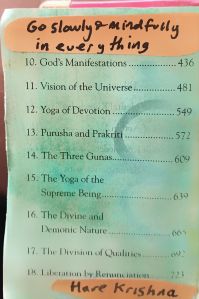
I was reminded of this incident this morning as I came across a short admonition, a little reminder to myself I have stuck on a Table of Contents page in my Bhagavad Gita.

Go slowly and mindfully in everything

What’s interesting is that, despite seeing and reading this so-called reminder more or less every day, and despite proofs of the benefits of actually listening to the reminder, such as what I’ve just described with the exercise , the reminder seems to mostly go right over my head, in one ear and out the other as they say.

Today, for some mysterious reason, it actually got my attention. At the same time, again who knows why, it triggered a truly relevant and appropriate memory to act as a kind of metaphor to illustrate the point to me.

I suppose it’s stating the obvious, but I can say that doing that (or any) exercise slowly and mindfully – in a watchful and observant manner – acts as an exercise in presence. Otherwise I’d not be sensing or feeling the muscles and the movement, or the peace of no random thoughts.

Did I mention that, having corrected my modus operandi with that particular exercise , I’m feeling the benefits? It definitely feels like things with legs and hips are loosening up, getting stronger. I’m actually walking further now without my legs aching on me.

More than that, I actually find myself wanting to do the exercise as opposed to ‘wanting to get it done’. Why is this? Well, I think it’s because I’m yearning to rediscover that feeling of presence; it’s a bit like a meditation, and in the same way clears the mind of random thoughts – at least for the short duration of the exercise. Having said that, even a short duration clarity plays its part in reconditioning a stubborn mind.

So, mental clarity, good exercise for the body, for the heart, even the soul?I think it’s the perfect metaphor for how I aspire to be living my life.

Slowly and mindfully.

Foster Your True Self: It’s A Big Deal

Today I finished watching  a beautiful and extremely fascinating documentary.  It was about life in a Trappist monastery as well as a fascinating history of that movement. I was struck by something one of the monks said.

He was referring to what he and his fellow monks are actually doing with their lives in the monastery. He said their lifestyle was helping them to:

‘foster who we truly are before God.’

Hearing this, I had to pause the video, make notes, and do some thinking. What had actually struck me, my first thought on pausing, was that this is exactly what I’m doing as a hermit monk dwelling in our Hermitage. Exactly what I’m doing. Well, at least it’s what I’m aspiring to.

There are two aspects or primary intentions that inform the life I try to live as a hermit and monk that are in fact integral one to the other; they merge actually to become one primary focus of my life.

I practice an ever evolving and I hope intensifying devotion to the divine, with the upliftment of the world and all beings as its central theme.

The other, integral focus, is an equally ever evolving and intensifying quest for self-knowledge, for the answer to the question, who am I?

In other words, I am attempting to foster who I truly am before God. Foster as in ‘encourage the development of …’ (as one definition puts it).

In this case, the development is the growth of the knowledge of my true nature – who I am above and beyond this physical (and mental) creature running around madly trying to figure things out.

In my life there is much effort devoted to the cultivation – a synonym for foster – of that knowledge: meditation, prayer, contemplation, study, just sitting, being still. Did I mention the aspirational nature of all this? It’s an ongoing project to say the least.

Speaking of aspirational: Two more synonyms for foster that I like are nurture and support. Both are even more in that aspirational category; at least it feels like that sometimes. Actually, maybe there’s a more accurate way for me to be putting this.

After all, as I think about it now, even I would agree that my whole lifestyle, my entire way of being in the world supports and nurtures me.

Except for me, myself, and I, that is: Lest the inner grammarian sends me mad in a search for antonyms for foster, let me just say that I am overly skilled in the self-critical and self-destructive departments. My ability to put myself down and to tear myself apart is legendary.

Anyway, with overwhelming nurture and support coming from my partner hermit all the time reinforcing my sense of Self, all I have to do is work on ridding myself of these self-destrucitive and self-critical tendencies.

So, the conditions for the banishment of self-loathing are there; all that’s missing is discipline on my own part in seeing the Divine in myself as I profess to be trying to see it in everyone else.

I need to be rid of the forgetfulness  that blinds me to the Truth that is actually very plain to see.

Speaking of the Divine, the ‘before God’ is the vital element for me. God is all there is, so it is always before God that I act, whether in a positive or in a not so great manner.

The best prescription is for me to remember. To remember that God is everywhere and everything (did I say that already?). To remember that me, myself, and I, are also included in that everything and everywhere.

I think that once I do remember these truths even for the odd moment now and again, then the real fostering of who I truly am will have begun.